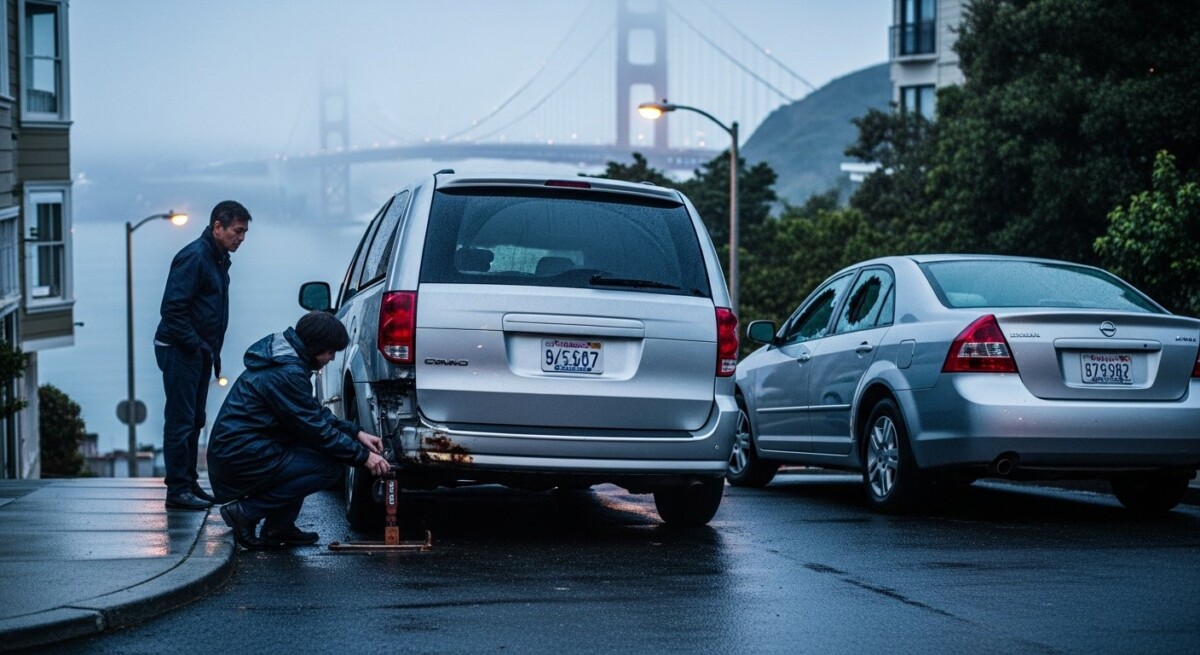
San Francisco families face a unique set of challenges when it comes to protecting their vehicles and loved ones. Between the steep hills, foggy mornings, high traffic density, and the ever-present risk of break-ins, finding the right coverage is not just about meeting state minimums. It is about building a financial safety net that can absorb the unexpected without derailing your household budget. For parents juggling school drop-offs, commutes across the Bay Bridge, and weekend road trips, the right policy provides both protection and peace of mind. This guide breaks down exactly what families need to consider when shopping for auto insurance for families in San Francisco, how to balance cost with coverage, and where to turn for the best rates.
Why San Francisco Families Need Specialized Coverage
San Francisco is not your average driving city. The local environment creates risks that standard policies might not fully address. For example, parking on a steep incline means your car is more likely to roll if the parking brake fails. Fog can reduce visibility to near zero, increasing the likelihood of fender benders. And according to recent data, San Francisco consistently ranks among the top U.S. cities for vehicle break-ins and catalytic converter theft. For a family with one or two cars, a single incident can mean hundreds or even thousands of dollars in out-of-pocket costs if your policy lacks comprehensive coverage.
Beyond property damage, families must consider liability. If you have teenage drivers on your policy, the risk of an at-fault accident rises significantly. A serious accident in a city where property values and medical costs are sky-high can lead to lawsuits that exceed basic state minimums. That is why many local agents recommend carrying higher liability limits than the California minimum of $15,000 per person and $30,000 per accident. For families, the sweet spot often starts at $100,000 per person and $300,000 per accident, with an additional umbrella policy for extra protection.
In our guide on AARP Hartford auto insurance benefits and eligibility, we discuss how older drivers in multi-generational households can also find value in bundled policies that cover multiple vehicles and drivers under one roof.
Key Coverage Types Every Family Should Evaluate
When you compare auto insurance for families in San Francisco, you will encounter several coverage options. Understanding each one helps you avoid paying for what you do not need while ensuring you are not underinsured in a crisis.
Liability Coverage (Bodily Injury and Property Damage)
This is the foundation of any policy. It pays for injuries or damage you cause to others in an at-fault accident. California requires it, but the state minimums are notoriously low. For a family with assets such as a home or savings, we strongly recommend increasing this to at least $100,000/$300,000. The extra premium is often modest, while the protection against a lawsuit is substantial.
Comprehensive and Collision Coverage
Comprehensive covers non-collision events like theft, vandalism, fire, and falling objects. In San Francisco, this is critical because of the high rate of smash-and-grab thefts and car break-ins. Collision covers damage to your car from hitting another vehicle or object, such as a curb or guardrail. If you have a car loan or lease, your lender will likely require both. Even if your car is paid off, keeping comprehensive coverage is wise if the vehicle is worth more than a few thousand dollars.
Uninsured and Underinsured Motorist Coverage
California has a high rate of uninsured drivers, estimated at around 15 percent. If you are hit by someone without insurance, this coverage pays for your injuries and sometimes property damage. For a family, medical bills from an accident can be devastating. This coverage is relatively inexpensive and can be a lifesaver.
Medical Payments or Personal Injury Protection
These cover medical expenses for you and your passengers regardless of who is at fault. In a city where healthcare costs are among the highest in the nation, this extra layer can prevent a single accident from wiping out your family’s medical deductible or savings.
How to Lower Your Premium Without Sacrificing Coverage
San Francisco is an expensive city, and insurance rates reflect that. The average annual premium in the city is higher than the state average, largely due to theft rates and traffic density. However, families have several levers to pull to bring costs down. Here are the most effective strategies to consider when shopping for auto insurance for families in San Francisco:
- Bundle home and auto policies: Many insurers offer a multi-policy discount of 10 to 25 percent. If you own or rent a home in the city, bundling can save hundreds of dollars per year.
- Ask about good student discounts: If you have a teen driver on the policy, a B average or higher can qualify for a discount of up to 15 percent.
- Increase your deductible: Raising your collision and comprehensive deductibles from $500 to $1,000 can lower your premium by 10 to 20 percent. Just make sure you have that amount set aside in an emergency fund.
- Take a defensive driving course: Some insurers offer a discount for completing an approved course, which is especially useful for parents or senior drivers looking to refresh their skills.
- Pay annually instead of monthly: Insurers often add installment fees for monthly payments. Paying the full six-month or annual premium upfront can save you 3 to 5 percent.
These strategies work best when you compare quotes from multiple carriers. Rates vary widely between insurers for the same driver profile, so taking 15 minutes to shop around can lead to significant savings. As noted in our analysis of auto insurance costs in Chicago, urban drivers who compare policies consistently pay less than those who auto-renew without shopping.
Teen Drivers and Young Adults: Adding Them to Your Policy
Adding a teenage driver to a San Francisco auto policy is one of the biggest premium increases a family can experience. Rates can double or even triple with a single teen on the policy. However, there are ways to manage this cost without excluding your child from coverage.
First, consider enrolling your teen in a driver education program that includes behind-the-wheel training. Many insurers offer a discount for completion. Second, if your teen is away at college without a car, you may qualify for a student away at school discount. Third, monitor your teen’s driving record closely. A single speeding ticket in San Francisco can increase premiums by 20 to 30 percent. Some insurers offer telematics programs that track driving habits through a smartphone app or device installed in the car, rewarding safe driving with lower rates.
It is also important to list your teen as a driver on the policy rather than letting them drive your car unlisted. If your teen gets into an accident while driving your car and they are not listed, the insurer may deny the claim entirely. That is a risk no family should take.
Multi-Vehicle Households and Coverage Coordination
Many San Francisco families own two cars, especially if both parents commute or one vehicle is used for weekend adventures. Insuring both vehicles under the same policy with the same carrier usually unlocks a multi-vehicle discount, which can be 10 to 15 percent per vehicle. Additionally, having all drivers and vehicles on one policy simplifies billing and renewal dates.
However, there is a nuance. If one driver in the household has a poor driving record, it can raise the rate for all vehicles on the policy. In that case, it may be worth exploring separate policies for the high-risk driver. For example, you could insure the family minivan and your own sedan under one policy with a clean driver, and put the teen driver on a separate, low-cost liability-only policy for an older car. This strategy requires careful comparison, as some insurers penalize households with multiple policies.
For more on state-specific rules and how they affect multi-vehicle families, see our breakdown of auto insurance requirements for Massachusetts drivers, which covers similar principles that apply in California.
Frequently Asked Questions
Does San Francisco’s high rate of car break-ins affect my premium?
Yes, indirectly. While your individual premium is based on your driving record and vehicle, insurers use zip code data to set base rates. San Francisco zip codes with high theft rates will have higher comprehensive coverage premiums. You cannot avoid this by changing your address, but you can mitigate it with anti-theft devices and by parking in a garage whenever possible.
What is the minimum auto insurance requirement for families in California?
California law requires 15/30/5 coverage: $15,000 per person for bodily injury, $30,000 per accident for bodily injury, and $5,000 for property damage. However, we strongly advise families to carry more than the minimum. A single accident involving a luxury car or serious injury can easily exceed these limits.
Can I exclude my spouse from my policy to save money?
You can exclude a driver, but that means they are not covered to drive any vehicle on the policy. If they drive your car and get into an accident, the claim will likely be denied. This is generally not recommended for families. Instead, look for discounts like good driver or low mileage.
How does my credit score affect my rate in California?
California is one of the few states that prohibits insurers from using credit scores to set auto insurance rates. That means families with lower credit scores will not be penalized, which is a significant advantage compared to many other states.
Should I file a claim for a minor fender bender?
If the damage is under $1,000, it is often better to pay out of pocket. Filing a claim, even a small one, can cause your premium to increase at renewal. For families, preserving a claims-free discount is often worth more than the payout for minor damage.
Getting the Best Rate for Your Family
The single most effective step a San Francisco family can take is to compare quotes from multiple insurers at least once a year. Life changes like a new teen driver, a move to a different neighborhood, or paying off a car loan can all affect your rate. Additionally, carriers adjust their pricing algorithms regularly, so a company that was expensive last year might be competitive today.
When you compare policies, look beyond the monthly premium. Check the coverage limits, deductibles, and exclusions. A cheap policy with low limits and high deductibles could leave your family exposed. Conversely, a slightly higher premium with robust coverage and a low deductible for comprehensive claims can save you thousands in the event of a theft or accident.
For families with complex needs, such as a teen driver or multiple vehicles, using a comparison platform like Free Auto Insurance Quotes Online simplifies the process. You fill out one form and receive quotes from multiple licensed carriers, allowing you to compare coverage and price side by side. This approach is especially effective in a competitive market like San Francisco, where rates vary significantly between insurers. As we discuss in our guide on saving money on auto insurance in Connecticut, the same principle applies nationwide: shopping around is the best way to avoid overpaying.
Protecting your family on the road does not have to break the bank. By understanding your coverage needs, taking advantage of discounts, and comparing rates regularly, you can secure a policy that fits both your budget and your lifestyle. Start your comparison today and drive with confidence knowing your family is covered.