Buying auto insurance for the first time has always felt like stepping into a maze of confusing terms and hidden costs. But in 2026, the landscape has shifted dramatically. New regulations, technology-driven pricing models, and consumer-friendly policy features have fundamentally changed what first-time buyers can expect. If you are shopping for your first policy this year, you will find more transparency, more flexibility, and more ways to save than ever before. However, you still need to know what questions to ask and where to look. This guide breaks down the most important changes and shows you exactly how to secure affordable, reliable coverage from day one.
Why 2026 Is a Turning Point for First-Time Auto Insurance Buyers
The auto insurance industry has undergone a quiet revolution over the past two years. Insurers now use real-time driving data, artificial intelligence for risk assessment, and new state-level mandates that favor the consumer. For first-time buyers, these shifts mean lower barriers to entry and fewer surprise premium hikes. In our guide on cheap auto insurance policies worth it, we explain how these changes make affordable coverage more accessible without sacrificing quality. The key difference in 2026 is that insurers compete more aggressively for new drivers, offering perks like accident forgiveness from day one and zero-down payment options. This competitive pressure benefits you directly.
Usage-Based Insurance: The New Standard for New Drivers
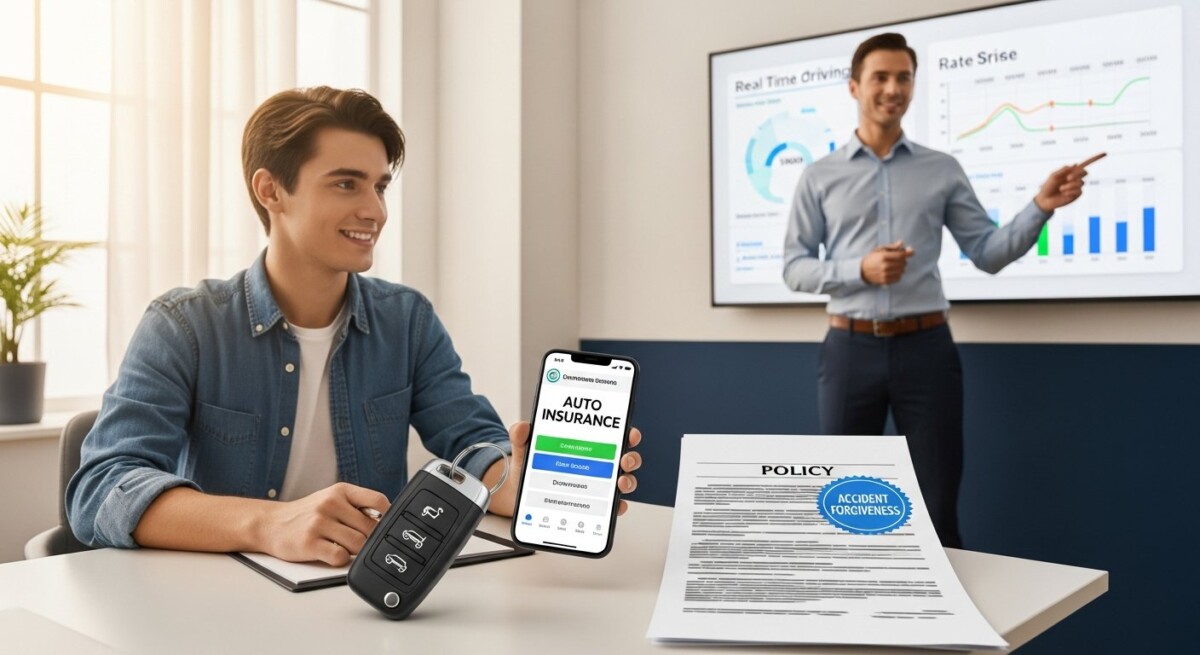
Usage-based insurance (UBI) has existed for years, but in 2026 it has become the default option for many first-time buyers rather than a niche product. Instead of pricing your policy solely on age, gender, or credit score, insurers now offer telematics programs that track your actual driving behavior. You install a small device in your car or use a smartphone app that monitors mileage, speed, braking patterns, and time of day you drive. Safe driving habits directly lower your premium.
For a first-time buyer with a clean record, this is a game changer. Traditional pricing models penalize young or inexperienced drivers with high base rates. UBI programs let you prove your responsibility behind the wheel. Many carriers now guarantee a discount of 10 to 30 percent for completing a 90-day monitoring period without hard braking or rapid acceleration events. Some even offer upfront discounts just for enrolling. If you are a cautious driver, you could pay significantly less than the standard rate for your age group.
Important considerations for UBI in 2026 include data privacy and transparency. Most insurers allow you to review your driving score in real time through a mobile app. You can see exactly which behaviors increase your rate and adjust your habits accordingly. Before signing up, confirm that the policy allows you to opt out of telematics after a set period without penalty. This flexibility ensures you are not locked into monitoring forever if you later prefer a traditional rate.
New Pay-Per-Mile Policies Eliminate Minimum Premiums
Another major innovation in 2026 is the widespread availability of pay-per-mile auto insurance. This model charges a low daily base rate plus a per-mile fee for every mile you drive. For first-time buyers who use their car sparingly, such as students or remote workers, this can cut premiums by half or more compared to a traditional annual policy. Unlike earlier versions of pay-per-mile insurance, the 2026 policies no longer impose a high minimum monthly premium. You only pay for what you drive.
How Pay-Per-Mile Works in Practice
When you enroll, the insurer sends you a small plug-in device that tracks mileage. You do not need to report odometer readings manually. The device syncs with your policy and calculates your bill each month based on actual miles driven. Most policies cap the per-mile rate at a reasonable level, so even if you take a long road trip, your costs remain predictable. If you drive fewer than 10,000 miles per year, this model almost always beats a traditional policy. For a first-time buyer, the savings can be substantial. You can then use that extra money to invest in higher liability limits or add comprehensive coverage.
Mandatory Accident Forgiveness for First Policies
Several states have enacted laws in 2026 that require insurers to offer accident forgiveness on a first-time buyer’s initial policy. Accident forgiveness means your premium does not increase after your first at-fault accident. Previously, this was an optional add-on that cost extra. Now, it is baked into many standard policies for new drivers. This change removes a major fear for first-time buyers: the worry that one mistake could double your insurance cost for years.
If you live in a state that has not yet mandated this benefit, you can still find insurers who include it voluntarily. When comparing quotes, ask explicitly whether the policy includes first-accident forgiveness. Some carriers offer it only for accidents below a certain dollar threshold, so read the fine print. In our complete guide on adding a driver to your auto insurance policy, we cover how accident forgiveness interacts with multi-driver policies, which is useful if you plan to share a car with a family member.
Digital-First Claims and Instant Binding
The 2026 insurance buying experience is almost entirely digital. You can get a quote, bind a policy, and receive proof of insurance within minutes without speaking to an agent. Insurers now offer instant binding for first-time buyers who provide accurate information. This means no waiting for underwriting approval. You enter your details, pay your first premium, and receive a digital ID card immediately. This speed is especially valuable if you need coverage the same day you purchase a car.
Claims processing has also improved. Many insurers now use AI to process photo-based claims in under 24 hours. You submit photos of the damage through an app, and the system estimates repair costs and schedules a payment or repair appointment. For a first-time buyer, this eliminates the intimidating phone call and paperwork that used to accompany an accident. You can focus on getting back on the road quickly.
Mandatory Coverage Minimums Are Rising
In 2026, more states have increased their minimum liability coverage requirements. This directly affects first-time buyers because the cheapest policy you can buy now includes higher limits. While this raises the floor price of insurance, it also protects you from devastating out-of-pocket costs after an accident. For example, states that previously required 15/30/5 coverage (meaning $15,000 per person, $30,000 per accident for bodily injury, and $5,000 for property damage) now require 25/50/10 or even 30/60/10. This shift means that even the most basic policy offers meaningful protection.
What This Means for Your First Policy
You should still consider buying more than the minimum. The new state minimums are better than they were, but they may still fall short if you cause a serious accident. Medical costs and vehicle repair expenses have risen sharply. Carrying higher liability limits, such as 50/100/50, adds only a modest amount to your premium but provides significantly more security. When you compare quotes on a platform like Free Auto Insurance Quotes Online, you can see the price difference between different coverage levels side by side. Choose a level that protects your assets without stretching your budget.
New Discounts Specifically for First-Time Buyers
Insurers in 2026 have introduced targeted discounts for first-time buyers that did not exist a few years ago. These discounts reward behaviors that indicate lower risk. Here are some of the most common ones you should look for:
- Good student discount: Full-time students with a B average or higher can save 10 to 20 percent. This applies even if you are not listed as a primary driver on a parent’s policy.
- Driver training completion: Completing an approved defensive driving course before buying your first policy qualifies you for a discount. Online courses are accepted by most insurers.
- Telematics enrollment discount: Simply agreeing to use a telematics device or app earns you an immediate discount, regardless of your driving score.
- Paperless and autopay discount: Setting up electronic billing and automatic monthly payments reduces administrative costs for the insurer, and they pass some of those savings to you.
- Low-mileage discount: If you drive fewer than 7,500 miles per year, you qualify for a low-mileage discount on most standard policies.
Stacking these discounts can reduce your premium by 30 percent or more. When you request quotes, many platforms automatically apply eligible discounts based on the information you provide. However, you should double-check that every discount you qualify for has been applied before you bind the policy. A quick call to the insurer or agent can confirm you are not leaving money on the table.
How to Compare Quotes Like a Pro in 2026
The tools available for comparing auto insurance have become more sophisticated. You no longer need to visit five different websites. A single comparison platform like Free Auto Insurance Quotes Online lets you input your information once and receive multiple quotes from top carriers. The system highlights differences in coverage terms, deductibles, and included perks. For first-time buyers, the most important thing is to compare apples to apples. Ensure each quote uses the same liability limits, deductible amounts, and coverage types. Otherwise, you might choose a cheap policy that leaves you underinsured.
When you receive your quotes, pay close attention to the declarations page summary. This document lists your coverage limits, deductibles, and any endorsements. In 2026, many insurers offer roadside assistance and rental car reimbursement as standard inclusions rather than add-ons. Verify these features are present in the quote you select. If you live in a state with specific requirements, such as no-fault insurance, confirm the policy complies. Our complete guide to auto insurance in Massachusetts for drivers provides a good example of how state rules can affect your choices.
Frequently Asked Questions
Can I get auto insurance with no driving history?
Yes. In 2026, many insurers offer policies specifically for first-time buyers with no prior insurance history. You may need to enroll in a telematics program or take a driver improvement course to qualify for the best rate. Some carriers also allow you to use a parent’s good driving history if you are added to their policy, but standalone policies are available.
How much does auto insurance cost for a first-time buyer in 2026?
Rates vary widely based on your location, vehicle, and driving habits. On average, first-time buyers pay between $1,200 and $2,400 per year for a standard policy. Usage-based and pay-per-mile policies can lower that to $800 or less for low-mileage drivers. The best way to find your exact rate is to compare multiple quotes.
Is it better to buy insurance directly from a company or through a comparison site?
Using a comparison site like Free Auto Insurance Quotes Online saves time and helps you see multiple options side by side. You can then choose to purchase directly from the insurer or through the platform’s partner agents. Both methods result in the same policy, but comparison tools often surface discounts you might miss on your own.
What happens if I let my policy lapse as a first-time buyer?
A lapse in coverage can lead to higher rates when you reapply and may trigger a penalty in some states. In 2026, many insurers offer grace periods of 10 to 30 days before canceling for nonpayment. If you face financial difficulty, contact your insurer to discuss payment plan options before the grace period expires.
Do I need comprehensive and collision coverage on an older car?
If your car is worth less than $3,000 to $4,000, comprehensive and collision coverage may not be cost-effective. The annual premium for these coverages could exceed the payout you would receive after a total loss. However, if you have a loan or lease, your lender will require full coverage regardless of the car’s value.
Your Next Step Toward Affordable Coverage
The auto insurance market in 2026 offers first-time buyers more control, more transparency, and more savings opportunities than any previous year. Usage-based programs, pay-per-mile options, and mandatory accident forgiveness remove many of the traditional pain points. The key is to shop around, ask the right questions, and take advantage of the discounts that apply to your situation. Start by comparing quotes from multiple carriers to see exactly what is available in your area. With the right approach, your first auto insurance purchase can be straightforward, affordable, and tailored to your life. For new drivers in New York, our guide on the 7 best auto insurance for new drivers in New York offers state-specific insights that can help you narrow your options.