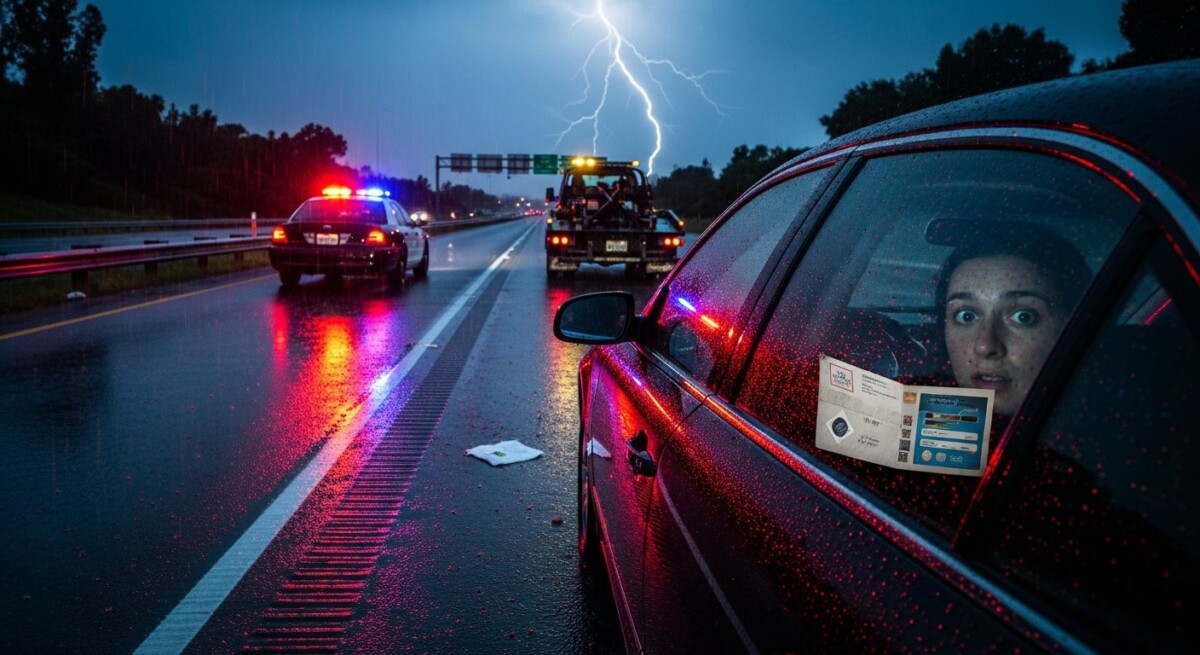
Imagine you are cruising down the 405 freeway in Los Angeles, the sun is setting, and traffic is finally moving. Then you see the flashing red and blue lights in your rearview mirror. Your heart sinks not because of the speeding ticket, but because you let your auto insurance lapse last month. In California, this scenario is far more serious than most drivers realize. The state treats uninsured driving as a significant public safety issue, and the consequences can ripple through your finances, your driving record, and even your freedom. Understanding exactly what happens if you drive without insurance in California is the first step to avoiding a costly mistake that could follow you for years.
California law is clear: every driver must carry a minimum level of liability insurance. This is not a suggestion or a recommendation. It is a legal requirement enforced by the Department of Motor Vehicles (DMV) and the courts. When you fail to carry insurance, you are not just breaking a minor rule. You are taking a financial risk that could lead to license suspension, vehicle impoundment, and personal bankruptcy if you cause an accident. For drivers who are already struggling to afford coverage, the irony is that going without insurance almost always ends up costing far more than the premium ever would.
This article breaks down the specific penalties, long-term consequences, and practical steps you can take if you find yourself in this situation. We will also explain how using a comparison platform like Free Auto Insurance Quotes Online can help you find affordable coverage that meets California’s requirements, so you never have to face these penalties in the first place. If you need immediate assistance or want to speak with a licensed agent, call us at 833-275-7533.
The Legal Minimum Insurance Requirements in California
Before we dive into the penalties, it is essential to understand what coverage California actually demands. The state operates under a “financial responsibility” law. This means that as a driver, you must prove you can pay for damages or injuries you cause in an accident. The most common way to prove this is by carrying a valid auto insurance policy. The minimum liability limits required are often referred to as 15/30/5.
- $15,000 for injury or death of one person in an accident you cause.
- $30,000 for total injury or death of multiple people (per accident).
- $5,000 for property damage caused by the accident.
These limits are the absolute floor. You cannot legally drive with less than this coverage. It is also important to note that California accepts a few other forms of financial responsibility, such as a $35,000 cash deposit with the DMV or a surety bond. However, for the vast majority of drivers, a standard auto insurance policy is the only practical option. If you are unsure whether your current policy meets these minimums, you can review your declarations page or contact an agent. For those with a past claim on their record, finding affordable coverage can be challenging. In our guide on affordable car insurance for drivers with past claims, we explain how to navigate higher rates and still stay compliant.
Immediate Penalties for a First Offense
If a law enforcement officer pulls you over and you cannot provide proof of insurance, the consequences begin immediately. California Vehicle Code Section 16028 requires you to show proof of financial responsibility upon request. If you cannot, you will receive a ticket. The base fine for a first offense of driving without insurance is typically around $100 to $200. However, with court costs, administrative fees, and penalty assessments, the total amount you pay can easily exceed $800. These additional fees are what make the penalty so severe. The court adds a series of mandatory surcharges that multiply the base fine.
Beyond the financial hit, the officer may also cite you for driving without valid registration if the DMV has been notified of your lapsed insurance. California has a continuous insurance monitoring system. If your insurance lapses, the DMV is automatically notified, and your vehicle registration may be suspended. This creates a compounding problem: you cannot register the car without insurance, and you cannot legally drive the car without registration. This cycle can trap drivers in a situation where they feel forced to drive illegally just to get to work or handle daily tasks.
Vehicle Impoundment Risk
In some cases, particularly if you have prior offenses or if the officer deems the situation egregious, the police can impound your vehicle on the spot. An impound is not just inconvenient. It is expensive. You will be responsible for towing fees, daily storage fees, and an administrative release fee. These costs can quickly add up to several hundred dollars, even if you retrieve the car the same day. If the vehicle remains in the impound lot for more than 30 days, the state can auction it off. Losing your car because of an insurance lapse is a harsh reality that many Californians face every year.
DMV Penalties: License Suspension and SR-22 Requirements
The DMV takes uninsured driving very seriously. If you are caught driving without insurance, the DMV will suspend your driver’s license for one year. This is an automatic administrative action, separate from any court penalties. To get your license back after the suspension period, you will need to file an SR-22 certificate with the DMV. An SR-22 is not an insurance policy itself. It is a form that your insurance company files with the state to prove that you now carry the required liability coverage.
Obtaining an SR-22 policy is significantly more expensive than a standard policy. Insurance companies view drivers who need an SR-22 as high-risk. You can expect your premiums to double or triple compared to what you were paying before the lapse. Additionally, you must maintain the SR-22 coverage for three full years. If your policy lapses again during that three-year period, the insurance company is required to notify the DMV immediately, and your license will be suspended again. This creates a high-stakes situation where missing a single payment resets the entire process.
For drivers who have recently moved to the United States, understanding these California-specific requirements can be confusing. If you are an international driver or a new resident, we recommend reading our auto insurance guide for international drivers moving to the US to ensure you comply with state laws from day one.
Financial Consequences After an Accident
The penalties described above apply even if you are pulled over for a broken taillight and never cause a crash. The situation becomes catastrophic if you cause an accident while uninsured. When you have no insurance, you are personally responsible for all damages and injuries you cause. This is not limited to the other driver’s vehicle. It includes medical bills, lost wages, pain and suffering, and property damage. A single accident with injuries can easily result in liability of $100,000 or more. Without an insurance company to pay these claims, the injured parties will come after you personally.
Most people do not have hundreds of thousands of dollars sitting in a savings account. If you are sued and lose, the court can garnish your wages, place liens on your home, and seize your bank accounts. This is called a judgment. Judgments for auto accidents can last for 10 years or more and can be renewed. In California, your driver’s license can also be suspended for failing to pay a judgment arising from an auto accident. This means you lose your license not just because you lacked insurance, but because you could not pay the damages you caused.
The Myth of “No Pay, No Play”
California has a “no pay, no play” law, but it is often misunderstood. This law limits the ability of an uninsured driver to recover non-economic damages (like pain and suffering) in a lawsuit, even if the other driver was at fault. However, this does not protect you if you cause the accident. If you are at fault, you are still fully liable. The law only restricts your ability to collect certain types of damages if you are the victim. This is a common misconception that leads uninsured drivers to believe they are somehow protected. They are not. If you cause a crash, you are responsible for everything.
How to Get Your License Back and Avoid Future Penalties
If your license has already been suspended, do not panic. There is a clear path to reinstatement, though it requires patience and money. First, you must serve the full suspension period. For a first offense, this is typically one year. After that, you must pay a $15 reinstatement fee to the DMV. Next, you must obtain an SR-22 policy from a licensed insurance carrier. Finally, you must maintain that SR-22 for three continuous years without any lapses. While this process is demanding, completing it is the only way to legally drive again.
For drivers who have not yet been caught but know their insurance has lapsed, the best course of action is to get insured immediately. Do not wait until you get pulled over. Even if you cannot afford a full policy today, having even the minimum liability coverage is better than none. Many insurance companies offer payment plans that allow you to pay monthly rather than a large lump sum. If you are a student or a first-time driver, or if you drive infrequently, there are specialized policies designed for your situation. You can learn more about options for low-mileage drivers in our article on affordable car insurance for occasional drivers.
Using a Comparison Platform to Find Affordable Coverage
The single most effective way to avoid the nightmare of uninsured driving is to shop for a policy you can actually afford. Many drivers go without insurance because they assume it is too expensive. However, rates vary dramatically between companies. One insurer might quote you $400 per month while another offers the same coverage for $150. The difference often comes down to the insurer’s risk assessment, your zip code, and your driving history. This is where a comparison platform like Free Auto Insurance Quotes Online becomes invaluable.
Instead of calling ten different agents and filling out ten different forms, you can complete one simple form on our site. Within minutes, you receive quotes from multiple carriers. This allows you to compare prices, coverage limits, and deductibles side by side. You can then select the policy that best fits your budget and your needs. The service is free and comes with no obligation. If you are a high-risk driver, or if you have a poor credit score or a history of accidents, using a comparison tool is even more critical because many standard insurers will not quote you online. We connect you with carriers that specialize in high-risk coverage.
Remember, the goal is to maintain continuous coverage. Even a one-day lapse can trigger a DMV notice and potential fees. If you are adding a new driver to your policy, such as a teenager or a spouse, make sure they are listed correctly to avoid a coverage gap. Our guide on adding a driver to your auto insurance policy walks you through the steps to ensure everyone in your household is properly covered.
Frequently Asked Questions
Can I go to jail for driving without insurance in California?
Yes, it is possible. While a first offense typically results in fines and license suspension, repeat offenses or causing an accident with injuries while uninsured can lead to jail time. California Vehicle Code 16028 is a misdemeanor, and judges have the discretion to impose jail sentences of up to six months in severe cases.
How long does a California insurance lapse stay on my record?
A lapse in coverage itself does not appear on your driving record the same way a ticket does. However, the DMV keeps a record of your insurance status for several years. If you are caught driving without insurance, that conviction stays on your record for three to five years and will cause your insurance rates to increase significantly during that time.
What if I was driving someone else’s car without insurance?
Insurance typically follows the car, not the driver. If you are driving a friend’s car with their permission, their insurance policy usually covers you. However, if they also have no insurance, you are both liable. If you are driving a borrowed car regularly, you should consider a non-owner insurance policy to protect yourself.
Does California offer a low-cost auto insurance program?
Yes. California has the California Low Cost Automobile Insurance Program (CLCA) for qualified low-income drivers. This program offers lower rates for liability coverage. However, it has strict income and eligibility requirements. It is a good option for those who qualify, but the coverage limits are very basic.
Protecting Your Future Starts With a Single Step
Driving without insurance in California is a gamble that rarely pays off. The fines, the license suspension, the impound fees, and the personal liability from an accident can devastate your financial life. The good news is that you always have a choice. You can take control of the situation today by shopping for a policy that fits your budget. Whether you are a first-time driver, a high-mileage commuter, or someone with a past lapse, there is a policy out there for you.
Do not let fear of high premiums keep you on the wrong side of the law. Use a comparison service to see what is actually available in your area. The few minutes it takes to fill out a form can save you thousands of dollars in penalties and give you peace of mind every time you get behind the wheel. If you are ready to find affordable coverage, call us at 833-275-7533 or start your free quote online today. Your future self will thank you.