
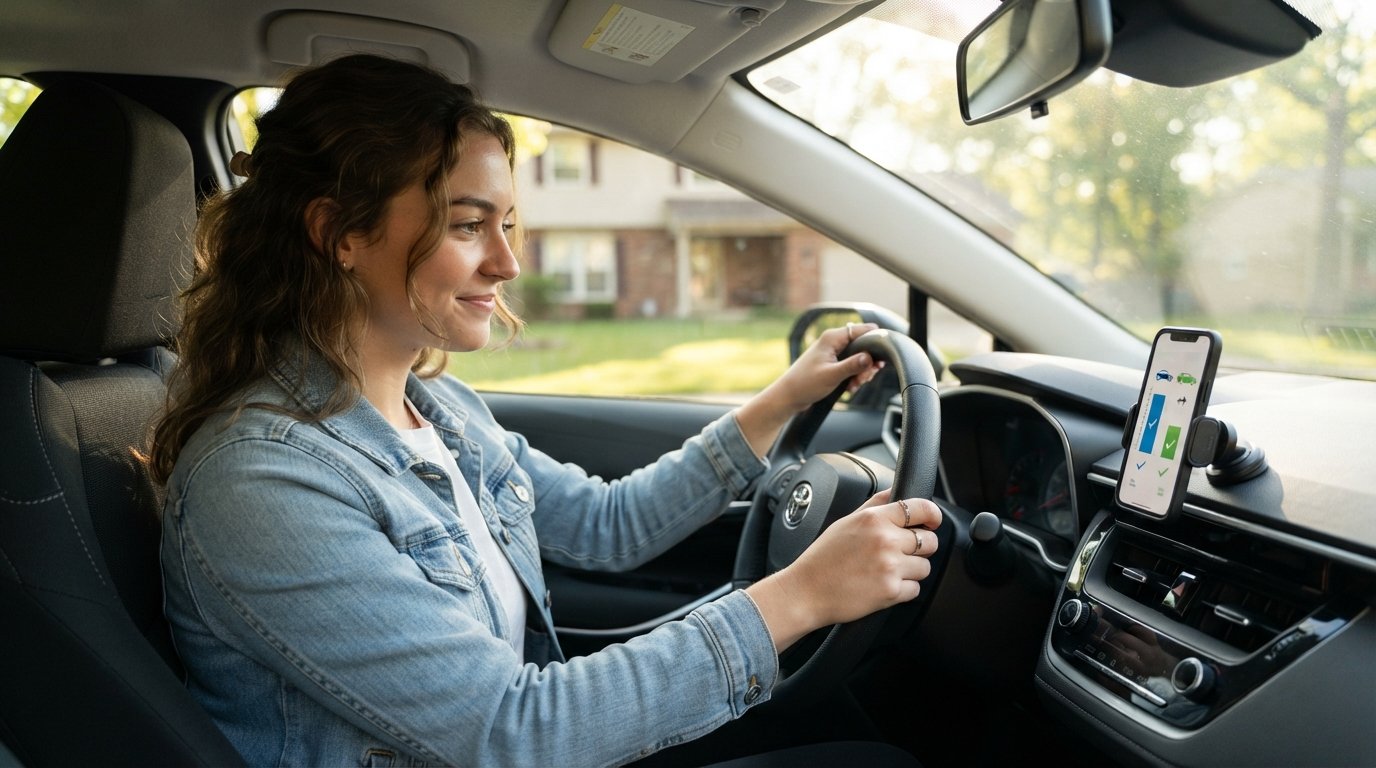
Affordable Auto Insurance for Young Drivers Under 25
Affordable auto insurance for young drivers under 25 is possible with the right discounts, coverage choices, and comparison strategy. Start saving today.

By Holden Pierce
Turning 16 or 21 does not have to mean turning over your entire paycheck to an insurance company. If you are a young driver under 25, you have probably already discovered that your auto insurance quote looks nothing like your parents' bill. The good news is that affordable auto insurance for young drivers under 25 is absolutely within reach, provided you know which levers to pull and which traps to avoid. Insurers view youth as a risk factor, but they also reward responsibility, smart coverage choices, and comparison shopping. This guide walks you through exactly how to lower your premiums without sacrificing the protection you need.
Why Young Drivers Pay More for Auto Insurance
Insurance is a math game built on statistics, and the statistics for drivers under 25 are not flattering. According to national crash data, drivers between 16 and 24 are involved in fatal crashes at a higher rate than any other age group except the very oldest drivers. They also tend to have less driving experience, which means slower reaction times in emergencies and a higher likelihood of filing a claim. Insurers respond to that data by assigning young drivers to a higher risk tier, which translates directly into higher premiums.
The pricing gap is significant. A 19-year-old driver with a clean record can easily pay two to three times what a 45-year-old with the same record pays for identical coverage. That gap widens further if the young driver owns a sports car, has a lapse in coverage, or lives in a state with high minimum liability requirements. The good news is that this gap is not permanent, and it is not fixed. Every year you drive without an accident, every discount you qualify for, and every smart coverage decision you make chips away at that premium.
It also helps to understand that insurers are not just looking at age. They are looking at a combination of factors: your driving record, your credit-based insurance score (in most states), the type of vehicle you drive, your annual mileage, and whether you have prior insurance. A young driver with a clean record, a safe used sedan, and a continuous coverage history can often beat the average rate for their age group by a wide margin.
Coverage Options That Keep Costs Down
One of the biggest mistakes young drivers make is buying the cheapest possible policy with state-minimum liability only. That approach can backfire badly. If you cause an accident that exceeds your liability limits, you are personally responsible for the difference, and a single judgment can follow you for years. The smarter strategy is to buy adequate liability coverage and then use higher deductibles and targeted add-ons to control the total cost.
Here is a framework for thinking about coverage as a young driver:
- Liability coverage: Required in nearly every state. Buy more than the minimum if you can afford it, because medical costs and vehicle repair bills add up fast.
- Collision coverage: Pays to repair or replace your own vehicle after an accident. If your car is worth less than a few thousand dollars, you may be able to drop this and save significantly.
- Comprehensive coverage: Covers theft, weather, vandalism, and animal strikes. Often required by lenders or lessors, but optional if you own your car outright.
- Uninsured/underinsured motorist coverage: Protects you when the at-fault driver has little or no insurance. This is one of the most valuable add-ons for young drivers and is often surprisingly affordable.
- Medical payments or personal injury protection: Helps cover your own medical bills regardless of fault. Worth considering if you have a high health insurance deductible.
Once you have a coverage framework in mind, the next step is to set your deductibles. Raising your collision deductible from $500 to $1,000 can cut your premium by 10 to 30 percent, depending on the insurer. Just make sure you have that amount available in savings before you make the switch, because you will need to pay it out of pocket if you file a claim.
If you are unsure which coverage combination makes sense for your situation, a comparison platform can help you see real quotes side by side. For example, when you compare Texas auto insurance quotes, you can quickly see how different deductible and coverage combinations affect your monthly payment. The same principle applies in every state: the only way to know if you are overpaying is to compare.
Discounts That Actually Move the Needle
Insurers offer dozens of discounts, but not all of them are created equal. Some save you $5 a year, while others can cut your premium by 25 percent or more. As a young driver, your goal is to stack as many meaningful discounts as possible on a single policy. Here are the ones that tend to deliver the biggest savings for drivers under 25.
Good student discount. If you are a full-time student with a B average or better, most major insurers will reduce your premium by 10 to 25 percent. You will typically need to provide a transcript or report card at each renewal. This discount is one of the easiest wins available to high school and college drivers.
Defensive driving course discount. Completing an approved defensive driving or driver safety course can earn you a 5 to 15 percent discount in many states. Some insurers also offer a discount for completing a telematics-based safe driving program, which monitors your actual driving habits and rewards you for smooth braking, low mileage, and safe speeds.
Multi-policy and multi-car discounts. If your parents already have auto insurance, adding you to their policy is often far cheaper than buying a standalone policy. You may also qualify for a multi-policy discount if the household bundles auto and home or renters insurance. These discounts can save 10 to 25 percent across the board.
Safety feature and anti-theft discounts. Vehicles equipped with airbags, electronic stability control, anti-lock brakes, and anti-theft devices often qualify for additional discounts. If you are shopping for a car, check which safety features earn discounts with your target insurers before you buy.
Loyalty and early signing discounts. Some insurers offer a discount if you get a quote before your current policy expires or if you stay with the same carrier for multiple years. These are smaller, but they add up over time.
Stacking discounts is not automatic. You usually have to ask for each one, and you may need to provide documentation. When you request quotes, tell the agent or comparison tool about every discount you might qualify for, including your GPA, any safety courses you have taken, and whether you are a student living away from home without a car.
How to Compare Quotes Without Wasting Time
Comparison shopping is the single most effective way to find affordable auto insurance for young drivers under 25. Rates for identical coverage can vary by hundreds of dollars per year between insurers, and the company that offers the best rate for a 45-year-old is not always the one that offers the best rate for a 19-year-old. The only way to find out is to get multiple quotes.
Here is a simple process you can follow:
- Gather your information: driver's license number, vehicle identification number, current coverage details, and a rough estimate of your annual mileage.
- Decide on your coverage levels and deductibles before you start shopping, so you are comparing apples to apples.
- Get quotes from at least three to five different insurers, either directly or through a comparison platform.
- Ask each insurer which discounts you qualify for and how much each one saves.
- Review the quotes side by side, paying attention to the total annual premium, the deductible, and the coverage limits.
If you want a neutral starting point, NewAutoInsurance provides consumer guidance and educational content that can help you understand your options before you commit. Once you have a shortlist, call each insurer and ask whether they can beat the best quote you have received. Many will match or come close, and some will offer additional discounts to win your business.
Do not overlook the value of working with an independent agent or a quote comparison service. These professionals can pull rates from multiple carriers in one sitting and often have access to regional insurers that do not advertise heavily. They can also flag coverage gaps you might not have considered, such as whether your policy includes rental reimbursement or roadside assistance.
Smart Vehicle Choices for Lower Premiums
The car you drive has a direct impact on what you pay for insurance. Sports cars, large SUVs, and vehicles with high theft rates cost more to insure, while safe, modest sedans and hatchbacks cost less. If you are in the market for a car and want to keep your insurance affordable, look for models with strong safety ratings, inexpensive replacement parts, and low theft rates.
You can also save by choosing a vehicle with a smaller engine and fewer luxury features. A base-model compact car will almost always cost less to insure than a fully loaded version of the same model, because repairs are cheaper and the vehicle is less attractive to thieves. Before you buy, ask your insurer for a quote on the specific make, model, and trim level you are considering. That five-minute call can save you hundreds of dollars over the life of the policy.
If you already own a car that is expensive to insure, you have a few options. You can raise your deductible, drop collision and comprehensive coverage if the car is paid off and not worth much, or shop for a new policy with an insurer that specializes in your vehicle type. You can also consider adding a telematics device or app that rewards safe driving, which can offset some of the cost.
Building a Clean Driving Record
Your driving record is the most powerful tool you have for lowering your insurance costs over time. Every year you go without an accident or moving violation, your premium should decrease, assuming all other factors stay the same. Insurers typically surcharge for at-fault accidents and major violations for three to five years, so avoiding them is worth real money.
Here are a few habits that pay off in lower premiums:
- Obey speed limits and traffic signals. Speeding tickets and red-light violations are among the most common reasons young drivers see rate increases.
- Avoid distracted driving. Phone use behind the wheel is a major risk factor and can lead to surcharges or even policy cancellation.
- Maintain continuous coverage. Even a short lapse can raise your rates when you restart your policy.
- Drive fewer miles if possible. Low-mileage discounts are available from many insurers, and they can be substantial for students who live on campus.
- Consider a telematics program. These programs reward safe driving with discounts of 10 to 30 percent at renewal.
If you do have an accident or ticket, do not panic. Your rates will go up, but you can often reduce the impact by taking a defensive driving course, shopping for a new insurer, or asking about accident forgiveness programs. Some insurers will waive the surcharge for a first minor violation if you have been a customer for a certain number of years.
When to Stay on a Parent's Policy
For many young drivers, the cheapest option is to stay on a parent's policy as a listed driver. This is especially true if you live at home, drive a car owned by your parents, or are a full-time student. Adding a young driver to an existing policy usually costs less than buying a standalone policy, because the household already has a multi-car or multi-policy discount and a longer claims history.
There are some trade-offs to consider. If you have an accident, it can affect your parents' premium as well as your own. You also may not build your own claims history or continuous coverage record, which can matter when you eventually buy your own policy. And if you live in a different state from your parents, you may need your own policy to comply with local requirements.
If you are ready to move to your own policy, do it before you have a lapse in coverage. A gap of even a few days can raise your rates significantly. Coordinate the start date of your new policy with the cancellation of your old one, and ask your new insurer whether they offer a discount for prior continuous coverage.
State Rules and Minimum Requirements
Every state sets its own minimum auto insurance requirements, and those minimums affect what you pay. States with higher minimum liability limits tend to have higher premiums, while states with no-fault systems may require additional personal injury protection coverage. As a young driver, you need to know what your state requires before you shop, so you can compare quotes on equal footing.
For example, Texas requires drivers to carry liability coverage with minimum limits of 30/60/25, meaning $30,000 per person for bodily injury, $60,000 per accident for bodily injury, and $25,000 for property damage. Many young drivers in Texas choose to buy higher limits because the minimums can be exhausted quickly in a serious accident. If you live in a state with lower minimums, such as California or Florida, your required coverage may look different, but the principle is the same: buy enough coverage to protect your assets without overpaying for extras you do not need.
You should also check whether your state offers a low-cost or assigned-risk program for high-risk drivers. These programs can be a lifeline if you have a poor driving record or have been turned down by standard insurers. They are not always cheap, but they can help you get back on the road legally while you work on improving your record.
Putting It All Together
Finding affordable auto insurance for young drivers under 25 is not about finding a magic policy. It is about understanding how insurers price risk, choosing coverage that matches your actual needs, stacking every discount you qualify for, and comparing quotes from multiple carriers before you buy. The drivers who pay the least are usually the ones who shop annually, keep their records clean, and ask questions instead of accepting the first quote they receive.
Start by getting quotes from at least three insurers, including one that specializes in young drivers. Ask about good student, defensive driving, and telematics discounts. Choose a safe, modest vehicle if you are in the market for a car. And keep your coverage continuous, because a lapse today can cost you hundreds of dollars tomorrow. With a little patience and a willingness to compare, you can keep your insurance bill manageable while you build the driving history that will lower your rates for years to come.