
ATV and Off Road Vehicle Insurance Coverage Guide
This ATV and off road vehicle insurance coverage guide explains liability, collision, exclusions, and how to compare quotes to avoid costly gaps.

By Isaac Bellamy
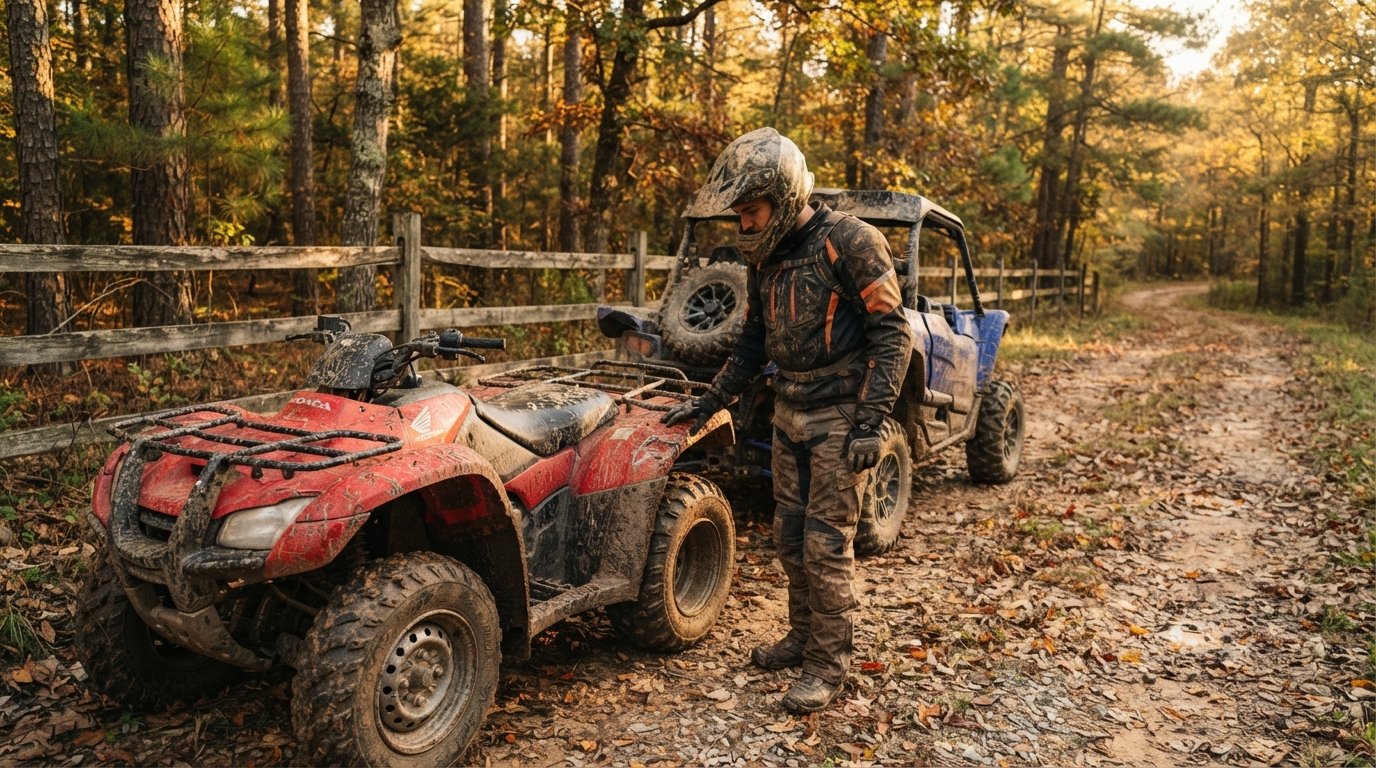
That mud-splattered trail you have been eyeing all spring comes with hidden financial risk. An ATV, side-by-side, or dirt bike can cost thousands to replace and even more to repair after a rollover. Yet many owners assume their homeowners policy or auto policy will step in when things go wrong. In most cases, it will not. This ATV and off road vehicle insurance coverage guide walks through what these policies actually cover, what they exclude, how much they cost, and how to compare quotes without overpaying.
Why Off Road Vehicles Need Their Own Coverage
Homeowners insurance typically treats ATVs as off-premises personal property, which means a theft claim might pay a small fraction of the machine's value and liability claims on trails are almost always excluded. Standard auto policies also exclude vehicles not designed for public roads. That leaves a gap that only a dedicated off road vehicle policy can fill. Without it, a single accident involving an injured rider or damaged fence can put your savings and even your home at risk.
The gap matters most in three scenarios: collisions with other riders, injuries to passengers, and theft from a trailer or storage yard. Each of these can generate costs that reach five figures quickly. A dedicated policy handles them the same way a car policy handles a fender bender, with defined limits, deductibles, and claims support. If you want to understand how insurers think about risk on any vehicle, from an ATV to a sedan, our MetLife auto insurance coverage options review shows how major carriers structure similar protections.
State law adds another layer. Roughly half of U.S. states require liability coverage for ATVs used on public land, and some require it any time the vehicle leaves private property. Even where coverage is optional, lenders frequently demand it when the vehicle is financed, just as they do with cars.
Types of Coverage Available for ATVs and Off Road Vehicles
Off road vehicle insurance is modular. You buy the pieces you need, and each piece responds to a different kind of loss. Understanding the building blocks makes it easier to compare quotes from multiple carriers and spot weak policies that look cheap but leave obvious holes.
Most policies start with liability, which pays for injuries or property damage you cause to others. From there, you can add physical damage coverage for your own machine, medical payments for you and your passengers, and specialized add-ons that address the realities of trail riding.
- Bodily injury liability: Pays medical bills and legal costs when you injure another person.
- Property damage liability: Covers damage you cause to fences, gates, other vehicles, or structures.
- Collision: Repairs or replaces your ATV after a crash, rollover, or impact with an object.
- Comprehensive: Handles theft, fire, vandalism, hail, and storm damage.
- Medical payments: Covers treatment for you and your passenger regardless of fault.
- Uninsured/underinsured motorist: Protects you when a hit-and-run or uninsured rider causes your injuries.
- Optional add-ons: Trailers, custom parts, safety apparel, and roadside assistance for remote breakdowns.
Liability alone is rarely enough. If you financed the machine, the lender will require collision and comprehensive until the loan is paid off. If you ride with passengers, medical payments coverage prevents their health insurer from coming after you later. Riders who use their ATV for farm work, hunting leases, or guided tours should also ask about commercial or business-use endorsements, because personal policies exclude business activity.
One more distinction matters: actual cash value versus agreed value. Actual cash value pays what your machine is worth today, after depreciation. Agreed value pays a figure you and the insurer set at purchase, which is often better for restored or heavily modified vehicles. Ask which method a policy uses before you sign.
What Off Road Policies Usually Exclude
Every policy has exclusions, and off road vehicle insurance has more than most. Racing, timed competitions, and organized events are almost universally excluded unless you buy a separate racing endorsement. Riding on public roads is another common exclusion, even in states where limited road use is legal. Damage from improper maintenance, wear and tear, and mechanical breakdown is never covered, because those are considered owner responsibilities rather than sudden accidents.
Intentional acts, riding while intoxicated, and using the vehicle to commit a crime will void a claim and may void the entire policy. Some carriers also exclude damage that occurs while the ATV is being towed by a vehicle that lacks proper towing insurance. Read the exclusions page before you buy, not after a claim is denied. If a quote seems unusually cheap, exclusions are often the reason.
Geography can trigger exclusions too. Policies written for private land may not respond on federal trails, and some carriers restrict coverage to specific states. If you trailer your side-by-side across state lines, confirm that your policy follows you. A quick call to the carrier before a trip is far cheaper than discovering the gap after an accident 500 miles from home.
How Much Does ATV and Off Road Insurance Cost
Premiums vary widely because the vehicles themselves vary widely. A basic liability-only policy for a youth ATV might cost $100 to $150 per year. Full coverage on a new side-by-side can run $400 to $900 annually, and high-performance dirt bikes or customized machines can exceed $1,000. The national average for a standard ATV policy with liability and physical damage sits somewhere near $300 per year, but your number depends on several factors.
Insurers weigh engine size, vehicle value, rider age and experience, riding location, annual mileage or engine hours, and your claims history. A 16-year-old on a 700cc machine will pay far more than a 45-year-old on a 250cc trail quad. Where you store the vehicle matters as well: a locked garage earns a discount that an open carport does not.
Discounts can cut premiums meaningfully. Common ones include multi-vehicle policies that bundle an ATV with your auto coverage, safety course completion, membership in a rider association, and loyalty discounts for staying with the same carrier. Bundling is usually the single largest savings lever, often 10 to 25 percent. If you already comparison shop for car coverage, apply the same habit here. Educational resources such as NewAutoInsurance explain how bundling and coverage tiers work across vehicle types, which helps you ask better questions when you request off road quotes.
Deductibles also shape your premium. Raising a collision deductible from $250 to $500 can lower your annual cost by 10 to 15 percent, but only if you could comfortably absorb the larger out-of-pocket amount after an accident. Choose a deductible based on your emergency fund, not just the monthly savings.
How to Compare ATV and Off Road Vehicle Insurance Quotes
Comparing quotes properly takes about 30 minutes and can save hundreds of dollars. The key is to request identical coverage limits from every carrier so the prices are actually comparable. Follow these steps each time you shop, whether for a new machine or a renewal.
- Gather your vehicle details: make, model, year, engine size, and any modifications.
- Decide your limits: at minimum, match your state's requirements, then consider higher liability limits for trail riding.
- Choose a deductible you can afford to pay after a claim.
- Request quotes from at least three carriers or through a comparison platform that gathers multiple offers at once.
- Compare the exclusions and add-ons, not just the monthly price.
- Ask about discounts for bundling, safety courses, and paid-in-full policies.
After the quotes arrive, read each one line by line. A policy that costs $50 more per year but includes medical payments and uninsured motorist coverage is usually the better deal. Also check the claims process: some carriers handle off road claims through specialty teams, while others route them through standard auto adjusters who may not understand trail damage.
Timing matters too. Shopping before your renewal gives you leverage, and shopping before you buy a machine lets you factor insurance into the total cost of ownership. If you are financing, get the insurance quote before you sign the loan so there are no surprises at the dealership.
Special Situations: Youth Riders, Farm Use, and Trailering
Youth riders deserve special attention. Many carriers will not write a policy for a rider under 16, and those that do charge significantly more. Some states require adult supervision or restrict engine size for young riders, and insurers mirror those rules. A safety course certificate often unlocks both a discount and access to carriers that would otherwise decline the risk.
Farm and ranch use blurs the line between personal and commercial. If your ATV hauls feed, checks fences, or supports any income-producing activity, tell your agent. A personal policy may deny a claim that occurs during farm work, while a commercial endorsement or a separate farm policy closes the gap. The same logic applies to hunting leases, guided tours, and rental use.
Trailering brings its own questions. Damage to the ATV while it sits on a trailer is usually covered by comprehensive, but the trailer itself may need its own policy or an endorsement. If the trailer detaches and causes an accident, your auto liability may respond, but only if the towing vehicle's policy includes it. Confirm both before your next road trip.
Finally, consider storage. Theft claims spike in winter when machines sit unattended. Locked storage, GPS trackers, and photographic documentation of your vehicle and its serial number can speed up a claim and sometimes lower your premium. Insurers reward owners who make theft difficult.
Off road riding is supposed to be fun, and the right policy keeps it that way. Spend an afternoon comparing quotes, match your coverage to how you actually ride, and revisit the policy each year as your machine and your trails change. That small habit protects your wallet, your passengers, and your peace of mind every time you hit the throttle.