
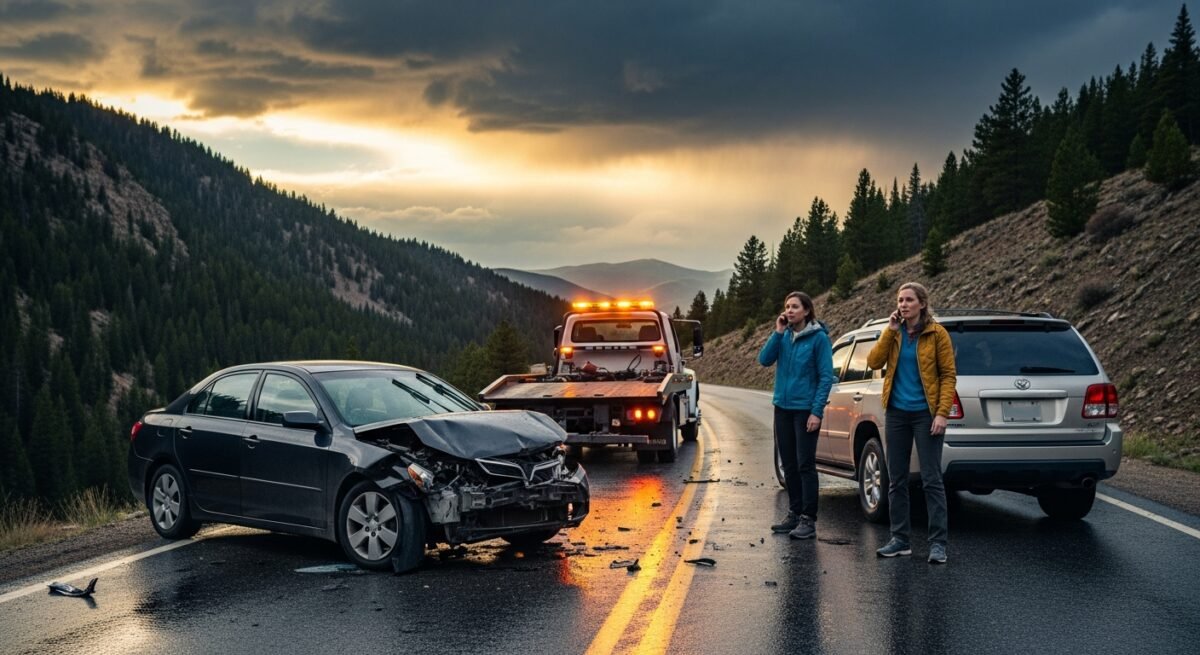
Auto Insurance Colorado: Reliable Protection for Every Driver
Navigate Colorado’s unique driving risks with the right auto insurance. Learn essential coverages for hail, wildlife, and mountain roads, plus strategies to find the best rates and comply with state laws.

By Nathaniel Carter
Driving in Colorado is an experience of breathtaking mountain passes, sprawling high plains, and vibrant city streets. Yet, navigating the state’s unique roads and regulations requires more than just a good sense of direction; it requires the right auto insurance. Colorado’s specific laws, combined with its diverse climate and challenging terrain, create a distinct insurance landscape. Whether you’re commuting in Denver, exploring the I-70 corridor, or navigating rural roads, understanding your auto insurance Colorado policy is not just a legal requirement—it’s a critical component of financial protection and peace of mind on every journey.
Understanding Colorado’s Auto Insurance Laws
Colorado operates under a tort system, meaning the driver found at fault for an accident is financially responsible for the resulting damages. This system underscores the importance of carrying adequate liability coverage to protect your assets. The state mandates minimum liability insurance requirements for all registered vehicles. These minimums are often referred to as 25/50/15 coverage. This translates to $25,000 for bodily injury per person, $50,000 for bodily injury per accident, and $15,000 for property damage. While these amounts satisfy the legal requirement, they are frequently insufficient to cover the full costs of a serious accident, especially given today’s high medical expenses and vehicle repair costs. Drivers are strongly encouraged to consider purchasing coverage well above these minimums.
Beyond the minimums, Colorado law also requires insurance companies to offer—and for you to actively reject in writing—Medical Payments (MedPay) coverage. MedPay, typically offering $5,000 in coverage, pays for medical expenses for you and your passengers regardless of who is at fault. This can be particularly valuable for covering immediate deductibles or co-pays before other insurance takes effect. Furthermore, uninsured/underinsured motorist (UM/UIM) coverage is also required to be offered. Given that not all drivers comply with the law, UM/UIM protection is crucial; it covers your injuries and damages if you’re hit by a driver with no insurance or insufficient coverage. Understanding these legal offerings is the first step in building a robust auto insurance policy for Colorado roads.
Key Coverages for Colorado Drivers
Building on the state’s required offerings, a comprehensive auto insurance Colorado policy should be tailored to the local environment. Colorado’s weather is notoriously variable, with potential for severe hailstorms, heavy snowfall, and sudden temperature shifts. These conditions make certain optional coverages far more than just optional—they become essential.
Collision and comprehensive coverage are the cornerstones of protecting your own vehicle. Collision covers damage from impacts with another vehicle or object. Comprehensive, often called “other than collision,” covers a wide array of non-crash incidents. For Colorado residents, this is vital for protection against:
- Hail Damage: Colorado is part of “Hail Alley,” experiencing some of the most frequent and costly hailstorms in the nation. Comprehensive coverage is what handles repairs for dents and shattered glass from hail. For a deeper look at this specific peril, our resource on whether auto insurance covers hail damage provides detailed insights.
- Animal Collisions: Encounters with deer, elk, and other wildlife are common, especially in mountainous and rural areas.
- Falling Objects & Weather Events: This includes damage from rockslides, falling tree limbs, windstorms, and flooding.
- Theft and Vandalism: Unfortunately, these risks exist in urban and remote areas alike.
Another critical consideration is rental car reimbursement and towing coverage. If your vehicle is in the shop for extensive hail repairs or after a collision on a remote pass, having a rental car covered can be a financial lifesaver. Similarly, emergency roadside service for towing, lockouts, or jump-starts in cold weather provides practical security. Evaluating your personal risk tolerance, vehicle value, and typical driving routes will guide you in selecting the right mix of these key coverages.
Factors That Influence Your Colorado Premium
Insurance companies use a complex algorithm to determine your premium, assessing risk based on a multitude of personal and environmental factors. Your driving record is paramount—a history of accidents, speeding tickets, or DUIs will significantly increase your costs. Your age, gender, and years of driving experience are also statistically correlated with risk and are factored into the price. The vehicle you drive matters greatly; insurers consider its safety ratings, repair costs, likelihood of theft, and overall value. A brand-new SUV will cost more to insure than a decade-old sedan with strong safety scores.
Your location within Colorado is a major determinant. Urban areas like Denver, Colorado Springs, and Aurora typically have higher rates due to increased traffic density, higher accident rates, and greater incidence of theft and vandalism. For example, drivers seeking cheap car insurance in Colorado Springs should know that local claim data directly impacts their quotes. Conversely, rural areas may see lower premiums but could have higher rates for animal collision claims. Your credit-based insurance score is another legally permitted factor in Colorado; insurers have found a correlation between credit history and the likelihood of filing a claim. Finally, your annual mileage and primary use of the vehicle (commuting vs. pleasure) round out the primary factors. Understanding what insurers are evaluating empowers you to take control, such as improving your credit score or opting for a safer vehicle, to potentially lower your costs.
How to Find the Best Rates and Save Money
Securing affordable and effective auto insurance in Colorado requires a proactive strategy. The single most powerful action is to comparison shop. Premiums can vary dramatically between companies for the exact same driver and coverage. Obtain at least three to five quotes from a mix of national insurers, regional providers, and direct-to-consumer companies. When shopping, ensure you are comparing identical coverage limits and deductibles for an accurate assessment. It’s also wise to re-shop your insurance every two to three years, as your loyalty discount may be outweighed by a competitor’s introductory rate.
Beyond shopping, numerous discounts can substantially reduce your premium. Bundling your auto policy with homeowners or renters insurance is one of the most common and effective savings methods. Other widely available discounts include those for:
- Safe driving history (accident-free for a set period)
- Completing a defensive driving course
- Having safety features like anti-lock brakes, anti-theft devices, and telematics (usage-based insurance)
- Being a good student (for young drivers)
- Paying your premium in full annually
- Going paperless and enrolling in automatic payments
For specific groups, like military members, specialized discounts and programs can offer significant savings. Exploring options for cheap auto insurance for military members is a worthwhile step for those who serve. Finally, consider adjusting your deductible—the amount you pay out-of-pocket before insurance kicks in. Raising your comprehensive and collision deductible from $500 to $1,000 can lower your premium, but ensure you have that higher amount saved for an emergency.
Frequently Asked Questions About Auto Insurance in Colorado
Is Colorado a “no-fault” auto insurance state?
No, Colorado is a tort, or “at-fault,” state. The driver who causes an accident is responsible for the resulting damages. This is why carrying robust liability coverage is so important.
What happens if I’m caught driving without insurance in Colorado?
Penalties are severe. For a first offense, you face a minimum $500 fine, a license suspension, and 4 DMV points. You will also be required to file an SR-22 proof of financial responsibility for three years, which leads to dramatically higher insurance premiums.
Does my auto insurance cover me when I drive on mountain passes in winter?
Your standard collision coverage applies if you lose control and hit a guardrail, regardless of road conditions. However, if you simply get stuck in snow and need a tow, that would only be covered if you have purchased emergency roadside assistance as part of your policy.
How does a hail damage claim affect my premium?
In Colorado, where hail is a frequent and widespread event, a single comprehensive claim for hail damage is less likely to trigger a surcharge than an at-fault collision claim. However, multiple claims of any type can impact your rates.
Can I get auto insurance in Colorado without a driver’s license?
While it is challenging, it is sometimes possible, such as if you own a car that someone else primarily drives. The process involves specific requirements and is more complex. For a detailed exploration of this scenario, you can review our guide on how to get auto insurance with no license.
Navigating the roads of Colorado demands respect for the landscape and a solid understanding of the rules that govern them. Your auto insurance policy is more than a card in your glovebox; it’s a dynamic financial safety net designed for the state’s unique challenges. By moving beyond minimum coverage, tailoring your policy to address specific Colorado risks like hail and wildlife, and actively seeking out competitive rates and discounts, you can drive with confidence. The right coverage ensures that your focus remains on the majestic views and open roads, secure in the knowledge that you are well-protected for whatever journey lies ahead.