
Auto Insurance for Delivery Gig Workers Beyond Rideshare
Compare auto insurance for delivery gig workers beyond rideshare and close coverage gaps. Call (833)-275-7533 for a personalized quote today.

By Oliver Turner
You finish a DoorDash run, pull into your driveway, and breathe a sigh of relief. The app is off, the food is delivered, and your car is safe. But if another driver clips your bumper during that last delivery, will your personal auto policy actually cover the damage? For thousands of delivery gig workers, the answer is a rude awakening: probably not. That is because most personal auto policies contain a commercial-use exclusion that kicks in the moment you accept payment for transporting goods. Rideshare endorsements, which many drivers add for Uber or Lyft, often do not extend to food and package delivery. This leaves a coverage gap that can cost you thousands in repairs, medical bills, or liability claims.
Understanding auto insurance for delivery gig workers beyond rideshare is essential if you earn money with DoorDash, Instacart, Amazon Flex, Grubhub, or similar platforms. The rules are different from rideshare, and the stakes are higher than most drivers realize. This guide breaks down why personal policies exclude delivery use, what the platforms actually cover, where the gap lies, and how to shop for quotes that protect you without overpaying.
Why Personal Auto Policies Exclude Commercial Delivery Use
Standard personal auto policies are priced for commuting, errands, and occasional road trips. Insurers calculate risk based on how often you drive, how far, and for what purpose. When you start delivering food or packages, your exposure changes: you spend more time on the road, you drive in unfamiliar neighborhoods, and you face tight deadlines that can encourage risky behavior. Insurers view this as a commercial activity, and most personal policies explicitly exclude it.
The exclusion language is usually buried in the fine print. It might say something like "vehicles used for livery, delivery, or any other commercial purpose are not covered." Some policies are more specific, naming food delivery or courier services directly. The key takeaway: if you are accepting payment to transport goods, your personal policy likely will not respond to a claim, even if you were not actively on a delivery at the exact moment of the incident. Insurers can deny coverage based on the vehicle's overall use, not just the instant of the crash.
This is the first major difference between rideshare and delivery. Rideshare companies like Uber and Lyft lobbied hard for specific insurance products, and many insurers now offer a rideshare endorsement that extends personal coverage during the app-on period. Delivery platforms have not achieved the same level of integration with personal lines. As a result, a rideshare endorsement on your policy typically does not cover DoorDash or Instacart deliveries. You need a separate solution.
What Delivery Platforms Provide While an Order Is Active
Delivery platforms do carry commercial auto insurance, but the coverage is limited and conditional. While you are actively logged into the app and waiting for or completing an order, the platform's policy may provide liability coverage. However, this coverage is usually secondary to your personal policy, and it often comes with high deductibles and exclusions. More importantly, it typically does not cover damage to your own vehicle.
Here is a general breakdown of what platforms may offer during an active delivery:
- Liability coverage: May pay for injuries or property damage you cause to others, but limits are often modest and may be secondary to your personal policy.
- Uninsured/underinsured motorist coverage: Sometimes included, but not guaranteed across all platforms or states.
- Comprehensive and collision: Rarely provided. If you hit a pothole or get into a fender bender, you are likely on your own for your own vehicle repairs.
- Gap periods: Coverage usually applies only from the moment you accept an order until you complete it. Driving to the restaurant before accepting an order, or driving home after your last delivery, may not be covered.
This means that even if you are logged into the app, you may not be covered if you are not actively on an order. The gap between platform coverage and personal policy is where most delivery drivers get into trouble.
The Gap Between Platform Coverage and Personal Policy
The most dangerous misconception among delivery gig workers is that the platform's insurance will handle everything. In reality, platform coverage is designed to protect the platform and the customer, not necessarily you or your car. If you are at fault in an accident during a delivery, the platform's liability coverage may pay the other driver, but your own vehicle damage could be your responsibility. If you are not at fault, the other driver's insurance may pay, but if they are uninsured, you could be stuck.
Worse, if your personal insurer discovers you were delivering at the time of a claim, they may deny your claim entirely and potentially cancel your policy for misrepresentation. This leaves you with no coverage for your car, no liability protection, and a damaged driving record. The financial fallout can be devastating: thousands in repairs, medical bills, and legal fees, all because of a coverage gap that could have been closed with the right endorsement or policy.
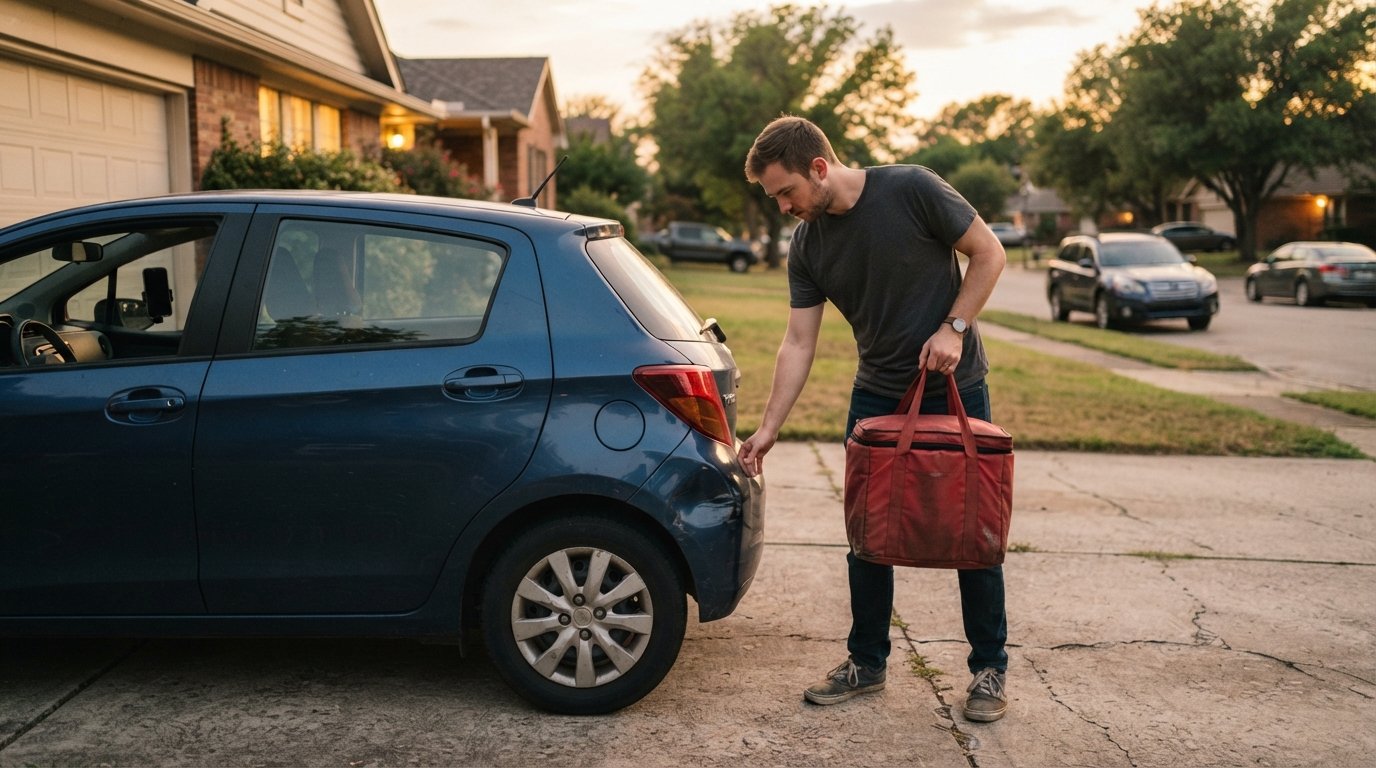
Consider a typical scenario: You are delivering a pizza and rear-end another car at a stoplight. The other driver files a claim. Your personal insurer sees the delivery bag in your car and denies coverage. The platform's liability coverage may pay the other driver, but your own bumper and radiator are not covered. You are out $3,000 for repairs, and your personal policy is now at risk. This is the gap that auto insurance for delivery gig workers beyond rideshare must address.
Commercial or Business-Use Endorsements for Couriers
The good news is that you do not need a full commercial auto policy to close the gap. Many insurers offer a business-use endorsement or a delivery endorsement that adds coverage for commercial delivery use to your personal policy. These endorsements are designed for gig workers and are often more affordable than a standalone commercial policy. The exact name and availability vary by insurer and state, but common options include:
- Business-use endorsement: Extends personal policy coverage to include business use, often including delivery. May have restrictions on the types of goods delivered or the percentage of mileage used for business.
- Delivery endorsement: Specifically tailored for food and package delivery. Some insurers offer this as a rider on personal policies.
- Commercial auto policy: A separate policy for vehicles used primarily for business. More expensive but provides broader coverage and higher limits.
When shopping for an endorsement, be clear about your delivery activities. Tell the agent you deliver for DoorDash, Instacart, or similar platforms, and ask specifically whether the endorsement covers food and package delivery. Some endorsements exclude certain types of delivery (e.g., alcohol or pharmaceuticals) or require a minimum mileage threshold. Get the details in writing and confirm that the endorsement covers both liability and physical damage to your vehicle.
Cost is a major consideration. A business-use endorsement may add 10 to 30 percent to your premium, depending on your insurer, location, and driving history. That is often far less than the cost of a standalone commercial policy. For many gig workers, the endorsement is the sweet spot: affordable, simple, and effective. To get a sense of baseline rates in your state, you can compare auto insurance quotes online before adding the endorsement, so you know what the starting point looks like.
How to Shop Quotes That Include Delivery Use
Shopping for auto insurance as a delivery gig worker requires a different approach than a standard quote. Most online quote forms do not have a checkbox for "food delivery," so you need to be proactive. Start by gathering the basics: your vehicle information, driving record, annual mileage, and the platforms you deliver for. Then follow these steps to ensure you get accurate quotes that include delivery use.
- Disclose your delivery work upfront. When you request a quote, tell the agent or use the comments field to state that you use your vehicle for food and package delivery. Do not hide it; otherwise, the quote will be inaccurate and the policy may not cover you.
- Ask about specific endorsements. Inquire whether the insurer offers a business-use or delivery endorsement. Ask for the exact name of the endorsement and what it covers.
- Confirm the coverage details. Ask whether the endorsement covers both liability and physical damage (comprehensive and collision). Also ask about the gap periods: does coverage apply while you are logged into the app but not on an order?
- Compare multiple quotes. Rates for delivery endorsements vary widely. Get quotes from at least three insurers and compare the total premium with the endorsement included.
- Review the policy language. Before you buy, read the endorsement and the exclusions. Make sure there are no surprises about the types of delivery covered or the mileage limits.
Remember that your personal auto policy is the foundation. If you have a loan or lease on your vehicle, you may be required to carry comprehensive and collision coverage. If you are financing your car, you might also be interested in exploring options to lower your monthly payment through car loan refinancing, which can free up cash for the right insurance coverage. The key is to balance your overall vehicle costs with adequate protection.
For a streamlined way to compare quotes, consider using a platform that connects you with multiple licensed agents. Free Auto Insurance Quotes Online offers a free, no-obligation quote service that can help you find insurers who understand delivery gig work. You can also ask agents specifically about endorsements for delivery drivers and get personalized quotes that include the right coverage.
State Variations and Special Considerations
Insurance regulations vary by state, and some states have specific rules for delivery gig workers. For example, California and New York have unique rideshare and delivery insurance requirements. In Texas, the market is large and competitive, and you can compare Texas auto insurance quotes to see how delivery endorsements affect rates. Always check your state's minimum coverage requirements and confirm that your policy meets them with the endorsement included.Another consideration is the type of vehicle you use. If you drive a newer car or a leased vehicle, you may need comprehensive and collision coverage to protect your investment. If you drive an older car, you might choose liability-only coverage, but be aware that the delivery endorsement may still be required. Some insurers offer discounts for safe driving, low mileage, or bundling home and auto, which can offset the cost of the endorsement.
Practical Tips to Protect Yourself as a Delivery Gig Worker
Beyond buying the right insurance, there are practical steps you can take to minimize risk and avoid coverage nightmares. First, keep your vehicle well-maintained and document your mileage. If you are ever in an accident, having records of your delivery activity can help clarify coverage. Second, never assume the platform's insurance will cover you. Always report accidents to both the platform and your personal insurer, and be honest about what you were doing at the time.
Third, review your policy annually. As your delivery volume changes, your insurance needs may change too. If you start delivering more hours, you may need higher limits or a broader endorsement. Finally, consider setting aside a small emergency fund for deductibles and repairs. Even with the best coverage, you will likely have some out-of-pocket costs.
Auto insurance for delivery gig workers beyond rideshare is not just a technicality; it is a financial safety net. By understanding the exclusions, the platform coverage, and the endorsement options, you can shop smarter and drive with confidence. Take the time to get quotes that reflect your actual use, and do not settle for a policy that leaves you exposed.
For a personalized quote that includes delivery use, call (833)-275-7533 or visit Free Auto Insurance Quotes Online to compare options from multiple carriers. Your car, your livelihood, and your peace of mind are worth the effort. CarLoanRefinancing