
Auto Insurance for Drivers Who Work From Home
Auto insurance for drivers who work from home can cut premiums by 30 percent. Call 8332757533 to compare low-mileage quotes today.

By Odessa Wright
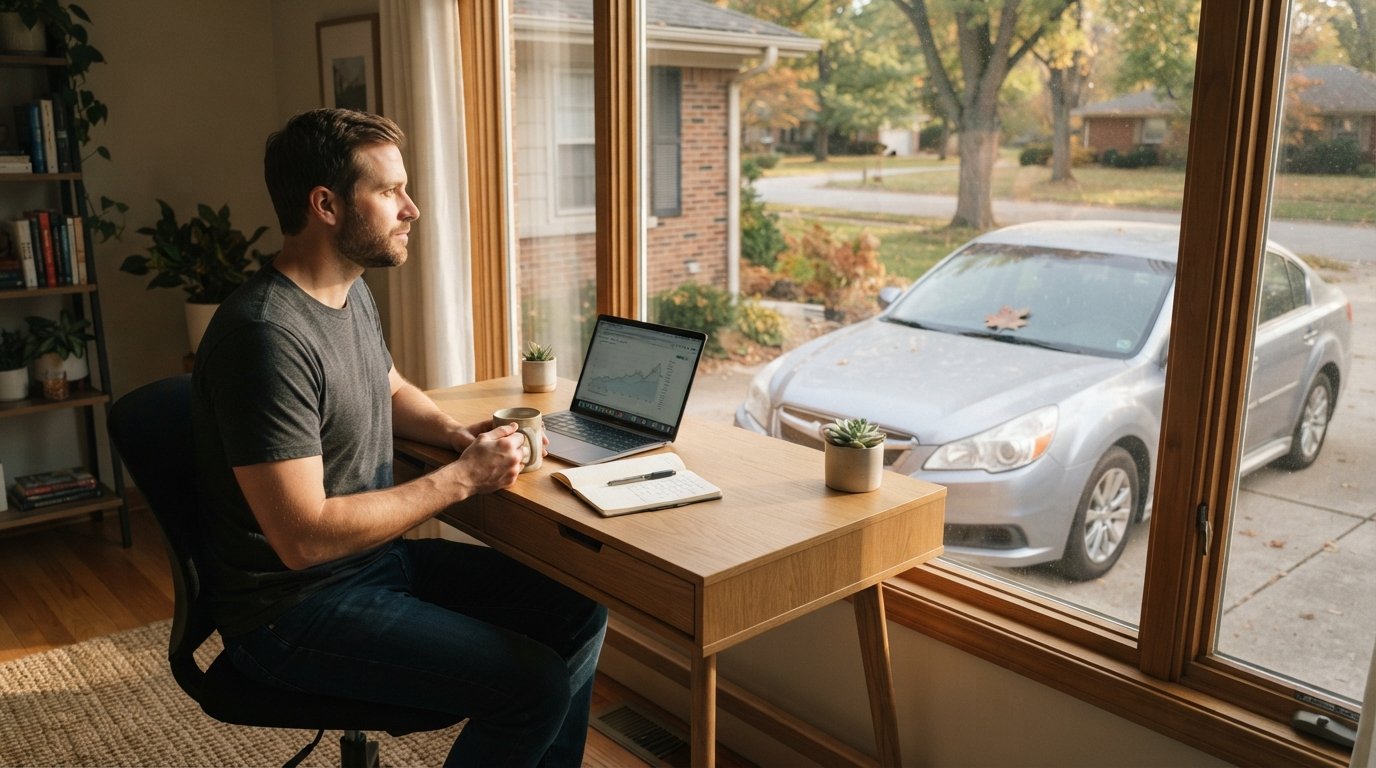
Your car spends most of the week parked in the driveway. You fill the tank once a month, maybe less, and your daily commute is now a ten-foot walk from the kitchen to a desk. So why does your auto insurance bill still look like you are logging 15,000 miles a year? That gap between how you actually drive and what your policy assumes is costing remote workers real money, and closing it starts with understanding how insurers price a low-mileage lifestyle.
Auto insurance for drivers who work from home is not a special product you buy off a shelf. It is a pricing conversation. Insurers build rates around risk, and one of the biggest risk factors they track is annual mileage. When you cut your driving from 15,000 miles to 5,000, you are statistically less likely to be in a crash, and that should translate into a lower premium. The catch is that most carriers will not lower your rate automatically. You have to tell them, and you have to prove it.
Why Remote Work Changes Your Risk Profile
Insurance is a numbers game built on probability. The more time you spend on the road, the more exposure you have to accidents, theft, vandalism, and weather damage. A driver who commutes 40 miles each way sits in traffic for hours every week. A remote worker who drives to the grocery store and the gym carries a fraction of that exposure.
Carriers know this. Mileage is baked into every quote, often as a rating tier: under 5,000 miles, 5,000 to 10,000, 10,000 to 15,000, and so on. Moving down a tier can shave 10 to 30 percent off your premium depending on your state, your carrier, and your other rating factors. That is not pocket change. On a $1,500 annual policy, a 20 percent reduction saves you $300 a year for a phone call and a few documents.
The problem is inertia. Many policies are written when a driver still commutes, and nothing prompts an update when life changes. Insurers rarely audit your odometer. If you never call, you keep paying the commuter rate indefinitely, which means you are subsidizing a risk you no longer carry. Remote workers who take five minutes to update their mileage are often the same people who later wonder why their neighbor with a similar car pays hundreds less.
Low-Mileage Discounts and Usage-Based Programs
Once you know your mileage has dropped, the next step is finding the discount or program that rewards it. Not every carrier handles low mileage the same way, and the difference between a flat discount and a telematics program can be significant. Here is how the main options compare:
- Low-mileage discount: A flat percentage off your premium when you report annual mileage below a threshold, typically 7,500 or 5,000 miles. Simple, but you usually have to ask for it.
- Usage-based insurance (UBI): A telematics app or plug-in device tracks your actual driving, including miles, time of day, hard braking, and cornering. Safe, low-mileage drivers can save 20 to 40 percent.
- Pay-per-mile insurance: You pay a low base rate plus a few cents for every mile driven. Ideal for drivers under 8,000 miles a year, less ideal if you take frequent road trips.
- Garage-kept or storage discounts: Some carriers reduce rates if the car is parked off-street or driven only seasonally, which can stack with low-mileage credits.
Usage-based programs deserve a closer look because they reward behavior, not just declarations. If you work from home and also drive gently, avoid late-night trips, and keep your phone out of your hand, a telematics program can outperform a flat low-mileage discount. The trade-off is privacy and data sharing. You are letting an insurer watch how you drive, and a few hard-braking events can erase your savings. Drivers who want the discount without the monitoring should ask specifically for a declared low-mileage discount instead.
How to Update Your Policy and Capture the Savings
Getting your premium adjusted is a process, not a single call. Insurers want evidence, and the quality of that evidence determines how much you save. The most successful remote workers treat this like a small project: gather documentation, make the request, and follow up.
- Calculate your real annual mileage. Check your odometer today, subtract the reading from 12 months ago, and use that number. If you do not have a prior reading, estimate from oil changes, service records, or a few weeks of typical driving multiplied out.
- Gather proof. Some carriers accept a self-reported figure, but many ask for a photo of the odometer, a recent service invoice, or a signed mileage statement. Keep these handy before you call.
- Call your insurer and request a mileage reclassification. Ask directly: "My annual mileage dropped to X. Can you reclassify my policy and apply any low-mileage discount?" Get the new premium and effective date in writing.
- Ask about telematics or pay-per-mile as an alternative. If the flat discount is small, a usage-based program may save more. Request a side-by-side comparison of both options.
- Re-shop your policy every 12 months. A carrier that was competitive at 15,000 miles may not be at 5,000. Rates for low-mileage drivers vary widely, and comparison shopping is where the biggest gaps show up.
That last step matters more than most people realize. Insurers use different rating algorithms, and a carrier that is expensive for commuters can be surprisingly cheap for remote workers, or the reverse. The only way to know is to pull quotes from multiple carriers with your updated mileage. If you want to see how rates move when you adjust mileage and coverage, an auto insurance quotes Texas guide walks through the comparison process step by step, and the same logic applies in every state.
Coverage You Still Need, Even If You Barely Drive
Low mileage does not mean low risk. A parked car can be stolen, hit by a hail storm, flooded, or struck by a distracted driver in a parking lot. Dropping coverage to the legal minimum because you work from home is a common mistake that can cost far more than it saves.
Liability coverage is mandatory in nearly every state, and it protects you when you cause injury or property damage to someone else. If you have a mortgage, a savings account, or a steady income, minimum liability limits are usually not enough. A single at-fault accident can exceed a state minimum in seconds, and the difference comes out of your pocket.
Comprehensive coverage is especially valuable for low-mileage drivers because it covers theft, weather, fire, and vandalism regardless of who is at fault. A car that sits in a driveway or garage for most of the week is still exposed to those risks, and replacing it out of pocket is rarely cheap. Collision coverage matters too, because the few trips you do take are often on unfamiliar roads or in heavy traffic when you run errands.
Uninsured and underinsured motorist coverage is the quiet essential. Roughly one in seven U.S. drivers carries no insurance, and many more carry only the legal minimum. If one of them hits you, UM/UIM pays for your medical bills and repairs when their policy cannot. Remote workers often assume they are safe because they drive less, but the crash that hurts you is more likely to happen on a busy weekend errand than during a quiet weekday commute. If you want a plain-language walkthrough of how these coverage types fit together, this independent auto insurance resource explains the options without pushing a specific carrier.
Common Mistakes Remote Workers Make With Their Policies
The savings are real, but they are easy to lose through small oversights. Remote workers tend to make the same handful of mistakes, and each one quietly costs money.
- Never reporting the mileage change. The single most common error. If you do not tell your insurer, you keep paying the commuter rate.
- Underreporting mileage to chase a discount. If you later file a claim and the odometer contradicts your declaration, the insurer can adjust the payout or deny the claim for misrepresentation.
- Dropping coverage entirely. A parked car still needs comprehensive coverage, and most states require liability even if the car is rarely driven.
- Forgetting to update your garaging address. If you moved to a new ZIP code when you went remote, your rate should reflect it. Rates vary dramatically by location.
- Ignoring the multi-policy and multi-car discounts. Bundling home or renters insurance, or insuring a spouse's car on the same policy, can stack with low-mileage savings.
Each of these mistakes is fixable with one conversation. The underreporting issue is the one to take most seriously, because it crosses from a savings problem into a claims problem. Insurers investigate claims, and odometer readings are easy to verify through service records and inspections. Honest reporting protects both your discount and your payout.
Stacking Savings Beyond Mileage
Low mileage is a strong lever, but it is not the only one. Remote workers can often combine several discounts that together cut premiums by 30 percent or more. Common stackable options include:
- Multi-policy bundling with home or renters insurance
- Multi-car discounts for households with two or more vehicles
- Safety features like anti-theft devices, airbags, and automatic emergency braking
- Good driver discounts for a clean record
- Paid-in-full discounts for paying the full premium upfront
- Paperless billing and autopay credits
The key is to ask. Discounts are not always advertised, and customer service representatives can apply them only if you qualify and request them. When you call to update your mileage, use the same call to ask which other discounts you are missing. A five-minute conversation can add up to hundreds of dollars a year.
It also helps to revisit your deductible. If you drive less, you may be comfortable raising your collision and comprehensive deductibles from $500 to $1,000, which lowers your premium immediately. Just make sure you have the cash set aside to cover the higher deductible if you file a claim.
When to Re-Shop and What to Bring
Even after you update your current policy, the market may have better options. Rates shift constantly, and carriers adjust their appetite for different driver profiles. A remote worker with low mileage, a clean record, and a bundled home policy is an attractive customer, and several carriers will compete for that business.
Re-shop every 12 months, or sooner if you have a major life change: a move, a new car, a teen driver added to the policy, or a significant mileage shift. When you request quotes, have these details ready: your current policy declarations page, your annual mileage, your VIN, your driving record, and your coverage preferences. The more accurate your inputs, the more accurate the quotes.
Comparison shopping is not about chasing the absolute lowest price. It is about matching coverage to your actual life. A policy that assumes you commute 15,000 miles a year is the wrong policy for someone who works from home. A policy built around 5,000 miles, full coverage, and stacked discounts is the right one, and it usually costs meaningfully less. The work is small, the savings are recurring, and the protection stays intact.
Remote work reshaped your daily routine. Let it reshape your insurance bill too.