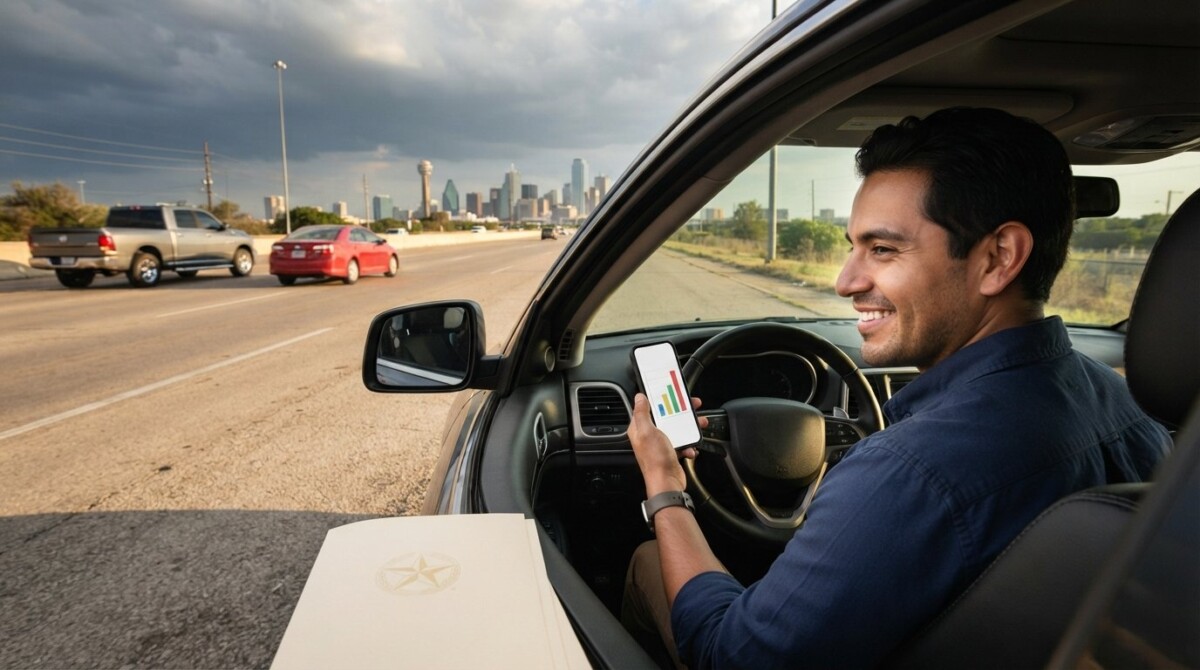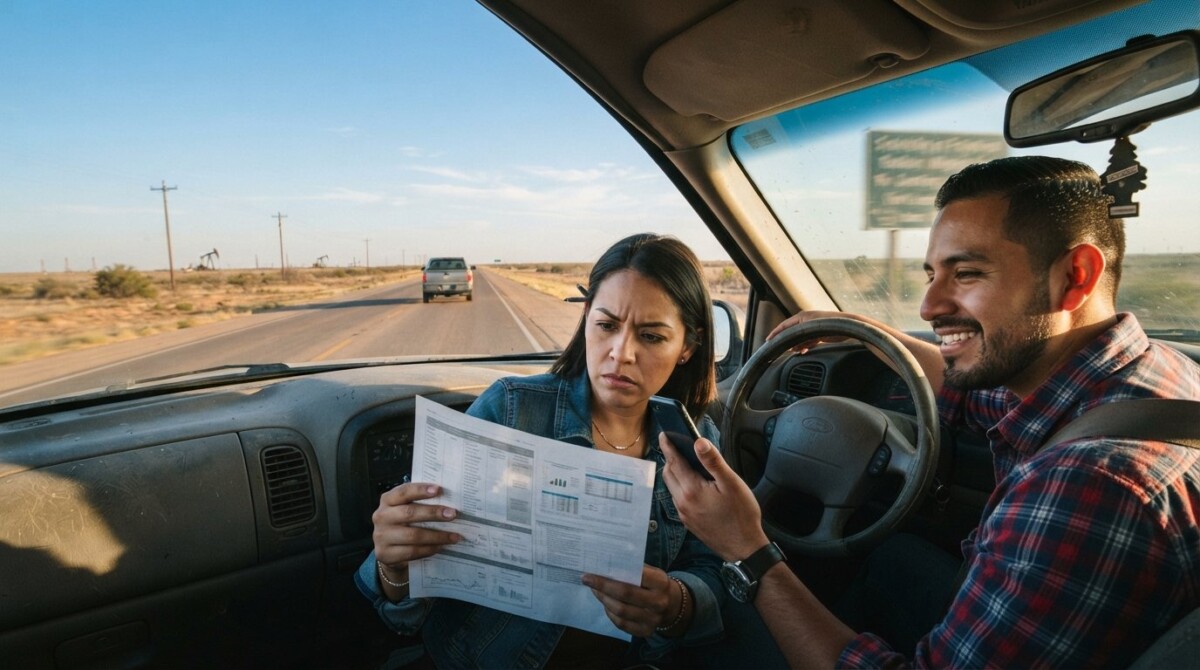
Texas roads are vast, and so are the differences between insurance rates across the Lone Star State. A driver in Houston might pay nearly double what a driver in rural West Texas pays for the same coverage. This is not a coincidence; it is a product of local risk factors, weather patterns, and traffic density. For most Texans, the annual cost of car insurance hovers around $1,900 for full coverage, but that number can feel meaningless when your own quote comes in far higher. The good news is that you are not stuck with the first price you see. Shopping for auto insurance quotes Texas drivers trust is a straightforward process, but only if you know where to look and what to compare.
The insurance market in Texas is uniquely competitive, with over 100 carriers writing policies. This competition works in your favor, because insurers are constantly vying for your business with discounts and bundled offers. However, the complexity of Texas insurance laws, including the state’s “at-fault” system and the high rate of uninsured motorists, means you need to be precise about the coverage you request. Requesting the bare minimum might save you money today, but it could leave you exposed to significant out-of-pocket costs after a serious accident. This guide will walk you through the exact steps to secure affordable, robust coverage without wasting hours on the phone.
Why Texas Insurance Rates Vary So Widely
Before you start comparing auto insurance quotes Texas carriers provide, it helps to understand the underlying factors that influence your rate. Insurers in Texas are allowed to use a variety of criteria to price your policy, and some of these might surprise you. Your driving record and credit score are major factors, but so are your ZIP code, your vehicle’s safety rating, and even your annual mileage. Urban centers like Dallas and San Antonio see higher rates due to increased accident frequency and vehicle theft, while rural areas typically enjoy lower premiums.
Another significant factor is the Texas Department of Insurance’s regulatory framework. Texas uses a “file and use” system, meaning insurers can adjust rates without prior approval as long as they justify the change later. This flexibility allows carriers to react quickly to weather events or claims spikes, which is why rates can shift noticeably from one year to the next. Understanding this volatility is key, because it means the policy you bought three years ago is likely no longer the cheapest option available.
To get a baseline for your specific profile, you should always start with a comparison platform that aggregates multiple carriers. Rather than visiting individual insurer websites, which requires duplicate data entry, a single form can generate multiple competing offers. This approach not only saves time but also gives you leverage when negotiating with your current provider.
Minimum Coverage vs. Full Coverage in Texas
Texas law mandates minimum liability limits of 30/60/25. This translates to $30,000 for bodily injury per person, $60,000 for bodily injury per accident, and $25,000 for property damage. While this is the legal floor, financial advisors and insurance experts strongly recommend carrying higher limits. In a state with expensive medical care and costly vehicle repairs, hitting the $60,000 cap in a multi-vehicle accident is surprisingly easy, leaving you personally responsible for the remaining damages.
Full coverage, which typically includes collision and comprehensive insurance alongside higher liability limits, is often required if you have a car loan or lease. However, even if you own your vehicle outright, the peace of mind offered by full coverage can be worth the extra cost. Comprehensive coverage protects you from non-collision events like hail, theft, and animal strikes, which are particularly relevant in Texas given the state’s severe weather patterns. Collision coverage pays for damage to your car when you hit another vehicle or object, regardless of fault.
When you compare auto insurance quotes Texas policies, make sure you are comparing apples to apples. A quote for minimum liability will always look cheaper than one for full coverage, but it does not provide the same protection. Use a comparison tool that allows you to toggle coverage levels so you can see the exact price difference. Often, the jump from minimum to full coverage is less than $50 per month, a small price to pay for avoiding a potential financial disaster.
How to Get the Best Auto Insurance Quotes Texas Offers
The process of obtaining cheap car insurance in Texas is not about finding a secret loophole; it is about presenting your risk profile in the best possible light and shopping around at the right time. Here are the steps to follow to secure the most competitive rates:
- Check your credit score first: In Texas, insurers heavily weigh your credit-based insurance score. A higher score can cut your premium by 30% or more. Pull your free credit report and dispute any errors before you start quoting.
- Bundle your policies: If you own a home or rent an apartment, getting your auto and property insurance from the same carrier often unlocks a multi-policy discount of up to 25%.
- Review your annual mileage: If you have been working from home or retired, your mileage is likely lower than what you reported years ago. Dropping below 7,500 miles a year can qualify you for a low-mileage discount.
- Ask about defensive driving: Completing an approved defensive driving course (often available online for under $25) can reduce your premium by up to 10% for three years.
- Compare quotes every six months: Rates change frequently. Set a calendar reminder to re-shop your policy at every renewal period to ensure you are still getting the best deal.
After following these steps, you should have a clear picture of your ideal coverage needs and the price range you can expect. The next move is to leverage a free comparison service. For instance, our platform at Free Auto Insurance Quotes Online allows you to enter your details once and receive multiple offers simultaneously. This method is far more efficient than calling agents individually, and it ensures you are seeing a broad swath of the market.
Discounts Specifically for Texas Drivers
Beyond the standard savings, Texas insurers offer unique discounts that are tied to the state’s specific conditions. For example, many carriers provide a discount for vehicles equipped with anti-theft devices, which is particularly valuable in metropolitan areas with higher theft rates. Similarly, if your car has advanced safety features like automatic emergency braking or lane departure warnings, you may qualify for a technology discount that can offset the cost of these features.
Another Texas-specific consideration is the usage-based insurance (UBI) program. Most major insurers in the state offer a telematics program where you install a small device in your car or use a mobile app to track your driving habits. Safe drivers who avoid hard braking, fast acceleration, and late-night driving can save up to 30% on their premium. This is an excellent option for cautious drivers who want their good habits to pay off.
If you have a clean driving record, you should also ask about accident-free and good-student discounts. For families with teen drivers, the good-student discount (requiring a B average or better) can save hundreds of dollars annually. When you are comparing auto insurance quotes Texas providers, explicitly ask each agent or online tool to apply every discount for which you might qualify. Do not assume they will automatically apply them all.
Handling High-Risk Profiles and SR-22s
If you have a DUI, multiple at-fault accidents, or a lapse in coverage, you are considered a high-risk driver. In Texas, this often means you will need to file an SR-22 form with the state, which is simply a certificate proving you carry the required liability insurance. Not all insurers offer SR-22 filings, and those that do often charge higher rates. However, this does not mean you should settle for the first quote you receive.
High-risk drivers should focus on insurers that specialize in non-standard coverage. These companies are more willing to underwrite drivers with blemished records, and their rates can be surprisingly competitive. Additionally, as time passes and your violations age off your record (typically three to five years), your rates will gradually decrease. It is crucial to keep your coverage continuous during this period, as a lapse will reset the clock and keep you in the high-risk category longer.
For those with an SR-22 requirement, be cautious of extremely cheap quotes that promise the world. Verify that the insurer is financially stable and has a good reputation for paying claims in Texas. A low premium is meaningless if the company denies your claim or goes bankrupt. Check the Texas Department of Insurance website for consumer complaint ratios before you commit.
The Role of Deductibles in Your Texas Quote
Your deductible is the amount you pay out of pocket before your insurance kicks in for a claim. In Texas, the standard deductibles are $500 or $1,000 for collision and comprehensive coverage. Choosing a higher deductible, such as $1,000 or $2,000, can significantly lower your monthly premium. The trade-off is that you need to have that cash readily available if you are in an accident.
This is a delicate balancing act. If you have a robust emergency fund, raising your deductible is one of the fastest ways to cut your premium by up to 25%. Conversely, if you live paycheck to paycheck, a $2,000 deductible could be a financial crisis. When you request auto insurance quotes Texas options, run the numbers with different deductible levels to see the exact savings. Often, the difference between a $500 and a $1,000 deductible is only $15 to $20 per month, which might be worth the peace of mind.
Also, consider whether you need rental reimbursement and roadside assistance. These add-ons are usually inexpensive (around $5 to $10 per month each), but they are not always necessary if you have a second car or a membership with a motor club. Removing unnecessary add-ons is a quick way to trim your quote without sacrificing core protection.
Comparing Quotes Online vs. Using an Agent
There is a common misconception that you must choose between online comparison tools and a local independent agent. In reality, the best strategy often involves using both. Online platforms, like the one we host, are excellent for getting a broad overview of the market and identifying the cheapest carriers quickly. They are fast, require no phone calls, and allow you to compare side-by-side.
However, a local agent can provide personalized advice, especially if you have a complex situation like a classic car, a commercial vehicle, or a teen driver on your policy. Agents can also help you understand the nuances of Texas liability law and ensure you are not underinsured. When you use an online quote tool, you can bring that data to an agent and ask them to match or beat it. This creates a competitive dynamic where you hold all the cards.
Many drivers make the mistake of assuming that online quotes are always accurate. They are accurate only if your input data is correct. Double-check your VIN, your address, and your annual mileage before submitting the form. An error in your ZIP code alone can change the quote by hundreds of dollars. Always review the final policy documents before signing to ensure the rates match the initial quote.
Frequently Asked Questions
How can I get cheap auto insurance quotes in Texas?
To get cheap quotes, you must compare multiple carriers using the same coverage limits. Start with a free online comparison tool, maintain a good credit score, and ask about all available discounts. Raising your deductible and bundling your policies are also effective ways to lower your premium.
What is the average cost of car insurance in Texas per month?
The average cost for full coverage in Texas is approximately $158 per month, while minimum liability coverage averages around $55 per month. These figures vary significantly based on your city, driving history, and the type of vehicle you drive.
Is it illegal to drive without insurance in Texas?
Yes, it is illegal to drive without insurance in Texas. You must carry proof of financial responsibility, usually in the form of an insurance card, whenever you drive. Fines for driving without insurance can reach $1,000 for a first offense, and your license can be suspended.
Does my credit score affect my auto insurance rate in Texas?
Yes, Texas insurers are permitted to use your credit history to determine your insurance score. Drivers with poor credit can pay up to 80% more than those with excellent credit. Improving your credit score is one of the most effective ways to lower your auto insurance costs.
When you are ready to see real numbers for your situation, use a trusted aggregator that shows you the full landscape of options. Our detailed guide on full coverage auto insurance quotes explains how to balance cost with protection. For a state-specific breakdown, you can review our Texas auto insurance quotes comparison to see how different carriers stack up. If you are new to this process, our step-by-step guide on how to compare Texas auto insurance walks you through the pitfalls to avoid. And if you are planning ahead, our projections for auto insurance quotes in 2026 can help you budget for future rate changes.
Securing the right auto insurance quotes Texas has to offer is not a one-time task; it is an ongoing part of responsible car ownership. The market is dynamic, and your personal circumstances will change over time. Whether you are buying a new car, moving to a new city, or simply hitting a renewal date, taking thirty minutes to re-quote your policy is one of the highest-return financial habits you can adopt. The savings you uncover can be redirected toward maintenance, fuel, or even a fun road trip across the Hill Country.
Start your comparison today using a free no-obligation quote form. You have nothing to lose except the overpriced premium you are probably paying right now. With the right approach, you can drive off with confidence knowing you have secured the best possible protection at a price that fits your budget.