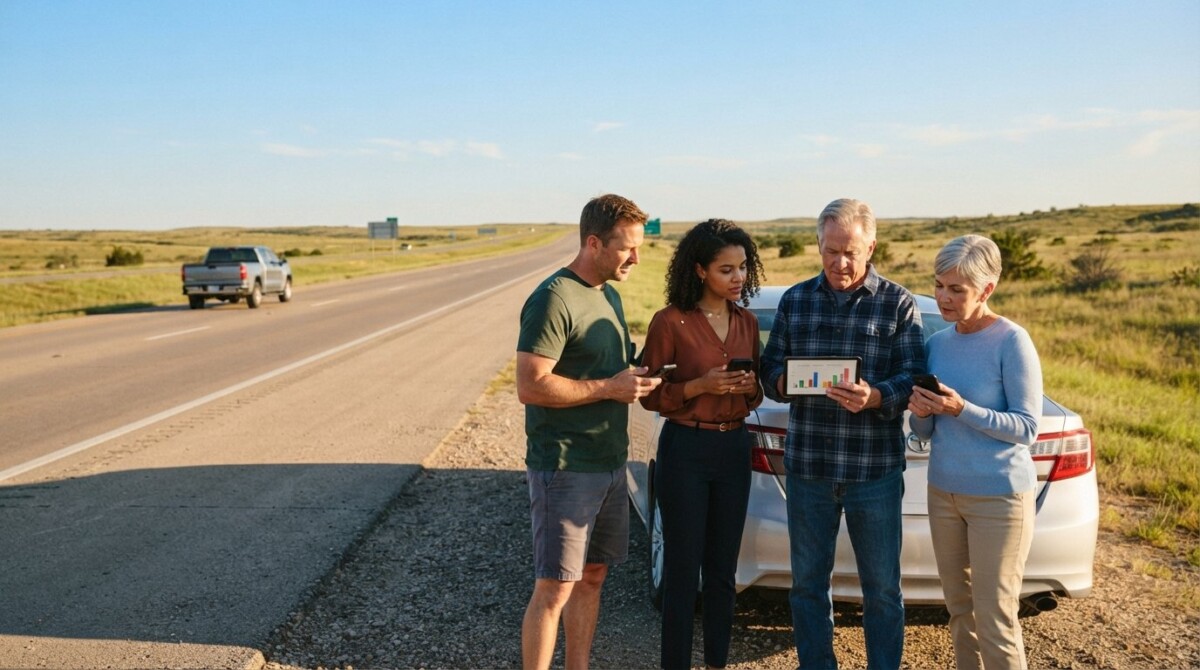
Texas roads are vast, and so is the range of auto insurance premiums drivers pay across the Lone Star State. You might assume that living in a major metro like Houston or Dallas automatically means sky-high rates, while rural drivers get a break, but the reality is far more nuanced. Your neighbor could be paying hundreds less per year for the same coverage on the same vehicle, simply because of how they shop. The difference often comes down to comparing auto insurance quotes Texas carriers offer, rather than settling for the first renewal notice that arrives in the mail.
This guide breaks down the specific factors that influence your premium in Texas, from local weather risks to the state’s unique minimum coverage laws. We will walk through the exact steps to gather competitive quotes, highlight the discounts that matter most for Texas drivers, and explain how to read a policy so you are not underinsured when you need protection the most. Whether you are a new driver in Austin or a seasoned commuter in San Antonio, understanding the market gives you the leverage to save money without sacrificing essential coverage.
Why Texas Auto Insurance Rates Vary So Widely
The first thing to understand is that Texas operates under a “fault” system for auto insurance. This means the at-fault driver’s insurance pays for the other party’s medical bills and vehicle repairs. This legal framework influences how insurers calculate risk, and it explains why liability coverage limits are such a critical decision for drivers here. Unlike states with no-fault laws, your policy must be robust enough to protect your assets if you cause a serious accident, because the injured party can pursue legal action against you personally.
Beyond the legal system, several state-specific variables push rates up or down. Severe weather, including hail storms in the Dallas-Fort Worth area and flooding along the Gulf Coast, leads to a high volume of comprehensive claims. Insurers factor this regional catastrophe risk into your premium. Additionally, Texas has a significant number of uninsured motorists on the road, which drives up the cost of Uninsured/Underinsured Motorist (UM/UIM) coverage, a protection that is highly recommended even though it is not mandatory in the state.
Your personal profile also plays a massive role. Insurers use credit-based insurance scores in Texas (with some restrictions) to predict the likelihood of future claims. Drivers with excellent credit often see premiums that are 40% to 60% lower than those with poor credit. Your driving record, age, marital status, and even the annual mileage you report all feed into the complex algorithm that determines your rate. Because these factors are so personal, there is no single “cheapest” company in Texas; the best rate for you depends entirely on how your profile aligns with each insurer’s risk appetite.
The Real Cost of Minimum Coverage in Texas
Texas law requires drivers to carry a minimum amount of liability insurance, often referred to as 30/60/25. This breaks down to $30,000 for bodily injury per person, $60,000 for total bodily injury per accident, and $25,000 for property damage. While this is the legal floor, insurance professionals frequently warn that these limits are dangerously low for today’s driving environment. A single modern vehicle can easily cost $40,000 or more to replace, meaning a minor collision could quickly exhaust your $25,000 property damage limit.
If you cause an accident and the damages exceed your policy limits, you are personally responsible for the difference. The injured party can sue you for medical expenses, lost wages, and pain and suffering. This financial exposure is why so many Texas drivers opt for higher liability limits, such as 100/300/100, which provides $100,000 per person and $300,000 per accident for bodily injury, plus $100,000 for property damage. The premium increase for this additional coverage is often surprisingly modest, sometimes just a few hundred dollars per year, which is a small price to pay for protecting your savings and future wages.
When you request auto insurance quotes Texas providers will often default to higher limits, but you should always verify the numbers. A quote for “full coverage” typically includes comprehensive and collision, but the liability limits can vary. Make sure you are comparing apples to apples. If you have significant assets, consider an umbrella policy to provide an extra layer of protection above your auto limits. It is also wise to include Uninsured/Underinsured Motorist coverage to protect yourself from drivers who lack adequate insurance, a common scenario on Texas highways.
How to Gather and Compare Auto Insurance Quotes Texas Drivers Trust
The process of shopping for insurance does not have to be tedious. By using a structured approach, you can gather multiple auto insurance quotes Texas options in under fifteen minutes. The key is to provide consistent information across all platforms so you can accurately compare prices and coverage levels. Start by gathering your driver’s license number, Vehicle Identification Number (VIN), current mileage, and details about your driving history, including any accidents or tickets from the past three to five years.
A common mistake is to enter slightly different information on each website, which leads to inaccurate comparisons. For example, if you list your commute as 10 miles per day on one quote and 30 miles per day on another, the rates will diverge for reasons unrelated to the insurer’s pricing model. Be precise with your annual mileage estimate and be honest about your driving record. Insurers verify this information during the underwriting process, and misrepresentation can lead to a denied claim or policy cancellation.
Here is a practical framework for comparing quotes effectively:
- Check the coverage details: Look beyond the total price to see the deductibles and liability limits included in each quote.
- Verify discounts: Note which discounts are automatically applied and which require you to take action, like completing a defensive driving course.
- Review the claims process: Research the insurer’s reputation for handling claims quickly and fairly, not just their price.
- Look for bundling options: If you own a home or rent, ask about bundling your policies for a multi-policy discount.
Once you have these quotes in hand, you can start to see a clear market range. You might find that one company is significantly cheaper for your profile, while another is more expensive. This variance underscores the importance of shopping, not just renewing. For a deeper look at how to structure your search, our guide on comparing Texas auto insurance quotes offers step-by-step instructions and pitfalls to avoid.
Top Discounts to Request on Your Texas Policy
Insurers in Texas offer a wide array of discounts, but they rarely advertise them all on the initial quote page. You often have to ask for them directly. One of the most common savings opportunities is the multi-policy discount, which you can earn by having your auto and homeowners or renters insurance with the same company. This can reduce both premiums by 5% to 15%, depending on the carrier. Similarly, insuring multiple vehicles on the same policy often triggers a multi-car discount.
Telematics programs, sometimes called usage-based insurance, are increasingly popular in Texas. These programs involve installing a mobile app or a small device in your car that tracks your driving habits, including speed, braking, and time of day. Safe drivers can earn significant discounts, sometimes up to 30%. If you drive less than average, a pay-per-mile program might be an even better fit. However, be aware that these programs share your data with the insurer, so consider your comfort level with that trade-off.
Another underutilized discount is for completing a state-approved defensive driving course. This is typically a four-hour online course that costs around $25. While it is often taken to dismiss a traffic ticket, completing it voluntarily can also qualify you for a discount. Additionally, many insurers offer lower rates for drivers who have been continuously insured without a lapse in coverage. If you are a student, good grades (a B average or higher) can earn you a discount, and if you are over 55, a mature driver improvement course might lower your premium.
It is important to ask your agent or the quote platform about all available discounts before you finalize your policy. Some discounts, like the one for paying your premium in full upfront rather than in monthly installments, are simple to apply. Others, like the professional affiliation discount for members of certain alumni groups or employers, require you to provide a membership number. Taking ten minutes to review these opportunities can lead to substantial annual savings, making the effort of comparing quotes well worth it. You can see how these savings stack up when you compare rates and save with our detailed analysis.
Understanding Your Quote: Reading the Fine Print
When a quote arrives in your inbox, it is tempting to look only at the bottom line. However, understanding what is inside the policy is crucial to avoiding surprise bills after an accident. The declarations page, which is the first page of your policy, summarizes your coverages, limits, and deductibles. Review this page carefully to confirm it matches the terms you requested. If the quote says “liability only” but you thought you were getting comprehensive, this is where you will catch the error.
Pay particular attention to your deductible amounts for comprehensive and collision coverage. A higher deductible, such as $1,000, lowers your premium but means you pay more out of pocket if you need to file a claim. A lower deductible, like $250, increases your premium but provides more financial protection after an accident. You should choose a deductible that you could comfortably afford to pay in an emergency. If you have an older car that is not worth much, you might consider dropping collision coverage entirely, as the cost of the coverage could exceed the payout you would receive after a total loss.
Also, examine the endorsements or add-ons that might be included in your quote. Roadside assistance, rental car reimbursement, and gap insurance (which pays the difference between your car’s value and what you owe on your loan) are often offered as optional extras. While these are valuable, they add to your premium. Determine which of these you truly need based on your financial situation. If you have a new car financed with a loan, gap insurance is often essential. If you have an older car that is paid off, you might skip it. Understanding these nuances ensures you are not paying for coverage you do not need while still protecting yourself from major financial loss.
How Your Location Within Texas Affects Your Rate
Where you park your car at night is a significant rating factor. Zip codes in dense urban areas like Houston, Dallas, and San Antonio typically have higher rates due to increased traffic congestion, higher rates of theft, and more frequent accidents. Conversely, drivers in rural areas of West Texas or the Panhandle often see lower premiums, as the risk of collision is statistically lower. However, rural drivers might face higher comprehensive rates if they are in areas prone to hail or severe storms.
Your commute distance also matters. Insurers ask for your annual mileage, and drivers who travel more miles each year are exposed to more risk. If you work from home or have a short commute, your rate will likely be lower than someone who drives 50 miles each way to work. When comparing quotes, ensure your mileage estimate is accurate. If your circumstances change, such as taking a new job with a longer commute, you should update your policy immediately to avoid a claims dispute.
Beyond your home address, the specific crime statistics in your neighborhood can influence your comprehensive premium. Cars parked on the street in areas with high vandalism or theft rates are riskier to insure than those parked in a private garage. Providing a garage address on your quote can sometimes lower your rate. While you cannot change where you live, understanding these geographic factors helps you make informed decisions. If you are moving within Texas, it is wise to re-shop your policy, as a change of address can either raise or lower your premium, and you want to ensure you are still getting the best deal for your new location.
Frequently Asked Questions
What is the average cost of car insurance in Texas?
Average rates vary widely depending on coverage levels and driver profiles, but full coverage in Texas typically costs around $2,200 per year, while minimum liability coverage averages near $700 per year. Your personal rate will differ based on your driving record, credit score, and the city where you live. The best way to know your rate is to request personalized quotes.
Can I get auto insurance without a down payment in Texas?
Yes, many insurers offer policies with no down payment, allowing you to pay the first month’s premium and start coverage immediately. However, these policies often come with a policy fee or a slightly higher monthly rate. Always compare the total annual cost of a no-down-payment plan versus paying in full upfront to see which is more economical for your budget.
How long does it take to get a Texas auto insurance quote?
An accurate quote can be generated in as little as five minutes if you have your driver’s license and vehicle information ready. Online comparison tools can provide multiple quotes simultaneously, which saves significant time compared to calling each insurance company individually. Using a comparison platform like ours is the fastest way to see rates from multiple carriers at once.
What happens if I drive without insurance in Texas?
Driving without insurance in Texas is illegal and can result in fines, license suspension, and vehicle impoundment. If you are involved in an accident without insurance, you will be personally liable for all damages and may face a lawsuit. SR-22 insurance, which is a certificate of financial responsibility, is often required for up to two years to reinstate your license.
For those who want a comprehensive breakdown of the process, our resource on how to compare and save with Texas auto insurance quotes provides additional insights and tools to streamline your search.
Making Your Final Decision
Choosing the right auto insurance policy in Texas is about balancing cost with protection. The cheapest quote is not always the best value if it leaves you exposed to significant financial risk. Conversely, paying for excessive coverage on an old vehicle is wasteful. By understanding your own risk profile and the coverage options available, you can make a confident decision that protects your finances and your peace of mind.
Once you have selected a policy, set a calendar reminder to re-shop your insurance every six to twelve months. Life changes, such as moving, getting married, or paying off a vehicle, can all affect your premium. The insurance market is competitive, and new discounts or companies may offer better rates in the future. Staying informed and periodically comparing auto insurance quotes Texas providers offer ensures you are always getting the best possible price for the coverage you need.