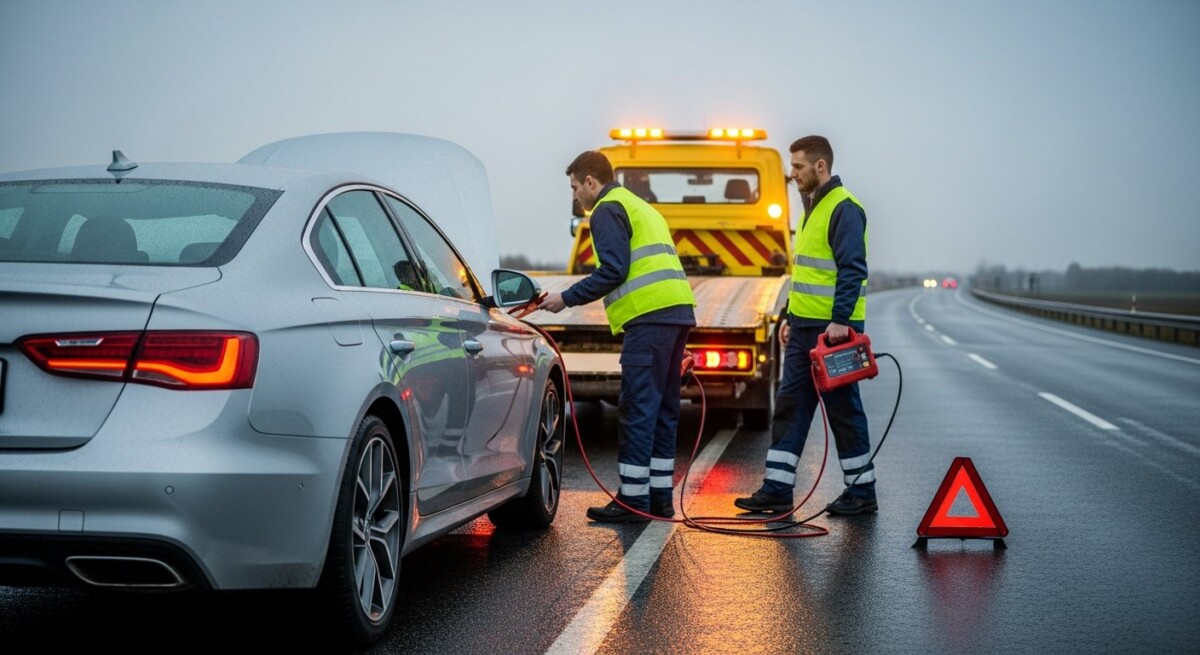
Imagine your car breaks down on a dark highway, or you return to a parking lot to find a flat tire. In that moment, panic can set in. You might wonder who to call, how much a tow truck will cost, and how long you will be stranded. This is where auto insurance with roadside assistance becomes more than just a policy add-on. It transforms from a line item on your bill into a lifeline that can save you time, money, and stress. For many drivers, this coverage is the difference between a minor inconvenience and a major crisis. Understanding exactly what it covers, how it works, and whether it fits your needs is essential before you commit to a policy.
Roadside assistance is often marketed as a cheap extra, but its value goes far beyond the monthly premium. When you are stranded, the cost of a single tow truck can range from $75 to $250 or more, depending on distance and time of day. A flat tire change from a private service might cost $50 to $100. Lockout services can run $60 to $150. Over the course of a year, one or two incidents can easily exceed the annual cost of adding roadside assistance to your auto insurance policy. This makes it a financially smart choice for most drivers, especially those with older vehicles or long commutes.
In this article, we will break down the key features of roadside assistance coverage, compare it to standalone programs, and help you decide if it is the right fit for your lifestyle. We will also explore how to shop for the best policy and what to do when you need to use it. By the end, you will have a clear roadmap to making an informed decision.
What Does Auto Insurance With Roadside Assistance Cover?
Roadside assistance coverage varies by insurer, but most standard policies include a core set of services designed to get you back on the road quickly. These services typically cover common roadside emergencies that do not require major mechanical repair at the scene. Understanding the specific benefits helps you gauge whether the coverage matches your driving habits.
Most auto insurance roadside assistance plans include the following services:
- Towing: Your vehicle is towed to the nearest qualified repair shop, usually within a set mileage limit such as 10 or 15 miles. Some policies offer unlimited towing distance for an additional fee.
- Flat tire change: A service technician will change your flat tire with your vehicle’s spare. If you do not have a spare, the service may include a tow to a tire shop.
- Battery jump-start: If your battery is dead, a technician will jump-start your car. Some policies also cover battery testing or replacement at a discount.
- Lockout assistance: If you lock your keys inside the car, a technician will attempt to unlock the door. This service often has a limit on the number of lockout calls per year.
- Fuel delivery: If you run out of gas, a technician will deliver enough fuel (usually 1 to 2 gallons) to get you to a nearby station. You typically pay for the fuel itself.
Some premium policies also include extras like winching (pulling your vehicle out of a ditch or mud), tire changes for run-flat tires, and even concierge services that help arrange lodging or rental cars if your vehicle needs overnight repairs. However, it is important to read the fine print. Many policies exclude coverage for vehicles used for commercial purposes, off-road driving, or if the breakdown is caused by a lack of maintenance. Additionally, there is usually a limit on the number of service calls per year, commonly three to five. Exceeding that limit may result in denial of service or additional fees.
The key advantage of bundling roadside assistance with your auto insurance is convenience. You have one company to call, one phone number to remember, and one bill to pay. The claims process is often streamlined, and you can manage everything through your insurer’s mobile app or website. This integration makes auto insurance with roadside assistance a seamless experience for most drivers.
Standalone Roadside Assistance vs. Insurance Bundles
Drivers often wonder whether they should add roadside assistance to their auto insurance policy or purchase a separate membership from a provider like AAA, Good Sam, or a credit card company. Both options have merits, and the best choice depends on your budget, driving frequency, and how much control you want over the service provider.
Let us compare the two approaches across several important factors:
Cost and Value: Adding roadside assistance to your auto insurance policy typically costs between $5 and $15 per year per vehicle. That is often cheaper than a standalone membership, which can run $50 to $150 annually. However, standalone plans sometimes offer higher service limits, such as longer towing distances or more service calls per year. For example, a premium AAA membership includes up to 100 miles of towing and covers all household members, while a basic insurance bundle might only cover the named driver and the insured vehicle.
Service Network and Response Time: Insurance companies usually contract with a network of local towing companies and service providers. The quality and speed of service can vary by location. Standalone clubs like AAA have their own dedicated fleet and long-standing relationships with vetted providers, which can lead to faster response times in many areas. However, major insurers like State Farm, Geico, and Progressive also have large networks that cover most of the country.
Claims Impact: One critical difference is that using roadside assistance through your auto insurance policy may be considered a claim. While it is not an accident claim that raises your rates, some insurers track the frequency of service calls. If you use roadside assistance multiple times in a short period, the insurer might view you as a higher risk and potentially increase your premium at renewal. Standalone memberships do not affect your insurance rates at all. If you are concerned about this, a separate membership may be a safer choice.
Coverage for Non-Owned Vehicles: Standalone memberships often cover you in any vehicle you are driving, including rental cars or a friend’s car. Auto insurance roadside assistance typically only covers the insured vehicle. If you frequently drive multiple cars, a standalone plan might offer better flexibility.
For most drivers, adding roadside assistance to their existing auto insurance policy is the most affordable and convenient option. However, if you drive long distances, own an older vehicle prone to breakdowns, or want coverage that does not interact with your insurance claims history, a standalone membership could be worth the extra cost. You can also combine both: use the insurance bundle for basic needs and keep a standalone membership for high-mileage trips as a backup.
How to Choose the Best Auto Insurance With Roadside Assistance
Selecting the right policy requires comparing not just the roadside assistance benefits but also the underlying auto insurance coverage. A cheap add-on is useless if your primary insurance is inadequate or the insurer has poor customer service. Follow these steps to find the best fit for your situation.
First, evaluate your driving habits and risk profile. Do you have a long commute? Do you drive an older vehicle with high mileage? Do you frequently travel in rural areas where help is scarce? If you answered yes to any of these, roadside assistance is a strong consideration. Next, check your current auto insurance policy. Many insurers offer roadside assistance as an optional endorsement. If you are already happy with your insurer, adding this coverage is usually a simple process that does not require switching companies.
When comparing policies, look beyond the monthly premium. Examine the following details:
- Service call limits: How many times per year can you use the service? Most policies cap it at three to five calls.
- Towing distance: Is there a free towing limit (e.g., 10 miles)? What is the cost per mile beyond that limit?
- Coverage for all household members: Does the policy cover your spouse, children, or other drivers listed on the policy?
- Response time guarantees: Some insurers promise a 30-minute or 60-minute response window. Check reviews to see if they meet those promises.
- Mobile app features: Can you request assistance via an app with GPS tracking? This can speed up service significantly.
It is also wise to read customer reviews for roadside assistance specifically. A company may have excellent claims handling for accidents but poor roadside service. Look for reviews that mention wait times, professionalism of technicians, and whether the service resolved the issue on the first visit. Finally, get quotes from multiple insurers. Our platform, Free Auto Insurance Quotes Online, allows you to compare rates from top carriers side by side, helping you find a policy that balances cost and coverage.
When to Use Your Roadside Assistance Coverage
Knowing when to call for help is just as important as having the coverage. Some situations clearly warrant a call, while others might be handled on your own. Misusing roadside assistance can lead to denied claims or even policy non-renewal if the insurer deems you a high-risk driver.
Call roadside assistance for:
- A flat tire you cannot safely change yourself, especially on a busy highway or in bad weather.
- A dead battery with no jumper cables or another vehicle nearby.
- Locked keys in the car when you have no spare key accessible.
- Running out of fuel, though this is largely preventable with basic planning.
- Any mechanical issue that prevents safe driving, such as a broken alternator, blown radiator hose, or transmission failure.
Do not call roadside assistance for:
- Minor issues you can fix yourself, like a loose gas cap or a burned-out headlight bulb.
- Non-emergency situations such as scheduling a routine tow for maintenance. Most policies only cover unexpected breakdowns.
- Problems caused by negligence, such as driving with a known mechanical issue or off-roading.
When you do call, be prepared to provide your exact location, a description of the problem, and your policy number. Many insurers now offer GPS-based location sharing through their mobile apps, which can speed up response times. Stay with your vehicle and keep your doors locked until help arrives. If you are on a highway, pull as far to the right shoulder as possible and turn on your hazard lights.
Frequently Asked Questions
Does roadside assistance cover rental cars?
Usually, no. Auto insurance with roadside assistance typically covers only the insured vehicle listed on the policy. If you rent a car, your auto insurance policy may extend liability and collision coverage to the rental, but roadside assistance does not automatically transfer. Check your policy or consider a separate membership for rental car protection.
Will using roadside assistance raise my insurance rates?
In most cases, using roadside assistance does not directly increase your rates because it is not considered an at-fault accident. However, frequent use (more than two or three times per year) may lead the insurer to view you as a higher risk, potentially resulting in a premium increase at renewal. It is best to use the service judiciously.
Can I add roadside assistance mid-policy?
Yes, most insurers allow you to add roadside assistance at any time during your policy term. The change usually takes effect immediately or within 24 hours. You will typically see a prorated charge on your next bill. Contact your agent or use your insurer’s online portal to make the change.
Is roadside assistance worth it for new cars?
New cars often come with manufacturer roadside assistance for a limited period, typically 3 to 5 years or 36,000 to 60,000 miles. During that time, you may not need to pay extra for it on your insurance. However, once the manufacturer coverage expires, adding it to your auto policy is a cost-effective way to maintain protection.
Making the Call: Is This Coverage Right for You?
Deciding whether to add roadside assistance to your auto insurance ultimately comes down to your personal risk tolerance and budget. If you drive a reliable, newer vehicle and rarely travel far from home, you might feel comfortable skipping the add-on and relying on family or friends in an emergency. However, for the vast majority of drivers, the peace of mind and financial protection offered by auto insurance with roadside assistance far outweigh the small annual cost.
By understanding the coverage details, comparing options, and knowing when to use the service, you can turn a stressful breakdown into a manageable inconvenience. The next time you see your insurance renewal notice, consider adding this smart coverage. To explore your options and find the best rates, visit our guide on whether roadside assistance is worth it or learn more about smart coverage choices. For drivers in Massachusetts, we also have a complete guide to auto insurance in Massachusetts that covers state-specific requirements. Stay safe on the road and be prepared for whatever comes your way.