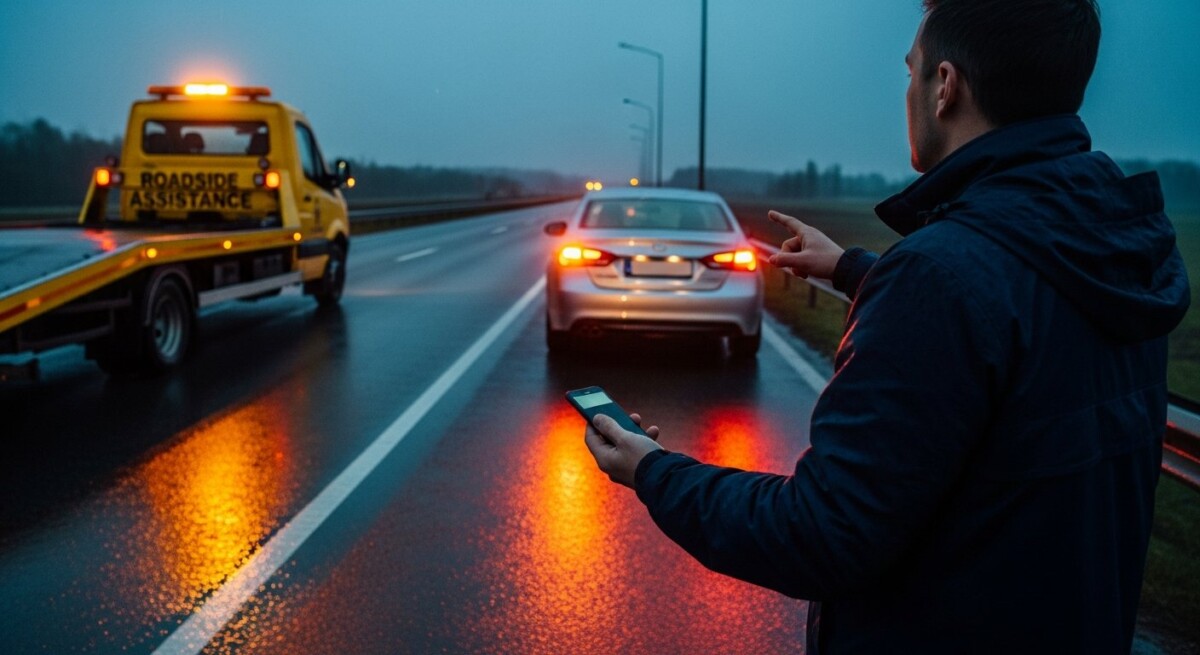
Imagine your car breaks down on a busy highway at night. Your phone battery is low, and you are unsure which towing company to call. This scenario is stressful enough without worrying about unexpected fees or long wait times. Adding roadside assistance to your auto insurance policy transforms this nightmare into a simple phone call. Instead of scrambling for a solution, you contact your insurer, and help arrives with predictable costs or even no upfront payment. This article explains how combining auto insurance with roadside assistance works, what it covers, and whether it is the right choice for your driving habits.
What Is Auto Insurance With Roadside Assistance?
Auto insurance with roadside assistance is a coverage add-on or endorsement that provides emergency services when your vehicle becomes inoperable. Unlike standard liability or collision coverage, which pays for damage from accidents, roadside assistance focuses on getting you moving again quickly. Typical services include towing, flat tire changes, battery jump-starts, fuel delivery, and lockout assistance. Many major insurers offer this as an optional feature for a few dollars per month. Some policies bundle it automatically, while others let you customize your plan.
This add-on is different from standalone roadside programs like AAA or Good Sam. When you purchase it through your insurer, you often pay a lower premium compared to a separate membership. However, the scope of services and coverage limits may vary. For example, some policies include unlimited towing up to a certain distance, while others cap the number of service calls per year. Understanding these details helps you avoid surprises when you need help most.
Key Benefits of Bundling Roadside Assistance With Your Policy
Adding roadside assistance to your existing auto insurance policy offers several practical advantages. First, it simplifies your financial planning. Instead of paying a separate annual membership fee, you roll the cost into your monthly or biannual premium. Second, you deal with one company for both claims and emergency services. If you have an accident that also requires a tow, your insurer coordinates both the repair and the roadside response. Third, many policies cover all drivers in your household, not just the policyholder. This is especially useful for families with teenage drivers or spouses who commute separately.
Another benefit is the potential for lower overall costs. Standalone roadside memberships can cost $50 to $150 per year. In contrast, insurer-based roadside assistance often adds only $10 to $30 per year per vehicle. For budget-conscious drivers, this difference matters. Additionally, some insurers offer a zero-deductible option for roadside calls, meaning you pay nothing out of pocket when you request service.
What Services Are Typically Included?
Most auto insurance with roadside assistance plans include these core services:
- Towing: Usually up to a specific distance, such as 10 or 15 miles, to the nearest repair facility.
- Battery jump-start: A technician comes to your location to restart a dead battery.
- Flat tire change: They replace your flat with your spare tire. Some policies also cover tire repair if possible.
- Fuel delivery: They bring enough gasoline or diesel to get you to a nearby station. You typically pay for the fuel itself.
- Lockout assistance: If you lock your keys inside the car, a locksmith or technician helps you gain entry.
These services cover the most common roadside emergencies. However, some policies exclude heavy-duty towing for large vehicles like RVs or trailers. Always read the fine print to confirm what is and is not covered. If you drive a specialized vehicle, ask your agent about limitations.
When Does Roadside Assistance Make Financial Sense?
Roadside assistance is not a one-size-fits-all product. For some drivers, it pays for itself after a single use. For others, it is an unnecessary monthly expense. Consider your driving patterns, vehicle age, and personal comfort with handling minor emergencies. If you frequently drive long distances on rural highways, the likelihood of a breakdown increases. Similarly, older vehicles with high mileage are more prone to mechanical failures. In these cases, the small premium for roadside assistance is a smart investment.
On the other hand, if you drive a new car with a manufacturer warranty that includes roadside help, you may already have coverage. Many automakers offer complimentary roadside assistance for the first three to five years. Before adding it to your insurance, check whether your warranty duplicates these services. Likewise, if you belong to a motor club or have credit card benefits that include towing, you might not need insurer-based assistance. For a detailed comparison of standalone versus insurer-based options, see our guide on auto insurance with roadside assistance: is it worth it?.
How to Choose the Right Provider
Selecting the best auto insurance with roadside assistance requires evaluating several factors. Start by reviewing the coverage limits for each service. For example, some policies offer free towing only up to five miles, while others offer 15 or 20 miles. If you live in a rural area far from repair shops, a higher towing limit is crucial. Next, check the number of service calls allowed per year. Most insurers permit three to five calls annually. Exceeding that limit may result in higher premiums or denial of future claims.
Another consideration is response time. Insurers contract with local towing companies and mechanics. In busy metropolitan areas, help may arrive within 30 minutes. In remote locations, you might wait an hour or longer. Read customer reviews about the insurer’s roadside network to gauge reliability. Finally, compare the cost of adding roadside assistance across multiple carriers. Some companies charge a flat fee per policy, while others charge per vehicle. For a comprehensive look at how this add-on works, read our article on auto insurance with roadside assistance: a smart add-on.
Common Exclusions and Limitations
No coverage is perfect. Roadside assistance policies often exclude certain situations. For instance, if your vehicle is disabled due to lack of maintenance, the insurer may deny the claim. Similarly, off-road breakdowns, like getting stuck in mud or snow, are typically not covered unless you purchase specialized off-road towing. Some policies also exclude services for vehicles used for commercial purposes, such as delivery vans or ride-share cars. If you drive for Uber or Lyft, ask about a commercial auto policy with roadside assistance.
Additionally, many insurers charge a deductible for towing beyond the included distance. For example, if your policy covers 10 miles of free towing but your vehicle needs to go 25 miles, you pay the difference. Some companies offer unlimited towing for an extra fee. Weigh the additional cost against how often you expect to need long-distance tows. For most drivers, the standard limit is sufficient.
Comparing Insurer-Based vs. Standalone Programs
Choosing between insurer-based roadside assistance and a standalone program like AAA depends on your priorities. Insurer-based plans are convenient and cheap, but they often have stricter limits. They treat each service call as a claim, which could potentially raise your rates if you use it frequently. Standalone programs, by contrast, do not affect your insurance premiums. They also offer additional benefits like travel discounts, trip interruption coverage, and maps. However, they cost more upfront.
Another difference is network size. Major standalone clubs have vast networks of service providers across the country, ensuring faster response times in remote areas. Insurer networks may be smaller, leading to longer waits. If you take frequent road trips or live in a region with limited towing options, a standalone program might be better. But if you want a low-cost safety net for rare emergencies, an insurer add-on is a solid choice. For a deeper dive into this comparison, check out our analysis of auto insurance with roadside assistance: smart coverage.
How to File a Roadside Assistance Claim
Using your auto insurance with roadside assistance is straightforward. Most insurers provide a 24/7 hotline or mobile app to request help. When you call, be ready with your policy number, your exact location, and a description of the problem. The dispatcher will send a nearby provider to your location. You should receive an estimated arrival time. If your car is in a dangerous spot, such as a highway shoulder, the dispatcher may prioritize your call.
After the service is completed, the provider bills your insurer directly for covered services. You only pay for anything beyond the policy limits, such as extra towing distance or fuel costs. Keep a record of the service receipt for your files. In rare cases, if you pay out of pocket, you can submit a reimbursement claim to your insurer. However, most policies require you to use their approved network to qualify for full coverage.
Frequently Asked Questions
Does roadside assistance affect my insurance rates?
Using roadside assistance is generally considered a service call, not an at-fault claim. Most insurers do not raise your premiums solely for using this benefit. However, if you file multiple roadside claims in a short period, the insurer may view you as a higher risk and adjust your rates accordingly. Check your policy terms for any usage limits.
Can I add roadside assistance to any auto insurance policy?
Most major carriers offer roadside assistance as an optional add-on. However, some discount insurers or minimum-coverage policies may not include it. You can usually add it when you purchase the policy or at any time during the policy term. Contact your agent to confirm availability.
Is towing covered for any reason?
Towing is typically covered only when your vehicle is disabled due to a mechanical breakdown, flat tire, or accident. Towing for non-emergency reasons, such as moving a vehicle to a different location, is not covered. Some policies also exclude towing if the vehicle is involved in illegal activity.
What if I have a rental car or a friend’s car?
Most auto insurance with roadside assistance covers you while driving the insured vehicle. If you are driving a rental car or a friend’s car, your personal policy may not apply. However, some insurers extend coverage to any vehicle you are driving, as long as you are the policyholder. Verify this with your provider before relying on it.
Can I use roadside assistance if my car is parked at home?
Yes, roadside assistance typically applies wherever your vehicle breaks down, including your driveway. For example, if your car will not start in your garage, you can call for a jump-start or tow to a repair shop. This is a common use case for drivers with older vehicles.
Making the Right Choice for Your Driving Needs
Ultimately, auto insurance with roadside assistance is a low-cost safety net that provides peace of mind. For a few dollars per month, you eliminate the guesswork and financial risk of unexpected breakdowns. Before purchasing, review your existing coverage, your vehicle’s reliability, and your typical driving routes. If you are still uncertain, speak with a licensed agent who can walk you through the options. Many drivers find that the convenience of having one provider for both insurance and emergency services simplifies their lives. For more details on how this coverage works in practice, see our comprehensive guide on auto insurance with roadside assistance: smart coverage.
By taking a few minutes to compare policies and understand the fine print, you can select a plan that fits your budget and lifestyle. Whether you choose insurer-based or standalone assistance, the goal is the same: to keep you safe and mobile on the road. Do not wait until you are stranded to think about roadside help. Plan ahead, and drive with confidence knowing that help is just a phone call away.