
Auto Liability Insurance: What It Covers and Why You Need It
Auto liability insurance coverage protects you from financial ruin after an at-fault accident. Call 833-275-7533 for a personalized quote and expert guidance.

By Elara Moonfield
When you get behind the wheel, you are taking on a significant financial responsibility. A single moment of distraction or bad luck can lead to an accident with devastating costs, from vehicle repairs to life-altering medical bills. The primary financial shield protecting you from these potentially ruinous expenses is auto liability insurance coverage. This is not just another line item on your policy, it is the foundational layer of protection required by law in almost every state. Understanding what liability insurance does, what it does not do, and how to choose the right limits is crucial for every driver who wants to navigate the roads with confidence and financial security.
The Core Components of Auto Liability Insurance
Auto liability insurance is specifically designed to cover costs for which you are found legally responsible after causing an accident. It does not cover damage to your own vehicle or your own medical expenses. Instead, it is divided into two mandatory components, each represented by a specific limit on your policy declarations page. These are typically expressed as three numbers, such as 25/50/25. The first two numbers pertain to bodily injury liability, while the third covers property damage liability.
Bodily Injury Liability (BI)
Bodily injury liability is the part of your auto liability insurance coverage that pays for the medical expenses, lost wages, and pain and suffering of other people injured in an accident you cause. It also provides for your legal defense if you are sued. The limits are expressed as “per person/per accident.” For example, with a 25/50 limit, your insurer will pay up to $25,000 for injuries to one individual, and up to a total of $50,000 for all injuries sustained in a single accident, regardless of the number of people hurt. If damages exceed these limits, you are personally responsible for the difference, which can lead to wage garnishment or asset seizure. This is why carrying only state minimums, which are often very low, is a considerable financial risk.
Property Damage Liability (PD)
Property damage liability covers the cost of repairing or replacing property that you damage in an at-fault accident. This most commonly refers to other vehicles, but it also includes structures like fences, mailboxes, buildings, or lampposts. Using the example of a 25/50/25 policy, the final “25” represents $25,000 of coverage for property damage per accident. Given the high cost of modern vehicles and potential liability for hitting expensive infrastructure, this limit can be exhausted quickly in a serious collision.
How Liability Coverage Works in a Real Accident Scenario
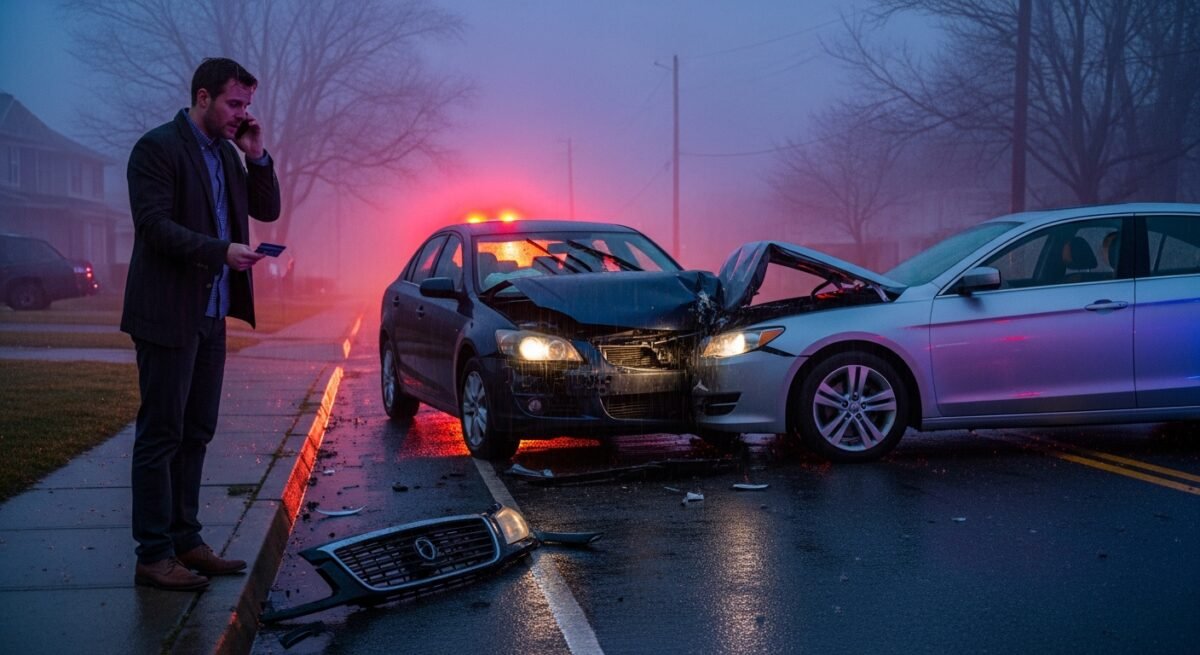
Imagine you run a red light and collide with another car carrying two passengers. The driver of the other car suffers a broken leg, incurring $30,000 in medical bills and lost wages. The passenger has minor injuries totaling $10,000. The other car is a total loss, valued at $22,000. You carry state minimum liability limits of 25/50/25.
Here is how your auto liability insurance coverage would respond: For bodily injury, your policy covers up to $25,000 per person and $50,000 per accident. The driver’s bills are $30,000, but your limit is $25,000. Your insurer pays $25,000, and you are personally liable for the remaining $5,000. The passenger’s $10,000 claim is fully covered within the per-person and total accident limits. For property damage, your limit is $25,000. The car is worth $22,000, so your policy covers the full amount. In this scenario, you face out-of-pocket costs of $5,000, plus potential legal fees from a lawsuit the injured driver may file to recover the unpaid balance. This starkly illustrates why higher limits are advisable. For a deeper dive into policy structures, our article on what full auto insurance coverage truly means explores how liability fits into a comprehensive protection plan.
Liability Insurance vs. Other Coverage Types
It is essential to distinguish liability coverage from other common parts of an auto insurance policy. Liability is outward-facing, protecting others from your mistakes. Other coverages are inward-facing, protecting you and your property.
- Collision Coverage: Pays for damage to your own car from an accident with another vehicle or object, regardless of fault.
- Comprehensive Coverage: Covers damage to your car from non-collision events like theft, vandalism, fire, or falling objects.
- Uninsured/Underinsured Motorist Coverage (UM/UIM): Protects you if you are hit by a driver with no insurance or insufficient liability limits. This is critical, as it addresses the gap left by another driver’s inadequate auto liability insurance coverage.
- Medical Payments (MedPay) or Personal Injury Protection (PIP): Covers medical expenses for you and your passengers, regardless of who is at fault.
A policy with only liability insurance is often called “state minimum” coverage. Adding collision, comprehensive, and UM/UIM creates a much more robust safety net. The legal requirements for liability are just the starting point for responsible financial planning.
Choosing the Right Liability Limits for Your Situation
Selecting your liability limits is one of the most important financial decisions you will make as a driver. State minimums are dangerously low, often 25/50/25 or similar. Financial experts and insurance agents universally recommend carrying limits that reflect your net worth and future earning potential. A serious accident can result in a multi-million dollar judgment against you. If your insurance is exhausted, your personal assets (home, savings, investments) are at risk.
A common and prudent recommendation is to carry limits of at least 100/300/100. For even greater protection, consider 250/500/250 or pairing these limits with an umbrella insurance policy. An umbrella policy provides an extra layer of liability protection (often $1 million or more) that kicks in once your auto or homeowners insurance limits are reached. It is a relatively inexpensive way to secure significant peace of mind. When evaluating your needs, consider these key factors:
- Your Assets and Net Worth: The more you own, the more you have to lose in a lawsuit.
- Your Future Income: Courts can garnish future wages to satisfy a judgment.
- Your Driving Environment: Dense urban areas with higher traffic and more expensive vehicles may warrant higher limits.
- Your Risk Tolerance: Are you comfortable with the potential of personal financial ruin?
Our dedicated guide, Auto Liability Insurance Explained: Coverage, Limits, Legal Requirements, provides a detailed framework for making this vital calculation.
Frequently Asked Questions About Auto Liability Insurance
Is liability insurance required everywhere?
Yes, 49 states and the District of Columbia require drivers to carry a minimum amount of auto liability insurance. New Hampshire is the sole exception, but it still holds drivers financially responsible for damages they cause.
What happens if I drive without liability insurance?
Penalties vary by state but can include hefty fines, license and registration suspension, vehicle impoundment, and even jail time for repeat offenses. If you cause an accident while uninsured, you will be personally liable for all damages.
Does my liability insurance cover me if I drive a rental car?
Often, yes. Your personal auto liability insurance typically extends to rental cars for the same coverage limits. However, verify with your insurer. Rental companies also sell liability insurance waivers at the counter.
Will my policy cover me if I’m driving for a ride-share service like Uber or Lyft?
Most personal auto policies exclude coverage during periods when you are logged into a ride-share app and are available for hire. Both companies provide contingent liability coverage during this phase, but gaps exist. You likely need a specific ride-share endorsement or commercial policy.
If someone else drives my car and crashes, whose insurance pays?
In most cases, auto liability insurance follows the vehicle, not the driver. Your insurance would be primary for an at-fault accident caused by a permitted driver. Their insurance might act as secondary coverage if your limits are exhausted.
Auto liability insurance coverage is the cornerstone of responsible vehicle ownership. It fulfills a legal mandate and, more importantly, serves as a critical financial buffer between a momentary error and a lifetime of debt. By moving beyond bare-minimum limits and understanding how this coverage interacts with other parts of your policy, you transform it from a simple compliance tool into a powerful component of your overall financial security strategy. Regularly reviewing your limits with an insurance professional ensures your protection evolves alongside your life and assets.