
Car Totaled? Your Insurance Guide to Payouts
Navigate a totaled car claim with confidence. Our insurance guide explains payouts, gap coverage, and more. Call (833)-275-7533 for expert help.

By Beckett Nolan
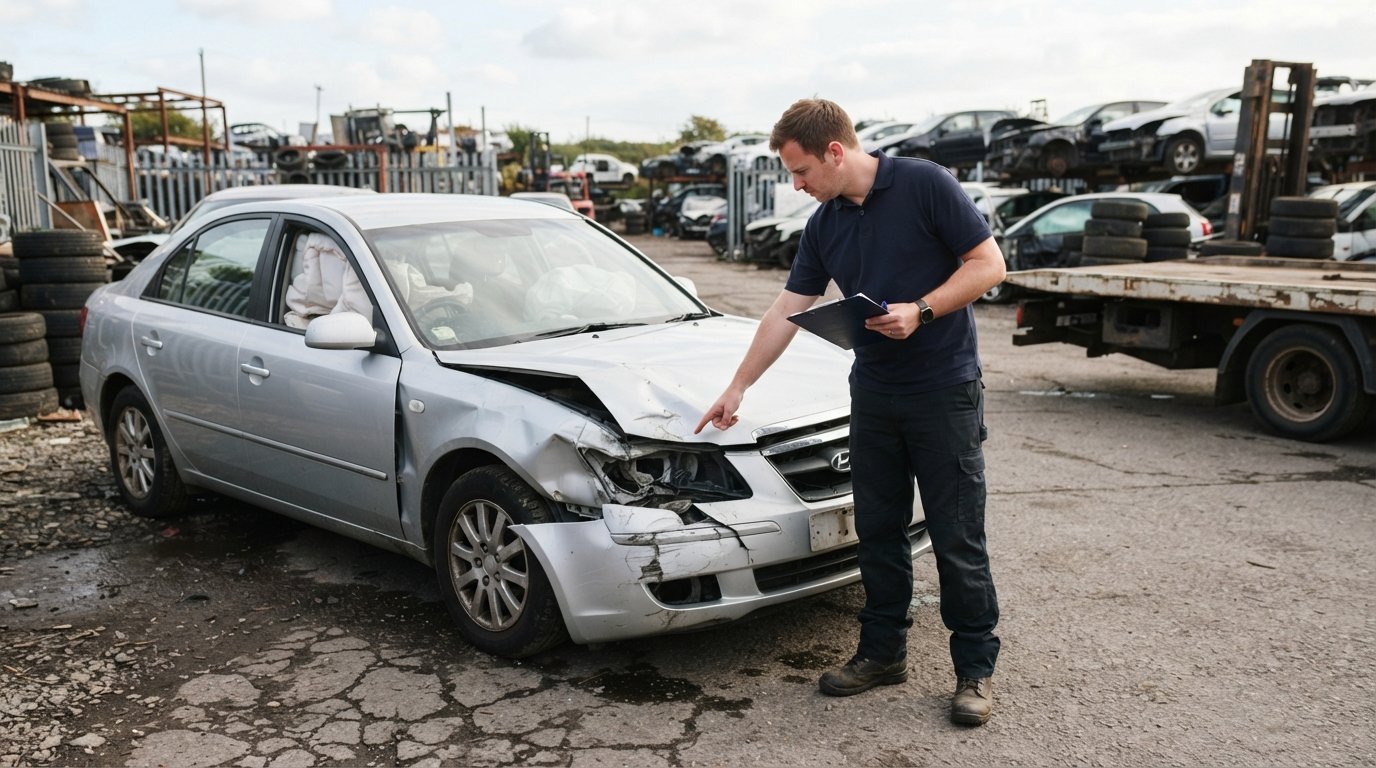
That sinking feeling when the adjuster says "total loss" is real. One moment you are dealing with a banged-up bumper, and the next you are navigating a claims process that feels designed to confuse you. Your car is not just metal and plastic; it is your ride to work, your kids' school bus, and a major line item in your budget. When it is declared a total loss, the pressure to make fast decisions can lead to costly mistakes. This guide walks you through exactly what to do if your car is totaled insurance guide, from the moment of the crash to the final check, so you can protect your financial interests and get back on the road with confidence.
How Insurers Decide a Car Is Totaled
The word "totaled" does not mean your car is a mangled heap of metal. It is an economic calculation. Insurance companies compare the cost of repairs to the actual cash value (ACV) of your vehicle. Each state sets its own total loss threshold, usually expressed as a percentage of the car's value. In many states, if repairs exceed 70% to 80% of the ACV, the insurer declares a total loss. Some states use a different formula based on the salvage value, but the principle is the same: if fixing the car costs more than the car is worth (or a high percentage of it), the insurer writes it off.
This threshold matters because it directly affects your payout. For example, if your car is worth $10,000 and the repair estimate is $7,500, a state with an 80% threshold would consider it repairable, while a state with a 70% threshold would total it. Knowing your state's rule helps you anticipate the outcome. You can usually find this information on your state's department of insurance website or by asking your adjuster directly. Remember that the adjuster's repair estimate is based on visual inspection and industry parts pricing, so it may not capture hidden damage. If you suspect the estimate is too low, you have the right to request a teardown inspection at a shop you trust.
Step-by-Step: What to Do When Your Car Is Totaled
The days following a total loss are critical. Your actions can influence the settlement amount and how quickly you get paid. Here is a practical sequence to follow.
- Ensure everyone is safe and document the scene. If you have not already done so, get medical attention for anyone injured. Then take photos of the damage, the other vehicle, and the surrounding area. Exchange insurance information with the other driver. If police respond, get the report number.
- Notify your insurer promptly. Report the claim as soon as possible. Provide a clear account of what happened. Your insurer will assign a claims adjuster and may arrange a tow to a salvage yard or repair shop for evaluation.
- Secure your personal belongings. Before the car is towed away, remove all personal items, including toll transponders, charging cables, and garage door openers. Once the vehicle is in the salvage yard, retrieving items can be difficult.
- Cooperate with the valuation process. The adjuster will inspect the car and research its market value. Provide maintenance records, receipts for recent repairs, and any evidence of your car's condition. This documentation can support a higher ACV.
- Review the settlement offer carefully. Do not accept the first offer without verifying it. Compare it to independent valuation sources and be prepared to negotiate if you find discrepancies.
Following these steps keeps the process moving and protects your rights. Delays often happen when paperwork is incomplete or the insurer cannot reach you, so respond to requests quickly and keep a log of all communications.
Understanding Your Settlement: Actual Cash Value vs. Replacement Cost
Most auto policies pay actual cash value (ACV) for a total loss. ACV is the market value of your car just before the accident, minus your deductible. It is not what you paid for the car, and it is not what it would cost to buy a brand-new replacement. The insurer typically uses third-party valuation tools that analyze local listings, mileage, condition, and options. You have the right to see the valuation report and challenge it if you believe it is wrong.
To verify the offer, gather your own evidence. Check online listings for similar vehicles in your area with comparable mileage and features. If your car had recent upgrades (new tires, a replaced transmission, a premium sound system), provide receipts. These can increase the value. Also, confirm that the insurer included all applicable taxes and fees. In many states, the settlement must include sales tax and title transfer fees so you can replace the vehicle without paying out of pocket for those costs.
If your policy includes replacement cost coverage (less common on older cars), the payout is based on the cost to replace the vehicle with a comparable new one, which can be significantly higher. Review your policy declarations page to see which valuation method applies. When you are ready to shop for a new policy, our comparison tool can help you find quotes quickly, and you can also read our guide on what to do when your car insurance cancels your policy to stay covered without gaps.
When the Payout Falls Short: Gap Insurance and Loan Payoff
One of the most painful surprises after a total loss is discovering that the insurance check does not cover your auto loan balance. This situation, known as being "upside down" on a car loan, happens because vehicles depreciate faster than many people pay them off. If you owe $15,000 but the ACV is $12,000, you are responsible for the $3,000 difference (plus your deductible) unless you have gap insurance.
Gap insurance covers the difference between your car's ACV and your loan or lease balance. It is often offered by dealerships at the time of purchase, but you can also buy it from some insurers. If you do not have gap coverage, you must continue making loan payments until the balance is satisfied, even though you no longer have the car. Some lenders offer payment plans, but the debt remains. Review your financing paperwork to see if gap coverage was included. If you are leasing, gap coverage is sometimes built into the lease agreement, but always verify.
Keeping the Salvage: Rebuilt Titles and Risks
You may have the option to buy back your totaled car from the insurer at its salvage value. This is sometimes called "retaining the salvage." The insurer deducts the salvage value from your settlement, and you get the car plus a check for the difference. You can then repair it and apply for a rebuilt title, which allows you to drive it legally. However, this path comes with significant caveats.
First, the car will carry a rebuilt or salvage title permanently, which drastically reduces its resale value. Second, obtaining a rebuilt title requires passing a state inspection, and the process varies by state. Third, some insurers will not offer full coverage on a rebuilt-title vehicle, and those that do may charge higher premiums. Finally, if the repairs are not done to safety standards, you could be putting yourself and others at risk. Retaining the salvage only makes sense if you have mechanical expertise, a reliable repair shop, and a clear plan for the vehicle's future.
Negotiating a Fair Settlement
Insurance companies are businesses, and their first offer is often their lowest. You are not obligated to accept it. If you have done your homework and believe the ACV is too low, present your evidence calmly and clearly. Point to specific listings, maintenance records, and any recent upgrades. Ask the adjuster to explain how they calculated the value and to correct any errors, such as missing options or incorrect mileage. If negotiations stall, you can request a review by a supervisor or, in some states, invoke an appraisal clause. The appraisal process involves hiring independent appraisers (one for you, one for the insurer) to determine the value, with costs typically split between the parties. This can be a powerful tool if the gap is significant.
For more resources on comparing coverage and finding savings, you can explore educational content at NewAutoInsurance, which offers independent guidance on auto insurance topics. The key is to stay informed and persistent. A well-documented case often leads to a better outcome.
Timeline: From Tow Yard to Final Payment
Every claim is different, but most total loss claims follow a general timeline. After you report the accident, the insurer typically inspects the vehicle within a few days. The valuation and settlement offer may take one to two weeks, depending on the complexity and the insurer's workload. Once you agree on the amount, payment is usually issued within 5 to 10 business days. If there is a loan or lease, the insurer may pay the lender directly and send you any excess. Keep in mind that delays can occur if there are disputes over liability, missing paperwork, or multiple parties involved. Stay proactive: follow up regularly and provide requested information immediately. The sooner you act, the sooner you can move on.
Having your car totaled is stressful, but you are not powerless. By understanding the process, verifying the settlement, and knowing your options for gap coverage and salvage retention, you can navigate the insurance maze and secure the funds you need to get back on the road. Take your time, ask questions, and do not be afraid to advocate for yourself.