
Comprehensive vs Collision Coverage: Key Difference Explained
Understand the comprehensive vs collision coverage difference explained with clear examples, so you avoid surprise repair bills and choose the right deductible.

By Julian Prescott
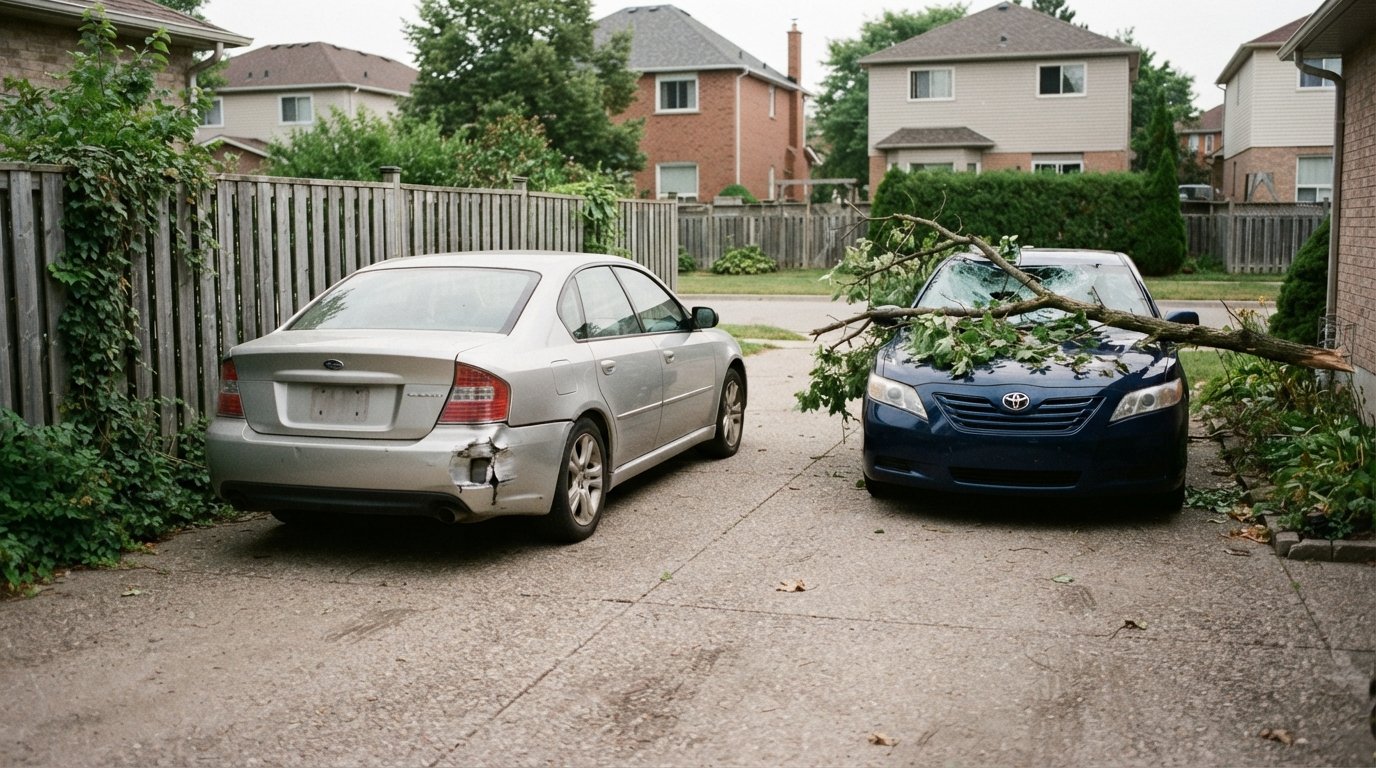
Imagine backing out of a driveway and scraping your neighbor's fence. Now imagine waking up to find a fallen tree branch crushed your windshield. One scenario involves your car hitting something, and the other involves something hitting your car. That single distinction sits at the heart of the comprehensive vs collision coverage difference explained in this guide. Drivers often lump these two protections together under the phrase "full coverage," but they solve very different problems, carry different deductibles, and affect your premium in different ways. Understanding which one pays for what can mean the difference between a stress-free claim and a surprise bill of several thousand dollars. This article breaks down both coverage types, shows how they work together, and helps you decide which ones belong on your policy.
What Collision Coverage Actually Pays For
Collision coverage is the part of your auto policy that pays to repair or replace your own vehicle when it is damaged in a collision with another object. That object can be another car, a guardrail, a mailbox, a concrete pillar in a parking garage, or a tree. If your car strikes something, or something strikes your car while it is moving, collision coverage typically responds. It does not matter who caused the accident for the coverage to apply to your vehicle. If you were at fault, collision still pays for your repairs, minus your deductible. If the other driver was at fault but their insurer is slow to pay, your collision coverage can step in and fix your car first, then your insurer may pursue the other party for reimbursement.
This is a critical point that many drivers miss. Liability coverage, which is required in almost every state, pays for damage you cause to other people and their property. It does nothing for your own car. Collision coverage fills that gap. Without it, a single at-fault accident could leave you paying out of pocket for a new bumper, a rebuilt transmission, or an entirely new vehicle. That is why lenders and leasing companies almost always require collision coverage on financed or leased cars. They want to protect their investment, and so should you.
Collision claims also cover single-car accidents. If you swerve to avoid a deer, hit a curb, and damage your suspension, that is a collision claim. If you slide on ice and hit a fence, that is a collision claim. The common thread is impact. For a deeper breakdown of how collision claims work in practice, including payout scenarios and deductible choices, see this guide on collision coverage key differences.
What Comprehensive Coverage Actually Pays For
Comprehensive coverage handles the opposite category of damage: everything that can go wrong when your car is not colliding with anything. Think theft, fire, hail, flooding, vandalism, falling objects, and animal strikes. If a deer runs into your parked car, that is comprehensive. If someone keys your door in a parking lot, that is comprehensive. If a hailstorm dents your hood and roof, that is comprehensive. If your car is stolen and never recovered, comprehensive pays the actual cash value of the vehicle, minus your deductible.
This coverage is sometimes called "other than collision" for obvious reasons. It exists because the world is full of hazards that have nothing to do with driving. Weather events, crime, and random accidents happen constantly, and repair bills for those events can be just as expensive as collision repairs. A single hailstorm in Texas or Colorado can total a car. A catalytic converter theft can cost over two thousand dollars to replace. Comprehensive coverage turns those financial shocks into a manageable deductible payment.
Comprehensive coverage is usually optional, but it is often required if you have a loan or lease. Even if it is not required, it is worth considering for any vehicle you could not afford to replace out of pocket. It also tends to be less expensive than collision coverage because claims are less frequent, though that varies by state and by the specific risks in your area.
Side by Side: The Core Differences Explained
The clearest way to see the comprehensive vs collision coverage difference explained is to look at what triggers each one. Collision is about impact with another object. Comprehensive is about everything else. That single rule resolves most confusion, but the practical details matter just as much. Deductibles, premium impact, and claim scenarios all differ between the two.
Here are the main distinctions in a quick reference list:
- Trigger: Collision requires an impact with another vehicle or object. Comprehensive covers non-impact events like theft, weather, fire, and vandalism.
- Fault: Collision pays regardless of fault for your own vehicle. Comprehensive pays regardless of fault because fault is rarely a factor in those events.
- Deductible: Both have separate deductibles. You might choose a five hundred dollar deductible for collision and a two hundred fifty dollar deductible for comprehensive, or vice versa.
- Requirement: Both are typically required on financed or leased vehicles. Neither is legally required by state law in most states, though lenders impose their own rules.
- Premium impact: Collision usually costs more because at-fault accidents are more common than hail storms or thefts. Comprehensive is often cheaper but can rise in high-theft or severe-weather areas.
Those five points cover the bulk of what separates the two coverages. The next step is understanding how they work together on a single policy. Most drivers who carry one also carry the other, and the combination is what people loosely call "full coverage." That term is not a legal or standardized insurance product, but it generally means you have both collision and comprehensive, plus liability and any other required coverages.
How Deductibles Work for Each Coverage
A deductible is the amount you pay out of pocket before your insurer pays the rest of a covered claim. If your collision deductible is five hundred dollars and the repair bill is three thousand dollars, you pay five hundred and your insurer pays two thousand five hundred. If the repair bill is four hundred dollars, you pay the whole thing because it is below your deductible. That is why choosing a deductible is a balancing act. A higher deductible lowers your premium but increases your financial exposure when you file a claim.
Collision and comprehensive deductibles are separate. You can set them at different levels. Many drivers choose a lower comprehensive deductible because comprehensive claims, like a cracked windshield or a stolen side mirror, tend to be smaller and more frequent. A two hundred fifty dollar comprehensive deductible might cost only a few dollars more per month than a five hundred dollar one, and it makes small claims much easier to handle. Collision deductibles are often set higher, sometimes one thousand dollars, to keep premiums down on a coverage that can be expensive.
Some insurers offer vanishing or diminishing deductibles. These programs reduce your deductible by a set amount for every claim-free year, eventually bringing it to zero. They can be a good fit if you are a safe driver and want to lower your out-of-pocket risk over time. Always ask whether a vanishing deductible applies to both collision and comprehensive or only one of them.
When to Carry Both, One, or Neither
The right combination depends on your car's value, your financial cushion, and your tolerance for risk. There is no single answer that fits every driver, but some general guidelines help. If your car is worth less than a few thousand dollars, the cost of collision and comprehensive might approach the payout you would receive after a claim. In that case, dropping one or both coverages could free up premium dollars for other needs. If your car is new, leased, or financed, you almost certainly need both.
Consider these scenarios to guide your decision:
- New car with a loan: Carry both. The lender will require them, and replacing the car out of pocket is not realistic for most households.
- Older car worth five thousand dollars: Run the numbers. If annual premiums for both coverages exceed ten to fifteen percent of the car's value, you might self-insure for physical damage.
- High-theft area: Keep comprehensive even if you drop collision. Theft risk is real and expensive.
- Hail-prone state: Keep comprehensive. A single storm can total a vehicle, and repairs are costly.
- Safe driver with a valuable car: Carry both and consider a higher deductible to lower premiums while keeping protection.
These are starting points, not rigid rules. Your insurer, your agent, and your state's regulations all influence what makes sense. The goal is to avoid paying for coverage you will never use while also avoiding a catastrophic out-of-pocket bill you cannot afford.
How Each Coverage Affects Your Premium
Collision coverage generally costs more than comprehensive because collision claims are more frequent and often more expensive. At-fault accidents happen every day, and repair costs have risen sharply in recent years due to advanced technology in bumpers, sensors, and cameras. Comprehensive coverage is usually cheaper, but it can be surprisingly expensive in areas with high theft rates or frequent severe weather. Insurers price comprehensive based on local risk, so two drivers with identical cars in different zip codes can pay very different amounts.
Both coverages are subject to your deductible, and both can be affected by your claims history. A single at-fault collision claim can raise your premium for several years. Comprehensive claims, especially weather-related ones, often have less impact because they are not considered your fault. However, filing too many claims of any kind can mark you as a high-risk policyholder and lead to higher rates or non-renewal.
One practical way to manage costs is to compare quotes from multiple carriers. Rates for the same coverage can vary by hundreds of dollars per year. Using a comparison platform like NewAutoInsurance can help you see how different insurers price collision and comprehensive coverage for your specific vehicle, driving record, and location. That kind of side-by-side view makes it easier to decide whether a higher deductible, a lower limit, or a different insurer is the right move.
Common Myths About Comprehensive and Collision
Misunderstandings about these coverages are common, and they can lead to costly mistakes. One persistent myth is that comprehensive coverage pays for everything that is not a collision. In reality, comprehensive has exclusions. It does not cover mechanical breakdown, normal wear and tear, or damage from racing or off-road use. Another myth is that collision coverage pays for the other driver's car. It does not. That is what liability coverage is for. Collision pays for your car, regardless of who caused the accident.
A third myth is that "full coverage" is a standard product with a fixed set of features. There is no universal definition. Full coverage typically means liability plus collision plus comprehensive, but the limits and deductibles vary widely. Some states require additional coverages like personal injury protection or uninsured motorist coverage. Always read your policy or ask your agent exactly what "full coverage" includes.
Finally, many drivers believe comprehensive coverage is only for expensive cars. That is not true. Even an older car can be stolen, flooded, or damaged by hail. The question is not whether the car is expensive but whether you can absorb the loss without financial strain. If the answer is no, comprehensive coverage is worth considering.
Filing a Claim: What to Expect
When you file a claim, the process differs slightly depending on whether it is a collision or comprehensive claim. For a collision claim, your insurer will typically ask for a police report, photos of the damage, and information about the other parties involved. They may inspect your car or send an adjuster to assess the damage. If you were at fault, your rates may rise. If the other driver was at fault, your insurer may pursue subrogation to recover what they paid, and you may get your deductible back.
For a comprehensive claim, the process is often simpler because there is rarely another party to pursue. You report the theft, fire, flood, or vandalism, provide documentation, and your insurer pays the claim minus your deductible. Weather claims can be handled in bulk after a major storm, which sometimes slows the process but rarely complicates it. The key in both cases is to document everything, report promptly, and keep records of all communication with your insurer.
Understanding the difference between collision and comprehensive coverage is not just academic. It affects how you file a claim, what you pay, and how much your insurer reimburses. Drivers who know the rules can avoid mistakes like filing a collision claim for a theft or assuming comprehensive covers a mechanical failure. That knowledge translates directly into money saved and stress avoided.
Take a few minutes to review your current policy. Check whether you have both coverages, what your deductibles are, and whether your limits still match the value of your car. If something looks off, request quotes from multiple insurers and compare. The right coverage mix is the one that protects your finances without overpaying for risks you can handle yourself. With the comprehensive vs collision coverage difference explained clearly, you are in a much better position to make that call.