
Does Car Insurance Cover Pothole and Road Debris Damage?
Pothole damage may be covered by collision or comprehensive insurance. Call (833)-275-7533 to compare quotes and find the right coverage for road hazards.

By Felix Rourke
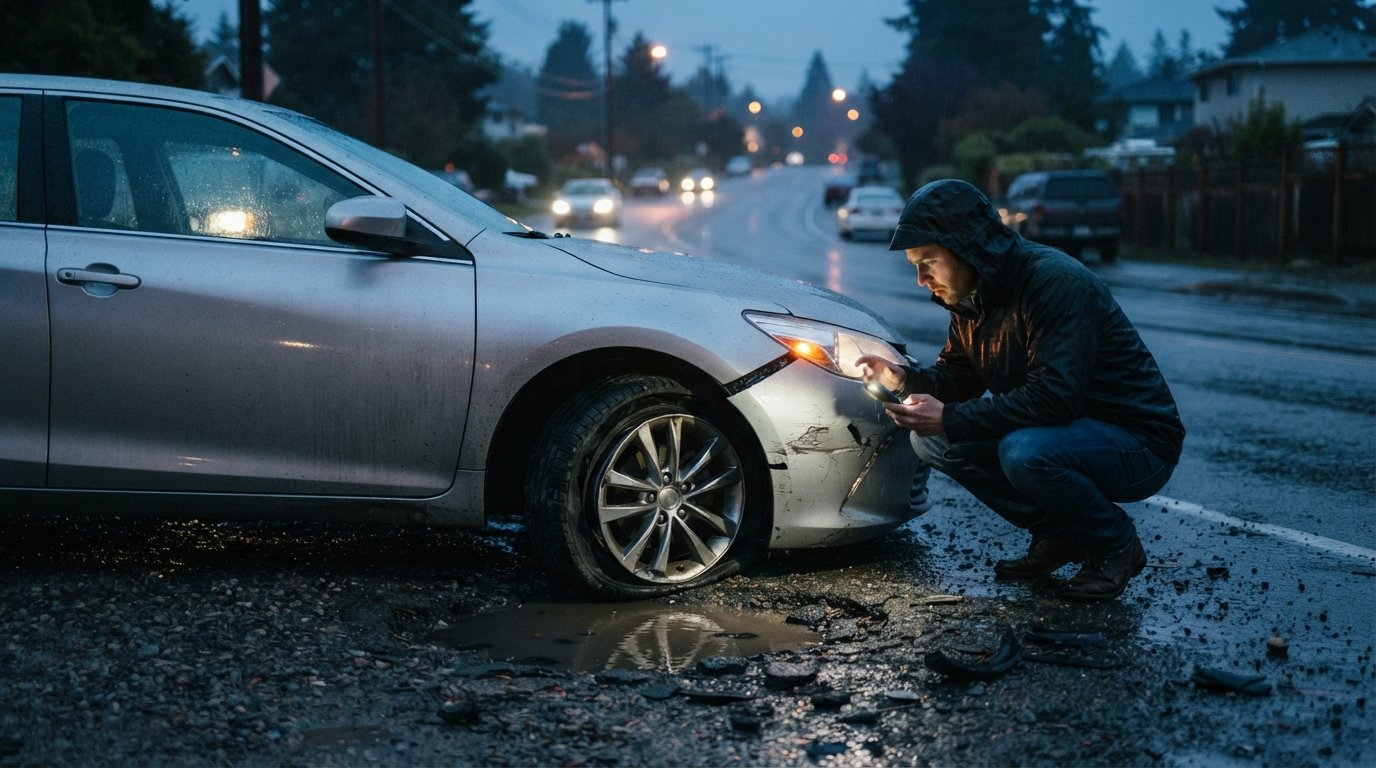
A loud thud, a sudden jolt, and your steering wheel jerks in your hands. You have just hit a pothole or a piece of road debris, and now you are staring at a bent rim, a torn tire, or a cracked bumper. The first question that runs through your mind is simple: does car insurance cover damage from potholes and road debris? The answer depends on the type of coverage you carry, your deductible, and the circumstances of the incident. Understanding how your policy responds to these common road hazards can save you hundreds or even thousands of dollars in out-of-pocket repairs, and it can help you decide whether filing a claim is actually worth it.
This guide breaks down the coverage types that apply to pothole and debris damage, explains the deductible math you need to run before calling your insurer, and walks through the process of seeking reimbursement from a government agency. You will also learn why tire and wheel damage often falls into a gray area and how a single claim can affect your future premiums. By the end, you will have a clear framework for handling road hazard damage without overpaying or damaging your insurance record.
Collision vs. Comprehensive: Which Coverage Pays for Road Hazards?
The short answer to whether car insurance covers pothole damage is that it usually falls under collision or comprehensive coverage, depending on how the damage occurs. Collision coverage pays to repair damage to your vehicle when it collides with another object, and that includes a pothole, a curb, a guardrail, or a piece of debris lying in the road. If your car strikes a pothole and the impact damages your tire, wheel, suspension, or bumper, your collision coverage is typically the provision that responds. The same is true if you hit a chunk of debris that falls from a truck or is left in the roadway.
Comprehensive coverage, by contrast, pays for damage that is not caused by a collision. This includes theft, fire, vandalism, weather events, and falling objects. If a rock flies up from the road and cracks your windshield, or if a piece of debris falls from an overpass and lands on your hood, comprehensive coverage is more likely to apply. The distinction matters because collision and comprehensive each carry their own deductible, and the claims process can differ slightly. For drivers who want the broadest protection against road hazards, carrying both collision and comprehensive coverage (often called full coverage) is the safest approach.
It is important to note that liability coverage, which is required in nearly every state, does not pay for damage to your own vehicle. Liability insurance covers injuries and property damage you cause to others. If you only carry the state minimum liability coverage and you hit a pothole, your insurer will not pay to fix your car. This is why drivers who finance or lease a vehicle are usually required to carry collision and comprehensive coverage, and why even owners of older vehicles should weigh the cost of these coverages against the risk of expensive road hazard repairs.
When does comprehensive coverage apply to road debris?
Comprehensive coverage is more likely to apply when the damage is caused by something other than a direct collision with the road surface. For example, if you are driving behind a construction truck and a piece of gravel chips your paint or cracks your windshield, that is typically a comprehensive claim. Similarly, if a tree branch falls onto your car while you are driving, comprehensive coverage responds. The key is whether the damage resulted from a collision with another vehicle or object (collision) or from an external event like a falling object, fire, or theft (comprehensive). Some insurers may classify debris strikes as collision if the debris was stationary in the road and you hit it, so it is always best to confirm with your carrier how they handle these scenarios.
The Deductible Math: When Filing a Claim Does Not Pay
Even when you have the right coverage, filing a claim for pothole or debris damage is not always a smart financial move. Your deductible is the amount you pay out of pocket before your insurance kicks in. If the repair cost is close to or below your deductible, filing a claim accomplishes nothing except putting a mark on your insurance record. For example, if you have a $500 deductible and the damage to your tire and wheel is $600, your insurer will pay only $100 after you cover the first $500. That $100 payout may not be worth the potential premium increase that comes with a claim.
Before you call your insurer, gather repair estimates from at least two reputable shops. Then compare the lowest estimate to your deductible. As a rule of thumb, if the repair cost is less than twice your deductible, you are probably better off paying out of pocket. If the repair cost is significantly higher than your deductible, filing a claim may make sense, especially if the damage is extensive and affects safety-critical components like suspension or steering. Keep in mind that some policies have separate deductibles for collision and comprehensive, and some may waive the deductible for certain types of comprehensive claims, such as windshield repair. Always review your policy declarations page to understand your exact deductible structure.
Another factor to consider is the long-term impact on your premiums. Insurance companies track claims history, and a collision claim, even a small one, can increase your rates at renewal. A comprehensive claim is sometimes treated more leniently because it is considered no-fault, but not all insurers make that distinction. If you are already paying a high premium due to a poor credit score or a high-risk driving history, adding a claim could push your rate even higher. Running the numbers before you file is the best way to protect your wallet.
For drivers who are unsure whether their policy will respond, it helps to speak with a licensed agent who can review your coverage and explain the likely outcome. You can also use educational resources like NewAutoInsurance to understand how different coverage types interact and what questions to ask your carrier. Being informed before you file can prevent surprises and help you make a decision that aligns with your financial goals.
Filing a Claim Against a City or State Agency
Many drivers wonder if they can recover the cost of pothole damage from the government entity responsible for maintaining the road. The answer is sometimes yes, but the process is rarely quick or guaranteed. Municipalities and state agencies have a legal duty to keep roads in a reasonably safe condition, but they are protected by a doctrine called sovereign immunity, which limits when you can sue them. To have a valid claim, you generally must prove that the government knew or should have known about the pothole or debris and failed to fix it within a reasonable time. You also must show that the damage was directly caused by the road hazard and that you were not negligent (for example, you were not speeding or driving distracted).
If you decide to pursue a claim, you will need to gather evidence: photographs of the pothole or debris, photos of the damage to your vehicle, repair estimates, and a police report if one was filed. You should also note the exact location and time of the incident. Most municipalities have a specific claims process and a deadline for filing, often 30 to 180 days from the date of the incident. Missing that deadline can void your claim entirely. Some cities have online claim forms, while others require written notice by mail. It is wise to send your claim via certified mail so you have proof of delivery.
Even if you follow every step correctly, there is no guarantee of payment. Many claims are denied because the government can show it had no prior notice of the hazard or because the hazard was on a road it does not maintain (such as a private road or a state highway maintained by a different agency). If your claim is denied, you may still be able to appeal or file a small claims lawsuit, but the time and effort involved may outweigh the repair cost. For minor damage, paying out of pocket is often the more practical choice. For significant damage, consulting with an attorney who specializes in government claims may be worthwhile.
What to do immediately after hitting a pothole or debris
Your actions in the moments after the incident can affect both your insurance claim and any potential claim against a government agency. Here is a step-by-step list to follow:
- Pull over safely: Find a safe spot to stop and assess the damage. Turn on your hazard lights and stay out of traffic.
- Document the scene: Take photos of the pothole or debris, the surrounding road, and any damage to your vehicle. Note the location, time, and weather conditions.
- Check for safety issues: Inspect your tires, wheels, and undercarriage for obvious damage. If the car is not safe to drive, call a tow truck.
- Get repair estimates: Visit a reputable shop for a written estimate before contacting your insurer. This helps you evaluate whether filing a claim is worthwhile.
- Report the hazard: Notify the local department of transportation or public works so the hazard can be fixed and so there is a record of the problem.
Following these steps protects your safety and preserves evidence that may be useful if you decide to file an insurance claim or seek reimbursement from a government entity. It also helps you avoid further damage by driving on a compromised tire or suspension.
Tire and Wheel Damage: The Exclusion You Need to Know
One of the most common surprises for drivers is that tire and wheel damage is often excluded or limited under many auto insurance policies. Some insurers will not pay to replace a tire or wheel unless it is damaged in the same incident that damages other parts of the vehicle. For example, if you hit a pothole and only the tire and wheel are damaged, some policies may deny the claim entirely or apply a separate deductible. If the same pothole also bends your suspension or cracks your bumper, the entire repair may be covered under collision coverage, including the tire and wheel. The exact rules vary by insurer and by state, so it is essential to read your policy or ask your agent specifically about tire and wheel coverage.
Some drivers purchase optional tire and wheel protection, which is a separate product often sold by dealerships or third-party providers. This coverage typically pays for tire replacement and wheel repair due to road hazards, and it may have no deductible or a small one. However, these products can be expensive and may not be worth the cost for every driver. If you frequently drive on poorly maintained roads, the peace of mind may justify the expense. Otherwise, relying on collision or comprehensive coverage (if you carry it) is usually sufficient, provided you understand the exclusions.
It is also worth noting that wear and tear is never covered by auto insurance. If your tires are bald or your wheels are damaged from gradual wear, insurance will not pay for replacement. Insurance is designed for sudden, accidental events, not for maintenance. Keeping your tires properly inflated and aligned can reduce the risk of pothole damage and improve your fuel efficiency, which is a simple way to protect your vehicle and your budget.
How a Pothole Claim Affects Future Rates and Quotes
Filing a claim for pothole or debris damage can influence your future insurance premiums, but the impact varies widely. Collision claims are generally considered at-fault claims by many insurers, even if the pothole was not your fault, because you were the one driving the vehicle that struck the object. A single collision claim can raise your premium by a significant percentage at renewal, and the increase may stay on your record for three to five years. Comprehensive claims, which are often considered no-fault, may have a smaller or no impact on your rate, but not all insurers treat them the same way. Some companies offer accident forgiveness or claim forgiveness programs that protect your rate after a first claim, so it is worth asking your agent about these features.
Before you file, consider getting new quotes from other carriers to see how your rate might change. If you are already paying a high premium, a claim could make your policy unaffordable. On the other hand, if you have a clean record and a good relationship with your insurer, a single comprehensive claim may not hurt much. The key is to run the numbers and make an informed decision. You can also ask your insurer directly how a claim would affect your rate; some companies will provide a general estimate without penalty.
If you are in the process of shopping for insurance, it is wise to compare quotes with and without a claim on your record so you understand the potential cost. Educational platforms like 2026 Rental Car Insurance: Key Coverage Updates can help you understand how different coverage types and claims histories interact, especially if you frequently rent vehicles or drive in unfamiliar areas where road hazards are more common. Being proactive about your coverage and your driving record is the best way to keep your premiums under control.
Practical Tips to Protect Yourself from Road Hazard Damage
While you cannot control the condition of every road, you can take steps to reduce the risk of pothole and debris damage and to minimize the financial impact when it happens. First, maintain adequate following distance so you have time to spot and avoid hazards. Second, keep your tires properly inflated and replace them before they become bald; healthy tires absorb impacts better and are less likely to blow out. Third, consider carrying collision and comprehensive coverage if your vehicle is worth more than a few thousand dollars, and review your deductibles to find a balance between affordability and out-of-pocket risk. Finally, report potholes and debris to local authorities so they can be repaired, which helps everyone on the road.
If you do hit a pothole or debris, remember that the decision to file a claim should be based on the math, not on emotion. Get estimates, compare them to your deductible, and consider the long-term effect on your premiums. And if you are unsure whether your policy covers the damage, call your insurer or a licensed agent for guidance. The more you know about your coverage, the better equipped you are to handle whatever the road throws at you.
Ultimately, the question of whether car insurance covers damage from potholes and road debris comes down to the coverage you carry and the specifics of the incident. Collision and comprehensive coverage are your primary tools, but deductibles and exclusions can limit their usefulness. By understanding your policy, documenting the damage, and running the numbers, you can make a smart decision that protects both your vehicle and your wallet.