
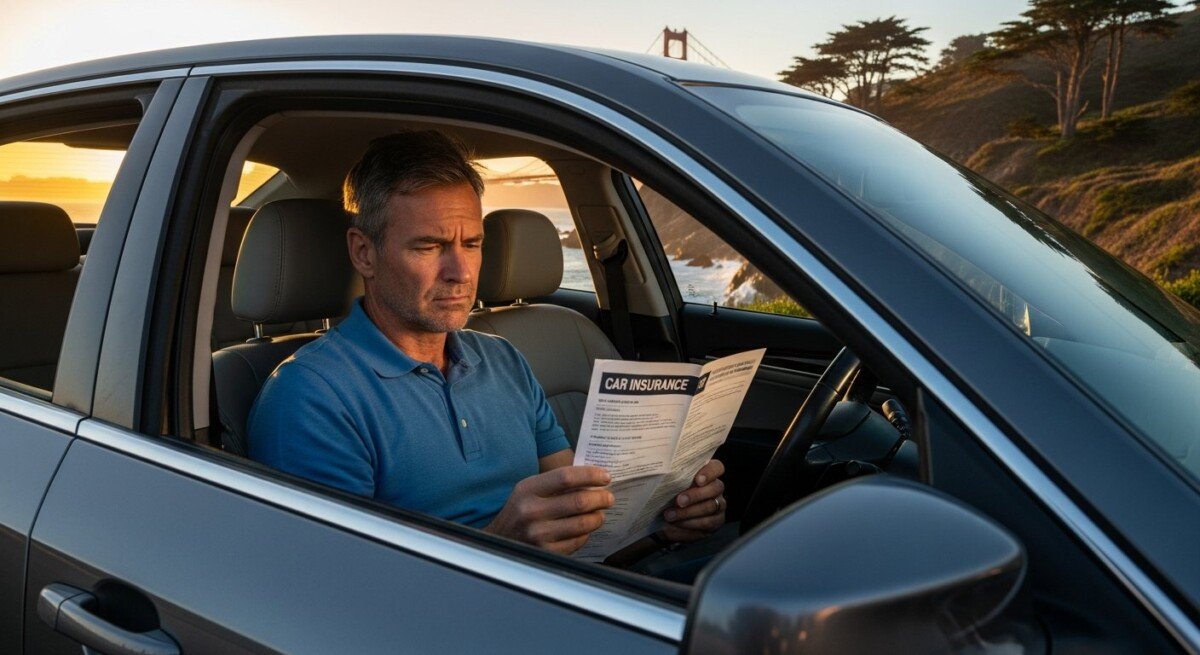
Finding Affordable Auto Insurance for High-Risk California Drivers
Secure required coverage and explore your options. Call 833-275-7533 for a consultation on auto insurance for high-risk drivers in California.

By Lucas Bennett
Being labeled a high-risk driver in California can feel like a financial life sentence. When standard insurance companies decline your application or quote premiums that are impossibly high, it’s easy to feel stuck. However, securing the legally required auto insurance in California is not only mandatory, it’s also possible, even with a troubled driving record. The Golden State has specific systems and options designed to ensure all drivers can obtain coverage. This guide will demystify the process, explain what makes a driver “high-risk,” and provide actionable strategies to find and afford the necessary protection, helping you get back on the road legally and with greater financial security.
What Defines a High-Risk Driver in California?
Insurance companies assess risk based on statistical probability. A high-risk driver is someone insurers believe is more likely to file a claim. This designation isn’t permanent, but it directly impacts your premiums and options. In California, several key factors contribute to this classification. A history of at-fault accidents is a major red flag, as it suggests a pattern of risky behavior. Similarly, convictions for moving violations, especially serious ones like reckless driving or excessive speeding, signal danger to insurers. The most significant factor, however, is a DUI conviction. A DUI stays on your California driving record for 10 years and can cause premiums to skyrocket or lead to an outright denial from standard carriers.
Other circumstances can also place you in the high-risk category. New drivers, particularly teenagers, lack a proven track record and are statistically more prone to accidents. A lapse in insurance coverage, even for a short period, makes insurers wary. Finally, drivers with a poor credit history may also be placed in higher-risk tiers by some companies, as California law allows insurers to use credit-based insurance scores (with certain restrictions) to determine rates. Understanding your specific risk factors is the first step toward addressing them and improving your standing over time.
California’s Assigned Risk Plan: The CAARP
For drivers who cannot obtain insurance through the standard voluntary market, California provides a safety net: the California Automobile Assigned Risk Plan (CAARP). This is a program of last resort, mandated by the state to ensure every licensed driver has access to the minimum required liability insurance. It is not an insurance company itself, but a mechanism that assigns high-risk drivers to participating insurance companies who are then required to provide them with a policy.
CAARP policies are exclusively for basic liability coverage, meeting California’s minimum requirements of 15/30/5 (which means $15,000 for injury/death to one person, $30,000 for injury/death to more than one person, and $5,000 for property damage in an accident you cause). You cannot purchase comprehensive, collision, or higher liability limits through CAARP. It’s crucial to understand that while CAARP guarantees availability, it does not guarantee affordability. Premiums in the assigned risk plan are typically significantly higher than standard market rates. You must apply for CAARP through a licensed insurance agent or broker, who will submit your application to the plan. If you’re struggling to find quotes, our resource on how to find low-cost auto insurance in California outlines both standard and non-standard pathways.
Practical Steps to Find Coverage and Lower Your Rates
While the situation may seem daunting, proactive steps can expand your options and reduce costs. A passive approach will likely lead to the most expensive outcome. The following strategic actions can make a substantial difference in your insurance journey.
- Shop Around Aggressively: Never accept the first quote. Different insurers weigh risk factors differently. Some companies specialize in non-standard, high-risk auto insurance and may offer more competitive rates than others, or even CAARP. Obtain quotes from at least five to six different providers, including regional insurers and those advertising non-standard coverage.
- Consider Higher Deductibles: If you are seeking comprehensive or collision coverage (not available through CAARP), opting for a higher deductible can lower your monthly premium. Ensure you have the savings to cover that deductible in case of a claim.
- Explore Discounts: Even high-risk drivers may qualify for certain discounts. Ask every insurer about discounts for completing a defensive driving course, bundling with renters or homeowners insurance, paying your premium in full, or using telematics devices that monitor your driving habits.
- Maintain Continuous Coverage: Once you have a policy, do not let it lapse. A consistent history of insurance, even if it’s a high-risk policy, looks better to insurers than a gap in coverage. This is a long-term play for rebuilding your status.
- Improve Your Driving Record: Time is your greatest ally. As violations and accidents age, their impact on your premium diminishes. Focus on driving cleanly and obeying all traffic laws. A DUI will weigh heavily for a decade, but a single speeding ticket’s effect will fade much sooner.
For those who drive significant distances, specialized policies can sometimes offer better value. If your high-risk status is combined with a long daily commute, understanding the best auto insurance for long commutes in California can provide additional context for your search.
Beyond the Basics: SR-22 and FR-44 Certifications
For some high-risk drivers, simply purchasing a policy isn’t enough. The state may require you to file proof of financial responsibility directly with the DMV. The most common form is the SR-22 certificate (often called an SR-22 insurance form). It’s not insurance, it’s a document your insurance company files with the state to verify you carry the minimum required liability coverage. You will typically need an SR-22 if your license was suspended due to a DUI, a serious at-fault accident without insurance, or accumulating too many violation points.
An SR-22 filing usually comes with additional fees from your insurer and requires them to notify the DMV immediately if your policy lapses or is canceled, which can lead to renewed license suspension. A similar, but less common, requirement is the FR-44, which is associated with DUI offenses and mandates higher liability coverage limits than the state minimum. It is critical to inform any insurance company you are shopping with that you need an SR-22 filing, as not all companies offer this service. For new drivers navigating these complex requirements, our first-time car buyer’s guide to California auto insurance covers foundational knowledge that applies to all drivers.
The Long-Term Path to Standard Insurance
Moving from the high-risk category back to the standard market is a process that requires patience and consistent effort. The goal is to demonstrate to insurers that you are no longer a high-risk proposition. The most powerful thing you can do is maintain a clean driving record. Every year without an accident or violation strengthens your case. Continue to shop your coverage annually. As your record improves, you may become eligible for better rates with new companies, or your current non-standard insurer may lower your premium at renewal.
Completing a state-approved defensive driving or driver improvement course can sometimes help, both by potentially qualifying you for a discount and by showing a proactive commitment to safe driving. Furthermore, working to improve your credit score, where permissible, can positively affect your insurance score in California. The journey out of high-risk insurance is measured in years, not months, but systematic comparison is key. Leveraging online tools for how to compare auto insurance rates online in California allows you to efficiently track your progress and spot when you qualify for better offers.
Frequently Asked Questions (FAQs)
How long will I be considered a high-risk driver? There is no fixed timeline. A major violation like a DUI affects your record for 10 years in California, but its impact on your insurance premium typically decreases each year you maintain a clean record. Minor violations and accidents generally affect your rate for 3-5 years.
Is CAARP my only option after a DUI? No, it is not your only option, but it is your guaranteed option. Many specialized non-standard insurance companies will offer policies to drivers with a DUI, often at rates competitive with or better than CAARP. You must shop around.
Can I be denied insurance in California? Standard insurance companies can deny you coverage based on your driving record or other risk factors. However, they cannot deny you coverage based solely on age, race, gender, or religion. If denied in the voluntary market, you are eligible for the CAARP program.
Will taking a driving course remove points from my record? In California, completing a state-approved traffic violator school can mask a point from your public driving record for insurance and employment purposes, but the conviction remains visible to the court and DMV for sentencing on future violations. It can help prevent a premium increase.
What is the absolute cheapest high-risk insurance I can get? The cheapest legal option is almost always a CAARP policy providing only the state minimum liability limits. However, this offers very little financial protection. Balancing cost with adequate coverage is a critical decision.
Securing auto insurance as a high-risk driver in California is undoubtedly challenging and expensive, but it is a manageable hurdle. By understanding the systems in place, like CAARP, and actively working to improve your risk profile through safe driving and diligent shopping, you can fulfill the legal requirement to drive and gradually work toward more favorable insurance terms. The road to lower premiums is built one safe mile at a time.