
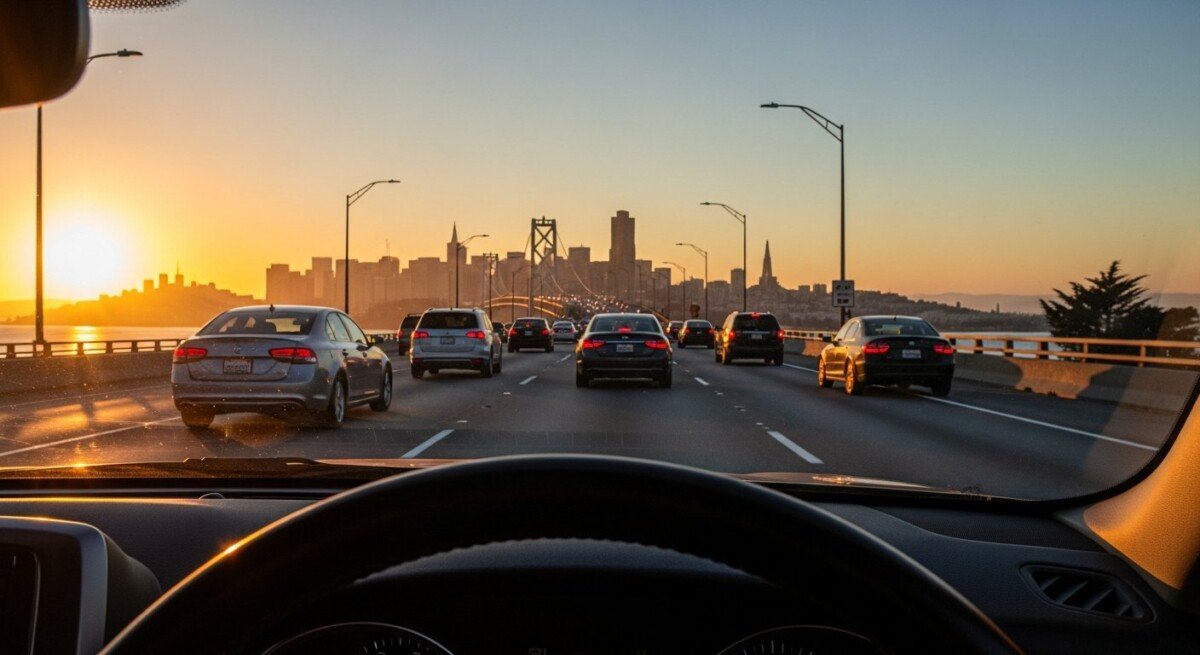
Finding the Best Auto Insurance for Long Commutes in California
Secure the right coverage for your California drive. Call 833-275-7533 for a quote on the best auto insurance for long commutes.

By Calla Winters
If your daily drive in California involves battling the 405, crossing the Bay Bridge, or navigating the sprawl of Los Angeles, you know a long commute is more than just a time sink. It’s a significant financial and safety consideration that demands a specialized auto insurance policy. Standard coverage often falls short for drivers who spend 20, 50, or even 100+ miles on the road each day. The best auto insurance for long commutes in California isn’t just about the lowest price, it’s about robust protection, tailored benefits, and a company that understands the unique risks of high-mileage driving. This guide will help you identify the coverage features you need and how to find a policy that protects your wallet and your peace of mind on those endless stretches of highway.
Why Long Commutes Demand Specialized Insurance
Insurance companies assess risk based on probability. The more time you spend on the road, the higher the probability you’ll be involved in an accident, encounter road debris, or face mechanical failure. From an insurer’s perspective, a long commute directly translates to increased risk exposure. This is why mileage is a primary rating factor. However, beyond just a potential premium increase, your extended time on the road exposes you to specific vulnerabilities that a basic policy may not adequately cover. For instance, a simple liability-only policy leaves you financially responsible for your own vehicle repairs after an accident, a risky proposition when your car is essential for earning a living. Understanding these heightened risks is the first step in building a proper shield. A comprehensive policy for commuters addresses the increased wear and tear, the higher likelihood of accidents during peak traffic hours, and the potential for costly delays and inconveniences.
Essential Coverage Features for California Commuters
When evaluating policies, you must look beyond the state minimums. California’s minimum liability requirements are notoriously low and offer scant protection in a serious accident, especially given the high cost of repairs and medical care in the state. For the long-distance driver, certain coverages transition from optional to essential.
First, high liability limits are non-negotiable. Consider carrying at least 100/300/100 (that’s $100,000 per person for bodily injury, $300,000 per accident, and $100,000 for property damage). With more miles driven, your exposure to causing an accident increases. Protecting your assets from a devastating lawsuit is paramount. Second, uninsured/underinsured motorist (UM/UIM) coverage is critical in California, where a significant number of drivers lack adequate insurance. This coverage protects you if you’re hit by someone who can’t pay for the damages they caused. Third, comprehensive and collision coverage (often called “full coverage”) is a must. Collision covers accidents with another vehicle or object, while comprehensive covers non-collision events like theft, vandalism, or hitting an animal. Given your car’s vital role and increased exposure, going without these is a gamble.
To ensure you’re comparing policies correctly, a structured approach is key. Our resource on how to compare auto insurance rates online in California provides a step-by-step framework for an apples-to-apples evaluation.
Additional Protections and Money-Saving Riders
The core coverages form your foundation, but several add-ons, or endorsements, can provide crucial safety nets specifically beneficial for commuters. These riders address the practical realities and hidden costs of a breakdown or accident far from home.
One of the most valuable is rental car reimbursement. If your primary vehicle is in the shop after a covered claim, this coverage pays for a temporary rental car, ensuring you can still get to work. For a commuter, losing transportation isn’t just an inconvenience, it’s a direct threat to your livelihood. Roadside assistance is another vital rider. A flat tire or dead battery on a busy freeway during rush hour is a commuter’s nightmare. Having 24/7 towing, lockout service, and jump-starts provides immense peace of mind. Finally, consider gap insurance if you have a loan or lease on a newer vehicle. If your car is totaled, standard insurance pays its actual cash value, which may be less than what you owe the lender. Gap coverage pays that difference.
It’s important to weigh the cost of these riders against their potential benefit. For a driver putting 15,000+ miles a year on their car, the probability of needing them is higher, making them a wise investment. Deciding on the right level of protection can be complex. For a deeper analysis of minimum coverage versus robust protection, review our article exploring whether liability-only auto insurance is enough for California drivers.
Top Insurance Company Considerations for High-Mileage Drivers
Not all insurers view high-mileage drivers the same way. Some may penalize you heavily, while others offer more favorable rates or usage-based programs that could benefit safe drivers. When shopping, prioritize companies with strong financial ratings, excellent customer service reviews for claims handling, and specific programs for commuters.
Usage-based insurance (UBI) programs, like Progressive’s Snapshot or Allstate’s Drivewise, can be a double-edged sword. They monitor your driving habits (braking, speed, mileage, time of day) via a mobile app or plug-in device. For a safe driver with a long, steady highway commute (as opposed to short, aggressive city drives), these programs can lead to significant discounts. However, if your commute involves heavy, stop-and-go traffic that leads to hard braking events, it might not be advantageous. Another key factor is the insurer’s network of repair shops and claims service. A company with a streamlined, digital claims process and a wide network of certified repair facilities can get you back on the road faster, minimizing commute disruption.
Some insurers, like AAA, are particularly popular in California and are known for their exceptional roadside service and local club benefits. If you’re considering them, it’s useful to understand their quoting process. You can learn more in our guide on how to get AAA auto insurance quotes and compare rates effectively against other carriers.
Actionable Steps to Find and Secure Your Policy
Finding the best policy requires a proactive and informed approach. Follow this sequential process to ensure you get comprehensive coverage at a competitive price.
- Gather Your Data: Have your driver’s license, vehicle registration, and current policy (if any) ready. Accurately calculate your estimated annual mileage, including both your daily commute and regular weekend driving.
- Determine Your Coverage Levels: Based on your assets, vehicle value, and risk tolerance, decide on your desired liability limits and whether you need comprehensive, collision, and the key riders like rental reimbursement.
- Get Multiple Quotes: Obtain quotes from at least 3-5 different insurers. Be sure each quote is for the exact same coverage levels and deductibles for a true comparison. Use online tools and consider speaking with an independent agent who can quote from multiple companies.
- Ask Specific Questions: Inquire about discounts for safe drivers, low mileage (if your commute is long but your total annual miles are still moderate), bundling, anti-theft devices, and defensive driving courses. Ask about their specific claims process and roadside assistance offerings.
- Review and Purchase: Carefully review the policy documents before finalizing. Ensure all vehicles, drivers, and coverages are listed correctly. Make your first payment to activate the policy.
For those new to the process, especially if you’re also shopping for a vehicle, starting with a solid foundation of knowledge is crucial. Our first-time car buyer’s guide to California auto insurance covers the fundamentals every new driver should know.
Frequently Asked Questions
Will my insurance definitely cost more because I have a long commute?
Typically, yes. Insurers use annual mileage as a primary rating factor. However, you can offset this by leveraging other discounts (safe driver, multi-policy, etc.) and choosing a company with favorable rates for your profile. Usage-based programs may also help if you are a safe driver.
How do insurance companies verify my mileage?
They may ask for an estimate when you get a quote. Some companies require an odometer reading at policy inception and renewal. For usage-based programs, mileage is tracked directly by the device or app. Providing inaccurate information can lead to a denied claim or policy cancellation.
Is pay-per-mile insurance a good option for long commutes?
Generally, no. Pay-per-mile programs (like Metromile) charge a base rate plus a per-mile fee. For drivers with consistently high daily mileage, the per-mile charges will likely make the policy more expensive than a traditional one.
What if my commute changes, such as switching to a hybrid work schedule?
Notify your insurer immediately. A reduction in your annual mileage (e.g., from 5 days a week in-office to 3 days) could qualify you for a lower rate. Failing to update your insurer could mean you’re overpaying.
Does the type of car I drive for my commute matter?
Absolutely. Insuring a safe, moderately-priced sedan will be far less expensive than insuring a luxury sports car or a large SUV for the same commute. Safety ratings, repair costs, and theft rates all influence your premium.
Securing the right auto insurance for a long California commute is an investment in your financial security and daily sanity. By prioritizing high liability limits, essential add-ons like rental reimbursement, and choosing an insurer with a strong reputation for service, you transform your policy from a legal requirement into a reliable partner for the road ahead. The time spent researching and comparing is repaid many times over in protection and peace of mind during your countless hours behind the wheel.