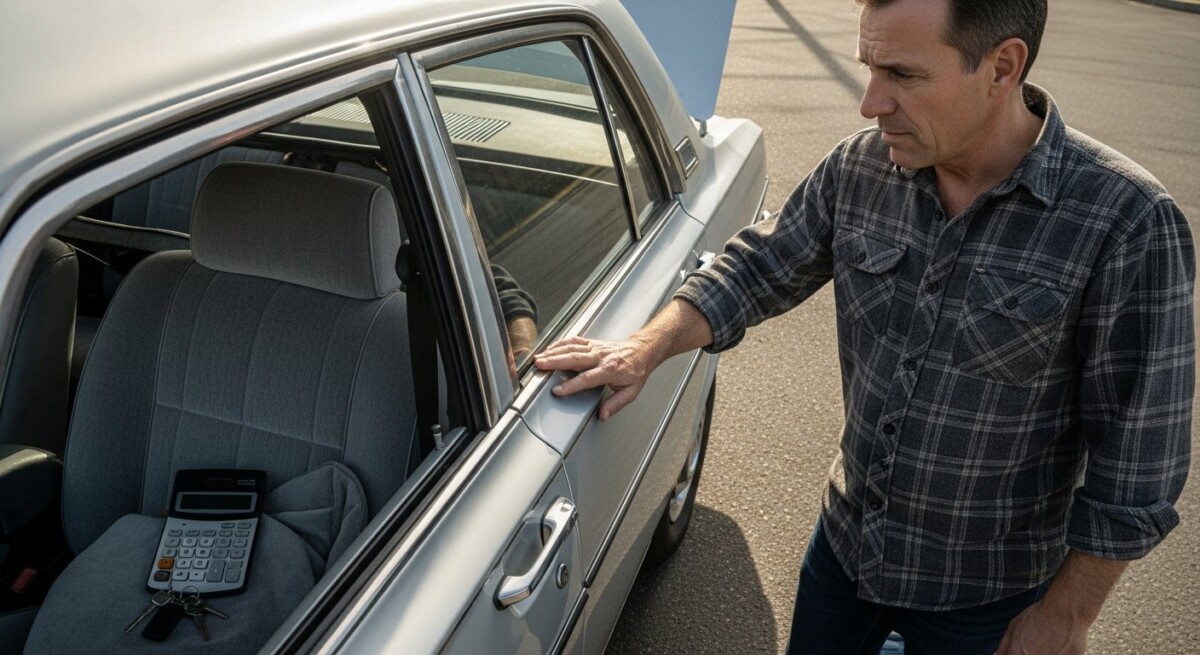
Many drivers assume that once a car reaches a certain age, full coverage auto insurance is no longer an option or simply not worth the cost. This assumption can lead to costly mistakes. The truth is that you can absolutely still get full coverage for an older vehicle, but the decision requires a careful analysis of your car’s value, your financial situation, and your risk tolerance. Insurers do not automatically drop your comprehensive and collision coverage when your car turns ten or fifteen years old. However, they may adjust how they calculate premiums and payouts based on the car’s diminished market value.
Before you drop your coverage or keep paying for it blindly, you need to understand the rules insurers use for older vehicles. This article will walk you through the key factors that determine whether full coverage makes financial sense for your aging car, the specific scenarios where keeping it is a smart move, and the warning signs that indicate you should switch to liability-only insurance. We will also cover how to shop for the best rates if you decide to maintain full coverage. By the end, you will have a clear framework to make the right choice for your situation.
If you are currently comparing options, you can explore our guide on affordable full coverage car insurance for young drivers to see how age and experience factor into premium calculations. The same principles apply to older vehicles, though the logic shifts from driver risk to vehicle risk.
How Insurers Define Full Coverage For Older Cars
Full coverage is not a legally defined term. It is an industry shorthand for a policy that combines liability insurance (which covers damage you cause to others) with comprehensive and collision coverage (which covers damage to your own vehicle). For older cars, the critical component is the actual cash value (ACV) of the vehicle. Insurers use ACV to determine how much they will pay if your car is totaled or stolen. ACV is calculated by taking the car’s replacement cost and subtracting depreciation based on age, mileage, and condition.
When a car is new, its ACV is high, so the insurer is willing to pay a significant amount in a total loss claim. As the car ages, its ACV drops. At some point, the annual premium for comprehensive and collision coverage may approach or even exceed the car’s ACV. When that happens, the insurance company may still offer the coverage, but it becomes a poor financial deal for you. The insurer is not blocking you from buying full coverage. They are simply pricing it based on the risk that your car is worth very little.
There is no universal age cutoff. Some insurers happily cover 20-year-old cars if the owner maintains them well. Other companies have internal guidelines that discourage writing comprehensive and collision on vehicles older than 10 years. The only way to know is to get quotes from multiple carriers. At Free Auto Insurance Quotes Online, we help you compare offers from several insurers so you can see which ones are willing to provide full coverage for your older vehicle and at what price.
When Keeping Full Coverage Is Smart
There are several scenarios where maintaining full coverage on an older car is a wise financial decision. The most common reason is that the car still holds significant value. Classic cars, collector vehicles, and well-maintained luxury models can retain high ACV even after many years. If your car is worth more than $5,000 to $10,000, paying for comprehensive and collision coverage is usually justified. A single accident or theft could cost you thousands of dollars out of pocket if you only have liability insurance.
Another situation where full coverage makes sense is when you cannot afford to replace the vehicle out of pocket. If your older car is fully paid off and you have no savings for a new car, the insurance payout from a total loss claim could be your only path to getting another vehicle. In this case, the peace of mind and financial protection are worth the premium. Even a car worth $3,000 can be critical transportation for a family that relies on it for work and school.
Finally, consider your driving environment. If you live in an area with high rates of theft, vandalism, or uninsured drivers, full coverage provides a safety net that liability-only policies cannot match. Comprehensive coverage protects against non-collision events like hail damage, falling branches, and animal strikes. If your older car is parked on the street in a city with frequent break-ins, the cost of comprehensive coverage may be a bargain compared to the risk of losing the car entirely.
For more detailed comparisons of top-rated insurers and their policies for older vehicles, read our best full coverage auto insurance top picks for 2026. That guide breaks down which companies offer the most competitive rates for cars with lower ACV.
The 10% Rule: A Simple Framework For Decision Making
Insurance professionals often recommend a simple rule of thumb to decide whether to keep full coverage on an older car. It is called the 10% rule. Here is how it works:
- Determine your car’s current actual cash value. You can use Kelley Blue Book, NADA Guides, or Edmunds to get a reliable estimate.
- Calculate your annual premium for comprehensive and collision coverage combined. Do not include liability coverage in this calculation.
- Divide the annual premium by the car’s ACV. Multiply by 100 to get a percentage.
If that percentage is 10% or higher, you should strongly consider dropping the full coverage and switching to liability-only insurance. For example, if your car is worth $5,000 and you are paying $600 per year for comp and collision, that is 12% of the car’s value. You are effectively paying more than one-tenth of your car’s worth every year for coverage that will only pay out a maximum of $5,000 in a total loss. Over three years, you would pay $1,800 in premiums for a car worth $5,000. The math does not favor keeping the coverage.
If the percentage is below 10%, keeping full coverage is generally reasonable. For a car worth $10,000 with an annual comp and collision premium of $800, that is 8%. You are paying a smaller fraction of the car’s value for protection against total loss. In that scenario, most financial advisors recommend keeping the coverage.
This rule is not absolute. Your personal financial situation matters. If you have an emergency fund that can cover a new car purchase, you might choose to drop coverage even at 8%. If you have no savings, you might keep coverage even at 12% because the risk of losing the car is too great. The 10% rule is a starting point, not a final verdict.
Factors That Increase Premiums For Older Vehicles
Insurers do not penalize cars simply for being old. They look at a combination of factors that can drive up premiums for older vehicles. Understanding these factors can help you decide whether to shop for a different insurer or adjust your coverage.
One major factor is the availability of replacement parts. For older cars, especially those that are no longer in production, parts can be expensive and hard to find. Insurers factor this into their collision premium because repairing the car may cost more than its ACV. If parts are scarce, the insurer may total the car for relatively minor damage, which increases their risk and your premium.
Another factor is the car’s safety features. Older vehicles lack modern safety technology such as automatic emergency braking, lane departure warnings, and advanced airbag systems. Statistically, these cars are involved in more severe accidents and have higher injury rates. This can raise your liability and medical payments premiums, though it does not directly affect comprehensive and collision rates as much.
Your driving record and location also matter. An older car driven by a driver with a clean record in a low-crime rural area will have much lower premiums than the same car driven by a high-risk driver in a dense urban area. Insurance is highly personalized. The only way to know your exact rate is to get a quote. Our platform makes that easy by connecting you with multiple carriers at once.
If you are in Illinois and want to see how state-specific regulations affect older car coverage, check our best full coverage auto insurance in Illinois 2026 guide. It covers local minimum requirements and how they interact with optional coverages for aging vehicles.
How To Lower Your Full Coverage Premium On An Older Car
If you decide to keep full coverage, there are several strategies to reduce your premium without sacrificing protection. The most effective method is to raise your deductibles. Comprehensive and collision deductibles are typically $250, $500, or $1,000. Increasing your deductible from $250 to $1,000 can lower your premium by 20% to 40%. The trade-off is that you will pay more out of pocket if you file a claim, but on an older car, the risk of a total loss is higher anyway. A higher deductible aligns your premium more closely with the car’s lower value.
Another strategy is to drop certain add-ons that may not be cost-effective for an older car. Rental reimbursement and towing coverage are relatively cheap, but you should evaluate whether you need them. If you have a second car or access to public transportation, you might skip rental reimbursement. If you have roadside assistance through a credit card or auto club, you can drop towing coverage. Every dollar saved on these extras can be redirected toward maintaining your comprehensive and collision coverage.
You can also ask about discounts specific to older vehicles. Some insurers offer a low-mileage discount if you drive your older car infrequently. If the car is a second vehicle used only for weekend errands, you may qualify. Additionally, bundling your auto insurance with homeowners or renters insurance can yield a multi-policy discount of 10% to 25%. Finally, paying your premium annually instead of monthly often eliminates installment fees and saves you money over the policy term.
For drivers who want to explore all available discounts, read our article on cheap full coverage auto insurance is it possible. It explains how to combine discounts and adjust coverage to get the lowest possible rate while maintaining full protection.
Frequently Asked Questions
Can an insurance company refuse to sell full coverage on an old car?
Yes, some insurers have internal guidelines that limit comprehensive and collision coverage to vehicles under a certain age or value. However, many companies will still offer it if the car is in good condition and the owner has a clean driving record. You may need to shop around to find a carrier that accommodates older vehicles.
What is the minimum car value to justify full coverage?
There is no official minimum, but most experts recommend keeping full coverage if your car is worth at least $3,000 to $5,000. Below that threshold, the annual premium for comp and collision may exceed 10% of the car’s value, making it a poor financial investment.
Does full coverage cover mechanical breakdowns on an old car?
No, full coverage auto insurance does not cover mechanical failures, engine problems, or wear-and-tear repairs. It only covers damage from accidents, theft, vandalism, weather events, and similar perils. For mechanical breakdowns, you would need a separate extended warranty or mechanical breakdown insurance.
Will my premium go up if I file a claim on an older car?
Yes, filing any at-fault accident claim can increase your premium regardless of the car’s age. However, because older cars have lower ACV, the payout on a total loss claim may be smaller. Some insurers have accident forgiveness programs that prevent a rate increase after the first claim. Check with your agent to see if this applies to your policy.
Should I drop full coverage if my car is paid off?
Not automatically. If you own the car free and clear, you are not required by a lender to carry full coverage. However, you should still evaluate the 10% rule and your personal financial situation. If the car is worth significant money or you cannot afford to replace it, keeping full coverage is advisable even without a loan.
Make The Right Call For Your Older Car
Deciding whether to keep full coverage on an older car comes down to a simple equation: compare the annual premium to the car’s actual cash value. If the premium is a small fraction of the value, keep the coverage. If it approaches or exceeds 10% of the value, consider switching to liability-only insurance. Your personal risk tolerance and savings also play a role. No single answer fits every driver, but the framework in this article gives you a clear path to making an informed decision.
At Free Auto Insurance Quotes Online, we help drivers like you compare rates from multiple insurers to find the best coverage for any car, regardless of age. Start your comparison today to see how much you can save while keeping the protection you need. The right policy is out there, and with the right information, you can find it without overpaying or underinsuring your vehicle.