
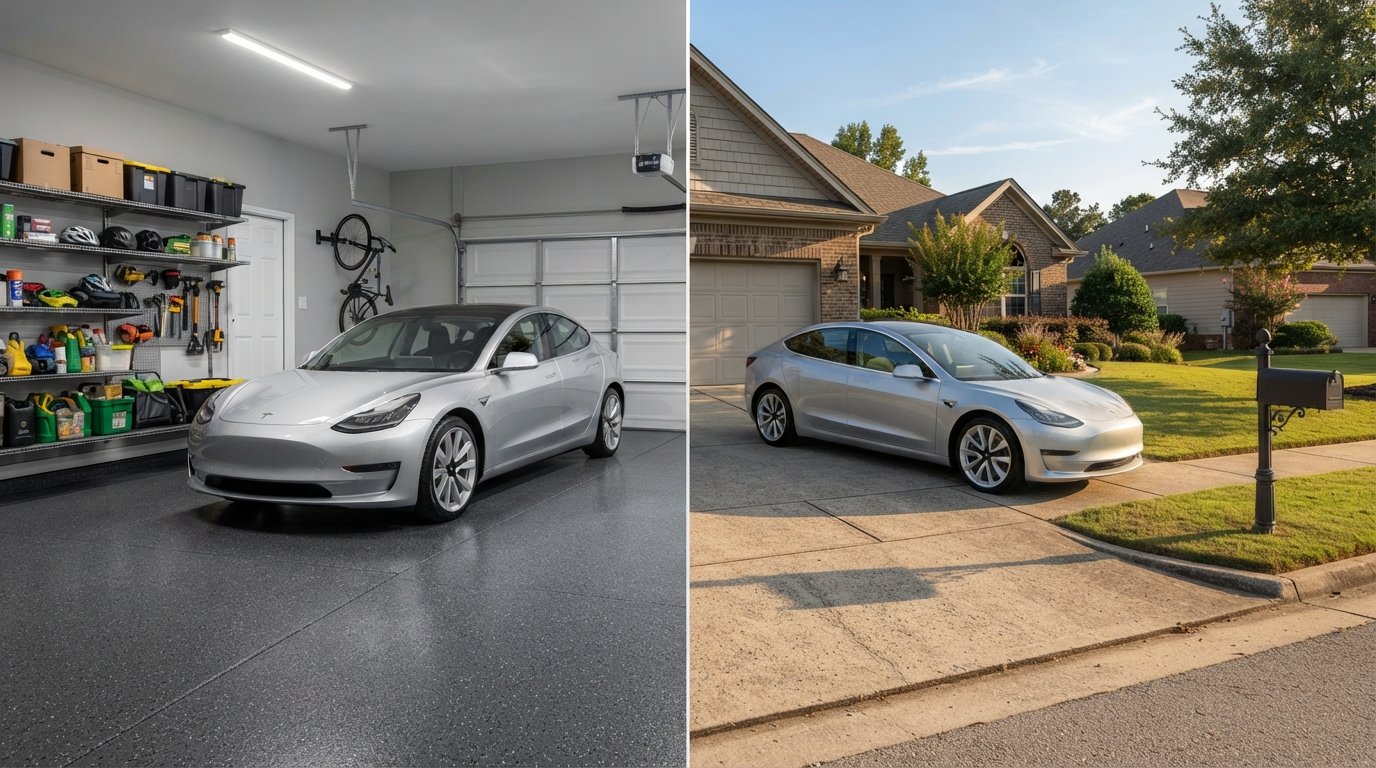
Garage vs Driveway: Car Insurance Parking Impact
Parking in a garage vs driveway affects your car insurance rate. Compare quotes and save. Call (833)-275-7533 for expert help.

By Althea Monroe
Where you park your car overnight might seem like a minor detail, but it can have a measurable effect on your auto insurance premium. Insurers view a garage as a lower-risk parking spot than a driveway, and a driveway as safer than the street. Understanding how parking location influences rates, theft risk, and discount eligibility can help you make smarter coverage decisions and potentially save money. In this guide, we break down the differences between car insurance for drivers who park in a garage versus driveway, explain how insurers rate each scenario, and show you what to compare when you request quotes.
How Insurers Rate Garaged, Driveway, and Street Parking
Insurance companies use a range of factors to calculate premiums, and overnight parking location is one of them. Statistically, vehicles parked in garages are less likely to be stolen, vandalized, or damaged by weather events. As a result, many insurers offer lower rates for garaged vehicles. Driveway parking is considered moderately safe: the car is on private property but still exposed to the elements and visible to potential thieves. Street parking carries the highest risk because the vehicle is on public roads, often in areas with higher traffic and less supervision.
However, the impact varies by insurer and region. Some companies place little weight on parking location, while others use it as a primary rating factor. In dense urban areas where street parking is common, the difference between garage and street rates may be more pronounced. In rural areas with low theft rates, the discount for garaging might be smaller. When you compare quotes, pay attention to how each insurer asks about parking; the wording can reveal how much they care about this factor.
Theft and Vandalism Risk by Parking Type
Theft and vandalism are major concerns for insurers. According to the National Insurance Crime Bureau, vehicles parked on the street are more likely to be stolen than those parked in garages or driveways. A garage provides a physical barrier and keeps the car out of sight, reducing opportunistic theft. A driveway offers some protection because the car is on private property, but it is still visible and accessible. Street parking exposes the vehicle to anyone walking by, increasing the risk of break-ins and vandalism.
Comprehensive coverage, which pays for theft, vandalism, and weather damage, is often required by lenders and strongly recommended for all drivers. If you park on the street, comprehensive coverage becomes even more critical because the risk of unexpected damage is higher. When comparing car insurance for drivers who park in a garage versus driveway, check whether the policy includes comprehensive coverage and whether the deductible is affordable.
Reporting a Change in Parking Location to Your Insurer
If you move or change where you park your car overnight, you must inform your insurer. Failing to do so could be considered misrepresentation and might lead to a denied claim or policy cancellation. For example, if you told your insurer you park in a garage but actually park on the street, and your car is stolen, the insurer could investigate and potentially reduce or deny the payout. Always update your policy when your parking situation changes, whether you move to a new home, lose access to a garage, or start parking in a different spot.
Reporting a change is usually straightforward: call your agent or log into your online account and update your address and parking details. The premium may increase or decrease depending on the new risk profile. It is better to be honest and pay a slightly higher premium than to risk a claim denial. When you get quotes, be accurate about your parking situation; this ensures you receive an accurate rate and avoid surprises later.
How Telematics and Anti-Theft Devices Interact with Parking Discounts
Telematics programs and anti-theft devices can further reduce premiums, especially for vehicles parked in higher-risk locations. Telematics uses a device or smartphone app to monitor driving habits, such as mileage, speed, and braking. Some programs also track parking location and time, offering discounts for safe parking. Anti-theft devices like car alarms, steering wheel locks, and GPS trackers make a vehicle less attractive to thieves and can qualify you for additional discounts.
If you park in a driveway or on the street, installing an anti-theft device can help offset the higher risk and possibly lower your premium. Many insurers offer discounts for factory-installed or aftermarket anti-theft systems. Combine these with telematics to maximize savings. When requesting quotes, ask about discounts for garaging, anti-theft devices, and telematics; these can add up to significant savings over time. For a deeper look at coverage options that pair well with these discounts, see our guide on 2026 rental car insurance coverage updates.
What to Compare When Quotes Ask About Overnight Parking
When you request auto insurance quotes, you will typically be asked where the vehicle is parked overnight. Options usually include garage, driveway, street, or other. Answer honestly, as this information affects your rate and claim eligibility. Compare quotes from multiple insurers because each company weighs parking location differently. Some may offer a significant discount for garaging, while others may not. Use the same parking information across all quotes to ensure an apples-to-apples comparison.
Also, ask about discounts related to parking and safety. Some insurers offer discounts for parking in a secure garage, for having a car alarm, or for completing defensive driving courses. When comparing car insurance for drivers who park in a garage versus driveway, consider the total cost after all discounts, not just the base rate. Additionally, check the policy's comprehensive coverage limits and deductibles; a lower deductible may be worth a slightly higher premium if you park in a higher-risk area.
For drivers looking to free up cash flow to afford better coverage, exploring car loan refinancing options might help lower monthly payments, making it easier to budget for comprehensive insurance.
Frequently Asked Questions
Does parking in a garage always lower my insurance?
Not always, but it often does. Some insurers offer a specific garaging discount, while others factor it into their overall risk assessment. The impact depends on your location, insurer, and other risk factors. In high-theft areas, the discount for garaging is typically larger. It is worth asking each insurer how they rate parking location.
What if I don't have a garage but park in a carport?
A carport provides some protection from weather but is not fully enclosed. Insurers may treat a carport similarly to a driveway or may offer a partial discount. Be accurate when describing your parking situation; if you say you have a garage but only have a carport, it could affect claims.
Can I get a discount for parking in a secure parking garage?
Yes, some insurers offer discounts for vehicles parked in secure, access-controlled garages, especially in urban areas. Provide details about the garage's security features when requesting quotes.
How does parking location affect comprehensive coverage?
Comprehensive coverage pays for theft, vandalism, and weather damage. If you park in a higher-risk location, comprehensive coverage is more important. The premium for comprehensive coverage may be higher for street-parked vehicles, but the protection is worth it.
Understanding the nuances of car insurance for drivers who park in a garage versus driveway empowers you to make informed choices. Whether you park in a garage, driveway, or on the street, being honest with your insurer and comparing quotes from multiple carriers can help you find the best rate for your situation. For personalized quotes from licensed agents, visit FreeAutoInsuranceQuotesOnline.com and complete a simple form. Call (833)-275-7533 to speak with a representative who can guide you through the process.