
How Inflation and Repair Costs Raise Car Insurance Premiums
See how inflation and repair costs raise car insurance premiums, and call (833)-275-7533 to compare quotes and avoid overpaying at renewal.

By Elara Moonfield
You open your renewal notice and the number at the top is higher than last time, even though your driving record is clean and your car is a year older. You are not imagining it, and you are not being singled out. The forces pushing auto insurance rates up are largely market-wide, and they start with two of the most powerful economic pressures of the decade: inflation and the rising cost of repairs. Understanding how inflation and repair costs raise car insurance premiums will not make the bill disappear, but it will help you separate what you can control from what you cannot, and it will show you where to push back. In this guide, we break down the chain reaction that starts at the body shop and ends on your renewal statement, and we explain what you can do about it.
The Repair Bill Behind Your Premium
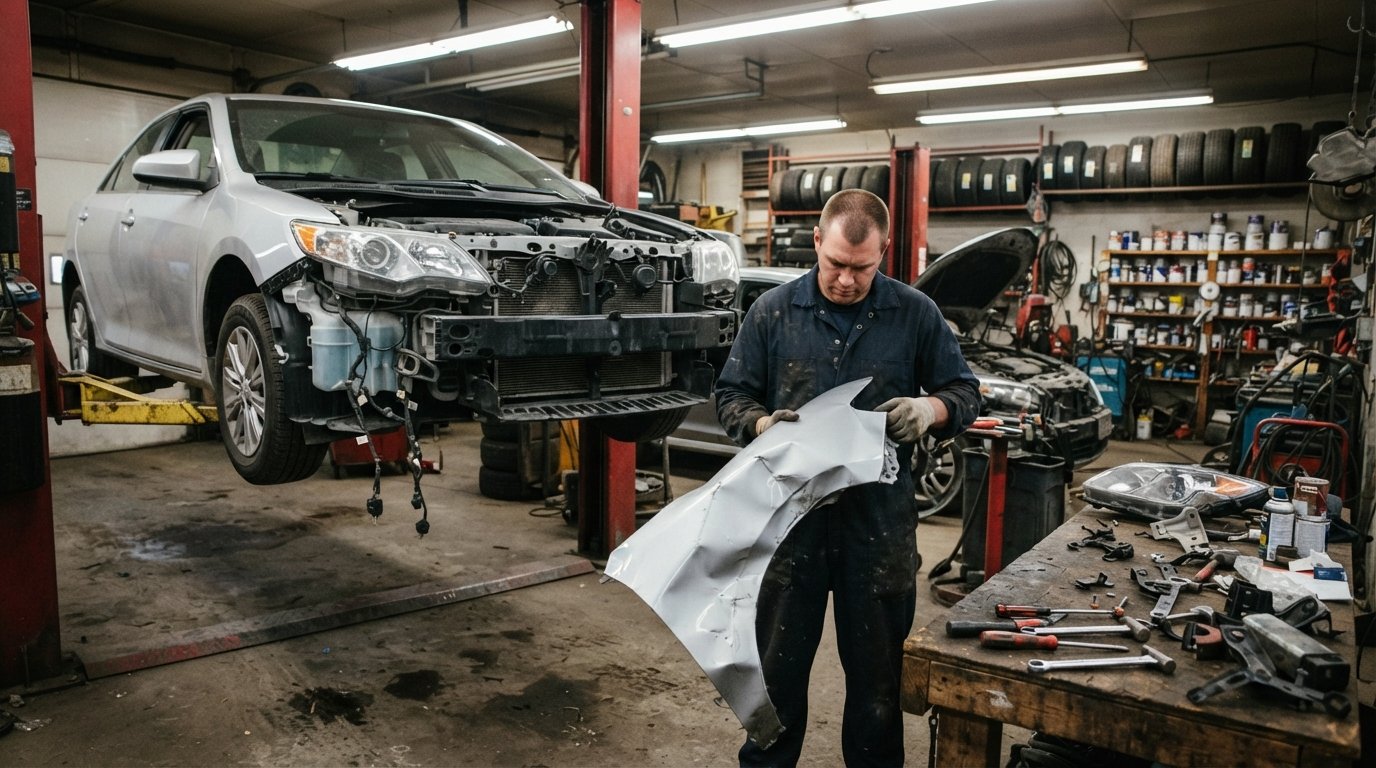
Insurance is a business of paying future claims, and premiums are the money collected today to cover those claims tomorrow. When the cost of settling a claim rises, insurers must collect more premium to stay solvent and to satisfy state regulators who monitor their financial health. That is why repair costs are the single most direct link between the body shop and your monthly bill. Every part, every hour of labor, and every new sensor adds to the amount an insurer pays out, and those payouts are funded by the premiums of every policyholder in the risk pool.
The past several years have been brutal on this front. Supply chain disruptions made parts scarce and expensive, skilled collision technicians became harder to find, and vehicles themselves became rolling computers packed with cameras, radar, and sensors. A simple fender bender that once meant a new bumper cover now often means recalibrating driver assistance systems, replacing sensors, and paying for specialized scans. The result is that the average claim severity, meaning the dollar amount of a typical claim, has climbed sharply, and insurers have passed much of that increase back to drivers.
It helps to see where the money actually goes. The main cost drivers inside a typical collision claim include:
- Parts inflation: replacement components, especially semiconductors and specialized sensors, rose faster than general consumer prices.
- Labor rates: skilled body technicians are in short supply, and shops have raised rates to attract and retain them.
- Advanced driver assistance systems: cameras, radar, and lidar must be recalibrated after many repairs, adding hours and equipment costs.
- Paint and materials: waterborne paints, specialty coatings, and raw materials have all become more expensive.
- Rental and storage: longer repair times mean more days in a rental car and more storage fees at the shop.
Each of these line items feeds directly into the loss costs that insurers use to set rates. When loss costs rise across thousands of claims, the effect compounds. A carrier that once paid $3,000 for a moderate collision may now pay $5,000 or more for the same event, and that difference has to come from somewhere. That somewhere is your premium. This is the mechanical core of how inflation and repair costs raise car insurance premiums, and it explains why even careful drivers feel the pinch.
Why Used Car Values and Total Loss Frequency Matter
Repair costs are only half of the severity story. The other half is what happens when a vehicle cannot be repaired economically. When the cost to fix a car exceeds a large percentage of its actual cash value, the insurer declares it a total loss and pays the market value instead of repairing it. During the used car shortage, those market values soared, which meant insurers were writing bigger total loss checks for the same vehicles. Higher total loss payouts translate directly into higher premiums for everyone in the pool.
The frequency of total losses has also risen. Modern vehicles absorb crashes differently than older ones, and damage that looks modest on the outside can hide expensive structural and electronic problems underneath. A rear-end collision that once cost a few thousand dollars to repair can now total a five-year-old sedan because the repair estimate exceeds the car's value. When total loss frequency rises at the same time that used car values are elevated, the combined effect on claim costs is significant. Insurers respond by raising rates, tightening underwriting, and in some cases declining to renew policies on vehicles that are expensive to repair or difficult to source parts for.
This is also why the make and model of your car matters more than many drivers realize. A vehicle with expensive sensors, rare parts, or a high theft rate will generally cost more to insure than a mainstream model with cheap, widely available components. If you are shopping for a car, it pays to check insurance costs before you sign, not after. You can compare how different vehicles affect premiums by reviewing average rate data, such as the figures in our guide on average car insurance premiums in 2026, which shows how much vehicle choice and driver profile can move the number.
Weather Events and Litigation Trends Push Premiums Higher
Repair costs and vehicle values explain a lot, but they do not explain everything. Two broader forces have been quietly adding to auto insurance costs: severe weather and the legal environment. Climate-driven events such as hailstorms, hurricanes, floods, and wildfires damage thousands of vehicles at once, creating surges of claims that strain insurer reserves. Even drivers in regions that rarely see extreme weather feel the effect, because insurance is priced across broad pools and reinsurance costs are shared across the industry.
Litigation is the other underappreciated factor. Attorney involvement in auto claims has increased in many states, and larger jury awards and settlements raise the average cost of bodily injury claims. Those costs flow into premiums just like repair costs do. States with higher litigation rates and more generous legal environments tend to have higher auto insurance premiums, and drivers who move between states often notice the difference immediately. Together, weather and litigation add a layer of volatility that insurers must price into every policy, which is part of why rates can rise even in years when your own driving record is spotless.
It is worth noting that these forces are largely outside any individual driver's control. You cannot change the frequency of hailstorms or the size of jury awards. What you can do is understand that your premium is not a personal judgment about your driving, and that shopping the market is a legitimate response to market-wide increases. Insurers price risk differently, and the carrier that was cheapest for you two years ago may no longer be competitive after a round of industry-wide rate increases.
What Drivers Can Control and What They Cannot
The most useful way to think about rising premiums is to sort the causes into two buckets: market-wide forces you cannot influence, and personal factors you can adjust. Most of the frustration drivers feel comes from conflating the two. If you assume every increase is your fault, you will waste energy trying to fix things that were never broken. If you assume nothing is under your control, you will leave real savings on the table.
Here is a practical way to sort the two:
- Market-wide and outside your control: parts inflation, labor shortages, advanced vehicle technology, used car values, severe weather, litigation trends, and reinsurance costs.
- Personal and within your control: your deductible, your coverage limits, your vehicle choice, your credit-based insurance score where allowed, your driving record, your annual mileage, and how often you shop and compare quotes.
That second bucket is where action pays off. Raising your deductible from $500 to $1,000 can meaningfully lower your premium, provided you have the cash to cover the higher out-of-pocket amount if you file a claim. Reviewing optional coverages you no longer need, such as roadside assistance on a new car with a manufacturer warranty, can trim costs. Bundling auto and home or renters insurance with the same carrier often earns a multi-policy discount. And maintaining a clean driving record remains one of the most reliable ways to keep your rate from climbing faster than the market average.
It also helps to understand the difference between a rate increase and a re-rating. A rate increase is a carrier-wide adjustment approved by state regulators and applied to a class of drivers. A re-rating is a change in your individual risk profile, such as a new ticket, a claim, a move, or a change in credit score. If your renewal jumped and none of your personal details changed, you are probably looking at a market-wide adjustment, and the right response is to shop rather than to blame yourself.
Steps to Take When Your Renewal Jumps Unexpectedly
An unexpected increase is not a reason to panic, but it is a reason to act. The worst response is to accept the new rate without checking whether the market has a better offer for a driver like you. The second worst is to cancel coverage in frustration, which can lead to a lapse, higher future rates, and potential legal trouble if you drive without insurance. A measured, step-by-step approach works far better.
When your renewal arrives higher than expected, work through this sequence:
- Read the notice carefully. Confirm whether the increase is a carrier-wide rate change or something specific to your policy, such as a claim, a new driver, or a change of address.
- Call your current insurer. Ask what is driving the increase and whether any discounts are available that you are not currently receiving.
- Re-shop your coverage. Gather quotes from multiple carriers using the same coverage limits and deductibles so the comparison is apples to apples.
- Adjust your deductible strategically. If you have emergency savings, a higher deductible can offset part of the increase without reducing your essential coverage.
- Review optional coverages. Drop or reduce add-ons you no longer need, but keep the core liability, collision, and comprehensive coverage that protects your finances.
After you have quotes in hand, compare them on total annual cost, not just monthly payment, and check the financial strength ratings of any carrier you are considering. A low premium from a carrier that handles claims poorly is not a bargain. If you are unsure where to start, independent resources such as NewAutoInsurance consumer guidance can help you understand coverage options and how to evaluate quotes before you commit. The goal is not to chase the absolute lowest number, but to make sure you are paying a fair price for the coverage you actually need.
Finally, build an annual habit around your policy. Once a year, before your renewal, spend thirty minutes reviewing your coverage, checking for new discounts, and comparing at least three quotes. Drivers who do this consistently tend to stay ahead of market increases, because they capture savings that passive policyholders miss. The forces of inflation and repair costs are not going away, but a little proactive shopping goes a long way toward keeping your premium from outpacing your budget.
Rising premiums are frustrating, but they are not mysterious. Once you understand how inflation and repair costs raise car insurance premiums, you can stop taking rate hikes personally and start responding to them strategically. The market will do what it does, but your deductible, your vehicle, your coverage choices, and your willingness to compare quotes are all levers you control. Use them, and you will be in a much stronger position at every renewal.