
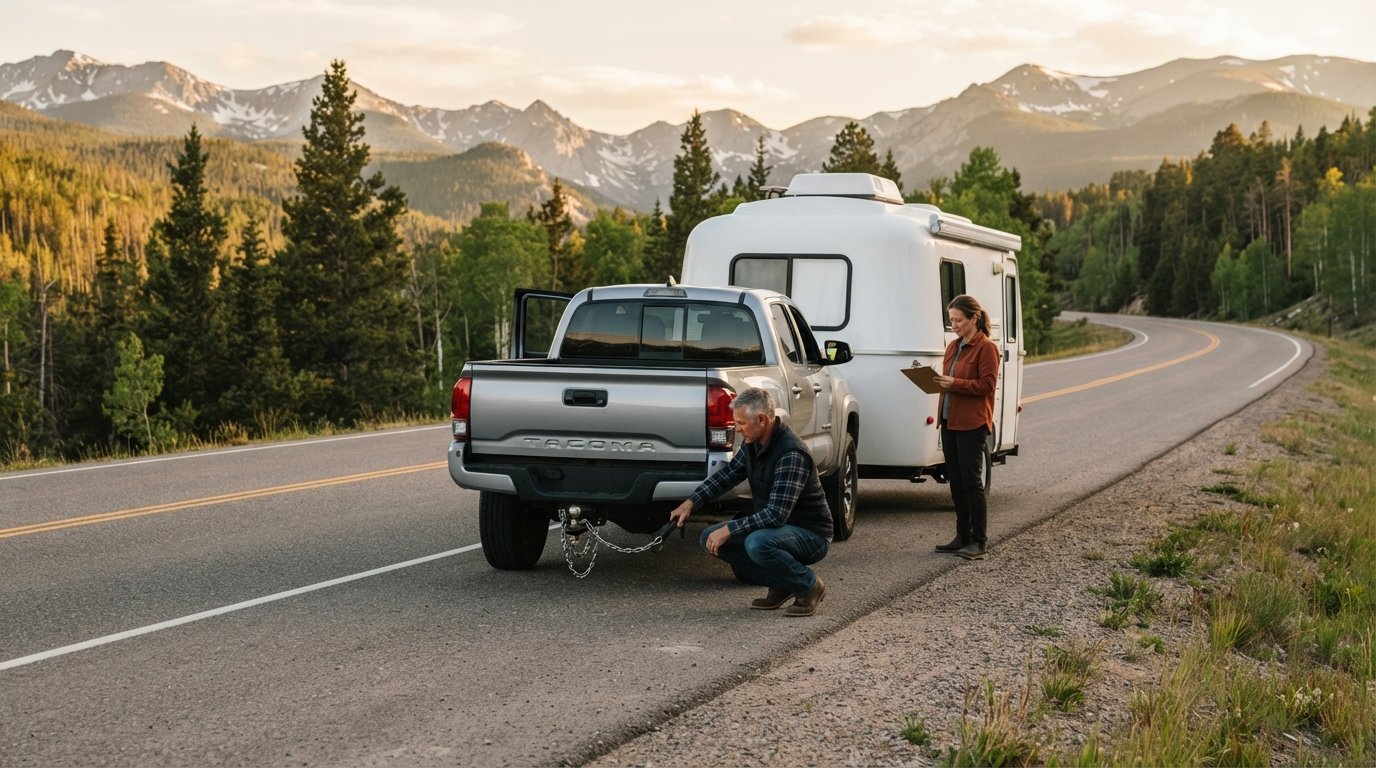
How Insurance Works When Towing a Camper With a Pickup
Understand how insurance works when towing a camper with a pickup truck. Call (833)-275-7533 for expert guidance on trailer coverage and quotes.

Hooking up a camper to your pickup truck opens up weekends of adventure, but it also raises a critical question: does your auto insurance actually cover you when you are towing? The answer is not always a simple yes or no. It depends on the type of coverage you carry, the state you live in, the size and weight of your trailer, and whether you have told your insurer that you plan to tow. Many drivers assume their truck policy automatically extends to whatever they pull, and that assumption can lead to costly surprises after an accident. Understanding how insurance works when towing a camper with a pickup truck is essential for protecting your wallet and your peace of mind.
This guide breaks down the rules that govern trailer coverage, explains when your truck policy is enough and when you need a separate policy or endorsement, and shows you how to confirm your protection before you hit the road. Whether you are a weekend camper or a full-time RVer, the information below will help you ask the right questions and avoid gaps in coverage.
The Basic Rule: Your Truck Policy Often Extends to the Camper
In most states, the liability coverage on your pickup truck automatically extends to a trailer you are towing, as long as the trailer is properly attached and the accident occurs while you are driving. This means that if you cause an accident while pulling your camper, your truck's bodily injury and property damage liability limits can respond to claims from other drivers. The trailer is treated as part of the towing vehicle for liability purposes, which is good news for most casual campers.
However, this extension is not universal. Some states and some insurance carriers treat trailers differently, and the extension usually applies only to liability, not to physical damage. In other words, your truck policy may pay for the other guy's repairs, but it may not pay to fix or replace your camper if you are at fault. That distinction is where many tow vehicle owners get into trouble.
It is also important to note that the extension applies only while the trailer is attached to the truck. Once you unhitch at the campsite, the camper is on its own. If it rolls into another vehicle or a structure, your truck policy likely will not respond. At that point, you need separate trailer coverage or a homeowners or renters policy that covers off-vehicle property.
When Your Camper Needs Its Own Policy or Endorsement
There are several situations where relying on your truck policy is not enough. The first is when your camper is large, heavy, or expensive. Many policies have weight and length thresholds, and once your trailer exceeds those limits, the liability extension may not apply. For example, some carriers cap automatic trailer coverage at 10,000 pounds gross vehicle weight rating (GVWR) or 28 feet in length. A large fifth-wheel or toy hauler can easily exceed those numbers, leaving you uninsured unless you add a specific endorsement or a standalone trailer policy.
The second situation is when you want physical damage protection for the camper itself. Your truck's collision and comprehensive coverage typically do not extend to a towed trailer. If you want your camper repaired or replaced after an accident, theft, fire, or severe weather, you need a separate policy or an endorsement that specifically lists the trailer. This is especially important for expensive campers, which can cost as much as a second vehicle.
The third situation involves state regulations. A few states require trailers over a certain weight to carry their own liability insurance, independent of the tow vehicle. If you live in or travel through such a state, you must comply with local laws. Always check the requirements for every state you plan to visit, because ignorance of the law is not a valid excuse.
Finally, if you rent a camper instead of owning one, your personal auto policy may not cover it at all. Rental trailers often fall under the rental company's insurance or require a separate rental policy. Confirm the rules with your insurer and the rental company before you tow.
Physical Damage to the Camper and Its Contents
As mentioned, liability coverage is only half the picture. Physical damage coverage, which includes collision and comprehensive, is what pays to repair or replace your camper after an accident, hail storm, fire, or theft. Most truck policies do not automatically extend physical damage coverage to a towed trailer, even if they extend liability. That means if you total your camper in a single-vehicle accident, you could be left paying for it out of pocket.
To protect your camper, you have a few options. You can add a trailer endorsement to your auto policy, which is often the cheapest route for small to medium trailers. You can buy a standalone travel trailer policy, which typically includes liability and physical damage coverage and may also cover attached accessories like awnings and generators. Or, in some cases, your homeowners policy may provide limited coverage for a small utility trailer, but that coverage is usually capped and may not apply to travel trailers.
Contents inside the camper are another consideration. Personal belongings, such as clothing, electronics, and camping gear, are usually covered by your homeowners or renters insurance while they are in the trailer, subject to your deductible and policy limits. However, if you use the camper as a full-time residence, your homeowners policy may not cover your belongings at all. In that case, you need a specialized full-timer policy that combines auto and homeowners coverage.
Weight and Length Thresholds: What to Watch For
Insurance policies are full of fine print, and weight and length thresholds are among the most important details for camper owners. Many carriers automatically extend liability coverage to trailers that fall below a certain weight, often 5,000 to 10,000 pounds GVWR, and below a certain length, often 20 to 28 feet. If your camper exceeds those limits, you may need a commercial policy, a specialty trailer policy, or an endorsement.
These thresholds vary widely by insurer and by state, so you cannot assume that what worked for a friend will work for you. A lightweight pop-up camper may be covered automatically, while a 30-foot travel trailer with a slide-out may not be. Always read your policy declarations page and ask your agent to confirm the exact limits that apply to your setup.
It is also worth noting that weight thresholds can affect your liability exposure in another way. If your truck is overloaded or your trailer exceeds the manufacturer's towing capacity, you may be held partially at fault in an accident, and your insurer could deny a claim for negligence. Keep your setup within the manufacturer's ratings and your policy's limits to avoid this risk.
Steps to Confirm Your Coverage Before You Tow
Before you hitch up and head out, take a few minutes to verify that your insurance is up to the task. The following steps will help you avoid gaps and ensure that both your truck and your camper are protected.
- Review your policy declarations page. Look for language about trailer coverage, weight limits, and length limits. If you do not see it, call your agent.
- Ask your insurer directly. Tell them the make, model, length, and GVWR of your camper and ask whether your current policy covers it for liability and physical damage. Get the answer in writing if possible.
- Request a quote for trailer coverage. If your camper is not covered, ask for a quote to add an endorsement or a standalone policy. Compare the cost against the value of your camper.
- Check your state's requirements. Confirm whether your state requires separate trailer insurance and whether your policy meets those minimums.
- Document your setup. Take photos of your truck and camper, keep receipts for accessories, and store them with your policy documents. This will help if you need to file a claim.
Following these steps takes less than an hour and can save you thousands of dollars in denied claims. It also gives you peace of mind on the road.
How to Factor Trailer Coverage Into Your Quote Comparison
When you shop for auto insurance, most online quote forms ask only about your truck, not your trailer. That means you could end up with a policy that does not cover your camper at all. To avoid this, mention your trailer explicitly during the quote process. Ask each insurer whether they offer trailer coverage, what the limits are, and how much it adds to your premium.
Comparing quotes side by side is the best way to find affordable coverage that includes your camper. A platform like Free Auto Insurance Quotes Online lets you request personalized quotes from multiple carriers, and you can specify that you need trailer coverage. That way, you are comparing apples to apples and not discovering a gap after an accident. For a deeper look at what happens after a claim, see our guide on how car insurance works after an accident.
If you want independent consumer guidance and educational resources about auto insurance, you can also visit NewAutoInsurance, which offers articles and FAQs for vehicle owners. However, for the fastest path to quotes from licensed agents, start with the form on this site.
Remember that the cheapest quote is not always the best one. A policy that saves you $10 a month but leaves your $30,000 camper unprotected is a bad deal. Look at the total cost of coverage, including trailer protection, and choose a policy that fits your actual risk.
Common Mistakes to Avoid
Even experienced campers make mistakes when it comes to insurance. One of the most common is assuming that because the truck is insured, the camper is insured too. As we have seen, liability may extend, but physical damage usually does not. Another common mistake is failing to update the insurer when you buy a new or larger camper. If you upgrade from a pop-up to a 30-foot travel trailer, your old policy may no longer cover you.
Another mistake is underestimating the value of contents. Campers often carry thousands of dollars in gear, and if that gear is not covered by your homeowners or renters policy, you could lose it all. Finally, some drivers fail to check state laws when traveling. A policy that is adequate at home may not meet the minimum requirements in another state, especially for large trailers.
Avoiding these mistakes is simple: communicate with your insurer, read your policy, and ask questions. Insurance is a contract, and the more you understand it, the better protected you are.
The Bottom Line on Towing Insurance
How insurance works when towing a camper with a pickup truck comes down to three key questions: Does your liability coverage extend to the trailer? Is the trailer within your policy's weight and length limits? And do you have physical damage coverage for the camper itself? Answer those questions before your next trip, and you will be ready for the road. If you are unsure, request quotes that specifically include trailer coverage, and do not be afraid to ask for clarification. A few minutes of preparation today can prevent a financial disaster tomorrow.
Safe travels, and happy camping.