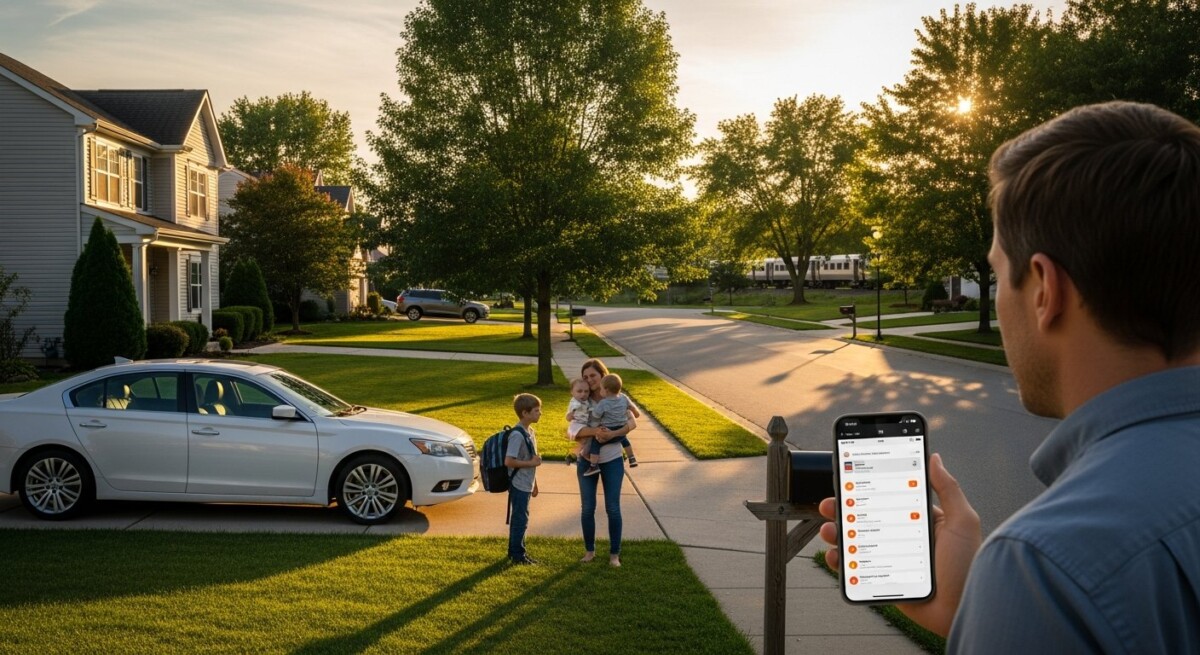
Living in the Chicago suburbs offers a great balance of city access and quieter neighborhoods, but it also comes with its own set of auto insurance challenges. Rates in the suburbs can vary significantly from one town to the next, and many drivers end up paying more than they need to simply because they do not shop around. Finding cheap auto insurance in Chicago suburbs is not about cutting corners on coverage. It is about understanding the local factors that influence rates and knowing which strategies actually lower your premium. Whether you commute daily to the Loop or drive just a few miles to the local grocery store, there are proven ways to reduce your costs without sacrificing protection.
In this article, we break down the key factors that affect suburban insurance rates, compare coverage options for different driver profiles, and show you how to use comparison tools to find the best deal. We also answer common questions about minimum requirements, discounts, and the impact of your credit score. By the end, you will have a clear roadmap to securing affordable coverage that fits your life in the suburbs.
Why Suburban Auto Insurance Rates Vary So Much
Many drivers assume that living outside of Chicago automatically means lower insurance costs. While it is true that dense urban areas generally have higher rates due to increased accident frequency and theft, the suburbs are not a single uniform market. Premiums can differ by hundreds of dollars per year between neighboring towns. Understanding why is the first step to finding cheap auto insurance in Chicago suburbs.
Insurance companies use a variety of data points to set rates for each zip code. These include local crime statistics, traffic accident frequency, the number of uninsured drivers, and even the average cost of medical care in the area. For example, suburbs with higher population density or major highway access often see more accidents and claims. Towns with excellent school ratings and low crime rates may qualify for lower base rates. Additionally, some suburbs have higher rates of auto theft or vandalism, which directly raises comprehensive coverage costs.
Another factor is the average commute distance. Drivers in far western suburbs like Elgin or Aurora often have longer commutes than those in closer suburbs like Oak Park or Evanston. Longer commutes mean more time on the road and a higher probability of filing a claim. Insurers factor this into your premium. The best way to see how your specific suburb affects your rate is to get personalized quotes from multiple carriers.
Minimum Coverage Requirements in Illinois
Before you start comparing rates, you need to know what Illinois law requires. The state mandates minimum liability coverage for all drivers. These minimums are:
- $25,000 for bodily injury per person per accident
- $50,000 for total bodily injury per accident (if multiple people are hurt)
- $20,000 for property damage per accident
This is often written as 25/50/20 coverage. While carrying only the state minimum will give you the lowest possible premium, it is rarely the best choice for suburban drivers. If you cause a serious accident, these minimum limits may not cover the full cost of medical bills or vehicle repairs. You could be personally sued for the difference. Many financial advisors recommend at least 100/300/50 coverage for suburban drivers who own a home or have significant savings. The extra cost is often modest, and it provides critical protection.
Illinois also requires uninsured motorist coverage. This protects you if you are hit by a driver who has no insurance. The minimum matches your liability limits, but you can purchase higher amounts. Given that some suburban areas have a notable number of uninsured drivers, this is a coverage worth considering.
Key Discounts That Lower Your Premium
Finding cheap auto insurance in Chicago suburbs is not just about picking the cheapest base rate. It is about stacking eligible discounts to reduce your final price. Most major insurers offer a range of discounts that suburban drivers can take advantage of. Here are the most impactful ones to look for:
- Multi-policy discount: Bundling your auto insurance with homeowners or renters insurance can save 10 to 25 percent on both policies.
- Good driver discount: Maintaining a clean driving record for three to five years typically qualifies you for a significant reduction.
- Good student discount: Full-time students under 25 with a B average or better can save up to 15 percent.
- Low mileage discount: If you work from home or drive fewer than 10,000 miles per year, you may qualify for a lower rate.
- Safety feature discount: Cars equipped with anti-lock brakes, airbags, and anti-theft devices often earn additional savings.
It is worth asking every insurer you quote with about these discounts. Some companies automatically apply them, while others require you to ask. Also, review your policy annually. Life changes like moving to a safer suburb, paying off a car loan, or retiring can open up new discounts or lower your risk profile.
Comparing Quotes: The Most Effective Way to Save
The single most effective step you can take to find cheap auto insurance in Chicago suburbs is to compare quotes from multiple carriers. Rates for the same driver and same coverage can vary by 40 percent or more between companies. This is because each insurer uses its own formula to assess risk. One company may favor drivers with long commutes, while another may penalize them. By shopping around, you ensure you are not overpaying for coverage that another company would offer for less.
When you compare quotes, make sure you provide the same coverage limits and deductibles for each quote. Otherwise, you are comparing apples to oranges. Use a platform like Free Auto Insurance Quotes Online to get multiple quotes at once. This saves time and gives you a broad view of the market. In our guide on cheap auto insurance policies, we explain how to evaluate whether a low-cost policy still provides adequate protection.
Once you have a few competitive quotes, look beyond the monthly price. Check the financial strength rating of each insurer and read customer reviews about their claims process. A very cheap policy from a company with poor customer service could cost you more in the long run if you have trouble getting a claim paid. Balance price with reliability.
Coverage Options for Different Suburban Driver Profiles
Not every suburban driver needs the same coverage. Your lifestyle, vehicle, and financial situation should guide your choices. Here is how different profiles can approach finding cheap auto insurance in Chicago suburbs:
Commuter Drivers
If you drive 30 minutes or more each way to work, you face higher exposure to accidents and traffic violations. You should carry higher liability limits (at least 100/300/50) and consider adding uninsured motorist coverage. A low deductible on comprehensive coverage can also help if you encounter debris or animal strikes on the highway. Look for insurers that offer commuter-specific discounts or low-mileage programs if your commute is shorter than average.
Families with Teen Drivers
Adding a teenager to your policy is expensive, but there are ways to manage the cost. Look for good student discounts and consider a telematics program that tracks safe driving habits. Some insurers offer significant savings for teens who complete a driver education course. Also, choose a safe, modest vehicle for your teen rather than a high-performance car. The type of car matters almost as much as the driver.
Retirees and Part-Time Drivers
If you are retired or work from home, you likely drive fewer miles. This puts you in a good position for low-mileage discounts. You can also consider raising your deductibles to lower your premium, since you are on the road less and have a lower chance of filing a claim. However, make sure you have enough in savings to cover the higher deductible if you do have an accident. Many retirees also benefit from a defensive driving course discount.
Factors That Can Increase Your Rate
Even with careful shopping, some factors may push your premium higher. Being aware of these can help you anticipate costs and take corrective action where possible. Your credit score is one of the most influential factors in Illinois for setting auto insurance rates. A lower score can increase your premium by 50 percent or more compared to a driver with excellent credit. Check your credit report annually and address any errors.
Your driving record is another major factor. Speeding tickets, at-fault accidents, and DUIs stay on your record for three to five years and can dramatically raise your rates. Some insurers offer accident forgiveness programs that prevent your first at-fault accident from increasing your premium, but this often comes with a higher base rate. Compare the trade-off carefully.
The type of car you drive also matters. Luxury vehicles, sports cars, and models with high theft rates cost more to insure. If you are shopping for a new car, check insurance costs before you buy. A modest sedan with good safety ratings will almost always be cheaper to insure than a large SUV or a sporty coupe.
How to Switch Policies Without a Gap
Once you find a better rate, switching is straightforward but requires timing. Never cancel your old policy before your new one is active. A lapse in coverage, even for one day, can lead to higher rates and may flag you as a high-risk driver. The best practice is to set the start date of your new policy to the day after your old policy ends. This ensures continuous coverage.
When you switch, your old insurer will refund any unused premium. This refund typically arrives within a few weeks. Also, notify your lender if you have a car loan, as they require proof of continuous comprehensive and collision coverage. Your new insurer can provide this documentation. For a detailed comparison of rates in the city versus the suburbs, check our article on auto insurance in Chicago.
Frequently Asked Questions
What is the cheapest auto insurance in Chicago suburbs?
There is no single cheapest company for everyone. Rates vary based on your driving history, credit score, vehicle, and exact location. The best way to find the cheapest option for you is to compare quotes from at least three to five insurers. Companies like GEICO, State Farm, and Progressive often have competitive rates in suburban areas, but your specific profile may favor a different carrier.
Do I need full coverage insurance in the suburbs?
Full coverage is not legally required, but it is usually required by lenders if you have a car loan or lease. Even if you own your car outright, full coverage (comprehensive and collision) is recommended if the vehicle is worth more than a few thousand dollars. For older cars with low value, dropping collision may save money, but consider your ability to replace the vehicle if it is totaled.
How can I lower my insurance after a ticket?
After a ticket, your rates will typically increase at renewal. You can take a defensive driving course to potentially reduce the surcharge. Also, shop around at renewal time, as some insurers are more lenient with minor violations than others. Over time, as the ticket ages, its impact decreases. Most tickets fall off your record after three years.
Does living in a specific suburb affect my rate?
Yes, significantly. Insurers use zip code data to assess risk. Suburbs with lower crime rates, fewer accidents, and lower medical costs generally have lower base rates. For example, Naperville and Arlington Heights often have more competitive rates than some south or west suburbs with higher claim frequencies. Always get quotes based on your exact address.
Can I get cheap auto insurance in Chicago suburbs with a bad credit score?
Yes, but your options may be limited and rates will be higher. Some insurers specialize in high-risk drivers or do not weigh credit as heavily. Shopping around is especially important if your credit is less than perfect. Improving your credit score over time will open up lower rates. In the meantime, focus on discounts like multi-policy and safe driver to offset some of the cost.
For more detailed information on state-specific requirements, read our guide to auto insurance in Massachusetts for a comparison of how different states approach coverage. While Massachusetts has different laws, the principles of comparing quotes and understanding coverage apply everywhere.
Finding cheap auto insurance in Chicago suburbs is a realistic goal if you take a strategic approach. Understand what your suburb costs, know the minimum requirements, stack eligible discounts, and compare quotes from multiple carriers. Avoid the temptation to buy the absolute cheapest policy without checking the insurer’s reputation and the coverage details. A well-chosen policy protects your finances and your family. Use a free comparison tool like Free Auto Insurance Quotes Online to start your search today. The time you invest in shopping around can save you hundreds of dollars per year, and that is money you can put toward other priorities in your suburban life.