
How to Insure a Car You Rarely Drive: Save Big
Master how to insure a car you rarely drive and cut premiums by up to 30 percent. Call 8332757533 for free quotes from multiple carriers.

By Calla Winters
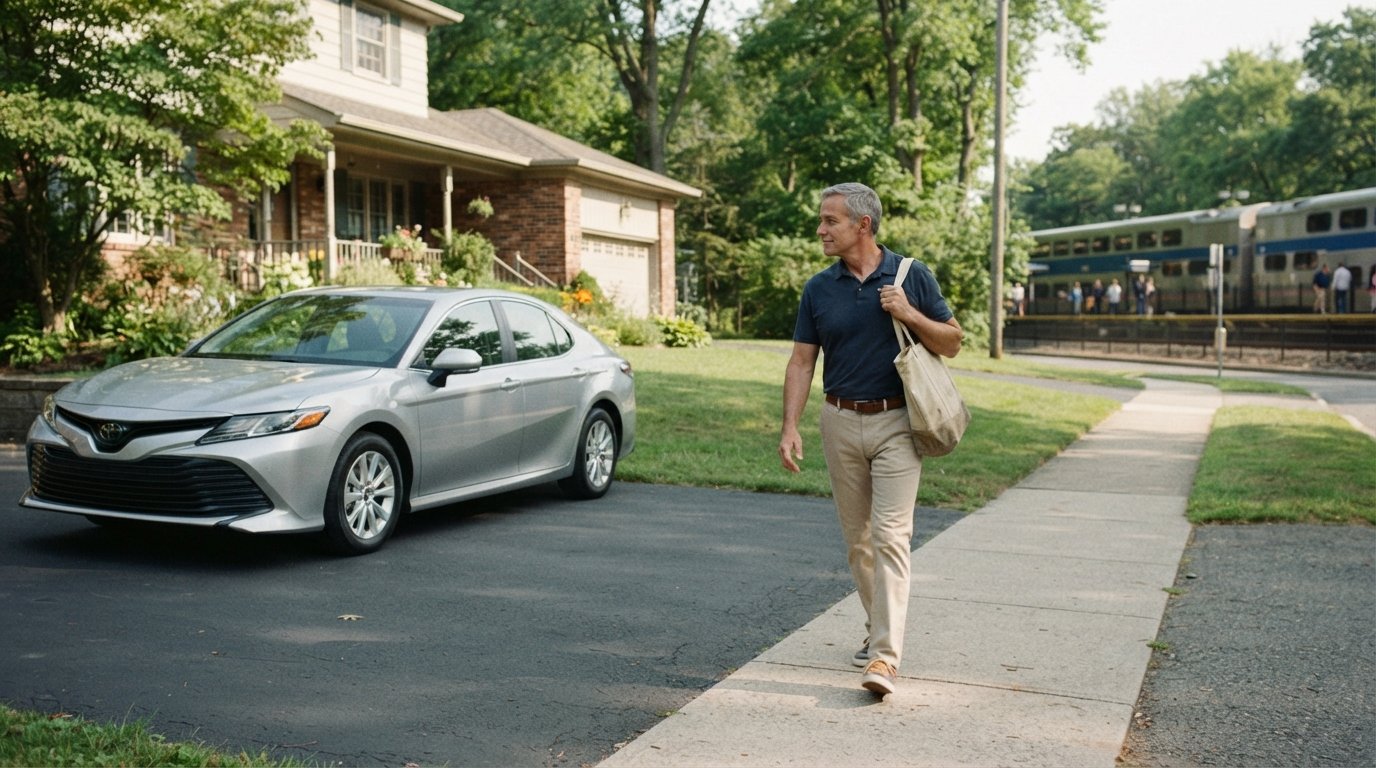
Your car sits in the driveway six days a week. Maybe you take the train to work, or you retired last year, or you only use the vehicle for weekend errands. You still need insurance, but paying a full-rate premium for a car that barely moves feels like burning money. The good news is that insurers recognize low-mileage drivers as lower risk, and there are legitimate, legal ways to cut your premium without dropping coverage altogether. This guide walks you through exactly how to insure a car you rarely drive, from the coverage types that make sense to the mileage thresholds that unlock real discounts.
Why Low-Mileage Drivers Pay Less (and How Much You Can Save)
Insurance is priced on risk. The more time a car spends on the road, the more opportunities exist for collisions, theft, and claims. When you drive under 5,000 to 7,500 miles a year, you fall into a lower-risk category, and most major carriers have products designed specifically for you. According to industry data, low-mileage drivers can save 10 to 30 percent compared to standard policies, and in some cases the savings climb even higher when you combine mileage-based discounts with other credits.
The savings come from two directions. First, your base rate may be lower because the insurer expects fewer claims. Second, you may qualify for specialized programs that track or estimate your actual mileage and adjust your premium accordingly. The key is knowing which program fits your situation, because not every low-mileage option works the same way.
Before you call anyone, gather a few facts: your current annual mileage, how often you drive, whether you have a second vehicle, and whether your state requires continuous coverage. These details determine which path makes the most sense. If you are also dealing with a higher-risk profile, such as a prior accident or a DUI, the strategies overlap but require extra care, and you can find targeted guidance in our resource on cheap car insurance for high-risk drivers in Florida.
Coverage Options That Make Sense for a Car You Barely Use
You cannot simply drop insurance because you rarely drive. Every state except New Hampshire and Virginia requires some form of liability coverage if the car is registered and parked on a public road. Even in those two states, financial responsibility laws mean you pay out of pocket if you cause an accident. So the question is not whether to insure, but how to structure coverage efficiently.
Here are the main coverage types to consider when your car spends most of its time parked:
- Liability only: The legal minimum in most states. It covers damage you cause to others but not your own vehicle. If your car is older or low in value, this may be the most cost-effective choice.
- Comprehensive coverage: Pays for theft, fire, vandalism, weather, and animal strikes. A parked car is still vulnerable to these risks, so comprehensive is often worth keeping even when you rarely drive.
- Collision coverage: Pays for damage to your car in an accident you cause. If you drive infrequently, the odds of a collision drop, but they do not disappear. Weigh the premium against your car's value.
- Uninsured/underinsured motorist (UM/UIM): Protects you if a hit-and-run or uninsured driver hits you. This is especially valuable in states with high uninsured rates.
- Medical payments or personal injury protection (PIP): Covers medical bills regardless of fault. Required in no-fault states, optional elsewhere.
The right mix depends on your car's value, your state's laws, and your tolerance for risk. A general rule: if your car is worth less than 10 times the annual premium for collision and comprehensive, you may be better off dropping those coverages and self-insuring. But if the car is new, leased, or financed, your lender will require full coverage regardless of mileage.
For a deeper look at how these coverage types interact, independent resources like NewAutoInsurance provide consumer-friendly explanations of policy structures and comparison strategies. The important thing is to match coverage to actual risk, not to habit.
Mileage-Based and Usage-Based Insurance Programs
Many major carriers now offer programs that adjust your premium based on how much you actually drive. These fall into two broad categories: usage-based insurance (UBI) and mileage-based insurance. Understanding the difference helps you choose the right one.
Usage-based programs typically use a smartphone app or a plug-in device to track driving habits: how hard you brake, how fast you accelerate, what time of day you drive, and how many miles you log. Safe, low-mileage drivers earn discounts at renewal. Mileage-based programs focus only on the number of miles driven, often with a preset annual limit. If you drive under that limit, you get a lower rate.
Here is how to evaluate whether a telematics program is worth it:
- Check the mileage threshold. Most programs offer the best rates below 7,500 or 5,000 annual miles. If you drive more, the discount shrinks.
- Review the privacy policy. Some programs collect location and driving data continuously. Decide if you are comfortable with that.
- Compare the discount against your current premium. A 15 percent discount on a $1,200 policy saves $180. On a $600 policy, it saves $90. Run the math.
- Ask about the sign-up bonus. Many carriers offer an immediate 5 to 10 percent discount just for enrolling, even before the data comes in.
- Confirm the program is available in your state. Telematics offerings vary widely by region.
If you are uncomfortable with continuous monitoring, ask about low-mileage discounts that do not require telematics. Many carriers offer a simple annual mileage verification, sometimes through a photo of your odometer or a declaration form. These discounts are smaller but require no ongoing data sharing.
Pay-Per-Mile and Usage-Based Insurance: Who Should Consider Them
Pay-per-mile insurance is a subset of usage-based coverage where you pay a base rate plus a per-mile charge. It is ideal for drivers who log fewer than 5,000 miles a year, work from home, or live in a city with strong public transit. If you drive 2,000 miles a year and your per-mile rate is 5 cents, you pay $100 in mileage charges plus a base rate that might be $30 to $50 a month. That can be far cheaper than a standard policy.
However, pay-per-mile is not available everywhere, and it may not be the best fit if your mileage fluctuates. A sudden road trip or a change in your commute can push your costs above what a traditional low-mileage policy would charge. Before switching, estimate your annual miles conservatively and add a buffer.
If you are a senior driver who has cut back on driving, or a young driver who only uses the car for occasional errands, these programs can be especially valuable. They align your premium with your actual exposure, which is the fairest way to price insurance. Just be sure to read the fine print about maximum annual mileage and what happens if you exceed it.
Steps to Insure a Car You Rarely Drive Without Overpaying
Now that you understand the options, here is a practical sequence to follow. This framework works whether you are insuring a second car, a classic car, or a vehicle you keep for occasional use.
Step 1: Document your actual mileage. Check your odometer today and again in 30 days. Multiply by 12 for a rough annual estimate. If you have service records or inspection reports, use them to confirm. Insurers may ask for proof, so having this ready speeds up the process.
Step 2: Decide whether to keep the car registered. If you will not drive it at all for months, some states allow you to suspend registration and drop insurance, but you must surrender the plates. This is risky if you need to move the car for street cleaning or emergencies. In most cases, keeping minimal liability coverage is safer and often cheaper than the penalties for a lapse.
Step 3: Shop at least three carriers. Rates for low-mileage drivers vary dramatically. One insurer may charge $80 a month for a 3,000-mile policy, while another charges $45 for the same coverage. Use a comparison platform to get multiple quotes at once. This is where a service like Free Auto Insurance Quotes Online can save you hours, because it connects you with licensed agents who can present tailored options from several carriers.
Step 4: Ask about every discount you qualify for. Low-mileage is just one. You may also qualify for:
- Multi-car discount (if you have another vehicle on the policy)
- Homeowner or renter discount
- Safety features discount (anti-theft, airbags, daytime running lights)
- Senior or mature driver discount
- Good student discount (for young drivers)
- Paid-in-full discount
- Paperless billing discount
Stacking these can cut your premium by 25 percent or more. Ask specifically about each one, because agents do not always volunteer every option.
Step 5: Choose the right deductible. A higher deductible lowers your premium. If you rarely drive, you are less likely to file a claim, so carrying a $1,000 deductible instead of $500 can save 10 to 20 percent. Just make sure you have that amount available if something does happen.
Step 6: Review your policy every six months. Mileage changes. A new job, a move, or a lifestyle shift can push you into a different risk category. Reviewing at renewal ensures you are not paying for coverage you no longer need.
Common Mistakes to Avoid When Insuring a Low-Mileage Car
The biggest mistake is letting your insurance lapse because you think you do not need it. A lapse creates a gap in coverage that insurers penalize heavily. When you try to reinstate, you may face higher rates, and in some states you face fines, license suspension, or mandatory SR-22 filing. Even if you drive once a month, continuous liability coverage is almost always cheaper than the penalty for going uninsured.
Another mistake is underreporting mileage to get a lower rate. This is insurance fraud. If you file a claim and the insurer discovers you drive more than you stated, they can deny the claim or cancel your policy. Be honest about your mileage, and if it changes, tell your insurer. A small rate adjustment is far better than a denied claim.
A third mistake is dropping comprehensive coverage on a car that sits outside. A parked car can be stolen, damaged by hail, or hit by a falling branch. Comprehensive coverage is often inexpensive, especially for low-mileage drivers, and it protects an asset that would otherwise be a total loss. If your car is financed or leased, you are required to carry it anyway.
Finally, do not assume your current insurer is giving you the best low-mileage rate. Loyalty does not always pay. Shopping around at least once a year is the single most effective way to keep your premium competitive. If you find a better rate, you can often use it as leverage with your current carrier, or simply switch.
State Rules and Special Situations
Insurance is regulated at the state level, so the rules for low-mileage drivers vary. Some states require insurers to offer mileage-based discounts. Others leave it to the market. In no-fault states like Florida and New York, personal injury protection (PIP) is mandatory regardless of how little you drive, which can keep your minimum premium higher than in at-fault states.
If you store your car for part of the year, ask about a "storage" or "suspension" policy. These policies provide comprehensive coverage only (no liability) while the car is off the road, and they cost significantly less. You must not drive the car at all during the storage period. When you are ready to drive again, you call your insurer and reinstate full coverage. This is a common strategy for snowbirds and collectors.
Classic and antique cars have their own insurance category, often with mileage limits and agreed-value coverage. If your rarely driven car is a classic, you may qualify for specialty coverage that costs far less than a standard policy. The same applies to recreational vehicles, motorcycles, and ATVs that see limited use.
For drivers with a high-risk history, such as a DUI or at-fault accident, low-mileage discounts still apply, but the base rate is higher. In those cases, working with an independent agent who can shop multiple carriers is especially important. Non-standard insurers may offer better rates for high-risk, low-mileage drivers than major brands.
How to Compare Low-Mileage Quotes Effectively
Comparing quotes is not just about the monthly premium. You need to compare coverage limits, deductibles, exclusions, and the insurer's claims reputation. A cheap policy with inadequate limits can cost you far more in the long run if you cause an accident.
When you request quotes, provide the same information to every carrier: your annual mileage, vehicle details, driving record, and desired coverage. Then compare the total annual cost, not just the monthly payment. Ask about installment fees, which can add 5 to 10 percent to your premium if you pay monthly.
Also check the insurer's financial strength rating and complaint index. A low premium is meaningless if the company fights every claim. Independent ratings from A.M. Best, Moody's, and the National Association of Insurance Commissioners (NAIC) can help you evaluate stability and customer service.
If you are unsure where to start, a comparison platform that connects you with licensed agents can streamline the process. You fill out one form, and multiple carriers compete for your business. That competition is what drives rates down, especially for low-mileage drivers who are already a preferred risk.
Final Thoughts on Insuring a Car You Rarely Drive
Insuring a car you rarely drive does not have to be expensive. By understanding your state's requirements, choosing the right coverage mix, and taking advantage of low-mileage discounts and telematics programs, you can cut your premium significantly without sacrificing protection. The key steps are simple: document your mileage, shop at least three carriers, stack every discount you qualify for, and review your policy regularly.
Remember that insurance is a legal requirement in nearly every state, and a lapse can cost you far more than the premium you were trying to avoid. If you are ready to see how much you could save, get a free, no-obligation quote from multiple carriers and let the competition work in your favor. With the right approach, your rarely driven car can be one of your cheapest assets to insure.