
How to Maximize Your Multi Car Insurance Discount
Master the multi car discount and keep more money in your pocket. Call (833)-275-7533 to compare quotes and maximize your savings today.

By Calla Winters
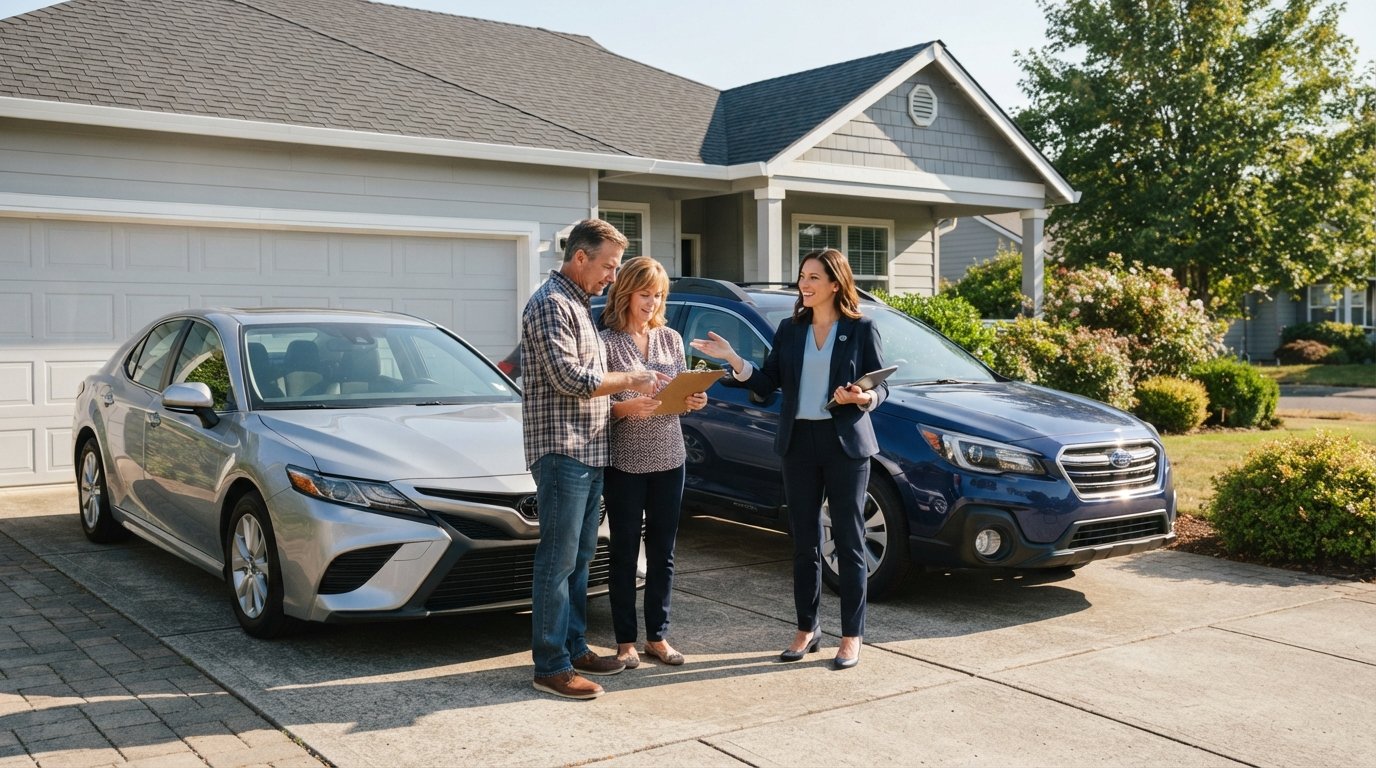
If your driveway holds two or more vehicles, you are already in a strong position to save money on auto insurance. Most major carriers offer a multi car insurance discount, sometimes called a multi vehicle discount, and it can trim your household premium by 10 to 25 percent. But here is the catch: the discount is rarely applied automatically in the most generous way possible. Many families leave money on the table because they assume their current policy is already optimized, or they never ask how the discount is actually calculated. Understanding the mechanics of multi car savings, from per vehicle rate reductions to driver allocation rules, is the first step toward keeping more money in your pocket.
The opportunity is real, but it requires a bit of strategy. Insurers evaluate risk at the household level, which means adding a vehicle or a driver changes the math for every policy on the account. In this guide, you will learn how to maximize your multi car insurance discount by asking the right questions, structuring your policies intelligently, and knowing when a separate policy might actually cost less overall. We will also cover how to re-shop quotes as your household changes, whether you are adding a teen driver or replacing an aging commuter car.
How Multi Car Discounts Are Calculated Per Additional Vehicle
Insurance companies do not simply hand you a flat percentage off your total bill. Instead, they apply the multi vehicle discount to each additional vehicle, and the size of that discount depends on the carrier, the state, and the risk profile of the drivers assigned to that vehicle. Typically, the first vehicle on a policy pays the full rate. The second vehicle might receive a 10 to 15 percent discount on its own premium, and the third or fourth vehicle could see even deeper reductions, sometimes 20 percent or more. The logic is straightforward: households with multiple vehicles tend to file fewer claims per vehicle because each car is driven less, and bundling everything with one insurer reduces administrative costs.
However, the discount is not always applied to the most expensive vehicle. Some carriers apply it to the vehicle with the lowest premium, which means your savings might be smaller than you expect. Others apply a percentage reduction to every vehicle after the first. When you request quotes, ask the agent to break down the multi car discount line by line. You want to see exactly how much is being deducted per vehicle and whether the discount is capped. A common mistake is assuming that adding a third car will automatically lower your total bill; in reality, adding a vehicle almost always increases your total premium, but the discount softens the increase. The goal is to ensure you are receiving the maximum allowable reduction on each additional car.
Another layer to consider is how the discount interacts with other savings. Many insurers allow multi car discounts to stack with safe driver, anti theft, and bundling discounts (home and auto). But stacking rules vary. Some carriers cap the total discount at a certain percentage, while others apply each discount sequentially. If you are comparing quotes, use the same coverage limits and deductibles across all carriers so you can see the true out of pocket difference. For a deeper look at how coverage add ons like rental reimbursement interact with your policy, see our guide on 2026 rental car insurance coverage updates. That article explains how rental car coverage works when your vehicle is in the shop, which is relevant if you are weighing whether to add that endorsement to a multi car policy.
One Policy or One Carrier: What the Discount Actually Requires
To qualify for a multi car discount, most insurers require that all vehicles be listed on the same policy, or at least with the same carrier. This is a crucial distinction. If you and your spouse have separate policies with different companies, neither of you will likely qualify for the multi vehicle discount, even though you live at the same address. The discount is designed to reward households that concentrate their business with one insurer. That said, there are exceptions. Some carriers allow vehicles to be on separate policies as long as they are with the same company and the household members are listed as drivers. Others require a single policy with all vehicles and all regular drivers listed. Before you assume you are covered, call your insurer and ask specifically: "Do all vehicles need to be on one policy to receive the multi car discount, or is same carrier enough?"
Keeping everything on one policy is usually the simplest path to the discount, but it is not always the cheapest overall. For example, if one driver has a serious moving violation and another has a clean record, combining them on one policy could raise the rate for the clean driver because insurers often blend household risk. In some cases, it may be cheaper to keep the high risk driver on a separate policy with a different carrier, even if it means forfeiting the multi car discount on that vehicle. The key is to run the numbers both ways. A licensed agent can quote a combined policy and separate policies side by side, showing you the total household cost after all discounts are applied. You can start that comparison by requesting free auto insurance quotes online, which will give you a baseline for your household.
If you decide to keep separate policies, be aware that you may still be able to capture other discounts, such as a multi policy discount if you also insure your home or renters with the same carrier. But the multi car discount specifically is tied to vehicles, not property. So if you split your vehicles across two carriers, you will likely lose the multi car savings on at least one of them. The decision should be based on total household premium, not just the headline discount percentage.
Mixing Drivers, Teens, and High Risk Vehicles Within a Household
Households with multiple vehicles often include a mix of drivers: a married couple, a teen driver, perhaps an elderly parent, and sometimes a high risk vehicle like a sports car or a modified truck. How you assign drivers to vehicles can significantly affect your multi car discount and your overall premium. Insurers typically assign the highest risk driver to the highest risk vehicle, which can drive up costs. But you may have some flexibility in how drivers are listed. For example, if your teen only drives the older sedan, you can sometimes exclude them from the sports car, which may reduce the rate on that vehicle. However, exclusion rules vary by state and carrier, and some insurers will not allow a household member to be excluded from any vehicle if they have regular access to it.
Teen drivers are a special case. Adding a teen to a multi car policy can increase your premium substantially, but the multi car discount can help offset some of that increase. Some carriers offer a good student discount or a driver training discount that stacks with the multi car discount. The key is to ask for every possible discount when you add a teen, and to review the driver assignment annually. As your teen gains experience and moves away to college (without a car), you may be able to remove them from the policy or adjust their status, which can lower your rate. Similarly, if you have a high risk vehicle that is rarely driven, you might qualify for a low mileage discount, which can stack with the multi car discount.
High risk vehicles, such as performance cars or vehicles with extensive modifications, can be expensive to insure regardless of discounts. If you own one, you might consider whether it is worth keeping on the same policy as your daily drivers. Sometimes, separating the high risk vehicle onto its own policy with a carrier that specializes in classic or modified cars can save money overall, even if you lose the multi car discount on that one vehicle. Again, the only way to know is to compare quotes. Use a comparison platform to see how different carriers handle multi car households with mixed risk profiles. For general guidance on coverage types that might apply to specialty vehicles, you can visit NewAutoInsurance, an independent online resource with educational articles and FAQs about auto insurance for U.S. drivers.
When Separate Policies Could Actually Cost Less Overall
It sounds counterintuitive, but there are situations where splitting your vehicles onto separate policies, even with different carriers, can save you money. The multi car discount is attractive, but it is not the only factor in your premium. If one driver has a clean record and another has multiple accidents or tickets, combining them on one policy can raise the clean driver's rate more than the multi car discount saves. In that case, separate policies might be cheaper for the household as a whole. Similarly, if you have a young driver who is the primary operator of one vehicle, some carriers offer lower rates for a standalone policy with a telematics device or a safe driver program, which may not be available on a combined policy.
Another scenario: you own a vehicle that is used for business or commercial purposes, such as a delivery van or a rideshare car. Personal auto policies often exclude commercial use, and mixing a commercial vehicle with personal vehicles on one policy can complicate coverage. In that case, a separate commercial auto policy may be necessary, and you might still qualify for a multi car discount on your personal vehicles if they remain together. Always disclose vehicle use to your insurer to avoid claim denials.
To determine whether separate policies make sense, you need to compare the total household premium under both scenarios. Gather quotes for a combined policy with all vehicles and drivers, and then gather quotes for separate policies (for example, one policy for the clean driver and one for the high risk driver). Be sure to compare identical coverage limits and deductibles. The difference may surprise you. Remember that the multi car discount is just one lever; other discounts like paid in full, paperless billing, and bundling home and auto can also influence the final price. A licensed agent can help you model these combinations, and you can start by getting free quotes from multiple carriers through our comparison tool.
How to Re-Shop Quotes as Household Vehicles Change
Your household is not static. You might add a vehicle when a child starts driving, remove one when a parent moves out, or replace a car after an accident. Each of these changes can affect your multi car discount eligibility and the overall competitiveness of your policy. Re-shopping your insurance every 12 to 24 months, or whenever a major life event occurs, is one of the most effective ways to ensure you are maximizing your discount. Insurers constantly adjust their rates and discount structures, so a carrier that was expensive two years ago might now be the cheapest for your multi car household.
Here is a simple process to follow when your household vehicles change:
- Inventory your household: List all vehicles, all regular drivers, and how each vehicle is used (commute, pleasure, business). Note any drivers who live at the address but may not need to be on the policy (e.g., a college student without a car).
- Gather current policy details: Collect your current declarations page, including coverage limits, deductibles, and all discounts applied. This is your baseline.
- Request quotes from multiple carriers: Use a comparison platform to get quotes for the same coverage levels. Be sure to indicate that you have multiple vehicles so the multi car discount is included in the quote.
- Ask about discount stacking: For each quote, ask the agent which discounts are applied and whether they can be combined. Specifically confirm the multi car discount amount per vehicle.
- Compare total household premium: Do not just compare the per vehicle price. Compare the total you would pay for all vehicles under each scenario (combined vs. separate policies).
After you have quotes, review them carefully. Look for any missing discounts, such as a good student discount for a teen, a defensive driving discount, or a low mileage discount. If you find a better offer, contact your current insurer and ask if they can match or beat it. Sometimes they will adjust your rate to keep your business. If not, switching is straightforward, and your new insurer will handle the cancellation of your old policy. Just be sure there is no gap in coverage.
Re-shopping is especially important when you add a teen driver or a new vehicle. Adding a teen can increase your premium by 50 percent or more, but the multi car discount and other discounts can soften the blow. If you do not re-shop, you might miss out on a carrier that specializes in families with teen drivers. Similarly, if you replace a car, the new car might qualify for a new car discount or safety feature discounts that were not available on the old one. Always update your policy and ask for a fresh quote.
Finally, keep your policy information organized and set a reminder to review your insurance every year. A quick 15 minute comparison can reveal hundreds of dollars in savings. The multi car discount is a powerful tool, but it works best when you actively manage it. By understanding how the discount is calculated, structuring your policies intelligently, and re-shopping as your household evolves, you can maximize your multi car insurance discount and keep your household premium as low as possible.
Start by getting a clear picture of your current coverage and then compare quotes from multiple carriers. The effort you put into reviewing your policy today can pay off with lower premiums for years to come.