
Insuring Custom and Modified Cars: What You Need to Know
Insuring custom and modified cars starts with agreed value coverage and solid documentation. Call (833)-275-7533 to compare quotes and protect your build.

By Lucas Bennett
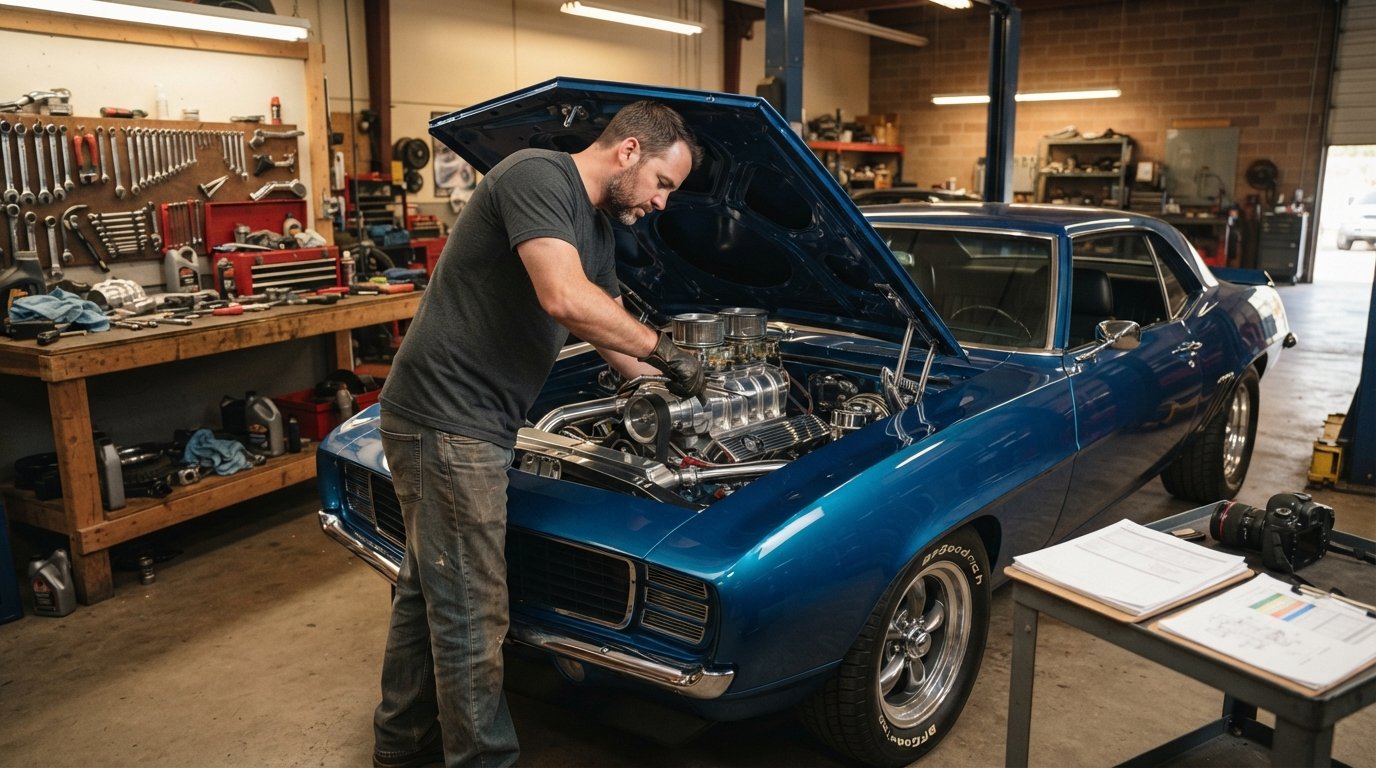
Your project car is more than transportation. It is a rolling expression of your time, money, and mechanical creativity. Whether you have dropped a crate engine into a classic muscle car, lifted a truck for off-road duty, or wrapped a modern coupe in custom paint and carbon fiber, the vehicle on your driveway is worth far more than the book value a standard insurer sees. That gap between what you have invested and what a typical policy will pay is where owners of modified vehicles get hurt, often discovering the shortfall only after an accident or theft. Understanding how coverage works for custom and modified cars before something goes wrong is the single most effective way to protect your investment and avoid a painful settlement surprise.
The core problem is simple: standard auto policies are built around mass-produced vehicles with predictable market values. Insurers calculate premiums and payouts using model-year data, depreciation schedules, and original equipment manufacturer (OEM) parts pricing. When your car carries $30,000 in aftermarket parts, a custom paint job, or a rebuilt drivetrain that doubles its output, the standard policy has no mechanism to recognize that added value. Many policies explicitly exclude or cap coverage for aftermarket equipment, which means a $12,000 supercharger kit might contribute nothing to your payout after a total loss. The good news is that specialty coverage exists, and with the right documentation and policy structure, you can insure a modified vehicle for what it is genuinely worth.
Why Standard Policies Fall Short for Modified Vehicles
Most drivers assume their full coverage policy protects everything attached to the car. In reality, standard policies typically cover the vehicle in its factory configuration. Aftermarket parts, performance upgrades, custom wheels, audio systems, and cosmetic modifications are usually subject to a small sub-limit, often somewhere between $1,000 and $5,000, and sometimes they are excluded entirely. If you have spent five figures building a show-quality restoration or a track-ready street machine, that sub-limit represents a fraction of your actual exposure. The insurer is not being unfair; it is simply pricing a product designed for the average commuter, not the enthusiast who has doubled the value of the vehicle through customization.
There is also the matter of how insurers assess risk. A modified car may be driven differently, stored differently, or present different repair costs than a stock vehicle. Standard carriers often lack the actuarial data to price these risks accurately, so they either decline the vehicle, apply surcharges, or quietly limit coverage. This is why so many modified-car owners end up with a policy that feels adequate until the moment they need to file a claim. Reviewing how rental car insurance works before you drive is a useful reminder that coverage terms vary widely, and the same diligence applies to your own customized vehicle.
The practical takeaway is that you cannot assume a standard policy will treat your modifications fairly. Before your next renewal, ask your agent directly how aftermarket equipment is covered, whether there is a sub-limit, and whether the policy uses actual cash value or a valuation method that recognizes your build. If the answers are vague, it is time to explore specialty options.
Agreed Value vs. Stated Value vs. Actual Cash Value
The settlement method is arguably the most important clause in any policy for a modified vehicle. Three approaches dominate the market, and the difference between them can be tens of thousands of dollars when you file a claim. Understanding these terms before you shop will help you compare quotes intelligently and avoid a policy that looks affordable but pays out far less than your car is worth.
- Actual Cash Value (ACV): The insurer pays the depreciated market value of the vehicle at the time of loss. Modifications are typically ignored or capped, making this the least protective option for custom builds.
- Stated Value: You declare a value, and the insurer agrees to pay that amount, but only up to the actual cash value at the time of loss. If your car has depreciated or the stated amount exceeds market value, the payout can be reduced.
- Agreed Value: You and the insurer agree on a specific value in advance, usually supported by an appraisal or detailed documentation. In a total loss, the insurer pays that agreed amount with no depreciation adjustment, which is the gold standard for collector and modified vehicles.
For a heavily modified car, agreed value is almost always the right choice. It locks in a number that reflects your investment and removes the ambiguity that leads to claim disputes. Stated value can work for lightly modified vehicles where the stated amount aligns closely with market value, but it offers less certainty. Actual cash value is appropriate only for daily drivers with minor cosmetic upgrades where the financial exposure is small.
Documenting Your Modifications the Right Way
Even the best agreed value policy depends on documentation. Insurers want proof of what you have built, what it cost, and what condition it is in. Without records, you are negotiating from a position of weakness after a loss, and the insurer may default to factory specifications. Building a documentation file is not glamorous, but it is the single most practical step you can take to protect your investment.
Start with receipts for every major purchase: engine components, suspension kits, wheels, paint and bodywork, upholstery, electronics, and labor. Photograph each modification from multiple angles, including close-ups of part numbers and serial numbers where visible. Keep a running build log with dates and mileage, and update it whenever you add something significant. If your vehicle has been appraised, store the appraisal with your policy documents and refresh it every few years as the build evolves. Many specialty insurers also accept a professional appraisal as the basis for agreed value, which can simplify the underwriting process.
Digital organization matters here. Scan paper receipts, back up photos to cloud storage, and keep a copy of your documentation package somewhere other than the vehicle itself. If your car is stolen or destroyed in a fire, the last thing you want is to lose your proof of investment along with it. A well-organized file also speeds up claims and reduces the chance of a dispute over whether a modification was actually installed.
How Performance and Safety Modifications Affect Eligibility and Premiums
Not all modifications are treated equally. Insurers distinguish between cosmetic upgrades, safety improvements, and performance enhancements, and each category influences eligibility and pricing differently. Understanding how carriers view your build helps you anticipate underwriting questions and choose a policy that fits rather than fighting a decline or a surprise surcharge.
Safety modifications such as upgraded brakes, roll cages, racing harnesses, and improved lighting are often viewed favorably, especially on vehicles used for track days or autocross. They may even qualify for discounts with some specialty carriers. Cosmetic modifications like custom paint, wraps, body kits, and interior upgrades are generally straightforward to insure as long as they are documented and reflected in the agreed value. Performance modifications are where underwriting gets stricter: engine swaps, turbochargers, superchargers, nitrous systems, and significant suspension changes raise questions about how the vehicle is driven and whether it meets street legality requirements in your state.
Some carriers will decline a vehicle with certain engine swaps or extreme horsepower gains, while others specialize in high-performance builds and price accordingly. Emissions compliance is another factor, particularly in states with strict inspection programs. A modification that renders the car unable to pass emissions or safety inspection can create coverage complications, so keep your build street legal if you intend to insure it for road use. Being upfront with your agent about every modification is essential; hiding a turbo kit to save on premiums can void a claim when the insurer discovers it during the adjustment process.
When to Move to a Specialty or Collector Policy
At some point, a standard policy stops being the right tool. The clearest signals are when your modification investment exceeds the aftermarket sub-limit, when your vehicle's agreed value is significantly higher than book value, or when your carrier declines the build outright. Specialty and collector policies are designed for exactly these situations, offering agreed value settlements, broader coverage for aftermarket parts, and underwriting that understands enthusiast vehicles.
Collector policies often come with usage restrictions, such as limited annual mileage, garage storage requirements, and prohibitions on commercial use or daily commuting. For many modified-car owners, these restrictions are acceptable because the vehicle is a weekend toy rather than a primary driver. Specialty policies for modified daily drivers also exist, though they tend to be stricter about documentation and may require a separate appraisal. The key is to match the policy to how you actually use the car, not how you imagine you might use it.
If you are financing your build or the vehicle itself, your lender may have requirements about coverage that complicate the switch to a specialty policy. Understanding your auto loan refinancing options can help you align your financing terms with your insurance strategy, especially if you are carrying a large balance on a heavily modified vehicle. Refinancing can lower monthly payments or change loan terms, freeing up budget for proper coverage. The goal is to avoid a situation where a low loan payment is offset by inadequate insurance that leaves you exposed after a loss.
Practical Steps to Insure Your Modified Car Correctly
Getting the right coverage is a process, not a single phone call. The owners who end up satisfied with their claims are the ones who prepared in advance, asked direct questions, and documented their builds thoroughly. The following sequence gives you a clear path from evaluation to active coverage.
- Inventory every modification and estimate its replacement cost, including labor. Group items by category (performance, cosmetic, safety, audio) so your agent can see the full picture.
- Gather receipts, photos, and any appraisals, then organize them into a single digital file you can share with an insurer or adjuster.
- Contact your current carrier and ask specifically how aftermarket parts are covered, whether there is a sub-limit, and which settlement method applies.
- Request quotes from specialty and collector insurers that write agreed value policies for modified vehicles, and compare not just premiums but also deductibles, usage restrictions, and claims handling.
- Review the policy language before signing, paying close attention to exclusions, mileage limits, storage requirements, and the process for updating your agreed value as the build evolves.
After the policy is in force, revisit it annually or whenever you complete a major modification. Agreed value is not static; as you invest more in the car, the insured value should rise to match. A quick annual review with your agent prevents the slow drift that leaves a heavily modified car underinsured after several years of incremental upgrades. It also gives you a chance to ask about discounts, such as multi-vehicle or safe-driver credits, that may apply even on specialty policies.
Finally, do not overlook the interaction between your auto policy and any other coverage you carry. Homeowner policies sometimes offer limited coverage for parts stored in a garage, and some enthusiast policies bundle spare parts and tools. If you store a spare engine or a set of race wheels, ask whether those items are covered and under which policy. Small gaps in coverage add up, and a few minutes of questions can close them before a loss occurs.
Insuring a custom or modified car rewards preparation. The owners who document their builds, choose agreed value coverage, and match their policy to how they actually drive avoid the settlement shock that catches so many enthusiasts off guard. Start with an honest inventory of what you have built, ask your agent the uncomfortable questions about exclusions and sub-limits, and move to a specialty policy when the numbers justify it. Your car is a significant investment, and the right coverage ensures that a bad day on the road does not become a financial loss you cannot recover from.