
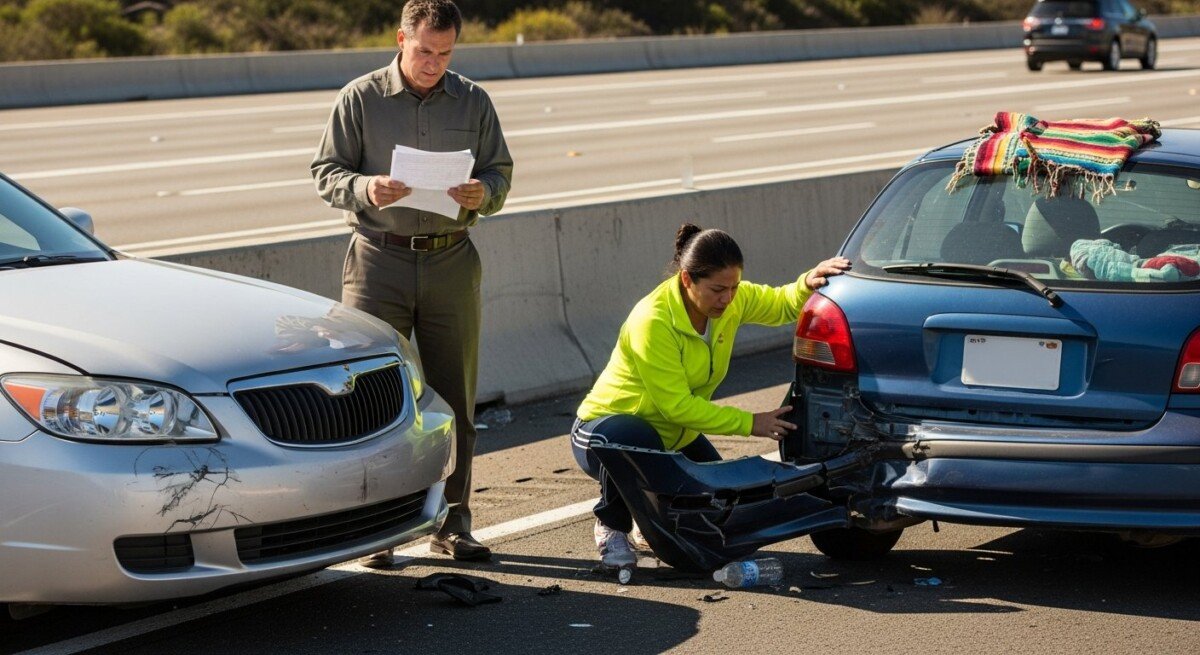
Is Liability-Only Auto Insurance Enough for California Drivers?
Learn if liability-only auto insurance truly protects you in California. Call 833-275-7533 for a personalized coverage review to avoid financial risk.

By Althea Monroe
You are legally on the road, your wallet feels a bit heavier each month, and you have met the state’s minimum requirement. For many California drivers, liability-only auto insurance seems like the perfect balance of compliance and cost savings. But in a state with some of the nation’s highest traffic density, vehicle values, and repair costs, the critical question becomes whether this bare-minimum coverage is truly sufficient protection for your financial future. The short answer is that while it fulfills the law, it often leaves you dangerously exposed to significant personal loss. Understanding the gaps in a liability-only policy is essential for any California motorist making an informed, responsible choice.
Understanding California’s Minimum Liability Requirements
California law mandates that all drivers carry a minimum amount of liability insurance, often expressed as 15/30/5. This is not a single figure but three separate limits that define your financial responsibility in an accident you cause. The first number, $15,000, is the maximum your insurer will pay for injuries to a single person. The second, $30,000, is the total limit for all injuries in a single accident. The third, $5,000, is for property damage you cause to someone else’s vehicle, fence, or other property. It is crucial to grasp that these limits are often shockingly low relative to actual costs in California. A moderate injury from a collision can generate medical bills far exceeding $15,000 in a matter of days. Similarly, $5,000 in property damage might not even cover a bumper replacement on a newer model car. When you choose liability-only, you are betting that any accident you cause will be minor and inexpensive, a risky gamble on California’s busy roads.
The Critical Gaps in a Liability-Only Policy
A liability-only policy protects others from your mistakes, but it offers you no direct protection for your own losses. This creates several potentially devastating financial vulnerabilities. First, and most importantly, it provides zero coverage for damage to your own vehicle. Whether you collide with another car, a tree, or a pothole, you are solely responsible for all repair or replacement costs. Second, it includes no medical coverage for you or your passengers, regardless of who is at fault. You would need to rely on your personal health insurance, which may have high deductibles and co-pays, and it certainly will not cover lost wages or pain and suffering. Third, it offers no defense against uninsured or underinsured motorists (UM/UIM). If a driver with no insurance or minimal limits hits you, a liability-only policy gives you no recourse to recover your vehicle repair or medical costs from your own insurer. This is a significant risk, as our analysis of the penalty for no car insurance in California shows the prevalence of uninsured drivers remains a concern. Finally, liability-only insurance provides no coverage for non-collision incidents like theft, vandalism, fire, or falling objects. In these common scenarios, you bear the total loss.
When Might Liability-Only Be a Calculated Risk?
While generally not recommended, a liability-only policy can be a deliberate, calculated choice for a very specific set of circumstances. The primary scenario is when you drive an old, low-value vehicle, often referred to as a “beater.” If your car’s market value is less than a few thousand dollars, paying for collision and comprehensive coverage may not be financially rational, as the premium plus deductible could approach the car’s total worth. This decision requires an honest assessment: can you afford to suddenly replace your vehicle out-of-pocket if it is totaled? Another scenario is if you rarely drive, perhaps using a car only for short, infrequent errands, thereby statistically lowering your risk. However, a single accident on a one-mile trip can be just as costly as one on a long commute. It is also a temporary option for those in extreme financial hardship, but it should be upgraded as soon as possible. Even in these cases, strongly consider adding uninsured motorist coverage, which is relatively inexpensive and provides crucial protection.
The High Cost of Being Underinsured in California
The financial consequences of an at-fault accident with only minimum liability coverage can be catastrophic. Imagine causing a collision that results in $40,000 in total medical bills for the other driver and passengers. Your policy would pay its $30,000 limit, leaving you personally liable for the remaining $10,000. The injured parties can, and likely will, sue you for this balance. A court judgment could lead to wage garnishment, a lien on your property, or the seizure of your assets. For property damage, the $5,000 limit is easily exhausted by today’s vehicles filled with sensors and complex materials. Hitting a luxury car or multiple vehicles almost guarantees you will be responsible for thousands in additional repair costs. Furthermore, without collision coverage, your own vehicle’s repair bill becomes an immediate out-of-pocket expense. This financial exposure turns a single moment of inattention into a long-term debt crisis. Navigating these complex financial risks is a key part of understanding auto insurance in California comprehensively.
Essential Coverages to Consider Adding
To build a robust financial safety net, California drivers should seriously consider layering additional coverages onto a base liability policy. The most critical add-ons address the glaring gaps previously discussed.
- Collision Coverage: Pays for damage to your own car resulting from a collision with another vehicle or object, regardless of fault.
- Comprehensive Coverage: Covers damage to your car from non-collision events like theft, vandalism, fire, hail, or falling trees.
- Uninsured/Underinsured Motorist (UM/UIM) Coverage: Protects you and your passengers if you are hit by a driver with no insurance or insufficient limits. This includes both bodily injury and property damage (UMPD) in California.
- Medical Payments (MedPay) or Personal Injury Protection (PIP): Covers medical expenses for you and your passengers, regardless of fault, and can help with deductibles from health insurance.
- Increased Liability Limits: Raising your liability limits from 15/30/5 to 100/300/100 or higher provides vastly more protection against lawsuits for a relatively modest premium increase.
Adding these coverages transforms your policy from a minimal legal document into a true asset protection plan. The incremental cost is often less than drivers fear, especially when balanced against the potential for financial ruin. A smart strategy is to carry the highest liability limits you can afford and pair them with a deductible for collision and comprehensive that matches your emergency fund capacity.
Balancing Cost and Protection: Strategies for Affordability
The premium for a full coverage policy is undeniably higher than for liability-only, but there are numerous strategies to manage costs without sacrificing essential protection. First, shop around diligently. Rates can vary dramatically between insurers for the same driver profile. Second, ask about every possible discount: good driver, multi-policy, good student, low mileage, pay-in-full, and safety feature discounts. Third, consider raising your deductibles for collision and comprehensive. Moving from a $500 to a $1,000 deductible can lower your premium significantly, but ensure you have that $1,000 saved and accessible. Fourth, maintain a clean driving record, as tickets and accidents cause premiums to soar. Fifth, review the coverage on older vehicles annually; if your car’s value has depreciated substantially, you might adjust or drop collision coverage. However, never drop UM/UIM coverage, as its value is independent of your car’s worth. For a detailed exploration of saving money while maintaining adequate protection, our resource on navigating California coverage and savings offers further guidance.
Frequently Asked Questions
Is liability-only insurance illegal in California?
No, it is perfectly legal as long as it meets the state’s minimum 15/30/5 requirements. It fulfills the financial responsibility law.
What is the biggest risk with a liability-only policy?
The biggest risk is being personally sued for damages that exceed your low policy limits, which could lead to wage garnishment and loss of assets.
Can I finance or lease a car with only liability insurance?
Almost certainly not. Lenders and leasing companies require you to carry collision and comprehensive coverage to protect their financial interest in the vehicle.
How much more expensive is full coverage than liability-only?
The cost difference varies widely based on driver, location, and vehicle. It can be double or more, but for many, the added protection is worth the cost. Shopping around is key.
Is Uninsured Motorist coverage worth it if I have health insurance?
Yes. Health insurance does not cover lost wages, pain and suffering, or property damage. UM/UIM coverage fills these critical gaps after a hit-and-run or accident with an uninsured driver.
Ultimately, the decision on whether liability-only auto insurance is enough for California hinges on your personal financial resilience and risk tolerance. For drivers with significant assets, a reliable daily driver, or limited savings, the minimal savings from a liability-only policy pale in comparison to the profound financial exposure it creates. A more balanced approach involves increasing liability limits and adding uninsured motorist coverage as an absolute baseline. Investing in a more complete insurance package is not just buying a policy, it is purchasing peace of mind and financial stability, ensuring that a single accident does not derail your life’s progress. For personalized advice on structuring your policy, reviewing your specific car insurance in California needs with a professional is a prudent next step.