
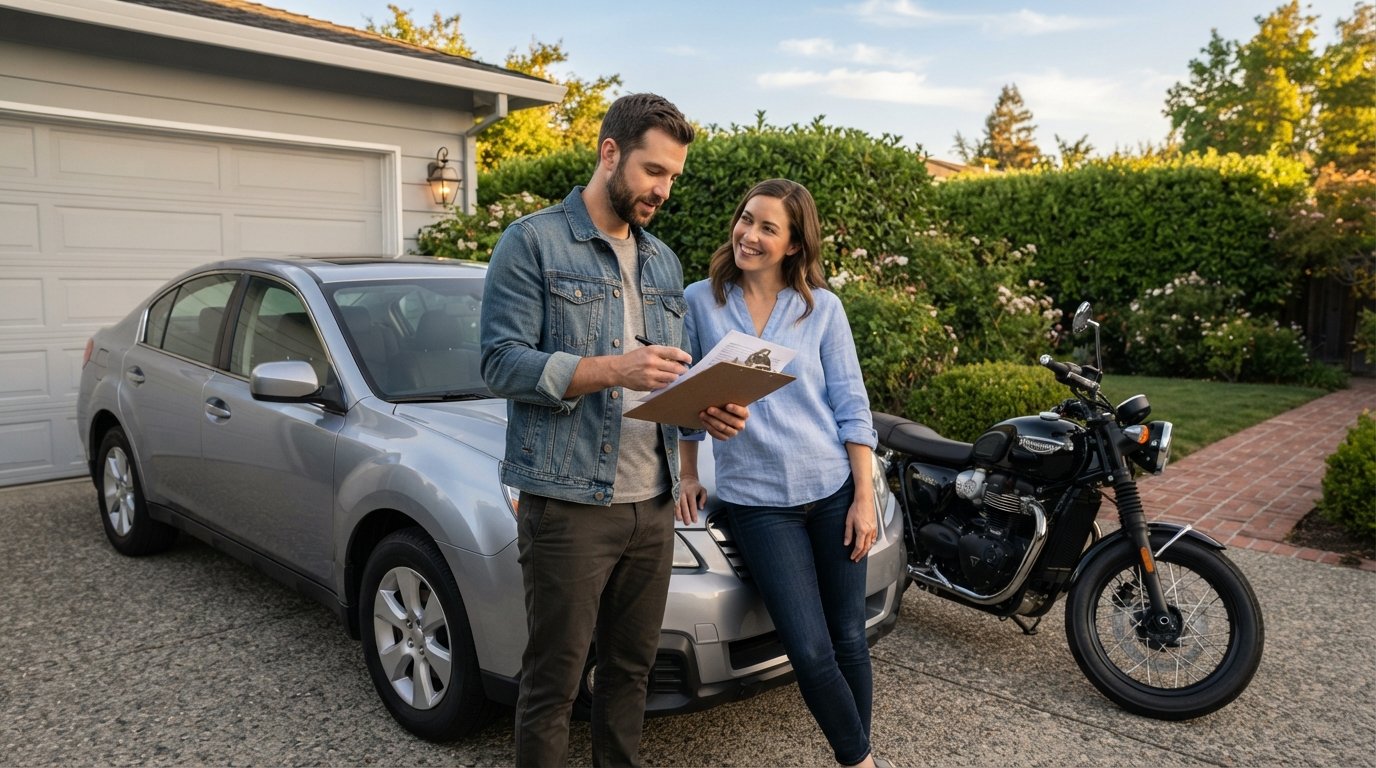
Motorcycle Insurance for Riders Who Also Own a Car
Unlock savings on motorcycle insurance for riders who also own a car. Call (833)-275-7533 to compare bundled and separate quotes today.

By Kieran Maddox
Owning both a car and a motorcycle offers unmatched flexibility, but it also creates a coverage puzzle that many riders solve the hard way: by overpaying or leaving gaps. The good news is that motorcycle insurance for riders who also own a car can be optimized through bundling, discounts, and smart policy design. This guide walks you through how multi-policy bundling works, whether your motorcycle liability satisfies state minimums, how to earn discounts for rider training, when seasonal lay-up coverage makes sense, and how to compare bundled versus separate quotes so you can make a confident, cost-effective decision.
How Multi-Policy Bundling Works Across Auto and Motorcycle
Bundling, also called multi-policy or multi-vehicle insurance, means purchasing two or more policies from the same insurer. When you own a car and a motorcycle, you can often place both on one policy or link them under a single account. Insurers reward this consolidation because it reduces their administrative costs and increases customer retention. The most common bundling structures are a true multi-vehicle policy (where the motorcycle is added as a second vehicle) and a linked policy setup (where the auto and motorcycle policies remain separate but receive a multi-policy discount).
Not every insurer treats motorcycles the same as cars. Some companies write motorcycle coverage through a specialty division, which may limit bundling options. Others allow you to add a motorcycle to your auto policy directly, simplifying billing and claims. The key is to ask each insurer how they define bundling and whether your motorcycle qualifies. A bundled policy often extends certain coverages, such as uninsured motorist protection, across both vehicles, but limits may differ. Always review the declarations page to confirm that both vehicles are listed and that the coverages you expect are actually included.
Bundling does not automatically mean savings. The discount is typically a percentage off the total premium, but the base rates for each vehicle still matter. A rider with a clean record and a modest car might see a 10 to 25 percent multi-policy discount. However, if the motorcycle is a high-performance model or the rider has a recent violation, the insurer may surcharge the motorcycle policy enough to erase the bundling benefit. That is why you must compare bundled quotes against separate quotes from multiple carriers, not just against your current separate policies.
- True multi-vehicle policy: Both car and motorcycle on one policy with a single renewal date and combined discounts.
- Linked multi-policy discount: Separate policies from the same insurer with a discount applied to each.
- Specialty motorcycle policy: Some insurers require a separate motorcycle policy, but may still offer a multi-policy discount if you also insure your car with them.
When you request quotes, specify that you want a bundled quote for both vehicles and a separate quote for each. This side-by-side comparison reveals whether the bundle actually saves money or simply creates the illusion of savings. For riders who also own a car, the bundling decision should be based on total household premium, coverage quality, and claims service, not just the discount percentage.
Does Motorcycle Liability Satisfy State Minimums?
Every state except New Hampshire requires some form of liability insurance for motorcycles, but the minimum requirements for motorcycles can differ from those for cars. In many states, the same minimum liability limits apply to both vehicle types, but some states have separate motorcycle minimums or additional requirements such as helmet laws that affect insurance eligibility. For example, Texas requires liability limits of 30/60/25 for motorcycles, identical to cars, while California requires 15/30/5 for both. Florida, which does not require motorcycle liability insurance for riders who wear helmets, still mandates it for riders without helmets or under 21.
The critical point is that your motorcycle liability policy satisfies the state minimum for the motorcycle itself, not for your car. If you own both, each vehicle must meet its own state minimum. You cannot use your car policy to cover your motorcycle or vice versa. However, some states allow you to combine coverage through a single policy if the insurer writes both vehicles on one contract. Even then, the liability limits apply per vehicle, and you must ensure that each vehicle meets the minimum.
Riders often ask whether their motorcycle liability extends to a car they rent or borrow. Generally, no. Your motorcycle policy covers the motorcycle listed on the policy, and your car policy covers the car. If you borrow a friend's motorcycle, your own motorcycle policy may provide limited coverage, but the friend's policy is primary. For car rentals, your personal auto policy typically extends to rental cars, but your motorcycle policy does not. This is a common gap that bundling can help address if the insurer allows coverage to extend across vehicle types.
Beyond state minimums, consider whether minimum liability is enough. Minimum limits often fall short of covering serious injuries or property damage. For riders who also own a car, carrying higher liability limits on both policies may be more cost-effective than buying separate umbrella policies. Many insurers offer a single umbrella liability policy that sits above both auto and motorcycle policies, providing excess coverage for a modest additional premium. This approach can simplify your coverage and close gaps that individual policies leave open.
Discounts for Rider Training and Safety Courses
Insurers reward riders who invest in safety education. Completing a motorcycle safety course approved by the Motorcycle Safety Foundation (MSF) or a state-recognized program can qualify you for a discount on your motorcycle policy, often 5 to 15 percent. Some insurers also offer discounts for advanced rider training or for holding a motorcycle endorsement on your license. These discounts are separate from bundling and can stack with multi-policy savings, making them a valuable addition to your overall premium reduction strategy.
To claim the discount, you typically need to provide a certificate of completion. Some insurers require the course to be completed within a certain timeframe, such as the past three years, while others accept any valid certificate. It is worth asking your insurer whether they recognize the specific course you plan to take. Many MSF courses are recognized nationwide, but state-specific programs may not be. If you are considering a course, check with your insurer first to ensure it qualifies for the discount.
Safety course discounts are not just about savings; they also improve your riding skills and may reduce your risk of accidents, which can lead to fewer claims and lower premiums over time. For riders who also own a car, a clean riding record combined with a defensive driving course for the car can further reduce your overall insurance costs. Some insurers offer a good driver discount that applies to both vehicles if you maintain a clean record across all policies.
Other discounts that may apply to riders who also own a car include multi-vehicle discounts (separate from multi-policy), anti-theft device discounts for both car and motorcycle, and low-mileage discounts if you drive or ride less than a certain number of miles per year. Combining these discounts with bundling and safety course discounts can significantly lower your total premium. Always ask for a full list of discounts and confirm which ones apply to your specific situation.
Seasonal Lay-Up Coverage for Riders in Winter States
If you live in a state with harsh winters, you may not ride your motorcycle for several months each year. Seasonal lay-up coverage, also called winter storage coverage, allows you to reduce or suspend certain coverages during the off-season while keeping the motorcycle insured. This can lower your premium during the months when you are not riding. The most common approach is to drop collision and comprehensive coverage during storage, or to reduce liability limits if the motorcycle is not on public roads. However, you must maintain at least the state minimum liability if the motorcycle is registered, even if it is stored.
Lay-up coverage is not automatic; you must request it from your insurer. Some insurers offer a specific lay-up endorsement that reduces premiums during the storage period. Others allow you to temporarily suspend coverage, but you must reinstate it before you ride again. It is important to understand the rules: if you ride during the lay-up period and have an accident, your claim may be denied. Also, lenders or lessors may require full coverage year-round if there is a lien on the motorcycle.
For riders who also own a car, lay-up coverage can complement bundling. If you bundle your car and motorcycle, you may be able to adjust the motorcycle portion of the policy during storage while keeping the car coverage active. Some insurers offer a single policy with a seasonal adjustment feature, which simplifies the process. Be sure to confirm that the lay-up does not affect your multi-policy discount; some insurers reduce the discount if one vehicle is placed in storage, while others maintain it.
When comparing bundled versus separate quotes, factor in the cost of lay-up coverage. A bundled policy that allows seasonal adjustments may be more flexible than separate policies, especially if the separate motorcycle insurer does not offer lay-up. However, if the bundled insurer charges a higher base rate, the lay-up savings may not offset the difference. Run the numbers for a full year, including the months of reduced coverage, to see which option is truly cheaper.
Comparing Bundled Versus Separate Quotes
The only way to know whether bundling saves you money is to compare quotes from multiple insurers. Start by gathering quotes for your car and motorcycle separately from at least three insurers, then request bundled quotes from the same insurers. This apples-to-apples comparison reveals the true discount. Be prepared to provide details such as your driving and riding records, annual mileage, vehicle makes and models, and any safety course certificates. If you have a loan or lease on either vehicle, the lender may require specific coverage limits, which can affect the quote.
When comparing quotes, look beyond the premium. Check the deductibles, coverage limits, exclusions, and claims process. A bundled policy with a lower premium but higher deductible may cost you more in the event of a claim. Also, consider the insurer's reputation for claims service and financial stability. You can check ratings from agencies such as A.M. Best, or ask friends and family for recommendations. For riders who also own a car, the convenience of a single insurer and a single renewal date can be worth a small premium difference, but not if the coverage is inferior.
If you are financing a car, you may also want to explore options to refinance your auto loan to lower your monthly payment, which can free up room in your budget for better insurance coverage. For example, platforms like CarLoanRefinancing provide educational resources and rate comparisons to help vehicle owners optimize their auto loans. While this does not directly affect your insurance premium, reducing your overall vehicle expenses can make it easier to afford comprehensive coverage on both your car and motorcycle.
Use a structured comparison framework to evaluate your options:
- List all coverages needed: State minimums, comprehensive, collision, uninsured motorist, and any lender requirements.
- Request bundled and separate quotes: From at least three insurers, specifying identical coverage limits and deductibles.
- Calculate total annual cost: Include any lay-up savings, discounts, and fees.
- Review coverage details: Compare exclusions, claims process, and customer satisfaction ratings.
- Choose the best combination: Select the option that provides the best coverage for the lowest total cost, not just the lowest premium.
After you select an insurer, review your policy annually. Life changes such as moving, buying a new vehicle, or completing a safety course can affect your rates. Bundling is not a one-time decision; it should be revisited whenever your circumstances change. For riders who also own a car, maintaining a clean record on both vehicles and taking advantage of all available discounts is the most reliable way to keep premiums low.
Finally, remember that motorcycle insurance for riders who also own a car is not just about price. It is about having the right coverage when you need it. Whether you choose to bundle or keep policies separate, make sure you understand what each policy covers and where the gaps might be. A licensed agent can help you navigate the options and find a solution that fits your budget and your riding lifestyle. With careful comparison and a focus on coverage, you can protect both your car and your motorcycle without overpaying.