
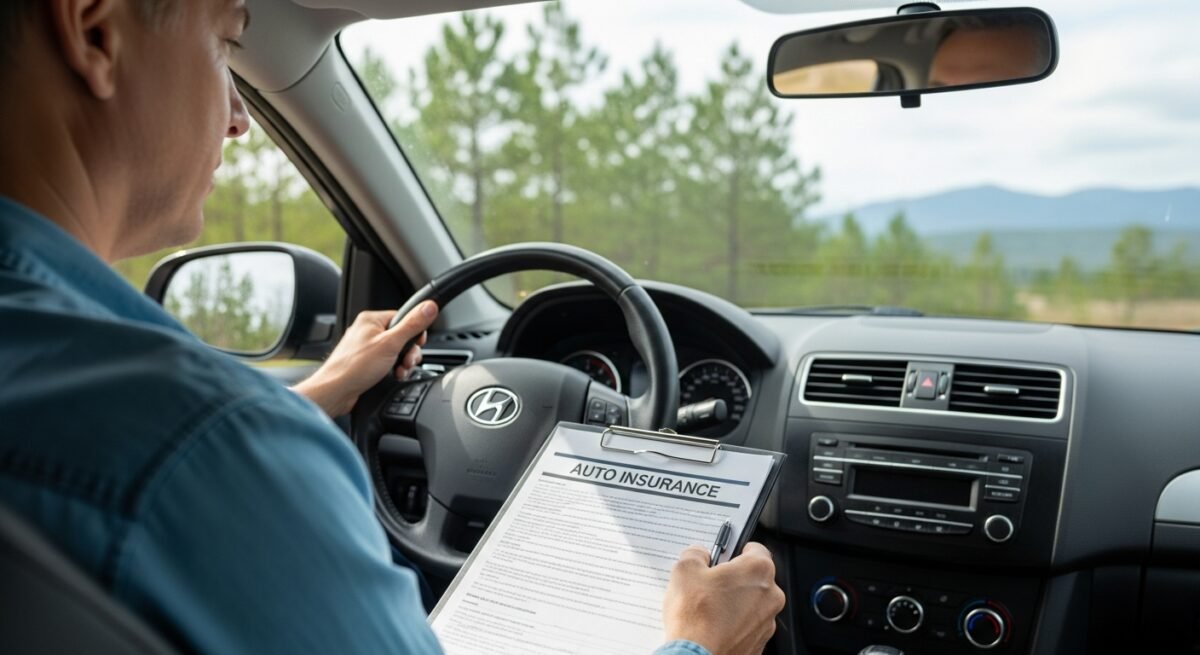
North Carolina Auto Insurance: Laws, Costs, and Savings Tips
Understand North Carolina’s unique auto insurance laws and learn how to secure proper coverage. For personalized quotes, call 833-275-7533.

By Evelin Cross
Driving in North Carolina comes with specific legal and financial responsibilities, and understanding your auto insurance policy is the first step to protecting yourself on the road. The state’s unique rules, including a “contributory negligence” law, make having the right coverage not just a legal formality but a critical financial shield. Whether you’re a new resident, a first-time driver in the Tar Heel State, or simply looking to optimize your current policy, navigating North Carolina auto insurance requires a clear grasp of mandatory minimums, common coverage options, and proven strategies to manage costs without sacrificing protection.
North Carolina’s Mandatory Auto Insurance Requirements
North Carolina law requires all registered vehicle owners to maintain continuous liability insurance. The state operates under a strict “financial responsibility” law, meaning you must prove you can pay for damages you cause in an accident. The minimum liability limits are often expressed as 30/60/25. This translates to $30,000 for bodily injury per person, $60,000 for total bodily injury per accident, and $25,000 for property damage per accident. It is crucial to understand that these are only the state-mandated minimums. In a serious accident, these amounts can be exhausted quickly, potentially leaving you personally responsible for medical bills and repair costs that exceed your policy limits.
Beyond basic liability, North Carolina also requires Uninsured Motorist (UM) and Underinsured Motorist (UIM) coverage. UM coverage protects you if you’re hit by a driver with no insurance, while UIM coverage applies when the at-fault driver’s limits are insufficient to cover your damages. Your insurance company must offer you the option to purchase UM/UIM coverage equal to your liability limits, and you must formally reject it in writing if you do not want it. This requirement highlights the state’s effort to protect its drivers from the financial risks posed by others on the road. Furthermore, North Carolina is one of the few states that follows a “contributory negligence” rule. If you are found even 1% at fault for an accident, you may be barred from recovering any damages from the other party. This makes carrying robust liability and UM/UIM coverage even more essential for financial protection.
Common Coverage Options and Add-Ons
While meeting the state minimums keeps you legal, a comprehensive policy provides far greater security. Collision coverage pays for damage to your own vehicle after an accident, regardless of fault. Comprehensive coverage handles non-collision incidents like theft, vandalism, fire, or hitting an animal. If you finance or lease your vehicle, your lender will almost certainly require both. For older cars, you might consider dropping these coverages if the cost of the coverage exceeds the car’s value.
Medical Payments (MedPay) or Personal Injury Protection (PIP) can cover medical expenses for you and your passengers, regardless of who caused the accident. This can be invaluable for covering deductibles and co-pays from your health insurance. Another critical add-on is rental reimbursement, which pays for a temporary vehicle while yours is being repaired after a covered claim. Roadside assistance, covering towing, lockouts, and flat tires, is also a popular and relatively inexpensive addition. When building your policy, consider your assets, your vehicle’s value, and your personal risk tolerance. A robust policy acts as a financial safety net, and the process of finding the right balance of coverage and cost is similar to strategies used in other states, as detailed in our resource on how to find cheap auto insurance in New Jersey.
Factors That Determine Your Insurance Premiums in NC
North Carolina auto insurance companies evaluate a multitude of factors to assess risk and set your premium. Some key determinants include your driving record, your age, and your location. A clean driving record with no accidents or violations will secure the lowest rates, while tickets, at-fault accidents, and DUI convictions will lead to significant surcharges that can last for years. Younger drivers, especially teens, pay higher premiums due to statistical inexperience. Where you live also matters, urban areas like Charlotte or Raleigh often have higher rates due to increased traffic density, accident rates, and theft statistics compared to rural counties.
Your vehicle itself is a major factor. The car’s make, model, year, safety features, and likelihood of theft all influence the premium. Sports cars and luxury vehicles cost more to insure than family sedans or minivans. Your credit-based insurance score, which is legal for insurers to use in North Carolina, can also impact your rate, as it is statistically correlated with claim likelihood. Finally, your chosen coverage limits, deductibles, and the discounts you qualify for will directly shape your final bill. Choosing a higher deductible for comprehensive and collision coverage can lower your premium, but it means you’ll pay more out-of-pocket if you file a claim.
Practical Strategies to Lower Your Insurance Costs
Finding affordable north carolina auto insurance requires proactive management. You are not powerless against premium increases. Implementing a few strategic actions can lead to substantial savings over time. Start by shopping around and comparing quotes from multiple insurers. Rates can vary dramatically between companies for the same driver profile, so getting at least three quotes is essential. Don’t forget to ask about every possible discount. Common discounts include those for bundling auto and home policies, maintaining a clean driving record, being a good student, paying your premium in full, installing anti-theft devices, and completing defensive driving courses.
Consider adjusting your coverage strategically. If your car is older and its market value is low, you might opt to drop comprehensive and collision coverage. Raising your deductibles is another effective way to lower your monthly premium, though you must ensure you have the savings to cover that higher deductible if needed. Maintaining a good credit score can also help keep your insurance costs down. Most importantly, drive safely. Avoiding accidents and traffic violations is the single most reliable way to prevent your premiums from skyrocketing. For a deeper dive into universal cost-cutting techniques, our guide on how to find the best cheap auto insurance offers additional actionable advice.
Here is a concise list of actionable steps to reduce your premium:
- Compare quotes from at least three different insurers annually.
- Bundle your auto policy with homeowners or renters insurance.
- Ask about discounts for safe driving, good students, or vehicle safety features.
- Increase your comprehensive and collision deductibles to a manageable level.
- Maintain a clean driving record and a good credit history.
Navigating Claims and Legal Considerations
If you are involved in an accident in North Carolina, your actions immediately afterward are critical. First, ensure safety and call 911 if there are injuries. Exchange insurance and contact information with the other driver(s) and gather evidence, such as photos and witness statements. Report the accident to your insurance company promptly, even if you are not at fault. Due to the state’s contributory negligence law, the insurance companies will conduct a detailed investigation to assign fault. If you are found to share any blame, you could be barred from recovery. This makes it imperative to never admit fault at the scene.
Your insurance policy is a contract, and understanding its terms is key during a claim. Know your deductibles, what your coverages include, and the process for filing a claim. If you have UM/UIM coverage and are hit by an uninsured driver, you would file a claim under your own policy. Disputes with your insurer over claim value or fault determination can sometimes arise. In such cases, you can file a complaint with the North Carolina Department of Insurance, which regulates insurers and assists consumers. Having detailed records and a clear understanding of your policy will always serve you well in these situations.
Frequently Asked Questions
What happens if I drive without insurance in North Carolina? Driving without the required insurance is a serious offense. Penalties can include fines, a one-year driver’s license suspension, and vehicle registration revocation. You may also be required to file an SR-22 form (proof of financial responsibility) for three years, which leads to significantly higher insurance premiums.
Is North Carolina a “no-fault” auto insurance state? No, North Carolina is an “at-fault” or “tort” state. This means the driver who is found legally responsible for causing the accident is liable for the resulting damages. This system is directly tied to the state’s contributory negligence rule.
How can I get insurance if I’m considered a high-risk driver? Drivers with multiple violations or a major incident like a DUI may be placed in the North Carolina Reinsurance Facility (NCRF), a shared risk pool. You will still get coverage, but your rates will be much higher. Shopping for companies that specialize in high-risk drivers is your best course of action.
Does my credit score affect my auto insurance rate in NC? Yes, most insurers in North Carolina use a credit-based insurance score as one factor in determining premiums. Maintaining good credit can help you secure lower rates.
What is the difference between MedPay and PIP? Both cover medical expenses. MedPay is generally simpler, covering reasonable medical and funeral expenses. PIP is broader, often covering additional costs like lost wages and essential services. Check your policy to see which, if either, you have.
Securing the right north carolina auto insurance policy is a fundamental aspect of responsible vehicle ownership. It goes beyond simply fulfilling a legal mandate, it is about crafting a personalized financial safety net that protects you, your passengers, and your assets from the unpredictable nature of the road. By understanding the state’s unique laws, carefully selecting your coverage, and employing smart strategies to manage costs, you can drive with greater confidence and peace of mind. Regularly reviewing your policy and shopping for competitive rates ensures your protection evolves with your life circumstances.