
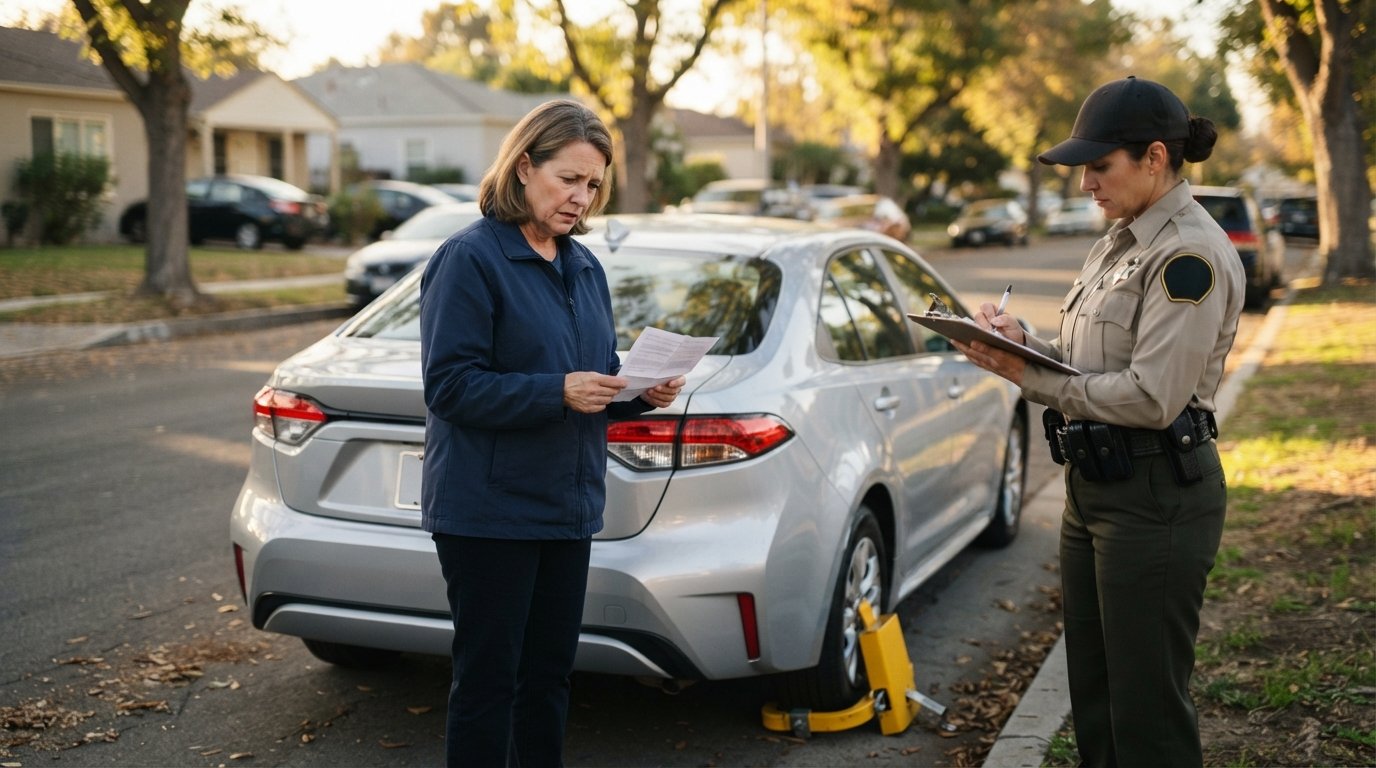
Penalties for Driving Without Car Insurance by State
Compare penalties for driving without car insurance by state to avoid fines and suspension. Call (833)-275-7533 for a free quote comparison today.

By Evelin Cross
Driving without car insurance is a costly mistake that can follow you for years. Every state except New Hampshire requires some form of auto liability insurance, and the penalties for driving without car insurance by state vary widely, from fines of a few hundred dollars to license suspensions, vehicle impoundment, and even jail time. If you have let your policy lapse, even for a day, you could be flagged by your state's DMV and face consequences you never expected. Understanding these penalties is the first step toward protecting yourself, your wallet, and your driving record.
Common Penalties for Uninsured Driving
While the specifics differ, most states impose a combination of civil and criminal penalties for driving without insurance. The most frequent consequences include fines, license suspension, vehicle impoundment, and mandatory SR-22 filings. In some states, repeat offenses can lead to jail time. The table below summarizes typical penalty categories, but keep in mind that amounts and durations are set by state statute and can change.
- Fines: Ranging from $100 to over $1,000, with higher amounts for repeat offenses.
- License suspension: Often 30 days to one year, and reinstatement usually requires proof of insurance and payment of fees.
- Vehicle impound or registration suspension: Your car may be towed or your registration blocked until you provide proof of coverage.
- SR-22 or FR-44 filing: A certificate of financial responsibility that your insurer must file with the state, often for three years.
- Jail time: Possible for repeat offenders or in states with strict criminal penalties.
These penalties are not just hypothetical. State DMVs use automated systems to verify insurance status, and a lapse can trigger a notice within days. The financial impact often exceeds the cost of a basic liability policy, making early comparison a smart move.
How State DMVs Verify Insurance and Flag Lapses
Most states participate in an insurance verification system that electronically matches your vehicle registration with active insurance policies. Insurers are required to report policy cancellations, non-renewals, and new policies to the state. When a lapse is detected, the DMV sends a notice requesting proof of insurance. If you fail to respond, penalties are automatically assessed. This system operates in real time, so even a short gap in coverage can be caught.
For example, in Texas, the DMV uses the TexasSure database to verify coverage. If you are stopped by law enforcement and cannot show proof of insurance, you may receive a citation. The officer can also verify your status electronically. Similarly, California uses the California Insurance Verification System (CIVS) to track coverage. In New York, the DMV requires insurers to notify them of any termination of coverage, and the department can suspend your registration immediately.
Because these systems are automated, you cannot rely on a grace period. If you switch insurers, make sure the new policy starts before the old one ends. If you sell a vehicle, cancel the insurance only after you have surrendered the plates or transferred ownership. A single day without coverage can lead to a flag.
State-by-State Penalties for Driving Without Car Insurance
Penalties for driving without car insurance by state are not uniform. Below is a breakdown of representative examples across different regions, highlighting the range of consequences. Always check your state's DMV website for the most current rules, as fines and suspension periods can be updated by legislation.
California
California requires minimum liability coverage of $15,000 per person and $30,000 per accident for bodily injury, plus $5,000 for property damage. Driving without insurance can result in a fine of $100 to $200 for a first offense, plus penalty assessments that can triple the total. Your license may be suspended for up to one year, and your vehicle may be impounded for 30 days. To reinstate, you must provide proof of insurance and pay a reinstatement fee. An SR-22 filing is required for three years.
Texas
Texas mandates 30/60/25 liability coverage. A first offense for driving without insurance carries a fine of $175 to $350, plus court costs. Subsequent offenses can bring fines up to $1,000 and a two-year license suspension. You may also face an annual surcharge of $250 for three years under the Texas Driver Responsibility Program. To avoid these penalties, compare Texas auto insurance quotes early and maintain continuous coverage. If you need a quote, you can save without the guesswork by comparing multiple carriers.
New York
New York requires 25/50/10 liability coverage and personal injury protection. Driving without insurance can lead to a fine of $150 to $1,500, a license suspension for up to one year, and a civil penalty of $750. The state also imposes a mandatory SR-22 filing for three years. Repeat offenders may face jail time. New York's DMV can suspend your registration immediately upon receiving notice of a lapse.
Florida
Florida requires $10,000 personal injury protection (PIP) and $10,000 property damage liability. Driving without insurance can result in a $150 fine for a first offense, license suspension for up to three years, and vehicle impoundment. Reinstatement requires proof of insurance and a $150 fee. Florida also requires an FR-44 filing for certain offenses, which mandates higher liability limits.
Illinois
Illinois mandates 25/50/20 liability coverage. A first offense for driving without insurance carries a minimum $500 fine and a license suspension until proof of insurance is provided. Subsequent offenses can bring fines up to $1,000 and a six-month suspension. Illinois also requires an SR-22 filing for three years.
These examples illustrate the range of penalties. In some states, like New Hampshire, insurance is not mandatory, but you must show proof of financial responsibility if you cause an accident. In others, like Michigan, penalties can include misdemeanor charges and up to one year in jail.
SR-22 and FR-44 Filing Requirements
An SR-22 is a certificate of financial responsibility that your insurer files with the state to prove you carry the required coverage. It is typically required for three years after a violation, such as driving without insurance or a DUI. If your policy lapses during that period, your insurer must notify the state, and your license may be suspended again. FR-44 is a similar filing used in Florida and Virginia, but it requires higher liability limits, often 100/300/50.
Not all insurers offer SR-22 filings. If you need one, you may have to seek a non-standard carrier, which often charges higher premiums. The filing fee is usually around $25, but the real cost is the higher premium you will pay for three years. Understanding this requirement is crucial for reinstating your license and avoiding further penalties.
How to Reinstate Your License After a Violation
If your license has been suspended for driving without insurance, you will need to follow a specific process to get it back. While each state has its own rules, the general steps are similar. Here is a numbered list to guide you:
- Obtain proof of insurance: You must purchase a policy that meets your state's minimum requirements. If an SR-22 is required, make sure the insurer will file it electronically.
- Pay reinstatement fees: These vary by state, typically ranging from $50 to $250. Some states also require payment of fines and court costs.
- File an SR-22 or FR-44: Your insurer must submit the certificate directly to the DMV. Confirm that it has been received before visiting the DMV.
- Complete any required courses: Some states require a defensive driving course or an insurance education program.
- Visit the DMV or apply online: Provide your proof of insurance, identification, and payment. Once processed, your license will be reinstated.
After reinstatement, you must maintain continuous coverage. A second lapse can lead to longer suspensions and higher fines. Setting up automatic payments or choosing a policy with a grace period can help you avoid accidental lapses.
Why Comparing Quotes Early Prevents Costly Penalties
The penalties for driving without car insurance by state are severe, but they are entirely avoidable. The most effective strategy is to compare quotes before your current policy expires. When you compare rates from multiple carriers, you can often find a more affordable policy, reducing the temptation to let coverage lapse. Many drivers overpay for insurance simply because they do not shop around.
For drivers with a high-risk history or those who need an SR-22, comparing quotes is even more important. Non-standard insurers may offer widely different rates, and a single quote comparison can save hundreds of dollars per year. Additionally, some carriers specialize in high-risk drivers and can file the necessary forms electronically, simplifying the process.
If you are looking for independent guidance on coverage options and savings, you can visit NewAutoInsurance, an online resource that provides educational content and comparisons. However, for a free, no-obligation quote from multiple carriers, use our comparison tool to get personalized quotes from licensed agents. Taking a few minutes to compare could prevent fines, suspension, and the hassle of reinstatement.
Remember that driving without insurance is not worth the risk. Even a brief lapse can be flagged, and the resulting penalties can cost more than years of premiums. Stay covered, compare quotes regularly, and keep your driving record clean.