
Uninsured Motorist Property Damage Coverage Explained
Uninsured motorist property damage coverage explained: learn how UMPD pays for repairs when a driver with no insurance hits you, often with a lower deductible.

By Evelin Cross
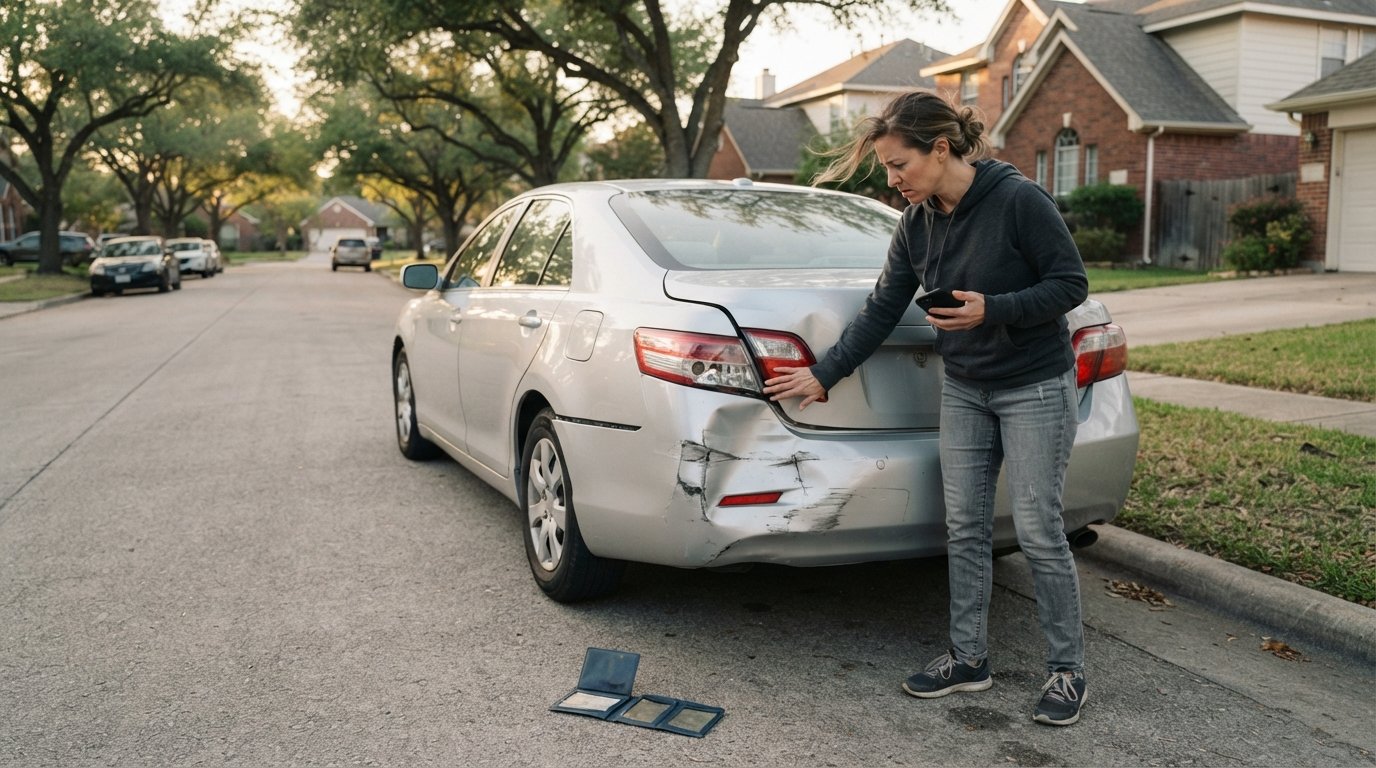
You walk out to your parked car and find the rear bumper caved in. The driver who hit you has no insurance card, no license, and no way to pay. Your own collision coverage might fix the car, but only after a deductible that could run $500 or $1,000. This is the exact moment when uninsured motorist property damage coverage proves its worth, and it is also the moment most drivers realize they do not fully understand what they bought. This guide breaks down how UMPD works, who needs it, what it pays, and how it interacts with the rest of your policy so you can decide whether the coverage belongs on your auto insurance.
What Uninsured Motorist Property Damage Coverage Actually Is
Uninsured motorist property damage, usually shortened to UMPD, is a coverage that pays to repair or replace your vehicle when a driver who is legally at fault has no liability insurance. It is a distinct coverage from uninsured motorist bodily injury, which handles medical bills after an accident with an uninsured driver. UMPD is specifically about the metal, glass, and paint: your car, and in some policies, other personal property inside it. Understanding the difference matters because a policy can include one without the other, and many drivers assume the bodily injury portion automatically extends to the vehicle. It does not.
The coverage is not available in every state. Some states, including California and several others, offer UMPD as an optional add-on with strict rules about when it applies. A handful of states build uninsured motorist protection into the policy differently, and a few do not require UMPD at all. That patchwork of rules is one reason the coverage confuses so many people. In states where UMPD exists, it typically steps in when three conditions are met: the other driver is identified, the other driver is at fault, and the other driver carries no liability insurance. If the at-fault driver flees the scene and is never found, that is a hit-and-run situation, which is usually handled by a separate uninsured motorist provision or by collision coverage instead.
There is also a close cousin called underinsured motorist property damage, sometimes labeled UIMPD. This applies when the at-fault driver does have insurance, but the limits are too low to cover your repair bill. For example, if the other driver carries only $10,000 in property damage liability and your repair estimate comes to $18,000, the gap of $8,000 could fall to you unless you have underinsured protection. Many policies combine these features under a single uninsured and underinsured motorist heading, so reading your declarations page carefully is essential.
How UMPD Differs from Collision and Liability Coverage
The easiest way to understand UMPD is to compare it against the two coverages drivers already know. Liability coverage pays other people when you cause damage. Collision coverage pays to fix your own car after any collision, regardless of who was at fault, but it comes with a deductible you pay out of pocket. UMPD sits in the middle: it pays for your car after a crash caused by an uninsured driver, and in many states it carries a much lower deductible than collision, sometimes as low as $200 or $250.
That lower deductible is the main financial reason drivers add UMPD. If your collision deductible is $1,000 and you are hit by an uninsured driver, filing under collision means you absorb the first $1,000 of the repair. Filing under UMPD in a state with a $250 deductible means you absorb only $250. On a $4,000 repair, that difference is $750 back in your pocket. The trade-off is that UMPD usually carries a lower maximum payout, often capped at a few thousand dollars, and it may not apply at all if the at-fault driver cannot be identified.
Another key difference involves fault. Collision coverage does not care who caused the accident. UMPD does care: the other driver must be at fault and must be uninsured. If you rear-end someone, your UMPD will not help because you caused the damage. If an uninsured driver runs a red light and T-bones you, UMPD is designed for precisely that scenario. This fault requirement is why police reports and accurate documentation matter so much after an accident with an uninsured motorist. Without proof that the other driver was both at fault and uninsured, the claim can stall.
For a broader look at how these pieces fit together, including when collision and comprehensive are worth the premium, see our guide on comprehensive auto insurance full coverage. It explains how full coverage is assembled from separate parts, which helps put UMPD in its proper place within your overall policy.
What UMPD Pays For and What It Leaves Out
When a UMPD claim is approved, the payout typically covers the cost to repair your vehicle up to the coverage limit. If the car is totaled, the payout is usually the actual cash value of the vehicle, minus your deductible, again capped by the limit. Some policies also extend UMPD to damaged personal property inside the car, such as a laptop or golf clubs, though this varies widely and is often subject to a small sub-limit. Rental car reimbursement during repairs is sometimes included, but more often it is a separate add-on.
What UMPD generally does not cover is just as important. It does not pay for injuries, which belong to the bodily injury side of uninsured motorist coverage or to your health insurance and medical payments coverage. It does not pay for damage to other people's property, because that is what your liability coverage is for. It usually does not cover hit-and-run damage when the at-fault driver is never identified, unless your state specifically allows it. And it does not cover mechanical breakdown, wear and tear, or damage from weather and theft, which fall under comprehensive coverage.
Here is a quick breakdown of common UMPD claim scenarios and how they typically resolve:
- Identified uninsured driver runs a stop sign and damages your front end: UMPD usually applies, subject to your deductible and limit.
- Uninsured driver sideswipes your parked car and leaves a note with their name but no insurance: UMPD may apply if fault and lack of insurance can be verified.
- Unknown hit-and-run driver damages your car overnight: UMPD often does not apply, so collision or uninsured motorist provisions may be needed.
- At-fault driver has minimum insurance that does not cover the full repair: underinsured motorist property damage may cover the gap.
- You cause the accident yourself: UMPD does not apply, and your collision coverage handles the repair.
Notice how many of these outcomes depend on state rules and policy language. That is not a flaw in the explanation; it is the reality of auto insurance regulation in the United States. Each state sets its own requirements, and each insurer writes its own contract within those requirements. The practical takeaway is that you should never assume UMPD will behave the same way after a move to a new state or a switch to a new carrier.
Who Should Consider Adding UMPD
Drivers in states where UMPD is optional should think carefully about whether to add it. The coverage tends to be inexpensive, often just a few dollars per month, because it only responds in a narrow set of circumstances. For many households, the low premium is worth the protection against a deductible they could not easily afford. If a $1,000 collision deductible would strain your budget, a UMPD endorsement with a $250 deductible can be a smart hedge.
Certain driver profiles benefit more than others. Drivers with older vehicles who have dropped collision coverage to save money might still want UMPD, because it restores a path to repair after an uninsured driver causes damage. Drivers in urban areas with high rates of uninsured motorists should weigh the coverage seriously, since the odds of encountering an uninsured driver rise with traffic density. Families with multiple vehicles may find that adding UMPD to each policy costs less than a single collision deductible would in a claim. And drivers who park on the street or in shared lots face elevated hit-and-run risk, though they should confirm whether their state's UMPD applies to unknown drivers before relying on it.
On the other side, drivers with very low collision deductibles and newer cars may find UMPD redundant, since collision already covers the same damage with a deductible they can afford. Drivers in states where UMPD is not offered have no choice in the matter and should instead focus on collision and uninsured motorist bodily injury coverage. The decision ultimately comes down to two questions: how likely is an uninsured driver to hit me, and how painful would my collision deductible be if one did?
How to File a UMPD Claim Step by Step
Filing a UMPD claim is similar to filing any other auto claim, but the documentation burden is heavier because you must prove the other driver was at fault and uninsured. The process usually unfolds in a predictable sequence, and following it carefully protects your payout.
- Call the police and get a report. An official report creates a record of fault and of the other driver's insurance status, which is the foundation of a UMPD claim.
- Exchange information and document everything. Photograph the other driver's license, license plate, and any insurance card they present, even if it looks expired or invalid.
- Notify your insurer promptly. Most policies require prompt notice of an accident, and delays can give the carrier grounds to question the claim.
- Provide proof of the other driver's uninsured status. This may come from the police report, a statement from the other driver, or a denial letter from the insurer they claimed to have.
- Get repair estimates and cooperate with the adjuster. Your insurer will inspect the damage and may issue payment directly to the repair shop, minus your deductible.
If the other driver's insurer denies coverage or cannot be located, your own insurer may need to verify that fact before paying. This verification step is where many claims slow down, so keeping copies of every letter and email is wise. If your claim is denied, ask for the specific policy language or state statute the insurer relied on, and consider appealing through your state's department of insurance if the denial seems inconsistent with your policy.
Cost, Limits, and State Variations
UMPD premiums are typically modest, but the limits are also modest. Many states cap UMPD payouts at the state's minimum property damage liability limit, which might be $10,000, $15,000, or $25,000 depending on where you live. That cap can be far below the value of a newer vehicle, which is why some drivers pair UMPD with collision coverage rather than treating it as a replacement. When UMPD and collision both apply, insurers usually coordinate so you are not paid twice for the same damage, and the deductible rules can get complicated.
State variation is the single biggest source of confusion around UMPD. Some states require insurers to offer it, some require it to be included, and some do not recognize it at all. Deductibles range from zero to several hundred dollars. Some states allow UMPD to cover hit-and-run damage; others do not. Some states allow it to cover only damage caused by a driver who is both uninsured and identified. Because of this patchwork, the only reliable way to know your coverage is to read your declarations page and policy booklet, or to ask your agent directly what your state's rules allow.
If you are shopping for coverage and want to compare how different carriers price UMPD alongside collision and liability, a comparison platform can save hours of individual quotes. Independent resources such as NewAutoInsurance publish consumer guidance and educational content that helps drivers understand coverage options before they buy. Pairing that kind of research with quotes from multiple licensed agents is the most efficient way to see whether UMPD is worth adding to your policy.
One practical tip: when you request quotes, ask specifically for the UMPD premium as a line item, not bundled into a vague total. That transparency makes it easy to see whether the coverage costs $3 per month or $30, and it lets you compare apples to apples across carriers. It also gives you a concrete number to weigh against your collision deductible, which is the real benchmark for whether UMPD is worth it.
Common Misconceptions That Cost Drivers Money
Several myths about UMPD lead drivers to make expensive mistakes. The first is that uninsured motorist coverage automatically includes property damage. In many policies and states, it does not; the bodily injury and property damage pieces are separate and must be selected individually. The second myth is that UMPD replaces collision coverage. It does not, because it only responds when the other driver is at fault and uninsured, leaving you exposed in every other type of accident.
A third misconception is that UMPD covers hit-and-run damage. In some states it does, but in many it does not, and drivers who drop collision coverage assuming UMPD will handle a parking lot hit-and-run can be left paying for repairs entirely out of pocket. A fourth myth is that UMPD raises your rates. Because UMPD claims are not your fault, many insurers do not surcharge for them, though the claim may still appear on your record and could affect discounts in some cases. A fifth myth is that the coverage is too cheap to matter. In reality, a $3 monthly premium that saves a $1,000 deductible in a single claim pays for itself many times over.
The best defense against these misconceptions is documentation. Keep a copy of your declarations page in the glove box, review it after every renewal, and ask your agent to explain any line you do not recognize. If you move to a new state, treat your policy as new and re-verify every coverage, because UMPD rules can change dramatically across state lines. Drivers who understand their policy before an accident are far more likely to collect what they are owed after one.
Uninsured motorist property damage coverage is not glamorous, and it is not the coverage most drivers think about when they buy a policy. But it fills a specific, painful gap: the moment when an uninsured driver damages your car and you are left holding a deductible you did not plan for. Knowing whether your state offers UMPD, what your deductible is, and how it interacts with collision and uninsured motorist bodily injury coverage puts you in control of that moment. Review your policy today, compare quotes from multiple carriers, and make sure the coverage you think you have is the coverage you actually bought.