
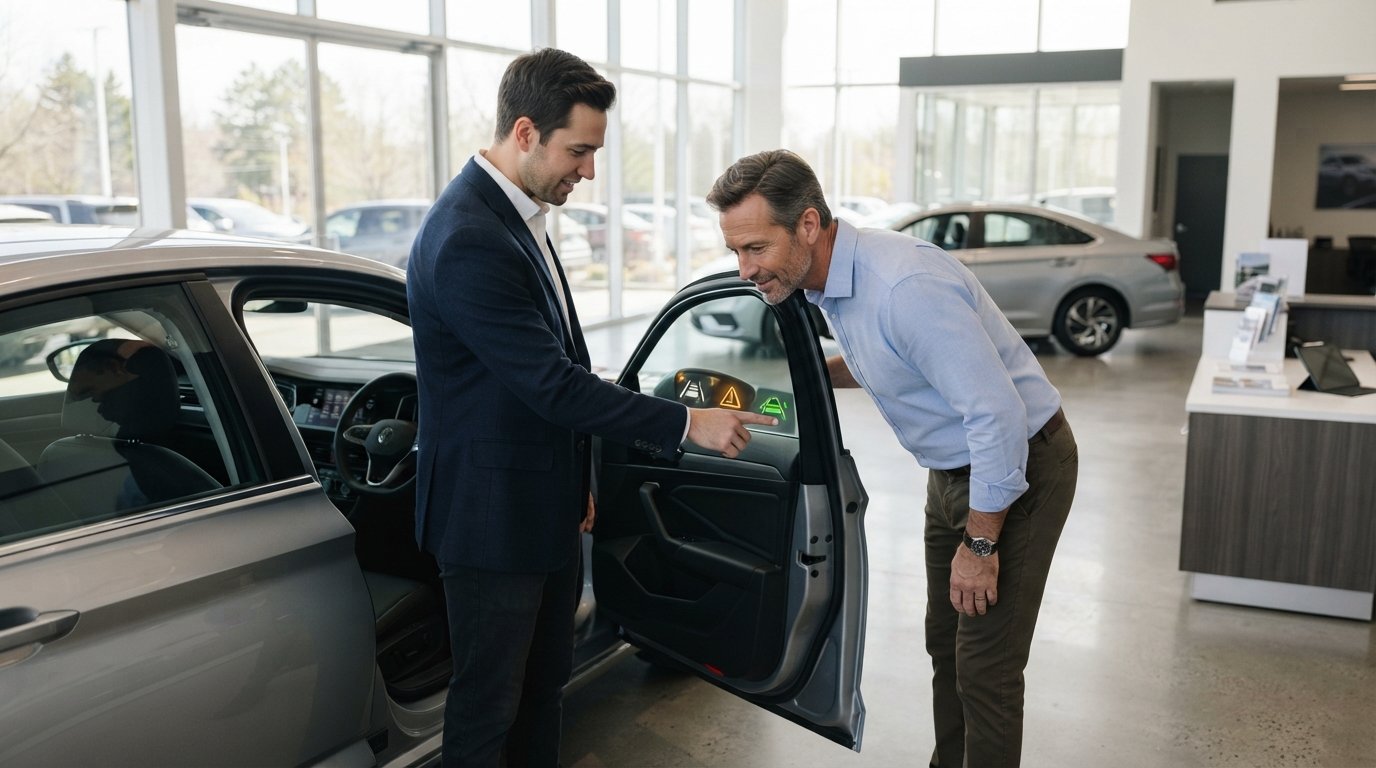
Vehicle Safety Features That Lower Insurance Costs
Safety features like automatic emergency braking and blind spot monitoring can lower your auto insurance premiums. Learn which ones qualify and how to claim them.

By Juniper Sloane
When you shop for a new or used car, the sticker price is only part of the story. The safety technology built into the vehicle can influence what you pay for auto insurance every month, sometimes by hundreds of dollars a year. Insurers reward drivers who choose cars equipped with features that reduce the likelihood of crashes or minimize the severity of injuries when collisions happen. Understanding which features matter most can help you negotiate a better premium and avoid paying for technology that insurers do not yet recognize.
This guide breaks down the specific safety features that typically earn discounts, explains why insurers care about them, and shows you how to make sure you actually receive every discount you qualify for. Whether you are buying a new car, adding a teenage driver to your policy, or simply reviewing your coverage, this information can help you keep more money in your pocket.
Why Insurers Reward Safety Technology
Auto insurance premiums are based on risk. When an insurer calculates your rate, it estimates how likely you are to file a claim and how expensive that claim might be. Vehicles with advanced safety systems tend to produce fewer claims and lower repair costs from minor collisions, so insurers offer discounts to encourage drivers to buy them. The logic is straightforward: if your car can prevent a crash or reduce its impact, the insurer saves money, and some of those savings get passed to you.
The Insurance Institute for Highway Safety (IIHS) and other research groups have found that features like automatic emergency braking and forward collision warning significantly reduce rear-end crashes. Insurers track this data closely and adjust their discount programs accordingly. However, not every feature qualifies for a discount with every carrier. Some insurers recognize a broad range of technologies, while others focus on a narrower list. That is why comparing quotes from multiple carriers is essential: the same vehicle might earn a discount with one company and not another.
It also helps to understand that discounts are not always automatic. Many insurers require you to ask for them or provide documentation. If you assume your carrier already knows about your car's safety features, you might be leaving money on the table. The sections below cover the most commonly rewarded features and how to claim the discounts they unlock.
Top Safety Features That Typically Earn Discounts
Not all safety technology is treated equally by insurers. Some features have a long track record of reducing claims and are widely recognized, while newer systems are still being evaluated. The following list covers the features most likely to lower your premium, along with a brief explanation of why each one matters to insurers.
- Automatic Emergency Braking (AEB): This system detects an impending collision and applies the brakes if the driver does not respond in time. Studies show AEB can reduce rear-end crashes by significant margins, making it one of the most valuable discounts available.
- Forward Collision Warning: Often paired with AEB, this feature alerts the driver to a potential collision ahead. Even without automatic braking, the warning alone helps prevent accidents and is frequently rewarded.
- Lane Departure Warning and Lane Keeping Assist: These systems monitor lane markings and alert or gently steer the vehicle back if it drifts. They are especially valuable for reducing single-vehicle crashes and sideswipes.
- Blind Spot Monitoring: Sensors detect vehicles in adjacent lanes that may be hidden from view. This feature helps prevent lane-change collisions, which are common and often costly.
- Adaptive Cruise Control: Unlike traditional cruise control, this system adjusts speed to maintain a safe following distance. It reduces the risk of rear-end collisions on highways.
- Rear Cross-Traffic Alert and Backup Cameras: These features help drivers avoid collisions when backing out of parking spaces, a frequent source of low-speed claims.
- Electronic Stability Control (ESC): Now standard on most vehicles, ESC helps prevent skids and rollovers by automatically adjusting brake pressure and engine power.
Beyond these electronic systems, certain structural and design features also influence premiums. For example, vehicles with high safety ratings from the IIHS or the National Highway Traffic Safety Administration (NHTSA) often qualify for additional discounts. Airbags, anti-lock brakes, and daytime running lights are older technologies, but they still contribute to lower rates with many carriers. If your vehicle has any of these features, make sure your insurer knows about them.
It is worth noting that some features may not earn a direct discount but can still lower your premium indirectly. For instance, a car with a strong safety rating may cost less to insure because the insurer expects lower injury claims, even if there is no line-item discount for that specific rating. When you compare quotes, pay attention to the overall premium rather than just the presence of individual discounts.
How to Make Sure You Get Every Safety Discount
Knowing which features qualify is only half the battle. The other half is making sure your insurer applies the discounts you deserve. Many drivers assume their carrier automatically knows everything about their vehicle, but that is not always the case. Discounts can be missed for a variety of reasons: the vehicle identification number (VIN) may not decode all features correctly, the insurer may not have updated its discount list, or the agent may simply forget to ask.
To avoid missing out, follow a proactive approach when you buy a car or review your policy. Start by gathering documentation that shows your vehicle's safety features. The window sticker, the owner's manual, and the manufacturer's website are all good sources. If you bought the car used, you can look up the VIN on a decoder website to see the original equipment list. Once you have that information, contact your insurer and ask specifically which features qualify for discounts. If your current carrier does not offer a discount for a feature you have, that is a good reason to shop around.
Here is a simple step-by-step process to maximize your savings:
- List your vehicle's safety features. Go through the list above and note which ones your car has. Include advanced systems like AEB and blind spot monitoring, as well as older features like anti-lock brakes and airbags.
- Check your policy documents. Look at your declarations page and any discount disclosures to see which discounts are already applied. If you see something missing, call your agent.
- Ask your insurer directly. Contact your carrier and ask which safety features qualify for discounts. Be specific about the features you have, and ask if any documentation is required.
- Compare quotes from multiple carriers. Different insurers recognize different features. A feature that earns no discount with one company might save you 10 percent with another. Use a comparison platform to see offers from several carriers at once.
- Re-shop every year or two. Discount programs change, and new safety features are added to insurer lists regularly. What did not qualify last year might qualify now.
One of the most efficient ways to compare discounts across carriers is to use an independent comparison service. For example, NewAutoInsurance provides educational resources and quote comparisons that help drivers understand coverage options and find potential savings. Because it is not a direct carrier, it can show you offers from multiple insurers, making it easier to see which one rewards your vehicle's safety features the most.
Remember that discounts are not the only factor in your premium. Your driving record, location, credit history (in most states), and annual mileage also play major roles. A carrier that offers a generous safety discount might still be more expensive overall than one with a smaller discount but lower base rates. That is why comparing total premiums, not just discounts, is critical.
Safety Features and High-Risk Drivers
If you have a high-risk driving history, such as a recent accident or a DUI, safety features can be especially valuable. High-risk drivers often face steep premiums, and every discount helps. Insurers may view advanced safety technology as evidence that you are taking steps to reduce risk, which can make them more willing to offer coverage or adjust your rate downward over time.
For drivers with poor credit, the situation is similar. In most states, credit-based insurance scores affect premiums, and a low score can mean higher rates. Safety features do not erase the impact of a low credit score, but they can partially offset it. When you get quotes, be sure to mention all safety features, even if you think they are minor. Some carriers offer discounts for simple features like daytime running lights or anti-theft devices, and those savings add up.
Young drivers and first-time drivers also benefit disproportionately from safety features. Teenagers are statistically more likely to be involved in crashes, so insurers charge higher rates for them. A car equipped with forward collision warning, lane keeping assist, and automatic emergency braking can help reduce that risk and may qualify for a discount that lowers the overall cost of adding a teen to your policy. Some insurers even offer specific teen driver discounts when the vehicle has certain safety systems.
If you are shopping for a car for a young driver, prioritize models with the most comprehensive safety suites. The savings on insurance can be substantial over several years, and the safety benefits go beyond money.
Other Safety-Related Discounts Worth Knowing
Beyond the vehicle's built-in technology, several other safety-related factors can lower your insurance costs. These are often overlooked because they are not part of the car itself, but they can make a meaningful difference.
- Anti-theft devices: Car alarms, steering wheel locks, and vehicle tracking systems can earn discounts because they reduce the risk of theft. Some insurers offer separate discounts for factory-installed and aftermarket devices.
- Defensive driving courses: Completing an approved defensive driving course can earn a discount in many states, especially for mature drivers. The course demonstrates a commitment to safe driving.
- Good student discounts: For young drivers, maintaining good grades can earn a discount that stacks with safety feature discounts.
- Low mileage discounts: If you drive fewer miles than average, you may qualify for a low-mileage discount, which is not safety-related but can combine with safety discounts for significant savings.
- Airbag and seat belt discounts: Some carriers still offer discounts for vehicles with airbags on both the driver and passenger sides, as well as for automatic seat belts.
These additional discounts vary widely by state and insurer. In some states, insurers are required to offer certain discounts, while in others they are optional. It pays to ask your agent what is available and to compare offers from multiple companies. A feature that earns a discount with one carrier might not with another, so shopping around is the only way to be sure you are getting the best deal.
It is also worth noting that safety features can sometimes increase repair costs, which could offset some of the discount. For example, a vehicle with cameras and sensors in the windshield may cost more to repair after a minor collision, and that could lead to higher premiums in the long run. However, most insurers still view advanced safety systems as a net positive for risk, and the discounts typically outweigh the potential repair cost concerns.
How to Compare Quotes and Maximize Your Savings
Once you know which safety features your vehicle has and which discounts you might qualify for, the next step is to compare quotes from multiple insurers. This is the single most effective way to ensure you are getting the best possible rate. Even if you are happy with your current carrier, a quick comparison can reveal savings you did not know existed.
Start by gathering your information: your VIN, your driving record, your annual mileage, and a list of your vehicle's safety features. Then use an online comparison platform to request quotes from several carriers at once. You can also contact agents directly, but that takes more time and may not give you as broad a view of the market. A comparison tool lets you see offers side by side, so you can quickly identify which carrier offers the best combination of base rate and safety discounts.
When you review quotes, look beyond the monthly premium. Check the deductible, the coverage limits, and any exclusions. A lower premium might come with higher out-of-pocket costs if you have an accident. Also, ask about additional discounts you might qualify for, such as a bundling discount if you also have homeowners or renters insurance with the same company. Many insurers offer multi-policy discounts that can stack with safety feature discounts.
Finally, do not be afraid to negotiate. If you have a quote from one carrier that is lower than another, you can sometimes use that as leverage to get a better offer from your current insurer. Loyalty does not always pay in the insurance industry, and companies often reserve their best rates for new customers. Shopping around every year or two is a smart habit that can save you hundreds of dollars over time.
In summary, vehicle safety features that lower insurance costs are a valuable tool for reducing your premiums. From automatic emergency braking to anti-theft devices, the technology in your car can work for you financially as well as physically. By understanding which features qualify, documenting them properly, and comparing quotes from multiple carriers, you can make sure you are not overpaying for coverage. Take a few minutes today to review your policy and see if you are missing any discounts. Your wallet will thank you.