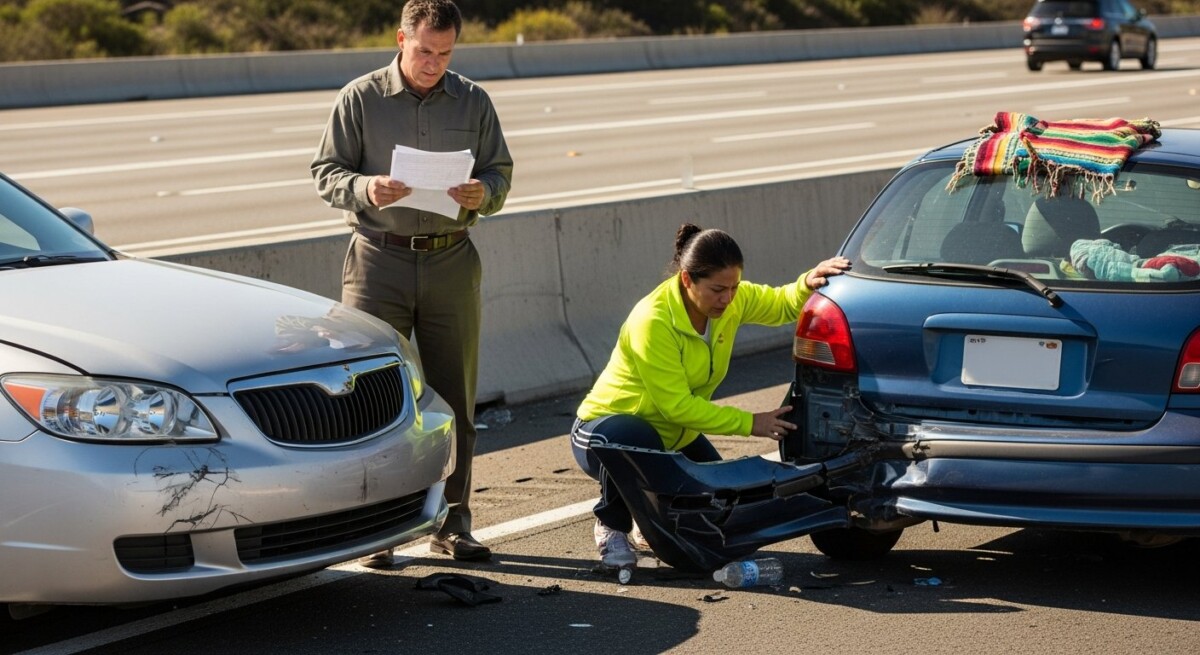
When you hear the term full coverage auto insurance, you probably imagine a policy that covers every possible scenario, leaving you with zero financial risk. This misconception is one of the most common in insurance, and it can lead to dangerous gaps in protection. In reality, full coverage is not a specific, standardized policy you can purchase off the shelf. It’s an industry shorthand, a colloquial term for a combination of coverages that typically satisfies lenders’ requirements and provides robust protection for your vehicle and others. Understanding what this bundle entails, what it excludes, and how to tailor it to your needs is crucial for making an informed, cost-effective decision about your car insurance.
The Core Components of a Full Coverage Policy
A full coverage auto insurance policy is generally built upon a foundation of three primary coverage types: liability, comprehensive, and collision. Each serves a distinct purpose. Liability insurance is legally required in almost every state and protects you if you are at fault in an accident that causes injury to others or damage to their property. Comprehensive and collision coverages are optional but are almost universally required if you are leasing or financing your vehicle. Together, they protect your own car from a wide array of perils. It’s critical to understand that even a robust combination of these coverages has limits and exclusions, which is why savvy policyholders often add endorsements.
Let’s break down these three pillars. Liability insurance is split into two main components: bodily injury liability per person, bodily injury liability per accident, and property damage liability. If you cause an accident, this coverage pays for the other party’s medical bills, lost wages, and vehicle repairs, up to your policy limits. Comprehensive coverage, often called other than collision, protects your vehicle from events that are typically outside of your control. This includes theft, vandalism, fire, falling objects (like a tree branch), and damage from animals. Collision coverage, as the name implies, pays for damage to your car resulting from a collision with another vehicle or object, such as a guardrail or pothole, regardless of who is at fault. The interplay of these coverages creates a safety net for both your assets and your vehicle’s value.
Common and Critical Add-Ons to Consider
While liability, comprehensive, and collision form the standard full coverage auto insurance package, they leave significant gaps. A truly comprehensive financial protection plan requires additional endorsements. One of the most important is uninsured/underinsured motorist (UM/UIM) coverage. This protects you if you’re hit by a driver who has no insurance or whose policy limits are too low to cover your damages. Given the number of uninsured drivers on the road, this add-on is essential. Medical payments coverage or personal injury protection (PIP), depending on your state, helps pay for your and your passengers’ medical expenses after an accident, regardless of fault.
Other valuable add-ons include rental car reimbursement, which covers the cost of a temporary vehicle while yours is being repaired after a covered claim, and roadside assistance, which provides help for breakdowns, flat tires, lockouts, and towing. For newer cars, gap insurance is a critical consideration. If your car is totaled or stolen, your standard insurance pays the actual cash value (ACV), which is often thousands less than the amount you still owe on your loan or lease. Gap insurance covers that difference, preventing a major financial setback. Evaluating which of these add-ons you need is a key part of customizing your policy.
What Full Coverage Does Not Cover
Acknowledging the limitations of a full coverage policy is just as important as understanding its inclusions. Standard policies do not cover routine maintenance, wear and tear, or mechanical breakdowns. If your transmission fails due to age, your insurance will not pay for the repair. Furthermore, personal items left in your car, such as a laptop or golf clubs, are typically excluded from auto policies and would need to be claimed under a homeowner’s or renter’s insurance policy. Intentional damage or damage sustained while using your vehicle for commercial purposes, like ride-sharing without a proper endorsement, is also not covered. It’s vital to read your policy’s exclusions section carefully to avoid unexpected denials.
How Premiums Are Calculated for Full Coverage
The cost of full coverage auto insurance varies dramatically from person to person because insurers use a complex algorithm of factors to assess risk. Your driving record is paramount: a clean history with no accidents or tickets will secure you the lowest rates, while violations and at-fault accidents will significantly increase your premium. Your age, gender, and marital status also play a role, as statistical data shows correlations between these demographics and claim frequency. Where you live affects your rate due to local traffic density, crime rates, and even weather patterns. Insurers also consider your vehicle’s make, model, and year: expensive cars cost more to repair and are more attractive to thieves, leading to higher premiums.
Your chosen coverage limits and deductibles are the levers you control most directly. A deductible is the amount you agree to pay out-of-pocket before your insurance kicks in for a comprehensive or collision claim. Choosing a higher deductible, such as $1,000 instead of $500, will lower your monthly premium. However, you must ensure you can comfortably afford that deductible if you need to file a claim. Similarly, opting for state-minimum liability limits will keep costs down but exposes you to massive personal financial risk if you cause a severe accident. A smart strategy is to carry the highest liability limits you can afford, which often costs less than you might think. For more strategies on optimizing multiple policies, our guide on bundling home and auto insurance explains how combining policies can lead to substantial discounts.
Determining If You Need Full Coverage
The decision to carry full coverage is primarily financial. If you are leasing or financing your vehicle, the lender or lessor will require you to maintain comprehensive and collision coverage to protect their financial interest in the car. Once you own your car outright, the choice becomes a calculation of risk versus value. A common rule of thumb is to consider dropping comprehensive and collision when the annual premium for those coverages exceeds 10% of your car’s current market value. For example, if your car is worth $4,000 and your comp and collision coverage costs $800 per year, it may be time to self-insure. However, you must also consider your personal financial ability to replace the vehicle if it is totaled.
Other personal factors should influence your decision. If you have a long commute or live in an area with high accident rates, the risk of a collision is greater. If you lack significant savings to cover a sudden vehicle replacement, maintaining coverage provides crucial financial stability. It’s a balance between the statistical likelihood of a loss and your capacity to absorb that loss without hardship. Remember, you must always maintain at least your state’s minimum required liability insurance, regardless of your vehicle’s age or value. As part of a broader smart financial strategy, reviewing your auto insurance needs annually ensures your coverage evolves with your life circumstances.
Frequently Asked Questions About Full Coverage
Is full coverage required by law?
No state mandates full coverage by law. The only legally required coverage is liability insurance (and sometimes PIP or UM). Lenders require full coverage (comp and collision) to protect their asset.
Does full coverage cover a blown engine?
Typically, no. Mechanical failure due to wear and tear is not covered. Comprehensive and collision only cover sudden, direct, and accidental physical damage from external events. A blown engine would only be covered if it was a direct result of a covered event, like a fire or an accident.
How much full coverage should I get?
For liability, experts recommend limits well above state minimums, such as 100/300/100 ($100,000 per person, $300,000 per accident for bodily injury, $100,000 for property damage). For comprehensive and collision, choose a deductible you can afford to pay. Higher deductibles lower your premium.
Will full coverage pay off my loan if my car is totaled?
Standard comprehensive and collision coverage pays the actual cash value (ACV) of the car at the time of the loss. If you owe more than the ACV (called being upside-down), you are responsible for the difference unless you have purchased separate gap insurance.
Does my policy cover other drivers?
Most policies extend coverage to permissive drivers, meaning someone you allow to drive your car occasionally. However, exclusions may apply for household members not listed on the policy. Always inform your insurer of all regular drivers in your household. For a deeper dive into simplifying and saving on your overall insurance portfolio, exploring a home and auto insurance bundle is a highly effective step.
Ultimately, the goal of any insurance policy is to transfer financial risk that you cannot comfortably bear yourself. Viewing full coverage auto insurance through this lens shifts the focus from a generic package to a customized financial tool. It is not about having every possible coverage, but about having the right coverages in the right amounts for your specific vehicle, financial situation, and risk tolerance. Regularly reviewing your policy with your agent, especially after major life events or changes in your vehicle’s value, ensures your protection remains aligned with your needs. Remember, the most expensive policy is the one that doesn’t cover you when you need it most. For further exploration on related topics, you can always Read full article on our partner site for extended insights.