
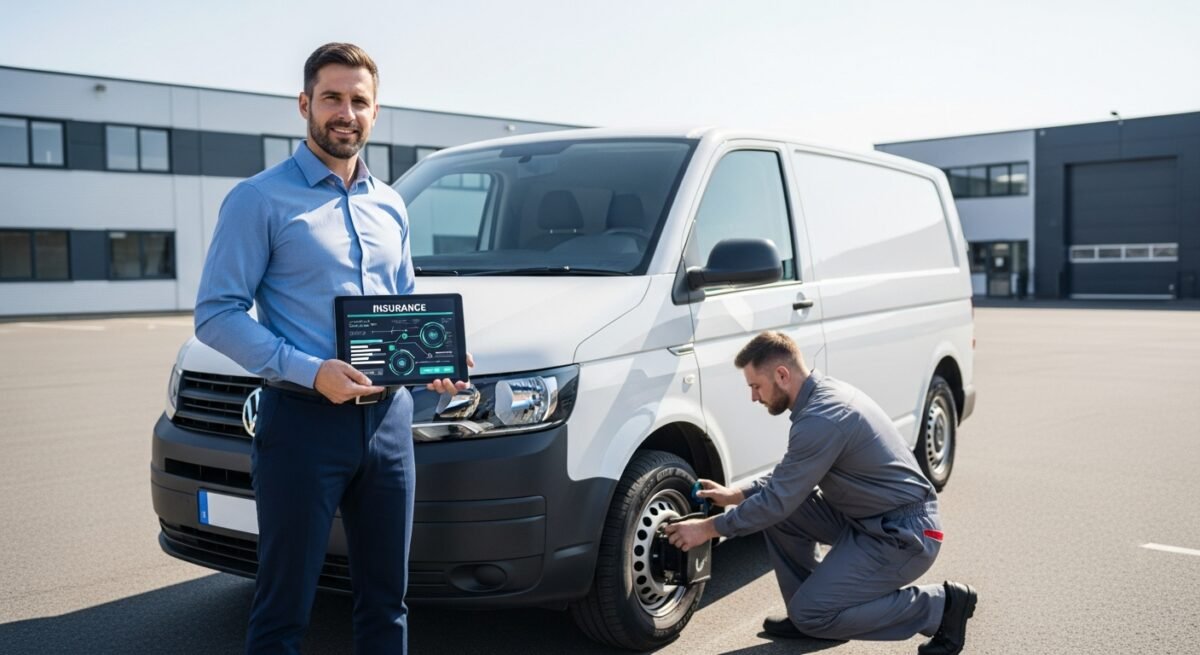
What Is Commercial Auto Insurance: A Guide for Business Owners
Commercial auto insurance protects your business from financial ruin after a vehicle accident. It covers liability, vehicle damage, and cargo, which personal policies exclude.

By Oliver Turner
If your business uses vehicles, from one delivery van to a fleet of trucks, you face a unique set of risks on the road that a personal auto policy simply will not cover. Commercial auto insurance is the fundamental, and often legally required, protection that stands between your company’s financial health and the potentially devastating costs of an accident, theft, or other vehicular incident. Understanding this coverage is not just about checking a box for compliance, it is about making a strategic decision to safeguard your assets, your employees, and the continuity of your business operations.
The Critical Difference: Commercial vs. Personal Auto Insurance
Many business owners mistakenly believe their personal auto policy extends to business use. This is a dangerous assumption that can lead to claim denials and significant personal liability. The core difference lies in the intent and context of vehicle use. A personal auto policy is designed for personal, non-profit activities like commuting to an office, running errands, or family trips. The moment a vehicle is used primarily for business purposes, it enters a higher-risk category with different insurance requirements. Insurers assess risk based on factors like increased time on the road, heavier vehicle weights, cargo transport, and employee drivers, all of which are standard in business operations.
A commercial auto policy is built to address these specific business risks. It provides coverage for vehicles owned, leased, or hired by the company, as well as for employees driving their own vehicles on company business (often requiring hired and non-owned auto liability coverage). The limits are typically higher to protect business assets, and the policy language is tailored to commercial exposures. For example, if a plumber’s work van loaded with tools is involved in an accident, a personal policy would likely deny coverage for the lost tools and business income interruption, while a commercial policy would address these losses. State laws also differ for commercial vehicles, often mandating higher minimum liability limits, especially for vehicles over a certain weight class.
Who Absolutely Needs Commercial Auto Insurance?
Any business entity that utilizes vehicles as part of its service, operations, or logistics needs to seriously evaluate commercial auto coverage. This is not exclusive to large trucking companies. The need is determined by how the vehicle is used, not just who owns it. Common scenarios that necessitate a commercial policy include transporting goods or equipment, traveling to client sites or job locations, carrying paying passengers, using vehicles for delivery services, or having employees drive any vehicle for work-related tasks.
Consider the following examples of businesses that require this coverage:
- Trade and Service Businesses: Plumbers, electricians, carpenters, landscapers, and cleaning services that use trucks or vans to carry tools, materials, and crew.
- Delivery and Transportation: Courier services, food delivery drivers, local moving companies, and taxi or rideshare services (which may have specific endorsements).
- Retail and Sales: Businesses that make deliveries (like florists or appliance stores) or whose sales representatives drive to meet clients.
- Non-Profit Organizations: Charities that use vans to transport volunteers, people, or supplies.
- Companies with Fleets: Any business with multiple vehicles, such as rental car agencies, utility companies, or corporations with a pool of company cars.
If you are unsure, the safest course is to speak with an insurance agent and disclose all vehicle use. They can help you navigate the gray areas, such as occasional business use of a personal car, which might be covered by an endorsement on your personal policy but often requires separate commercial protection. Remember, state-specific regulations also play a role. For instance, the requirements for commercial auto insurance in Virginia may differ slightly from those in New York, particularly regarding registration and minimum financial responsibility filings.
Core Coverage Types in a Commercial Auto Policy
A robust commercial auto insurance policy is not a monolithic product. It is a package of several key coverage types that can be customized to fit your business’s precise needs. Understanding each component allows you to build a policy that provides comprehensive protection.
Liability Coverage: Your Financial Shield
This is the cornerstone of any auto policy, commercial or personal. Liability coverage protects your business if you or an employee driver is at fault in an accident that causes bodily injury to others or damage to their property. It pays for medical expenses, lost wages, pain and suffering for injured parties, as well as repairs or replacement of damaged vehicles, structures, or other property. Commercial policies offer split limits (e.g., $250,000 per person/$500,000 per accident/$100,000 property damage) or a combined single limit (e.g., $1,000,000). Given the higher stakes of business-related accidents, opting for limits significantly higher than state minimums is a prudent risk management strategy.
Physical Damage Coverage: Protecting Your Assets
While liability covers damage you cause to others, physical damage coverage protects your business’s own vehicles. It consists of two main parts: collision and comprehensive. Collision coverage pays for damage to your vehicle resulting from an impact with another vehicle or object, regardless of fault. Comprehensive coverage (sometimes called “other than collision”) handles losses from non-collision events like theft, vandalism, fire, falling objects, or weather-related damage (hail, flood). For businesses that rely on specialized, expensive vehicles, this coverage is essential. The policy will pay up to the vehicle’s actual cash value, minus your chosen deductible.
Additional Crucial Coverages
Beyond the basics, several other coverages address specific commercial risks. Medical Payments or Personal Injury Protection (PIP) covers medical expenses for you and your passengers, regardless of fault, and is required in some no-fault states. Uninsured/Underinsured Motorist (UM/UIM) coverage protects your business if your vehicle is hit by a driver with no insurance or insufficient limits. For businesses transporting goods, Motor Truck Cargo insurance is vital. It covers the loss or damage to the cargo being hauled in your vehicle due to accident, theft, or fire. Finally, Hired and Non-Owned Auto Liability (HNOA) is critical for businesses that rent vehicles short-term or have employees using their personal cars for work errands. It provides liability coverage where the primary policy on the rented or personal vehicle falls short.
Key Factors That Influence Your Commercial Auto Insurance Cost
The premium for a commercial auto policy is not a one-size-fits-all calculation. Insurers perform a detailed risk assessment based on numerous factors related to your business and its driving practices. Being aware of these factors can help you manage costs and present your business in the best light to insurers.
First, business and vehicle details are foundational. The industry you operate in directly impacts risk. A long-haul trucking company will pay more than a local florist making occasional deliveries. The number of vehicles, their make, model, year, and value are all considered, as are the primary garaging locations, which influence theft and accident rates. How you use the vehicles matters immensely: local deliveries versus interstate travel, the type of cargo hauled, and the annual mileage per vehicle. Driver-related factors are equally critical. Insurers will scrutinize the driving records (violations, at-fault accidents) and experience levels of all employees who may operate company vehicles. Many insurers now also consider credit-based insurance scores in permitted states as a factor in predicting claim likelihood.
Your chosen coverage details directly affect your premium. Higher liability limits and lower deductibles for physical damage coverage will increase your cost, but they also provide stronger protection. You can often find discounts for bundling your commercial auto with other policies like general liability or commercial property in a Business Owner’s Policy (BOP), installing safety or anti-theft devices in vehicles, or having a formal driver safety training program. It is also wise to review the specifics of auto insurance in Washington or your own state, as regional regulations and risk environments can cause significant premium variations.
How to Buy the Right Policy: A Step-by-Step Approach
Purchasing commercial auto insurance should be a deliberate process. Start by conducting a thorough risk assessment. List all vehicles (owned, leased, or regularly hired), identify all potential drivers, and document all typical uses, including cargo types and geographic ranges. This information is crucial for getting accurate quotes. Next, research and compare quotes from multiple insurers. Do not just look at the premium, compare the coverage details, limits, deductibles, and exclusions line by line. Working with an independent insurance agent or broker who specializes in commercial lines can be invaluable, as they can access multiple markets and explain complex policy terms.
When reviewing quotes, prioritize adequate coverage over the lowest price. A cheap policy with gaps can be catastrophic. Ensure the liability limits are high enough to protect your business assets from a serious lawsuit. Verify that all necessary endorsements, like HNOA or cargo coverage, are included. Ask about the insurer’s claims process and customer service reputation. Once you select a policy, the process does not end. You must manage your policy proactively. This includes maintaining meticulous driver records, enforcing a strict safe driving policy, reporting any changes in vehicle use or drivers to your insurer immediately, and shopping your coverage every few years to ensure you are still getting competitive rates and appropriate protection. For a deeper dive into navigating insurance specifics in major markets, exploring a resource like our guide on Navigating Auto Insurance in New York can provide valuable regional insights.
Frequently Asked Questions (FAQs)
Q: Can I just add my business vehicle to my personal auto policy?
A> Almost never. Personal auto policies explicitly exclude vehicles used for business purposes, except for very limited, incidental use like occasional client meetings. Using a vehicle primarily for business under a personal policy will almost certainly result in a denied claim.
Q: What happens if an employee gets in an accident while using their own car for a work errand?
A> In this scenario, the employee’s personal auto insurance is considered the primary coverage. However, if the accident costs exceed their policy limits, your business could be sued for damages. This is why Hired and Non-Owned Auto Liability (HNOA) coverage is essential, as it acts as a crucial secondary layer of protection for the business.
Q: How much commercial auto insurance coverage do I need?
A> At a minimum, you must meet your state’s financial responsibility laws. However, these minimums are often woefully inadequate for a business. A good rule of thumb is to carry liability limits high enough to cover your business’s total assets. Consulting with an insurance professional to perform a proper risk analysis is the best way to determine appropriate limits.
Q: Are there ways to lower my commercial auto insurance premiums?
A> Yes. Strategies include implementing a formal driver safety program, maintaining strict hiring standards for drivers, choosing higher deductibles (if financially feasible), bundling policies, installing telematics or GPS tracking devices that promote safe driving, and ensuring all vehicle and driver information is accurately reported to avoid premium adjustments at audit.
Securing the right commercial auto insurance is a non-negotiable aspect of responsible business ownership. It transforms a potentially catastrophic event from a business-ending disaster into a manageable incident. By investing the time to understand your risks, compare coverage options, and choose a policy that truly fits your operational footprint, you protect not just your vehicles, but your company’s reputation, financial stability, and future. For more detailed comparisons and guidance on specific coverage scenarios, you can always Read full article on specialized insurance topics to ensure you are fully informed. Remember, the road to business success is much smoother when you are properly insured for every mile.