
What Is Freeway Auto Insurance and How Does It Work?
Freeway auto insurance requires specific coverage for high-speed risks. Learn how to build a policy that protects you financially after a serious interstate accident.

By Nathaniel Carter
The open road offers freedom, but it also comes with inherent financial risks. While “freeway auto insurance” might sound like a specific company or policy type, it is more accurately understood as the essential coverage you need for driving on high-speed, high-traffic roads like freeways and interstates. The unique demands of freeway driving, from higher speeds and complex merges to increased likelihood of multi-vehicle incidents, make having a robust and well-understood auto insurance policy not just a legal requirement, but a critical component of your financial security. This article will navigate the intricacies of auto insurance as it pertains to freeway driving, helping you secure the right protection for your journeys.
The Unique Risks of Freeway Driving and Insurance Implications
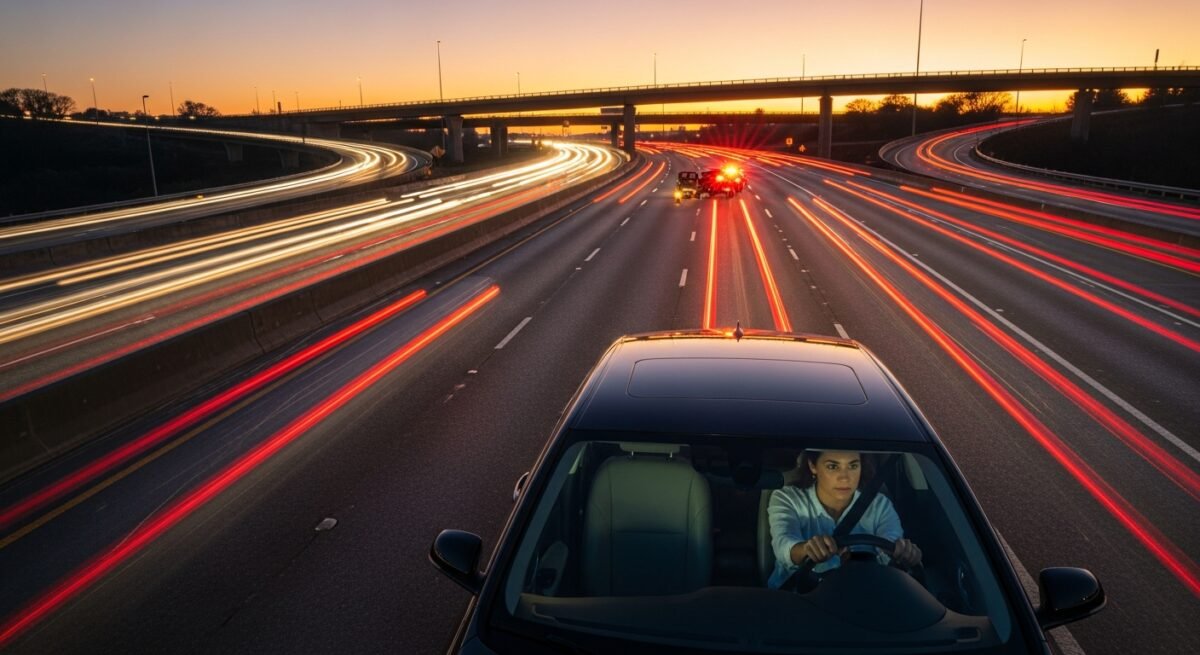
Freeway driving presents a distinct set of hazards compared to local street commuting. Speeds are significantly higher, which dramatically increases the force of impact in a collision, often leading to more severe vehicle damage and bodily injury. Traffic density is greater, and the flow is constant, raising the probability of chain-reaction accidents. Complex maneuvers like merging, lane changes, and exiting require heightened awareness, and a single moment of distraction can have catastrophic consequences. From an insurance perspective, these factors directly influence both your risk profile and the types of coverage that become non-negotiable. Insurers consider the frequency and routes of your driving when assessing risk; a daily freeway commuter may be viewed differently than someone who primarily drives in suburban neighborhoods.
The implications for your policy are substantial. While state minimum liability coverage might be legally sufficient, it is often woefully inadequate for a serious freeway accident where multiple vehicles and expensive repairs or medical bills are involved. A fender-bender at low speed on a city street might cost a few thousand dollars, but a high-speed freeway collision can easily result in tens or even hundreds of thousands in damages. Therefore, the core principle for freeway auto insurance is to carry liability limits that truly protect your assets. Furthermore, given the high risk of hit-and-run drivers or uninsured motorists on busy highways, coverages like Uninsured/Underinsured Motorist (UM/UIM) and Collision become particularly valuable layers of protection.
Essential Coverage Components for Highway Protection
Building an auto insurance policy for freeway driving means moving beyond bare minimums. A comprehensive approach should include several key components, each serving a specific purpose in the event of an incident. The goal is to create a safety net that addresses property damage, bodily injury, and your own vehicle’s repairs, regardless of fault in many cases.
First, Bodily Injury and Property Damage Liability coverage are the foundational elements required by law. They pay for injuries you cause to others and damage you cause to their property. For freeway drivers, experts recommend carrying limits much higher than state minimums, such as 100/300/100, which translates to $100,000 per person for bodily injury, $300,000 per accident, and $100,000 for property damage. Next, Personal Injury Protection (PIP) or Medical Payments coverage handles your and your passengers’ medical expenses, which is crucial after a high-impact crash. Uninsured/Underinsured Motorist coverage is vital, as it protects you if you’re hit by a driver with no insurance or insufficient limits, a common concern. Finally, to protect your own vehicle, Collision coverage pays for repairs after an accident, and Comprehensive coverage handles non-collision events like theft, vandalism, or hitting an animal, all of which can occur on or near freeways.
To select the right levels, consider your assets, your vehicle’s value, and your personal risk tolerance. An effective strategy for managing the cost of these enhanced coverages is to explore bundling options. You can often secure a significant discount by purchasing your auto insurance and other policies, like homeowners or renters insurance, from the same provider. For a deeper dive into this cost-saving approach, our resource on how to bundle home and auto insurance for maximum savings outlines the process and benefits.
Steps to Take After a Freeway Accident
The moments and days following a freeway accident are critical, both for safety and for ensuring a smooth insurance claims process. Knowing what to do in advance can reduce stress and help protect your rights. Your immediate actions can significantly impact the outcome of your claim.
First, ensure safety. If possible, move vehicles to the shoulder or a safe area away from moving traffic. Turn on hazard lights and set up emergency triangles or flares if you have them. Check for injuries and call 911 immediately to report the accident and request medical assistance if needed. Even if the accident seems minor, a police report provides an official record that is invaluable for your insurance claim. Exchange information with the other driver(s), including names, contact details, insurance company, and policy number. Use your smartphone to take comprehensive photos and videos of the scene, vehicle damage, license plates, road conditions, and any visible injuries. Collect contact information from any witnesses as well. Avoid discussing fault or making detailed statements about the accident to anyone other than the police and your insurance representative.
Once you are in a safe location, notify your insurance company as soon as possible to initiate the claims process. Provide them with all the collected information and the police report number. Be honest and factual in your account. Your insurer will assign a claims adjuster to investigate, assess damage, and determine coverage based on your policy terms. For a complete guide on navigating this process strategically, including how to communicate with adjusters, you can Read full article on post-accident procedures. Remember, having robust freeway auto insurance is the first step, but proper post-accident protocol is what activates that protection.
Maximizing Value and Minimizing Your Premium
While comprehensive coverage is advisable, it doesn’t have to break the bank. Several proven strategies can help you obtain the necessary freeway auto insurance protection at a more affordable rate. Being a proactive and informed consumer is the key to finding this balance.
Start by shopping around and comparing quotes from multiple insurers. Rates can vary widely for the same driver and coverage profile. Always ask about available discounts, which can include safe driver discounts, good student discounts, discounts for safety features in your car (like automatic emergency braking), low-mileage discounts, and paperless billing discounts. One of the most impactful ways to save is through policy bundling, as mentioned earlier. Purchasing multiple insurance products from one carrier almost always results in a lower overall premium. For a focused look at this tactic, explore our article on bundle home and auto insurance, the smart financial strategy, which details the long-term benefits. Furthermore, consider raising your deductible, the amount you pay out-of-pocket before insurance kicks in. Opting for a higher deductible on your Comprehensive and Collision coverages can lower your premium, but ensure you have the savings to cover that deductible if needed.
Frequently Asked Questions
Does my auto insurance cover me if I’m driving on a freeway in another state?
Yes, your personal auto insurance policy typically provides coverage in all 50 states and U.S. territories. The policy will adjust to meet the minimum liability requirements of the state you are driving in, even if they are higher than your home state’s requirements.
Is freeway auto insurance more expensive than regular auto insurance?
Insurers don’t have a separate “freeway” policy, but your premium is calculated based on risk factors, which include your annual mileage and typical driving routes. A long daily freeway commute may result in a slightly higher premium than someone who drives infrequently on local roads, due to increased exposure to risk.
What if I’m only using a car for a long freeway road trip?
If you rarely drive but are planning a major trip, inform your insurer. They may adjust your policy if your estimated annual mileage will change significantly. For a rental car, your personal policy’s liability coverage usually extends, and you can purchase a Collision Damage Waiver (CDW) from the rental company for physical damage protection.
How does bundling policies actually save me money?
Bundling saves money because it reduces customer acquisition and administrative costs for the insurer, and they pass some of those savings to you as a discount. It also increases customer loyalty. You can learn more about the mechanics and advantages in our post on bundle home and auto insurance to save money and simplify coverage.
Securing the right auto insurance for freeway driving is an exercise in prudent risk management. By understanding the heightened risks, investing in adequate coverage limits, and knowing how to respond after an incident, you transform your policy from a simple legal document into a powerful tool for peace of mind. Regularly review your coverage, shop for competitive rates, and leverage discounts like bundling to ensure you are always protected on the road ahead, without overpaying for the security you need.