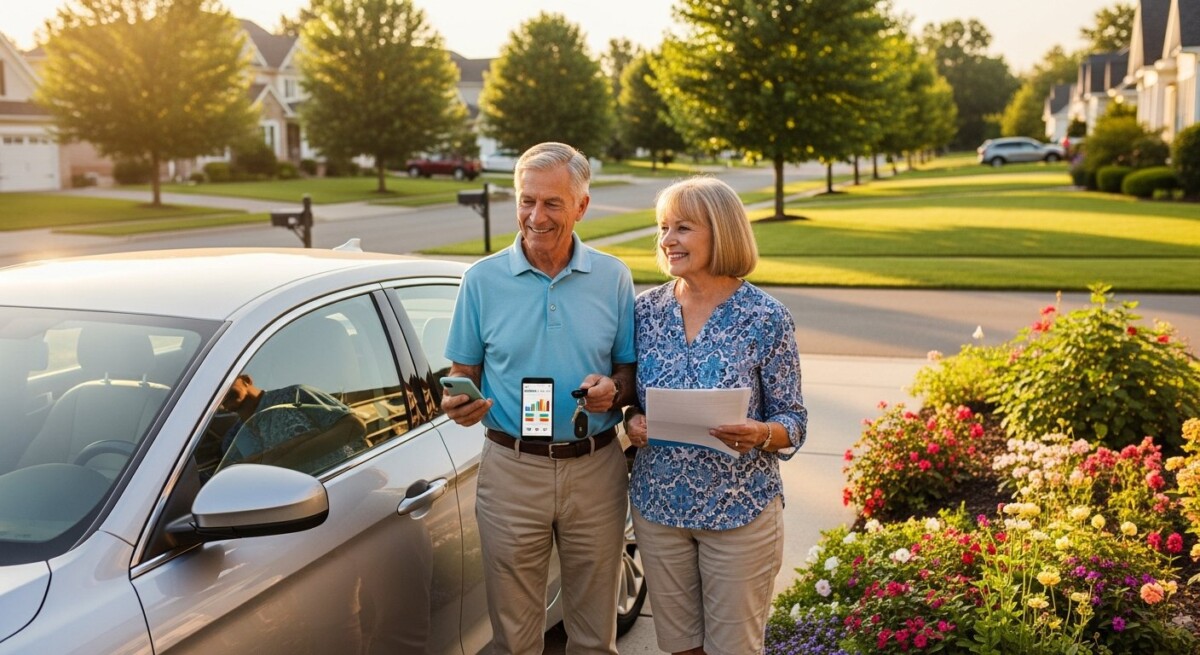
Finding affordable coverage after retirement can feel like navigating a maze of rising premiums and unfamiliar policy terms. Many seniors discover that rates shift dramatically once they stop commuting or move to a new state. The good news is that the best car insurance rates for seniors in 2026 are not only achievable but often lower than what younger drivers pay, provided you know exactly where to look and which discounts to ask for. With the right strategy, you can secure a policy that protects your assets without draining your fixed income.
Insurance companies weigh several factors differently for older drivers. Your years of experience, low annual mileage, and safe driving record can work in your favor. However, insurers also consider age-related risk factors. Understanding how carriers calculate these risks is the first step to finding a policy that rewards your experience rather than penalizing your age. In our guide on Bundle and Save: Best Multi-Car Auto Insurance Rates, we explain how combining policies can further reduce costs for senior households.
Why Senior Insurance Rates Change After Age 65
Insurance pricing is based on statistical risk. For seniors, this creates a mixed picture. On one hand, drivers over 65 typically have decades of experience and lower accident rates per mile than teenagers. On the other hand, factors like slower reaction times, age-related medical conditions, and increased fragility in accidents can cause rates to creep upward around age 75 or 80. Insurers also adjust for reduced driving frequency, which can lower premiums.
Another major factor is the type of vehicle you drive. Seniors often own paid-off cars and may choose to drop collision or comprehensive coverage to save money. While this reduces the premium, it also leaves you financially exposed if the car is damaged or stolen. A better approach is to shop for a policy that balances affordable rates with adequate protection. Many carriers now offer usage-based programs that track mileage and driving habits, which can be very favorable for seniors who drive infrequently or only during daylight hours.
How Driving Habits Affect Your Premium
Your daily routine behind the wheel tells insurers a lot about your risk profile. If you are retired and no longer commute during rush hour, your exposure to accidents drops significantly. Many companies offer low-mileage discounts for drivers who log fewer than 7,500 miles per year. Some even provide telematics programs where a small device or smartphone app monitors your speed, braking, and time of day. Seniors who drive cautiously and only during safe hours can see discounts of 10% to 30%.
It is important to update your insurance company whenever your driving patterns change. If you recently stopped commuting, notify your agent immediately. You may qualify for a retired driver discount or a low-mileage program that was not previously available. Keeping your insurer informed about reduced mileage is one of the simplest ways to lower your bill without sacrificing coverage.
Top Discounts Seniors Should Not Overlook
Insurance companies offer a wide range of discounts, but many seniors leave money on the table simply because they do not ask. Here are the most valuable discounts to request when comparing policies for 2026:
- Mature driver completion discount: Completing an approved defensive driving course for seniors can reduce your premium by 5% to 15%. Courses are available online and typically take a few hours.
- Low-mileage discount: If you drive fewer than 10,000 miles per year, you may qualify for a significant reduction. Some carriers have specific programs for retirees.
- Multi-policy discount: Bundling your auto insurance with home, renters, or even life insurance from the same carrier often yields savings of 10% to 25%.
- Pay-in-full discount: Paying your entire annual premium upfront rather than monthly can save you administrative fees and sometimes an additional percentage off the total.
- Loyalty discount: Some insurers reward long-term customers, but loyalty does not always equal the lowest rate. Always compare quotes from multiple carriers before renewing.
Each discount varies by state and company. The best strategy is to ask every insurer you speak with to run a complete discount check based on your specific situation. Some discounts stack, meaning you can combine multiple savings on one policy. For example, a senior who completes a defensive driving course, drives only 6,000 miles per year, and bundles auto with home insurance could see their base rate cut by nearly half.
Comparing Rates Across Multiple Carriers
The single most effective action you can take to find the best car insurance rates for seniors in 2026 is to compare quotes from at least three to five different companies. Rates for the exact same coverage can vary by hundreds of dollars per year between insurers. This is because each company uses its own formula to weigh factors like credit history, location, and driving record. What one carrier penalizes heavily, another may ignore.
When comparing quotes, make sure each policy offers the same liability limits, deductibles, and optional coverages. A cheap policy that excludes uninsured motorist protection or offers minimal liability coverage is not a bargain if you get into a serious accident. Focus on the total value, not just the monthly payment. A slightly higher premium that includes roadside assistance, rental car reimbursement, and glass coverage may save you thousands in out-of-pocket costs later. In our analysis of 2026 Rental Car Insurance: Key Coverage Updates, we detail how rental reimbursement can protect seniors who rely on their vehicles for medical appointments.
When to Consider Dropping Full Coverage
One of the most common questions seniors ask is whether they should drop collision and comprehensive coverage on an older vehicle. The general rule of thumb is that if your car is worth less than ten times the annual premium for these coverages, it may not be financially wise to keep them. For example, if your car is valued at $4,000 and you pay $600 per year for collision and comprehensive, you would recoup the car’s value after about six and a half years of premiums. In that case, dropping those coverages could make sense.
However, there are exceptions. If you cannot afford to replace your vehicle after a total loss without insurance, keeping full coverage provides peace of mind. Additionally, if you have a loan or lease on the vehicle, your lender will require collision and comprehensive regardless of the car’s age. Always consider your personal financial situation before making changes. A licensed agent at Free Auto Insurance Quotes Online can help you run a cost-benefit analysis tailored to your car’s current market value.
State-Specific Considerations for Seniors
Insurance is regulated at the state level, which means rates and available discounts vary widely depending on where you live. Some states require insurers to offer discounts for completing approved senior driving courses, while others mandate that companies cannot use age as a primary rating factor. Seniors in Florida, for example, often face higher baseline rates due to the high number of uninsured drivers and severe weather risks. On the other hand, drivers in rural areas of the Midwest may enjoy some of the lowest premiums in the country.
If you have recently moved to a new state, or if you are a snowbird who splits time between two homes, you need to ensure your policy accurately reflects your primary residence. Insuring a vehicle in the wrong state can lead to claim denials or rate adjustments after a loss. Always update your address with your insurer immediately after moving. For those who own classic cars or collector vehicles, a standard auto policy may not provide adequate coverage. Our guide on 2026 Classic Car Insurance: Key Coverage Updates explains how specialized policies can protect valuable vehicles at lower rates than standard insurance.
How a Violation or Lapse Affects Senior Rates
Even a minor traffic violation can have an outsized impact on insurance premiums for seniors. Because older drivers are statistically considered higher risk for certain types of accidents, a speeding ticket or at-fault accident can cause rates to spike more dramatically than they would for a middle-aged driver. Many insurers offer accident forgiveness programs, but these often require several years of clean driving to qualify. If you have a recent violation on your record, it is even more critical to shop around, as some companies are more lenient than others.
If you have let your insurance lapse for any reason, even for a few days, you will likely face higher rates when you apply for a new policy. Carriers view a lapse as a sign of increased risk. To avoid this, always secure a new policy before canceling your old one. If you are currently dealing with higher rates due to a past incident, read our detailed breakdown on Auto Insurance Rates Rise After Violations for tips on how to mitigate the increase over time.
Frequently Asked Questions
At what age do car insurance rates go up for seniors?
Most insurers begin to increase rates gradually around age 70 to 75, with more significant increases after age 80. However, this varies by company. Some carriers specialize in older drivers and offer competitive rates well into a person’s 80s. Shopping around is essential after age 70.
Can a senior get car insurance with a suspended license?
It is very difficult to obtain a standard auto policy with a suspended license. Some non-standard insurers may offer coverage, but premiums will be extremely high. The best course of action is to resolve the suspension and then shop for a new policy. If you need a vehicle for essential medical appointments, consider asking a family member to add you as a listed driver on their policy.
Do all states require seniors to take a driving test to renew a license?
No. Only a handful of states require vision tests or road tests for older drivers upon renewal. These states include Illinois, New Hampshire, and a few others. Most states simply require a vision screening. Check your state’s Department of Motor Vehicles website for specific requirements.
What is the best coverage level for a retired senior on a fixed income?
For most seniors, carrying liability limits of at least $100,000 per person and $300,000 per accident is recommended. If you own a home or have significant savings, consider an umbrella policy for extra protection. Dropping collision on a low-value car is often a smart move, but never drop liability or uninsured motorist coverage.
Take the Next Step Toward Affordable Coverage
Securing the best car insurance rates for seniors in 2026 does not require hours of research or confusing paperwork. It simply requires knowing which discounts to target, which coverages to prioritize, and which companies offer the most favorable pricing for your age group. By comparing multiple quotes side by side and asking the right questions, you can find a policy that fits your budget and provides real protection for the road ahead.
If you are ready to see what rates are available in your area, visit Free Auto Insurance Quotes Online to complete a simple form. You will receive personalized quotes from licensed agents who understand the unique needs of senior drivers. There is no obligation, and the process takes just a few minutes. Protect your independence and your savings with a policy designed for your stage of life.