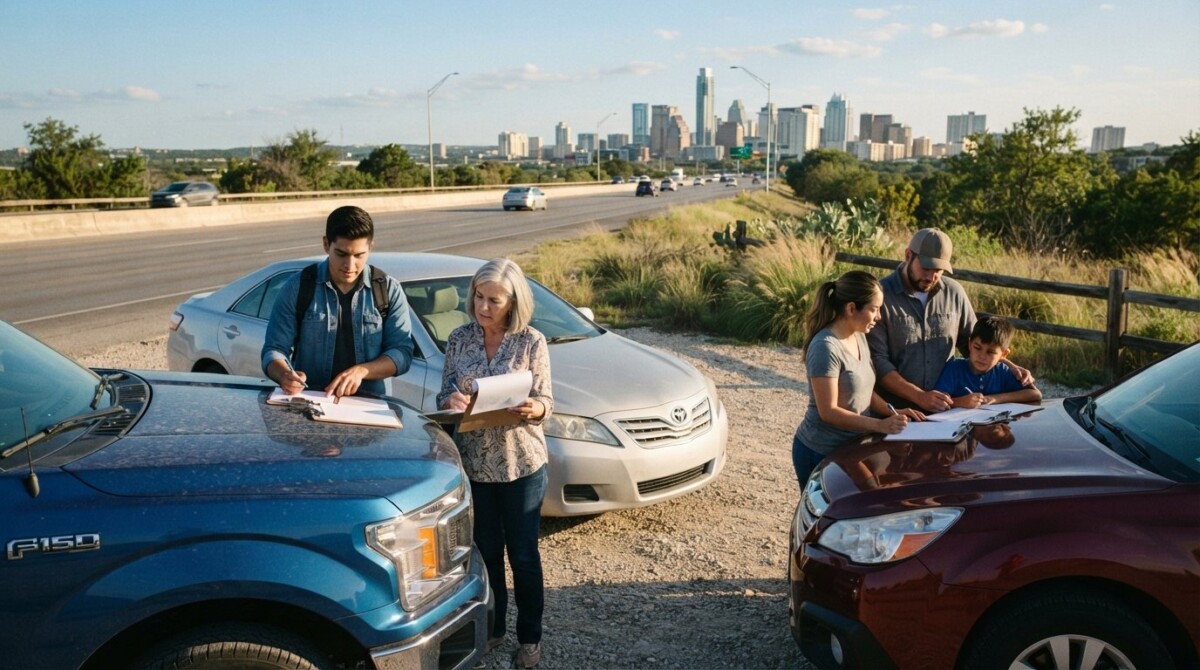
Managing insurance for two or more vehicles can feel like juggling multiple policies, due dates, and premium amounts. Many drivers assume that insuring each car separately is the only option, but that approach often leads to paying more than necessary. The best auto insurance rates for drivers with multiple vehicles typically come from bundling those cars under one policy with the same carrier. This strategy not only simplifies your paperwork but also unlocks significant discounts that individual policies cannot match.
Insurance companies reward loyalty and volume. When you place multiple vehicles on a single policy, the insurer sees reduced administrative costs and a lower risk of gaps in coverage. They pass some of those savings back to you in the form of a multi-car discount. On average, drivers who bundle two or more vehicles save between 10 and 25 percent compared to insuring each car separately. For a family with three cars, those savings can amount to hundreds of dollars each year.
But finding the best auto insurance rates for drivers with multiple vehicles involves more than just asking for a multi-car discount. You need to compare quotes from several insurers, understand how each company calculates its rates, and ensure that your coverage levels remain adequate for every vehicle. This article walks you through the entire process, from understanding multi-car policies to negotiating the lowest premiums, so you can protect your household without overpaying.
How Multi-Car Insurance Policies Work
A multi-car insurance policy is a single policy that covers two or more vehicles under the same account. Each vehicle has its own set of coverage limits, deductibles, and endorsements, but they all share the same policy number and billing cycle. This structure makes it easier to manage renewals, payments, and claims because everything is consolidated in one place.
Most major insurers require that all vehicles on a multi-car policy be registered to the same address and have at least one common named insured, such as a spouse or partner. Teenage drivers living at home can also be added to the family multi-car policy, often at a lower rate than purchasing a separate policy for them. However, if you have a vehicle used exclusively for business or a classic car that requires specialized coverage, you may need a separate policy for that specific vehicle.
Key Features of Multi-Car Policies
Understanding the mechanics of a multi-car policy helps you evaluate whether it fits your situation. Here are the primary features you should know:
- Shared Policy Number: All vehicles appear on one declaration page, making it easy to see coverage details at a glance.
- Individual Coverage Options: You can choose different liability limits, comprehensive and collision deductibles, and add-ons like roadside assistance for each car separately.
- Single Billing Cycle: You receive one bill for all vehicles, which can simplify budgeting and reduce the chance of missed payments.
- Multi-Car Discount: Insurers offer a percentage discount for each additional vehicle, typically starting with the second car.
- Accident Forgiveness Limits: Some insurers apply accident forgiveness to the policy rather than to an individual driver, meaning one at-fault claim may not raise rates for the entire household.
These features make multi-car policies attractive for families, couples, and households with multiple drivers. However, you should still compare the total premium against the sum of two separate policies, especially if one vehicle is older and could be covered with liability only. In some cases, separating policies for a high-risk driver might result in lower overall costs, so always run the numbers before committing.
Strategies to Find the Best Auto Insurance Rates for Drivers with Multiple Vehicles
Securing the lowest premium for your household requires a deliberate approach. Start by gathering your current policy details, including coverage limits, deductibles, and annual mileage for each vehicle. Then follow these steps to identify the best auto insurance rates for drivers with multiple vehicles:
1. Shop Around Every Six to Twelve Months. Insurance rates change frequently based on market conditions, your claims history, and the insurer’s underwriting guidelines. A company that offered the lowest rate last year may no longer be competitive. Get quotes from at least three to five insurers, including both national carriers and regional providers. Use a comparison platform like Free Auto Insurance Quotes Online to receive multiple quotes at once without entering your information repeatedly.
2. Ask About All Available Discounts. Multi-car discounts are just the beginning. Many insurers also offer discounts for bundling auto and home insurance, paying in full, having a clean driving record, completing a defensive driving course, and installing anti-theft devices. Stacking these discounts can reduce your premium by 30 percent or more. When you request a quote, ask the agent or online tool to show you every discount for which you qualify.
3. Adjust Coverage Levels Strategically. Not every vehicle needs the same level of coverage. An older car with a low market value may only need liability coverage, while a new SUV financed through a bank requires full comprehensive and collision. By tailoring coverage to each vehicle’s value and usage, you avoid paying for protection you do not need. However, ensure that every driver in the household has adequate liability limits to protect your assets in the event of a serious accident.
4. Consider Usage-Based Insurance Programs. Some insurers offer telematics programs that track your driving habits through a smartphone app or a device installed in the car. Safe driving behaviors such as smooth braking, moderate speed, and low mileage can earn you a discount. If your household has multiple drivers with good habits, usage-based insurance can lower the total premium for the entire policy.
5. Maintain Good Credit. In most states, insurers use credit-based insurance scores to set rates. A higher credit score typically leads to lower premiums. Pay your bills on time, keep credit card balances low, and check your credit report annually for errors. Improving your credit score before shopping for a multi-car policy can result in substantial savings.
Common Mistakes to Avoid When Insuring Multiple Vehicles
Even experienced drivers make errors when setting up multi-car policies. Avoiding these pitfalls will help you secure the best auto insurance rates for drivers with multiple vehicles and prevent unpleasant surprises at claim time.
Mistake 1: Assuming All Insurers Offer the Same Multi-Car Discount. Discount percentages vary widely by company. One insurer might offer a 10 percent discount for a second car, while another offers 20 percent. Always compare the total premium, not just the discount percentage, because the base rate also differs. A smaller discount on a lower base rate may beat a larger discount on a higher base rate.
Mistake 2: Ignoring the Impact of High-Risk Drivers. If a teenager or a driver with a DUI is on your policy, your rates will increase significantly. In some cases, it might be cheaper to insure that driver separately under a non-standard policy. However, that approach means losing the multi-car discount for the remaining vehicles. Run the numbers both ways to see which option costs less overall.
Mistake 3: Setting the Same Deductible for Every Vehicle. A lower deductible means a higher premium. If you have a vehicle that is rarely driven or has a low value, consider raising its deductible to $1,000 or more to reduce the premium. Keep a lower deductible, such as $250 or $500, only on the vehicle you drive most often or that carries a loan balance.
Mistake 4: Forgetting to Update Your Policy After Life Changes. Adding a new vehicle, removing a sold car, or having a young driver get their license all affect your premium. Notify your insurer immediately when these changes occur. Delaying the update can lead to coverage gaps or overpaying for a vehicle you no longer own.
State-Specific Considerations for Multi-Car Policies
Insurance regulations and minimum coverage requirements vary by state. If you live in a state with no-fault insurance, such as Florida or Michigan, your multi-car policy must include personal injury protection (PIP) for each vehicle. In tort states like California, you may have more flexibility to choose liability limits. Understanding your state’s rules helps you avoid buying unnecessary coverage or missing required protections.
For example, in our guide on auto insurance in Massachusetts for drivers, we explain that the state requires both bodily injury and property damage liability, plus PIP. A multi-car policy in Massachusetts must meet these minimums for every vehicle. Similarly, if you are a new driver looking for coverage, the article about best auto insurance for new drivers in New York highlights how adding a newly licensed driver to a family multi-car policy often costs less than a standalone policy.
When you file a claim involving multiple vehicles, the process can become complex. Our step-by-step guide on filing a California auto insurance claim provides detailed instructions that apply to multi-car households as well. Additionally, if you need to add or remove a driver from your policy, the resource on adding a driver to your auto insurance policy covers the documentation and rating changes involved.
Frequently Asked Questions
Can I insure two cars under different policies and still get a discount? Generally, no. Multi-car discounts are only available when the vehicles are on the same policy with the same insurer. However, some insurers offer a loyalty discount if you hold separate policies with them, but the savings are usually smaller than a true multi-car discount.
Does a multi-car policy cover all drivers in the household? Yes, as long as the drivers are listed on the policy. Most insurers require you to name all licensed household members, even if they rarely drive. Failing to list a driver could result in a claim denial.
What happens if one driver has an accident on a multi-car policy? The at-fault accident typically affects the premium for the entire policy at renewal, not just the vehicle involved. However, some insurers offer accident forgiveness that shields the policy from a surcharge after the first at-fault accident.
Is it cheaper to insure two cars with the same company? In most cases, yes. The combined premium for a multi-car policy is almost always lower than the sum of two separate policies from different companies, thanks to the multi-car discount and reduced administrative fees.
Can I have different deductibles for each car on a multi-car policy? Yes. You can customize deductibles and coverage levels for each vehicle independently, which allows you to balance premium costs with financial risk.
Final Thoughts on Multi-Car Insurance
Finding the best auto insurance rates for drivers with multiple vehicles requires a combination of smart shopping, strategic coverage choices, and awareness of available discounts. Start by comparing quotes from multiple insurers using a trusted platform like Free Auto Insurance Quotes Online. Adjust your coverage based on each vehicle’s value and usage, and ask about every discount you may qualify for. Avoid common mistakes such as setting uniform deductibles or ignoring the impact of high-risk drivers. With a little effort, you can protect your entire household while keeping your premiums affordable. Review your policy at least once a year to ensure it still meets your needs and budget.