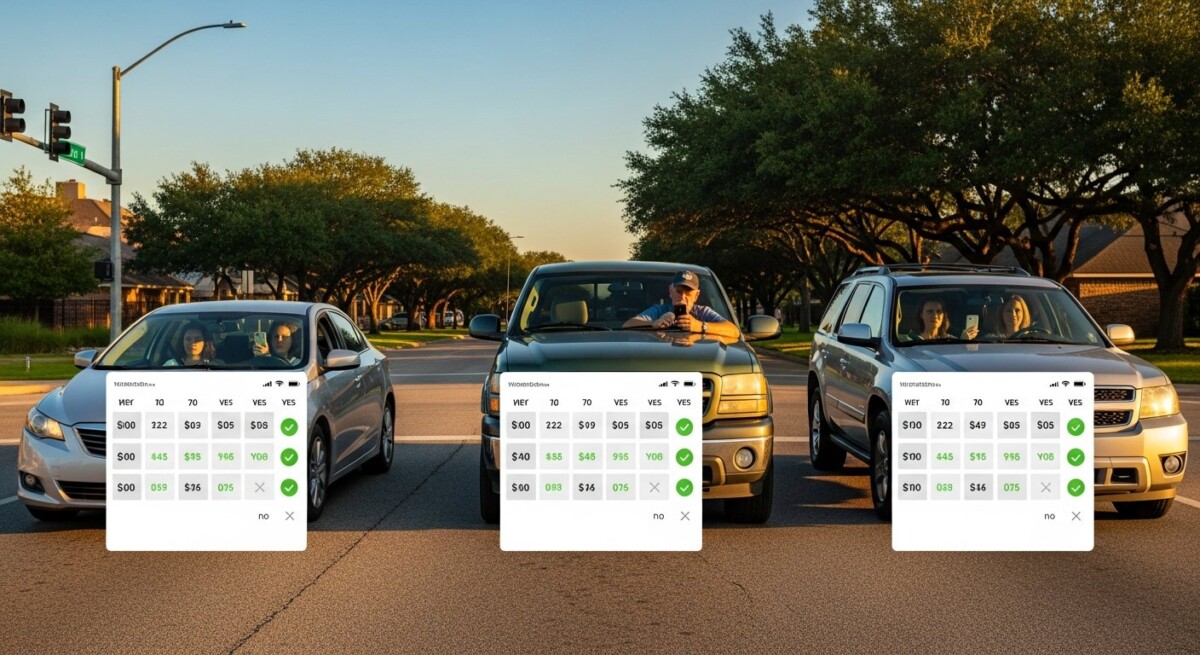
Texas roads are vast, and so are the differences in what drivers pay for car insurance. If you live in the Lone Star State, you have likely noticed that your neighbor pays a different rate than your coworker, even for similar vehicles. This is not a mystery. It is the result of how insurers calculate risk using local data, credit history, and driving records. The good news is that you do not have to accept the first price you see. Getting multiple auto insurance quotes Texas drivers can use to compare rates is the smartest way to keep more money in your pocket each month.
Many drivers make the mistake of renewing the same policy year after year without shopping around. That loyalty often costs them hundreds of dollars annually. Insurance companies regularly adjust their pricing models, and the company that was cheapest for you two years ago might now be one of the most expensive. By taking a fresh look at the market, you can find competitive rates that reflect your current risk profile, not your history from a previous year.
Why Texas Insurance Rates Are Unique
Texas operates under a unique regulatory system called “prior approval.” This means that the Texas Department of Insurance must review and approve rate changes before insurers can implement them. While this provides some oversight, it does not mean rates are uniform. In fact, Texas consistently ranks among the more expensive states for auto insurance due to a combination of factors including high population density in metros like Houston and Dallas, severe weather events like hail and flooding, and a high rate of uninsured motorists.
Because of these variables, a one-size-fits-all policy does not exist. Drivers in rural West Texas might pay significantly less than those in downtown Austin, even with the same carrier. This is why comparing local options matters more than looking at national averages. When you request auto insurance quotes Texas providers will tailor their prices to your specific ZIP code, driving history, and the coverage limits you choose.
Minimum Coverage Requirements in Texas
Before you start comparing prices, it is essential to understand what the law requires. Texas mandates a minimum amount of liability insurance known as 30/60/25. This breaks down to $30,000 for bodily injury per person, $60,000 for bodily injury per accident, and $25,000 for property damage. While these limits satisfy the legal requirement, they are often insufficient if you cause a serious accident.
Consider this scenario: you accidentally rear-end a new SUV and the driver goes to the hospital. Medical bills and vehicle repairs can easily exceed $60,000. If your policy only covers the minimum, you would be personally responsible for the difference. That financial gap can lead to lawsuits and wage garnishment. Most financial advisors recommend carrying higher limits, such as 100/300/100, to protect your assets.
Beyond liability, Texas drivers can add collision and comprehensive coverage. Collision covers damage to your car from an accident, while comprehensive covers non-collision events like theft, fire, or hail. If you have a car loan or lease, your lender will likely require these coverages. Even if you own your car outright, adding these protections can prevent a total loss from becoming a financial disaster.
How to Get the Best Auto Insurance Quotes Texas Has to Offer
The process of finding affordable coverage is not complicated, but it requires a systematic approach. Instead of visiting every insurance website individually, you can use a comparison platform to streamline the process. This saves time and ensures you are looking at apples-to-apples comparisons.
Here is a simple framework to follow when you start shopping:
- Gather your information: Have your driver’s license number, vehicle VIN, and current mileage ready.
- Know your coverage needs: Decide on liability limits and whether you need comprehensive and collision.
- Check your credit score: In Texas, insurers use credit-based insurance scores, so a better score often means lower rates.
- Ask about discounts: Inquire about multi-policy, safe driver, and defensive driving course discounts.
Once you have this information, you can fill out a single form to receive multiple offers. This approach gives you leverage when negotiating with agents. If one company quotes you $1,500 for six months, you can ask another company to match or beat that price. Insurers want your business, and they often have flexibility in pricing that they do not advertise publicly.
Factors That Influence Your Texas Premium
Understanding what drives your rate up or down can help you make better choices. Your age, marital status, and claims history all play a role. However, there are a few factors specific to Texas that you should pay attention to.
Weather is a major factor. Hailstorms in areas like San Antonio and Fort Worth frequently cause billions of dollars in vehicle damage. Insurers factor this risk into your premium. If you park in a garage, you might qualify for a lower rate because your car is protected from hail and theft. Similarly, living in a neighborhood with high crime rates can increase your comprehensive premium.
Your driving record is equally critical. A single at-fault accident can raise your rates by 40% or more. Conversely, maintaining a clean record for three to five years can earn you a significant accident-free discount. If you have a blemish on your record, consider taking a state-approved defensive driving course. This not only removes points from your license but also qualifies you for a discount with most major insurers.
For younger drivers, rates are notoriously high. If you are under 25, adding yourself to a parent’s policy is usually cheaper than buying your own. In our guide for young drivers, we explain how maintaining good grades can unlock a substantial discount that many families overlook.
Comparing Quotes: What to Look For
When you receive multiple auto insurance quotes Texas carriers provide, do not just look at the bottom-line price. You need to examine the declarations page carefully. This document outlines your coverage limits, deductibles, and exclusions. A cheaper policy might have a higher deductible, meaning you pay more out of pocket before insurance kicks in after a claim.
Look for the following when comparing policies:
- Deductible amounts: A $1,000 deductible lowers your premium but requires more cash if you file a claim.
- Roadside assistance: Some policies include this for free, while others charge extra.
- Rental reimbursement: This covers a rental car while yours is in the shop after a covered claim.
- Gap insurance: If you owe more than your car is worth, this covers the difference after a total loss.
It is also wise to check the financial strength of the insurer. A company that charges very low rates but has poor customer service or slow claims handling is not a bargain. Look up AM Best ratings or read customer reviews on the Texas Department of Insurance website before committing.
The Role of Discounts in Lowering Your Rate
Discounts are where you can truly slash your premium. Most drivers are aware of the good student discount, but there are many others that go unused. For example, if you work from home and drive fewer than 7,500 miles a year, you might qualify for a low-mileage discount. Telematics programs, which track your driving via a mobile app, can save safe drivers up to 30% on their premiums.
Bundling your auto insurance with homeowners or renters insurance is another powerful way to save. This often results in a multi-policy discount of 10% to 15% on both policies. Additionally, paying your premium in full upfront rather than in monthly installments can eliminate installment fees, saving you around $50 to $100 per term.
For those who are new to the driving world, the process can feel overwhelming. Our first-time buyer guide breaks down the jargon and helps you build a policy from scratch without overpaying. It is a valuable resource for anyone who has never purchased coverage independently.
Why Use a Comparison Platform
Visiting dozens of insurance websites manually is tedious. A better approach is to use a service like Free Auto Insurance Quotes Online, which partners with multiple carriers to bring you rates in one place. This platform simplifies the process, allowing you to enter your details once and receive several options. It is designed for consumers who want to make informed decisions without spending hours on the phone.
The platform also provides educational resources to help you understand the nuances of coverage. For example, if you are a student, you might not realize that living away at school without a car can still qualify you for a discount. Our article on student discounts highlights how to maximize savings while away from home.
Similarly, if you are moving to Texas from another state, the rules are different. State-specific guides like ours help drivers understand how their current coverage transfers and what new requirements they must meet. While that particular guide focuses on Massachusetts, the principles of comparing rates and understanding state laws apply universally.
Frequently Asked Questions
How often should I shop for auto insurance in Texas?
You should compare rates at least once every six months, ideally at renewal time. Life changes such as moving, getting married, or buying a new car can also trigger a rate change, so shop around after any major event.
Can I get auto insurance quotes Texas residents need without a Social Security number?
Most insurers require your Social Security number to pull your credit-based insurance score. However, some companies allow you to get a quote without it, though the rate may be less accurate. Using a comparison platform is the easiest way to see which carriers offer this flexibility.
Does a speeding ticket raise my insurance rates?
Generally, yes. A minor speeding ticket can increase your rate by 10% to 20% for three years. However, taking a defensive driving course can often prevent the rate increase and remove the points from your license.
What is the cheapest car to insure in Texas?
Vehicles with high safety ratings and low repair costs are the cheapest to insure. Models like the Honda CR-V, Subaru Outback, and Mazda CX-5 typically have lower premiums because they are reliable and not targeted by thieves. Sports cars and luxury sedans are expensive to insure due to high performance and costly parts.
Getting the right coverage at the right price is a matter of diligence. The Texas insurance market is competitive, which works in your favor if you are willing to look around. By understanding the unique risks in your area and leveraging discounts, you can secure a policy that protects you financially without breaking the bank.
Start your search today by requesting auto insurance quotes Texas providers can offer through a trusted comparison platform. The few minutes you spend comparing could save you hundreds of dollars this year and every year after. Do not wait for your renewal notice to arrive. Take control of your coverage now and drive with confidence knowing you are fully protected at a price you can afford.