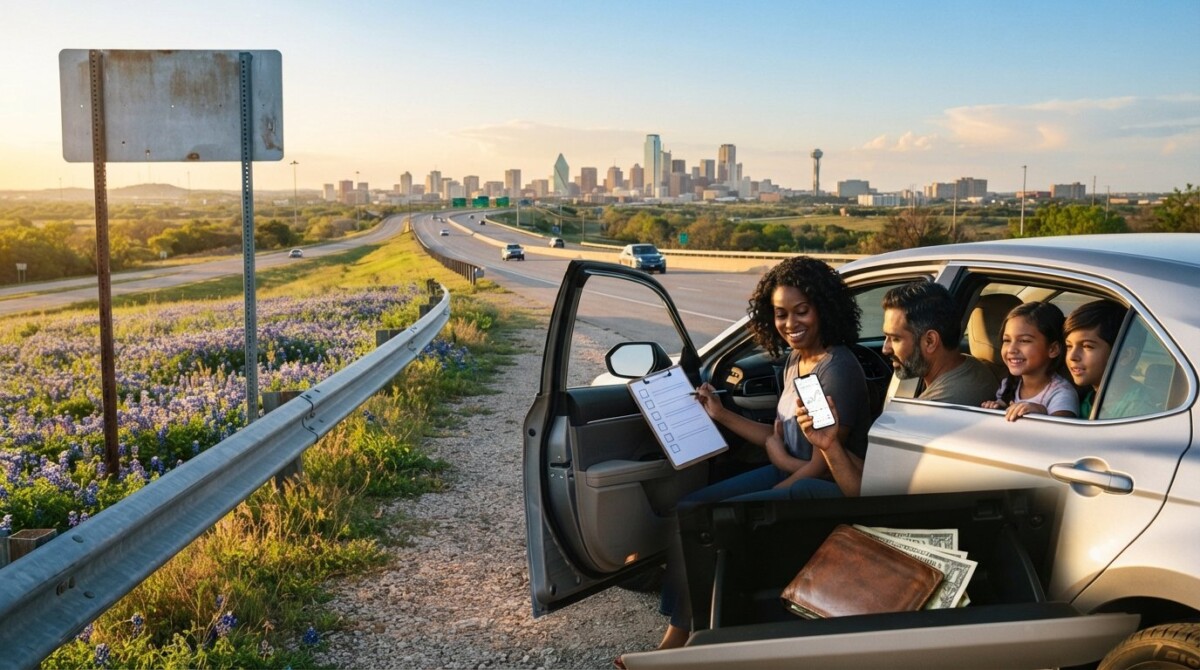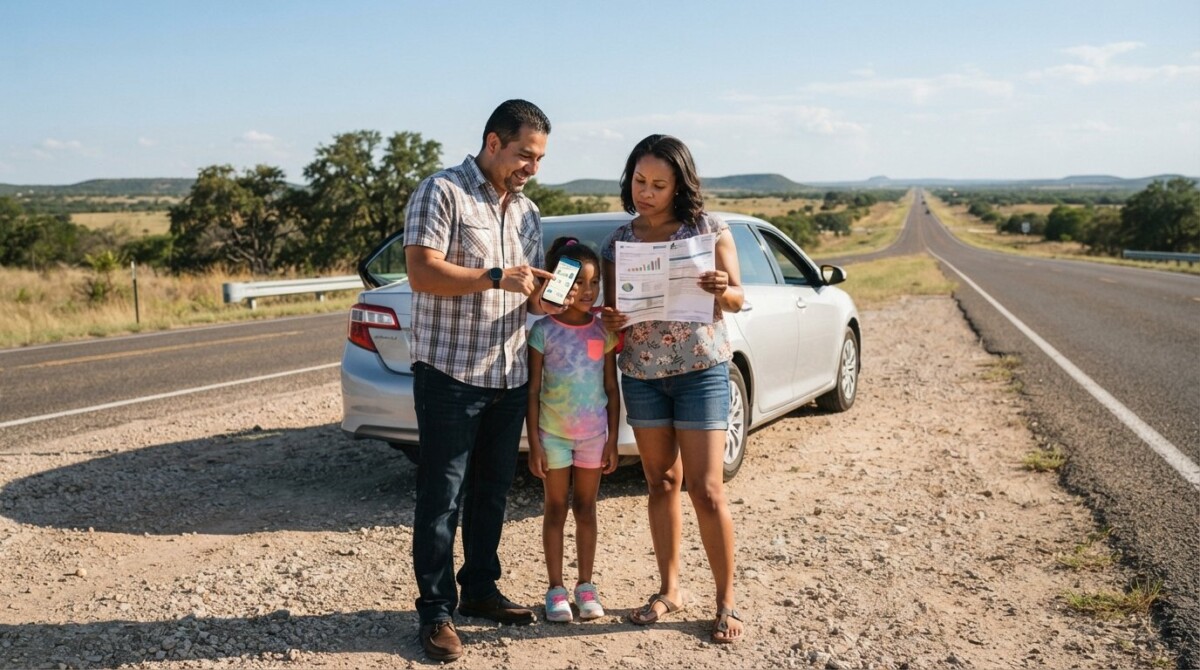
Finding the right auto insurance quotes Texas drivers can trust often feels like a full-time job. With over 27 million licensed drivers in the state, you are competing for attention with every major carrier, and the rates they offer can swing wildly based on your ZIP code, driving record, and even your credit score. The good news is that the Texas insurance market is one of the most competitive in the country, which means savings are available if you know exactly where and how to look.
The challenge is not a lack of options; it is a lack of clarity. Many drivers simply renew their current policy out of habit, assuming that loyalty is rewarded. In reality, insurers frequently raise rates by 5 to 10 percent annually for existing customers while offering steep discounts to new ones. This article breaks down the mechanics of Texas auto insurance pricing, the coverage requirements you cannot ignore, and the specific strategies that will help you secure a lower premium without sacrificing protection.
Understanding Texas Minimum Coverage Requirements
Before you start comparing rates, you need to know what the law actually requires. Texas is a fault state, which means the at-fault driver’s insurance pays for the other party’s injuries and property damage. The state mandates a minimum level of liability coverage under what is commonly called the 30/60/25 rule. This translates to $30,000 in bodily injury coverage per person, $60,000 in total bodily injury coverage per accident, and $25,000 in property damage liability.
While these minimums will keep you legal, they are rarely sufficient in a serious accident. Medical bills for a single hospital stay can easily exceed $30,000, and if you are found at fault, you will be personally responsible for the difference. That financial exposure is a major reason why many financial advisors recommend carrying higher liability limits, such as 100/300/50, even if it costs a bit more each month.
Why Minimum Coverage Can Backfire
Consider a scenario where you rear-end a newer SUV at a stoplight. The driver suffers a minor neck injury, and the repair bill comes to $18,000. Your $25,000 property damage limit covers the car, but the medical expenses and potential lost wages for the other driver could push the bodily injury claim past your $30,000 per-person limit. Once your policy is exhausted, the other party’s attorney can come after your personal assets, including your home and savings.
When you compare auto insurance quotes Texas providers offer, you will notice that the price difference between a 30/60/25 policy and a 100/300/50 policy is often less than $15 per month. That is a small price to pay for an extra $70,000 in per-person protection. Always price both levels when you are shopping so you can make an informed decision based on actual numbers, not assumptions.
The Real Factors That Drive Your Texas Premium
Insurance companies are not just guessing when they set your rate; they are using complex actuarial models to predict the likelihood that you will file a claim. In Texas, some of the most influential factors are completely within your control, while others are tied to where you live and how you drive. Understanding these variables will help you see why one quote is $180 per month while another is $240 for the exact same coverage.
Your driving record is the single largest factor. A single at-fault accident can raise your premium by an average of 45 percent in Texas, and a speeding ticket can add roughly 20 percent. These surcharges typically stay on your record for three years. Your credit history also plays a major role, as insurers have found a strong correlation between credit scores and claim frequency. Drivers with poor credit in Texas often pay twice as much as those with excellent credit.
- ZIP code: Urban areas like Houston and Dallas have higher rates due to congestion and theft, while rural counties often see lower premiums.
- Annual mileage: The more you drive, the higher your risk. Commuters driving 15,000 miles per year pay more than telecommuters driving 5,000.
- Vehicle type: Sports cars and luxury sedans cost more to insure than family sedans and minivans due to repair costs and theft rates.
- Coverage selections: Your deductible amount and whether you add comprehensive and collision coverage directly change your monthly rate.
- Marital status: Married drivers statistically file fewer claims, so they often receive lower rates than single drivers.
You cannot change your ZIP code or your marital status overnight, but you can adjust your driving habits and policy structure. If you have recently retired or started working from home, notify your insurer. Reducing your annual mileage estimate by even 2,000 miles can lower your premium.
How to Compare Auto Insurance Quotes Texas Providers Effectively
The biggest mistake drivers make is comparing policies on price alone without checking the coverage details. A quote for $90 per month might look great until you realize it only offers the bare minimum liability limits and no roadside assistance. Conversely, a $130 quote might include rental reimbursement, gap coverage, and a $0 deductible for glass repair. You need an apples-to-apples comparison to make a rational choice.
Start by deciding on a coverage baseline. Determine your desired liability limits, your deductible amount (usually $500 or $1,000), and whether you need comprehensive and collision coverage. For older vehicles worth less than $4,000, dropping collision is often a smart financial move because the premium you pay could exceed the payout you would receive after a total loss.
When you request Texas auto insurance quotes and how to save big, make sure you are providing identical information on every quote form. If you enter a slightly different deductible or add an extra driver on one form, the quotes will not be comparable. Consistency is the key to accurate comparison shopping.
Using a Comparison Platform for Speed and Accuracy
Rather than visiting the website of every major insurer individually, you can save hours by using a centralized comparison service. Free Auto Insurance Quotes Online partners with multiple licensed carriers to provide you with side-by-side quotes in a matter of minutes. This approach not only saves time but also ensures you are seeing rates from both national giants and regional Texas carriers that may offer more competitive pricing in your area.
Once you have your quotes, look beyond the monthly premium. Review the customer service ratings, the claims process, and the financial strength of each carrier. A cheap policy from a company that is slow to pay claims is not a bargain. You can check financial stability ratings through agencies like A.M. Best or Standard & Poor’s.
Discounts That Actually Move the Needle in Texas
Insurance companies advertise dozens of discounts, but not all of them will apply to your situation. Some are worth pennies, while others can reduce your premium by 20 percent or more. Knowing which discounts to ask for is just as important as knowing which coverage to buy.
The most valuable discount in Texas is usually the multi-policy discount, which rewards you for bundling your auto insurance with your homeowners or renters policy. This can save 15 to 20 percent on both policies. The defensive driving discount is also significant. Texas allows drivers to take an approved defensive driving course every three years to receive a 10 percent discount, and many online courses take just a few hours.
If you are shopping for cheap auto insurance quotes Texas drivers trust, you should also ask about telematics programs. Many major carriers offer usage-based insurance apps that track your driving habits. Safe drivers who avoid hard braking, rapid acceleration, and late-night driving can earn discounts of up to 30 percent. If you are a cautious driver, this is one of the fastest ways to lower your bill.
- Pay-in-full discount: Paying your six-month premium upfront saves the installment fees that come with monthly billing.
- Paperless discount: Opting for electronic documents and billing can save a small percentage off your total.
- Good student discount: Full-time students under 25 with a B average or better often qualify for 10 to 15 percent off.
- Military and federal employee discounts: Many carriers offer special rates for active duty military, veterans, and government employees.
- Anti-theft and safety features: Cars with alarms, tracking devices, and advanced airbag systems may earn additional credits.
Do not assume these discounts are automatically applied to your quote. In many cases, the agent or the online system will not know you qualify unless you explicitly mention it. When you receive your quote, call the customer service line and ask them to review your policy for any missed discounts.
When to Shop for a New Policy
Timing matters more than most drivers realize. Insurance companies generally review your policy at renewal, which happens every six or twelve months. If your rates go up at renewal for no apparent reason, that is the perfect trigger to start shopping. You can switch insurers at any time, and any unused premium on your old policy will be refunded to you on a pro-rated basis.
Life events are also excellent opportunities to re-quote your coverage. Getting married, moving to a safer neighborhood, or paying off your car loan can all lower your premium. Conversely, adding a teenage driver or getting a speeding ticket will raise your rates, which is exactly when you should compare alternatives to see if another carrier offers a more forgiving rate.
If you are looking to compare auto insurance quotes Texas drivers rely on, the best strategy is to set a calendar reminder to check rates every six months. The market is constantly shifting, and a company that was expensive last year may be the cheapest option this year due to changes in their underwriting guidelines.
High-Risk Drivers Still Have Options
Having a DUI, multiple accidents, or a lapse in coverage puts you in the high-risk category, which can double or triple your premium. However, Texas maintains a shared market program called the Texas Automobile Insurance Plan Association (TAPIA), which provides coverage to drivers who cannot find insurance in the voluntary market. This is often the most expensive option, but it is a lifeline for those who need to maintain legal driving status.
The more practical approach for high-risk drivers is to work with an independent agent who has access to non-standard carriers. These companies specialize in high-risk coverage and often offer rates that are significantly lower than TAPIA. After maintaining a clean driving record for a few years, you can transition back to a standard carrier and enjoy lower rates.
It is also important to note that your rates will not stay high forever. In Texas, most surcharges for accidents and violations disappear after three to five years. If you were recently convicted of a DUI, you will need to carry an SR-22 certificate, but once the required period ends, you can begin shopping for standard coverage again. For more detailed rate projections, check out our guide on auto insurance quotes Texas 2026 rate secrets to understand how long you can expect to pay elevated premiums.
Frequently Asked Questions
How much is auto insurance in Texas per month?
The average cost of full coverage auto insurance in Texas is approximately $1,850 per year, which is about $154 per month. However, this is just an average. Drivers with clean records and good credit can pay as little as $90 per month, while high-risk drivers can pay over $300 per month. The only way to know your exact rate is to request a personalized quote.
What is the penalty for driving without insurance in Texas?
Driving without insurance in Texas is a serious offense. A first offense carries a fine of up to $350, and subsequent offenses can result in fines up to $1,000. You may also face the impoundment of your vehicle and the suspension of your driver’s license. Additionally, you will need to pay a $250 reinstatement fee to get your license back.
Does Texas require uninsured motorist coverage?
Texas does not require uninsured motorist (UM) coverage, but insurers are required to offer it. You must sign a written rejection form if you choose to decline it. Given that nearly 14 percent of Texas drivers are uninsured, adding UM coverage to your policy is a low-cost way to protect yourself from accidents caused by drivers who lack insurance.
How can I lower my auto insurance quote immediately?
The quickest way to lower your quote is to raise your deductible from $500 to $1,000. This simple change can reduce your premium by 10 to 20 percent. You should also remove collision and comprehensive coverage from older vehicles that are not worth much, and ask about every available discount you may qualify for.
Getting the Best Rate Starts Right Now
The Texas auto insurance market is designed to reward drivers who shop around. Sticking with the same insurer for years without checking competitors is almost always a financial mistake. By understanding your coverage needs, knowing which factors influence your rate, and taking advantage of available discounts, you can significantly reduce your monthly premium while maintaining the protection you need.
Do not wait for your renewal date to start the process. Request your auto insurance quotes Texas carriers are offering today, and see for yourself how much you can save. The comparison tools available at Free Auto Insurance Quotes Online make it easy to review multiple options in one place, so you can make a confident decision and get back on the road with more money in your pocket.