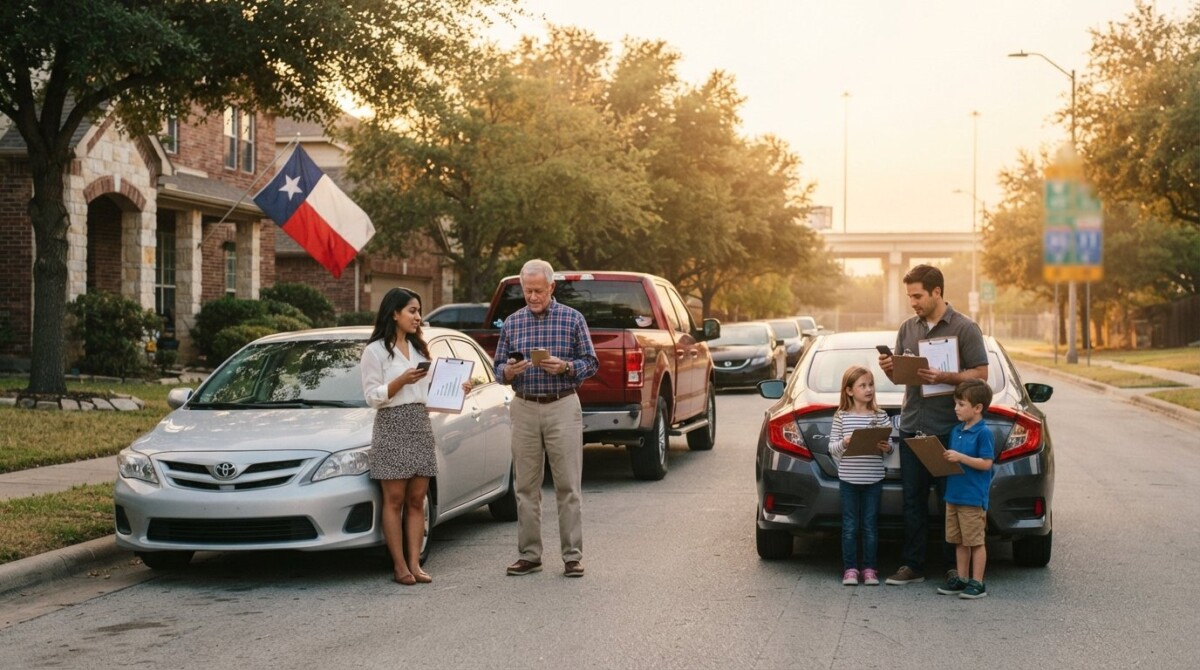
Texas roads are long, and so is the list of things that can drive up your car insurance bill. From sprawling metro areas like Houston and Dallas to rural counties where deer outnumber drivers, the Lone Star State presents unique challenges for finding affordable coverage. If you have been putting off shopping for auto insurance quotes Texas because the process feels overwhelming, this guide will change that. You will learn exactly how rates are calculated, what coverage the state requires, and the nine most effective strategies to lower your premium without sacrificing protection.
Before we dive into the savings tactics, understand one thing: insurance companies view Texas drivers as higher risk than the national average. The state leads the country in uninsured motorists, severe weather events, and congested highways. That combination pushes base rates up. But here is the good news: insurers also compete fiercely for your business in Texas. That competition means you can find significant discounts if you know where to look and how to compare quotes properly.
Why Texas Auto Insurance Quotes Vary So Much
Have you ever wondered why your neighbor pays $80 less per month for the same coverage? Insurance pricing is not one-size-fits-all. Each carrier uses its own proprietary algorithm to weigh risk factors, so the same driver can receive dramatically different quotes from different companies. Some insurers prioritize your credit score heavily, while others focus more on your driving record or the type of vehicle you drive.
In Texas, there are additional state-specific factors at play. For instance, your ZIP code matters more in Texas than in many other states because of the high variation in traffic density, crime rates, and weather-related claims. A driver in Katy might pay 30% more than someone in Boerne with an identical profile. This is why getting multiple auto insurance quotes Texas is not just a recommendation; it is a necessity.
Coverage Minimums vs. Actual Needs
Every Texas driver is required to carry a minimum amount of liability insurance. The state mandates 30/60/25 coverage, which means $30,000 for bodily injury per person, $60,000 for total bodily injury per accident, and $25,000 for property damage. While these minimums are the legal floor, they are rarely enough to protect your assets if you cause a serious accident.
Let me give you a concrete example. If you rear-end a new SUV at a stoplight, the damage could easily exceed $25,000. Without higher property damage limits, you would be personally responsible for the difference. That is why most financial advisors recommend carrying at least 100/300/100 coverage. The cost difference between minimum liability and 100/300/100 is often less than $20 per month, but it can save you from financial ruin. When you compare auto insurance quotes Texas, always plug in the same coverage levels so you are comparing apples to apples.
Nine Proven Ways to Lower Your Texas Auto Insurance Rate
The strategies below are ranked from the most impactful to the least, but you should combine as many as possible to maximize your savings. In our guide on auto insurance quotes Texas: 4 smart ways to save, we highlight a few of these in detail, but here is the full playbook.
- Shop around every six months. Your current insurer will often raise your rate at renewal simply because they can. Getting fresh quotes from at least three carriers ensures you are paying the market rate, not their loyalty tax.
- Raise your deductible. Increasing your comprehensive and collision deductible from $500 to $1,000 can reduce your premium by 10% to 20%. Just make sure you have that amount saved in an emergency fund.
- Bundle your policies. If you own a home or rent, bundling your auto insurance with your homeowners or renters policy can unlock discounts of 5% to 15% with most major carriers.
- Ask about every discount. Insurers offer dozens of discounts that many drivers never claim. These include discounts for anti-theft devices, anti-lock brakes, airbags, good student grades, defensive driving courses, and low annual mileage.
- Take a defensive driving course. Texas requires insurers to offer a discount to drivers who complete an approved defensive driving course. The discount typically lasts for three years, so it is worth the few hours it takes to complete the course online.
- Improve your credit score. Texas is one of the few states that allows insurers to use credit-based insurance scores. Drivers with excellent credit can pay up to 50% less than those with poor credit. Paying down credit card balances and correcting errors on your credit report can make a big difference.
- Drive a cheaper car to insure. If you are in the market for a new vehicle, check insurance costs before you buy. Sports cars, luxury sedans, and large SUVs with high theft rates come with hefty premiums. A modest sedan with a strong safety rating might save you hundreds per year.
- Drop unnecessary coverage on older cars. If your car is worth less than $3,000, carrying collision and comprehensive coverage may not make financial sense. The premiums you pay over a few years could exceed what you would receive from a total loss claim.
- Use a comparison platform. Instead of visiting each insurer’s website individually, use a service that aggregates quotes from multiple carriers. For example, the process at auto insurance quotes Texas: how to compare and save shows you how to get several quotes in minutes from one form.
Keep in mind that not every discount applies to every driver. A defensive driving course discount might not help you if you have a clean record and already have a low base rate. But stacking three or four of these strategies will almost certainly produce measurable savings. The key is to be systematic: gather quotes, compare coverage levels, and ask each insurer which discounts you qualify for.
Understanding Texas-Specific Rate Factors
Beyond the national factors like age, gender, and driving history, Texas insurers look at several local data points to set your rate. Understanding these can help you choose where to live and how to use your vehicle.
Your ZIP code is one of the most influential factors. Insurers analyze claims data for your area, including the frequency of accidents, thefts, and vandalism. They also consider the cost of medical care and auto repair in your region. Urban areas with heavy traffic and higher crime rates generally have higher premiums. If you are moving, compare auto insurance quotes Texas for your new address before you commit to a lease or mortgage.
Your annual mileage is another critical factor. The more you drive, the higher your risk of an accident. If you have a short commute or work from home, you may qualify for a low-mileage discount. Some insurers offer usage-based programs that track your driving via a mobile app or a device in your car. Safe drivers can save up to 30% with these programs, but they are not for everyone. If you have a heavy foot or drive late at night, you might end up paying more.
Minimum Coverage Is a Trap
Many budget-conscious drivers choose the state minimum liability because it is the cheapest option. While it does keep your monthly payment low, it offers almost no protection for you. If you are found at fault in an accident, your insurance will pay for the other party’s medical bills and property damage up to your policy limits. But it will not pay for your own injuries or damage to your car. You would need to pay those out of pocket or rely on your health insurance.
Moreover, if the other party sues you for more than your policy limits, you could face wage garnishment or a lien on your property. The savings from minimum coverage are not worth that risk. As you compare auto insurance quotes Texas that fit your budget, look for a policy that balances cost with adequate liability limits. An independent insurance agent can help you determine the right amount based on your assets and income.
How to Compare Texas Auto Insurance Quotes Like a Pro
Comparing quotes is not just about finding the lowest number. It is about finding the best value for your specific needs. Here is a step-by-step method to ensure you make an informed decision.
First, gather your personal information: driver’s license numbers for all household members, vehicle VINs, current insurance declarations page, and your estimated annual mileage. Having this ready speeds up the quote process and ensures accuracy. Inaccurate information can lead to a quote that is not honored later.
Second, decide on your coverage levels. Use the same liability limits, deductibles, and optional coverages for every quote you request. This consistency makes the comparison valid. If you are unsure what coverage you need, read our article on Texas auto insurance quotes: how to save big in 2026 for a detailed breakdown.
Third, request quotes from at least three different types of insurers: a national carrier like Geico or State Farm, a regional carrier like Texas Farm Bureau, and an online-only carrier like Root or Clearcover. Each has a different underwriting model, so you may be surprised by which offers the lowest rate.
Finally, read the fine print. Check the policy’s exclusions, limits, and deductibles. Look for any hidden fees or mandatory add-ons like roadside assistance that you did not request. A quote that is $10 cheaper per month may not be a bargain if it lacks rental car reimbursement or has a strict claims process.
Frequently Asked Questions
How often should I get new auto insurance quotes in Texas?
You should compare quotes at least once every six months, preferably around your policy renewal date. Insurers frequently adjust their rates, so a company that was expensive last year might now be the cheapest. Also, life changes like moving, getting married, or buying a new car can trigger a rate change, so shop around after any major event.
What is the cheapest car insurance company in Texas?
There is no single cheapest company for everyone. The lowest rate depends on your age, driving record, credit score, vehicle, and ZIP code. In general, Geico, State Farm, and USAA (for military families) often have competitive rates, but you should always get personalized quotes. Online-only insurers like Root and Clearcover can also be cheap for safe drivers with good credit.
Does Texas require uninsured motorist coverage?
Texas does not require uninsured motorist (UM) coverage, but insurers must offer it in writing. You can reject it, but that is usually a mistake. With about 20% of Texas drivers uninsured, UM coverage protects you if you are hit by a driver with no insurance. It is relatively inexpensive and provides crucial coverage for medical bills and lost wages.
Your Next Step: Get Quotes and Save
Now that you understand the mechanics of Texas auto insurance pricing, you are equipped to shop with confidence. Do not let the process overwhelm you. Start by gathering your information, decide on your coverage needs, and request quotes from at least three insurers. Use the strategies above to reduce your rate, and always read the policy details before you sign.
The potential savings are substantial. Drivers who shop around at renewal save an average of $400 per year in Texas. That is money that could go toward a vacation, an emergency fund, or simply breathing easier. If you are ready to compare current rates from multiple carriers in minutes, visit our free quote tool. And for personalized assistance, call us at 833-275-7533.