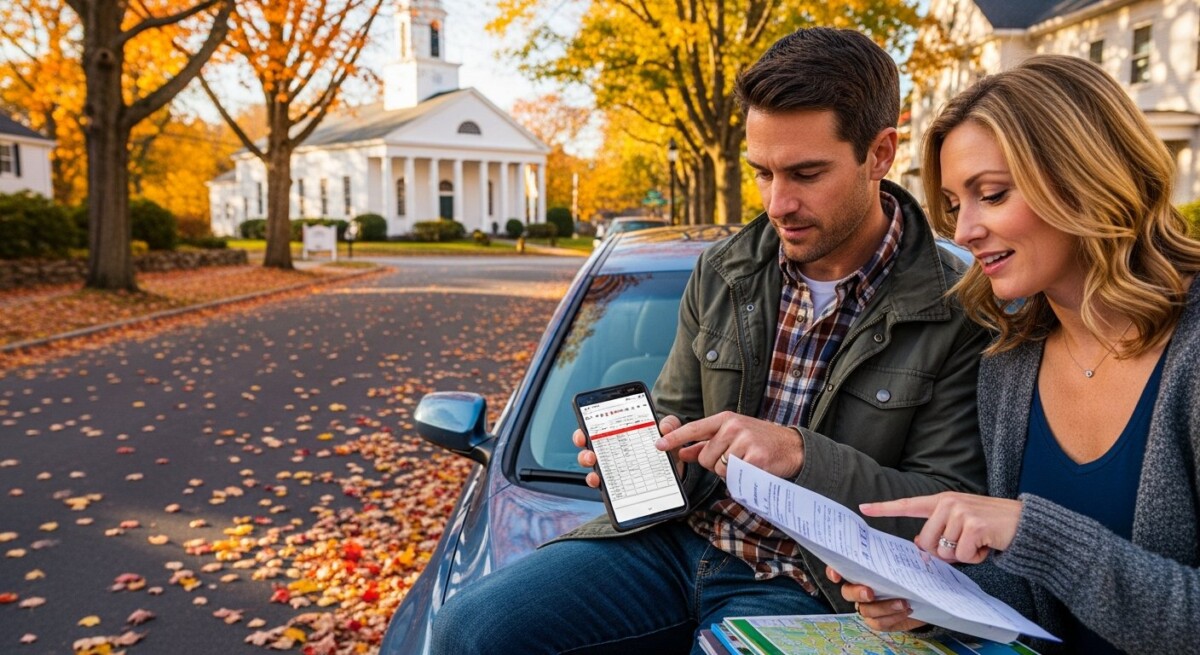
Finding the right auto insurance in Massachusetts often feels like navigating a maze of regulations, coverage minimums, and varying rates. The Bay State has its own unique insurance landscape, including a state-run option and strict requirements that differ from most other states. Whether you are a new driver in Boston, a family in Worcester, or a commuter on the Cape, comparing auto insurance quotes Massachusetts is the single most effective way to ensure you are not overpaying for coverage. This guide walks you through exactly how to get accurate quotes, what factors influence your rate, and how to secure the best policy for your needs.
Why Massachusetts Auto Insurance Is Different
Massachusetts operates under a unique system that directly impacts how insurers calculate premiums. Unlike many states where only liability coverage is required, Massachusetts mandates a specific set of coverages known as the “standard Massachusetts auto policy.” This includes bodily injury liability, property damage liability, personal injury protection (PIP), and uninsured motorist coverage. The state also regulates rates through the Division of Insurance, meaning insurers must justify their pricing. However, rates can still vary significantly between companies for the same driver profile.
Another key difference is the state’s “take-all-comers” rule. While this rule requires insurers to offer coverage to most drivers, it does not mean everyone pays the same rate. Factors like your driving record, credit history (where permitted), and the type of vehicle you drive heavily influence your premium. Understanding these nuances is the first step toward making informed decisions when you request auto insurance quotes Massachusetts.
The Role of the Massachusetts Auto Insurance Plan (MAIP)
If you have trouble finding coverage in the voluntary market due to a high-risk profile (multiple accidents, DUI, or a suspended license), the Massachusetts Auto Insurance Plan (MAIP) serves as the insurer of last resort. While MAIP guarantees you can get coverage, premiums are typically higher than standard market rates. Most drivers will find better pricing by shopping around with standard carriers first. In our article on auto insurance rates rise after violations, we explain how infractions can push drivers toward assigned risk plans and why proactive comparison shopping is critical.
How to Get Accurate Auto Insurance Quotes Massachusetts
To get a quote that truly reflects what you will pay, you must provide consistent and accurate information. Insurers use complex algorithms that weigh dozens of variables. A small discrepancy in your annual mileage or a missed detail about your commute can lead to a quote that is either too high or invalid when it is time to bind the policy. Follow these steps to ensure your quotes are reliable.
First, gather your personal information: your driver’s license number, vehicle identification number (VIN), current insurance declarations page (if you have one), and details about your driving history for the past five years. Second, decide on the coverage levels you want. Massachusetts minimum limits are often too low for serious accidents. Consider higher liability limits and adding collision and comprehensive coverage if your car has significant value. Third, use a comparison platform that allows you to see multiple quotes side by side without entering your information repeatedly.
What Information Insurers Need
- Driver’s license numbers and dates of birth for all household members who will drive the vehicle.
- Vehicle make, model, year, and VIN.
- Annual mileage estimate and primary use (commuting, pleasure, business).
- Details on any accidents, tickets, or claims in the past three to five years.
Providing this data accurately ensures the quotes you receive are binding and not just estimates. Many drivers make the mistake of understating their mileage to get a lower rate, but this can lead to claim denial later. Honesty upfront protects you down the road. Once you have a few quotes, you can analyze the differences in premium, deductibles, and coverage limits before making a choice.
Key Factors That Affect Your Massachusetts Auto Insurance Rate
Your final premium is shaped by a combination of personal, vehicular, and geographic factors. Understanding these can help you take steps to lower your costs. Insurers in Massachusetts are particularly sensitive to certain variables that might surprise new residents.
Your driving record is the single most influential factor. A clean record without at-fault accidents or moving violations will earn you the best rates. Even a single speeding ticket can increase your premium by 20 percent or more for three years. Credit-based insurance scores are also used in Massachusetts, though the state has some restrictions on how heavily insurers can weigh them. Maintaining good credit can save you hundreds of dollars annually. Finally, where you park your car at night matters. Zip codes with higher rates of theft, vandalism, or accidents will see higher premiums. Urban areas like Boston, Cambridge, and Springfield typically have higher rates than rural towns in the Berkshires.
Discounts You Should Not Miss
- Multi-policy discount: Bundling your auto and homeowners or renters insurance.
- Multi-car discount: Insuring more than one vehicle on the same policy.
- Safe driver discount: Maintaining a clean driving record for three to five years.
- Defensive driving course discount: Completing an approved state course.
- Low mileage discount: Driving fewer than 7,500 miles per year.
Each insurer applies these discounts differently. Some may offer a 10 percent discount for bundling, while another might offer 15 percent. The only way to capture all applicable savings is to compare quotes from multiple carriers. Additionally, newer vehicles with advanced safety features like automatic braking and lane departure warnings may qualify for additional discounts. The rise of usage-based insurance programs also allows drivers to save by demonstrating safe driving habits through a mobile app or plug-in device. As discussed in our piece on the rise of pay-as-you-go auto insurance, these programs can be particularly beneficial for low-mileage drivers in Massachusetts.
Coverage Minimums vs. Recommended Coverage in Massachusetts
Massachusetts law requires every driver to carry a minimum level of auto insurance. The current minimums are:
- $20,000 per person and $40,000 per accident for bodily injury liability.
- $5,000 for property damage liability.
- $8,000 in personal injury protection (PIP).
- $20,000 per person and $40,000 per accident for uninsured motorist coverage.
While these limits meet the legal requirement, they are often insufficient for serious accidents. Medical costs in Massachusetts are high, and a single hospital stay can easily exceed $20,000. If you are found at fault for an accident that causes significant injuries, your personal assets could be at risk if your liability limits are too low. Most financial advisors recommend carrying at least $100,000 per person and $300,000 per accident for bodily injury liability, along with $50,000 in property damage coverage.
Collision coverage pays for damage to your vehicle from an accident, while comprehensive coverage covers non-collision events like theft, vandalism, or a falling tree branch. If your car is financed or leased, your lender will require both. If you own your car outright and it is older with a low market value, you might consider dropping collision and comprehensive to save money. However, remember that Massachusetts winters can be harsh, and comprehensive coverage is valuable for weather-related damage like hitting a deer or a pothole.
How to Lower Your Auto Insurance Costs in Massachusetts
Beyond shopping for quotes, you have several strategies to reduce your premium. One of the most effective is to raise your deductible. Increasing your collision deductible from $500 to $1,000 can lower your premium by 10 to 20 percent. Just make sure you have that amount saved in an emergency fund to cover repairs if you are in an accident. Another approach is to review your policy annually. Your life circumstances change, and so do your insurance needs. A teenager who has moved away for college, a car that is now paid off, or a change in your commute distance can all be reasons to adjust coverage and save money.
You should also check for group discounts. Many employers, alumni associations, and professional organizations have partnerships with insurers that offer discounted rates to members. Even if you are not aware of such a benefit, a quick call to your HR department or a search of your benefits portal could reveal savings. Finally, consider paying your premium in full every six months rather than monthly. Insurers often charge installment fees for monthly payments, which can add up to 5 percent or more to your annual cost.
For young drivers in your household, the cost of adding them to your policy can be substantial. However, there are ways to mitigate this. Many insurers offer a good student discount for drivers under 25 who maintain a B average or higher. Additionally, enrolling your teen in a driver’s education course can lead to a discount and, more importantly, make them a safer driver. We cover these options in detail in our guide on top student driver auto insurance options, which includes strategies specifically applicable to Massachusetts families.
What to Do After an Accident in Massachusetts
Even with the best coverage, an accident is stressful. Massachusetts follows a “no-fault” system for personal injury protection (PIP). This means your own insurance pays for your medical expenses and lost wages up to your PIP limit, regardless of who caused the accident. This system is designed to speed up payments and reduce litigation. However, if your injuries are severe, you may still have the right to sue the at-fault driver. Understanding this distinction is important when selecting your PIP coverage level.
After an accident, you should immediately check for injuries, call the police if there is damage or injury, and exchange insurance information with the other driver. Do not admit fault at the scene. Report the accident to your insurer as soon as possible, ideally within 24 hours. Your insurer will guide you through the claims process, including arranging for an appraisal of the damage and authorizing repairs. If you are involved in a hit-and-run, your uninsured motorist coverage will apply. For a deeper understanding of this specific scenario, read our article on hit-and-run auto insurance coverage explained, which outlines the steps you need to take to protect your claim.
Frequently Asked Questions
How much is auto insurance in Massachusetts per month?
The average cost of auto insurance in Massachusetts is around $130 to $150 per month for a full coverage policy. However, rates vary widely based on your age, driving record, location, and vehicle. The best way to know your exact rate is to compare auto insurance quotes Massachusetts from at least three different insurers.
Is Massachusetts a no-fault state for car insurance?
Yes, Massachusetts is a no-fault state. This means that your own insurance company pays for your medical expenses and lost wages after an accident, up to your personal injury protection (PIP) limits, regardless of who caused the accident. This system is designed to reduce small claims lawsuits.
What is the minimum car insurance coverage in Massachusetts?
The minimum required coverage includes $20,000/$40,000 bodily injury liability, $5,000 property damage liability, $8,000 personal injury protection (PIP), and $20,000/$40,000 uninsured motorist coverage. While these are the legal minimums, higher limits are strongly recommended to protect your assets.
Can I get auto insurance with a suspended license in Massachusetts?
Yes, but it is more difficult and expensive. You may need to obtain coverage through the Massachusetts Auto Insurance Plan (MAIP), which is the high-risk pool. Some standard insurers may also offer policies to drivers with a suspended license, but premiums will be significantly higher.
Does my credit score affect my car insurance rate in Massachusetts?
Yes, Massachusetts allows insurers to use credit-based insurance scores to determine rates, though with some restrictions. Drivers with good credit typically receive lower premiums than those with poor credit. Maintaining a healthy credit score can help you secure more affordable auto insurance quotes Massachusetts.
Comparing auto insurance quotes Massachusetts is not a one-time task. It is an annual habit that can save you hundreds of dollars and ensure you have the right protection for your life. The insurance market changes, your driving profile changes, and new discounts become available. By staying informed and using a trusted comparison platform, you put yourself in the driver’s seat. Start your comparison today and see how much you could save.