
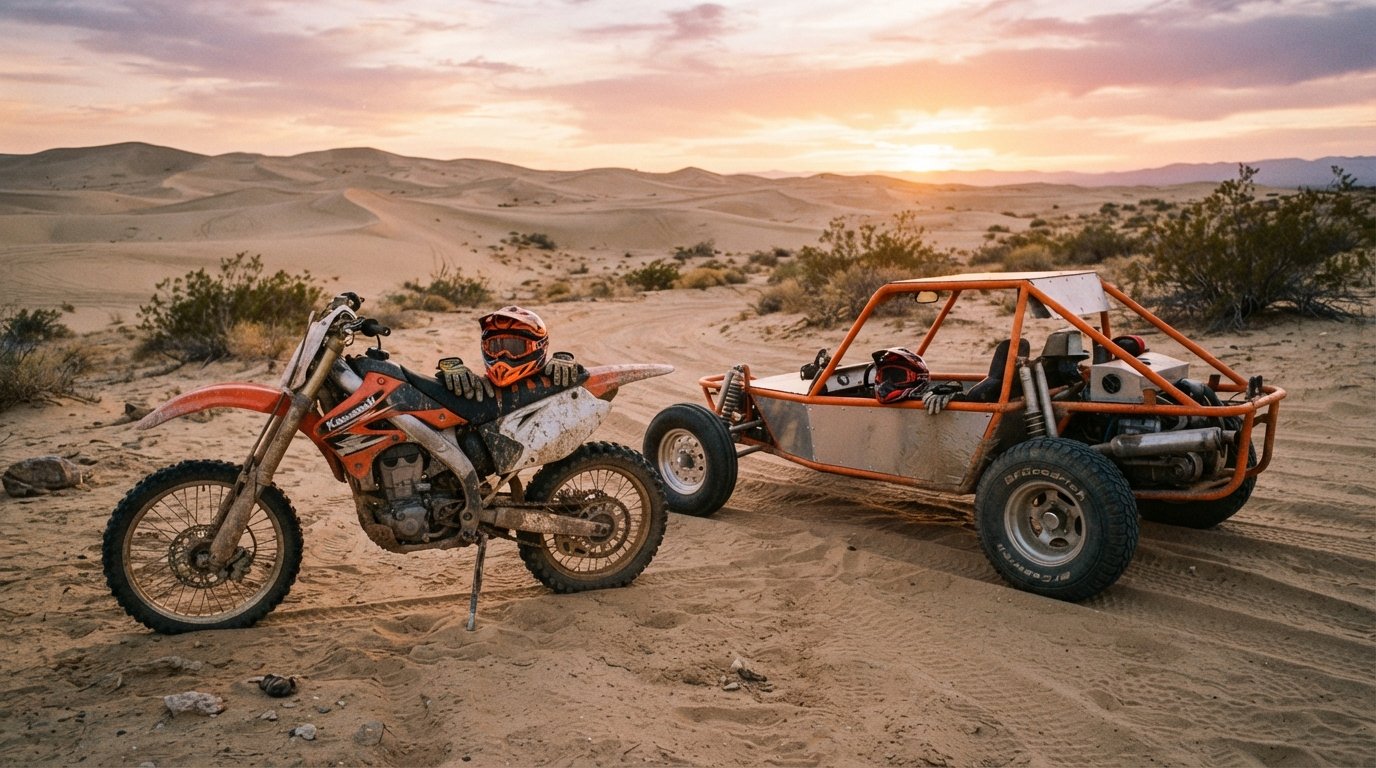
Off Road Vehicle Insurance for Dirt Bikes and Dune Buggies
Protect your dirt bike or dune buggy with specialized off road vehicle insurance. Compare quotes and find the right coverage. Call (833)-275-7533 for help.

You just picked up a used dirt bike for weekend trail rides, or maybe your family is finally ready to buy that dune buggy you have been eyeing for trips to the sand. Before you load up and head out, there is one piece of paperwork that deserves your attention: insurance. Here is the problem many riders discover too late. Your standard auto policy almost certainly does not cover a dirt bike or a dune buggy. Most personal auto policies exclude off road vehicles, and if you assume you are protected, you could be facing repair bills, medical costs, or liability claims out of pocket. Understanding off road vehicle insurance for dirt bikes and dune buggies is the first step toward riding with confidence instead of hoping nothing goes wrong.
Why Your Auto Policy Probably Excludes Dirt Bikes and Dune Buggies
Standard auto insurance is built around vehicles designed for public roads. Dirt bikes and dune buggies are not street legal in most configurations, and insurers classify them as recreational vehicles or off road vehicles. When you read the exclusions section of a typical auto policy, you will often find language that removes coverage for vehicles not licensed for highway use, or for vehicles with fewer than four wheels, or for recreational vehicles used off public roads. That means if you take your dirt bike to a trail system and collide with another rider, your auto policy will likely deny the claim.
The same logic applies to dune buggies. Even if your buggy has four wheels, it may not have a VIN or title that a standard auto insurer recognizes. Some homemade or kit buggies fall into a gray area, and insurers may refuse to write a standard auto policy for them at all. The result is a coverage gap that many riders do not realize exists until they need help. The good news is that specialized policies exist to fill that gap, and they are often more affordable than people expect.
If you also own an ATV or a side-by-side, the same exclusion rules generally apply. You can read more about how these policies work in our guide on ATV and off road vehicle insurance coverage, which explains the differences between recreational vehicle policies and standard auto coverage.
Specialized Off Road Vehicle Policies: What They Cover
Off road vehicle insurance for dirt bikes and dune buggies is typically written as a standalone policy, separate from your auto insurance. These policies are designed around the risks of recreational riding, and they can include several coverage types that mirror auto insurance but are tailored to off road use. The most common coverage types are liability, collision, comprehensive, and medical payments. Liability coverage protects you if you injure someone else or damage their property while riding. Collision coverage pays to repair or replace your vehicle after an accident, regardless of fault. Comprehensive coverage handles theft, fire, vandalism, and other non-collision damage. Medical payments coverage can help with medical bills for you or your passengers after a crash.
Not every policy includes all of these options. Some insurers offer a package policy that bundles liability and physical damage, while others let you pick and choose. For dirt bikes, liability coverage is often the most important piece because a collision with another rider or a pedestrian can lead to significant medical claims. For dune buggies, which can carry passengers, medical payments coverage and higher liability limits are worth considering. It is also smart to ask about accessory coverage if you have upgraded suspension, exhaust, or safety gear installed on your vehicle.
Here are the core coverage types you will typically see in an off road vehicle policy:
- Liability: Covers bodily injury and property damage you cause to others.
- Collision: Pays for damage to your dirt bike or dune buggy from an accident.
- Comprehensive: Covers theft, fire, vandalism, and weather damage.
- Medical payments: Helps with medical expenses for you and your passengers.
- Uninsured/underinsured motorist: Protects you if another rider or driver has no insurance.
Keep in mind that off road vehicle policies are not one-size-fits-all. A policy for a high-performance dirt bike may look different from a policy for a family dune buggy. Insurers consider factors like engine size, vehicle value, rider experience, and where you ride. That is why comparing quotes from multiple carriers is so important. A policy that fits one rider's needs may leave another rider underinsured.
Liability Needs on Public Lands and at Organized Events
Many riders assume that public lands are free of liability concerns. In reality, riding on public lands can create liability exposure. If you cause an accident on a trail or in a staging area and injure another rider, you could be held financially responsible. Some public land agencies require proof of insurance before allowing certain vehicles on designated trails. Organized events, such as motocross races or dune buggy rallies, often require participants to carry liability insurance as a condition of entry. Without a specialized policy, you may be turned away or left unprotected.
Liability coverage on an off road vehicle policy typically pays for the other party's medical bills and property damage, up to your policy limits. It also provides legal defense if you are sued. If you ride in areas where accidents are more likely, such as crowded trail systems or competitive events, higher liability limits are worth the extra premium. Some policies also offer optional coverage for environmental damage, which can be relevant if your vehicle leaks fuel or oil on public lands.
Before you ride on public lands, check the rules of the land management agency. Some require a minimum amount of liability insurance, while others simply recommend it. At organized events, review the entry requirements carefully. If you are unsure whether your current policy meets the event's standards, ask the organizer for specific coverage requirements and then compare off road vehicle insurance quotes to find a policy that satisfies them.
Safety Gear and Rider Training Discounts
Insurance companies reward responsible behavior, and off road vehicle policies are no exception. Many insurers offer discounts for riders who complete safety training courses, wear protective gear, or belong to recognized off road organizations. These discounts can reduce your premium by a meaningful amount, especially for younger or less experienced riders. If you are shopping for off road vehicle insurance for dirt bikes and dune buggies, ask each insurer about available discounts before you buy.
Common discounts include completion of a certified rider training course, membership in an off road club, and installation of safety features like a roll cage or upgraded brakes on a dune buggy. Some insurers also offer discounts for bundling your off road policy with your auto or homeowners insurance, or for paying your premium in full. The key is to ask. Discounts are not always advertised, and a quick conversation with an agent can uncover savings you did not know existed.
Safety gear itself is not just about discounts. Wearing a helmet, goggles, gloves, and protective clothing reduces your risk of injury, which can also help keep your insurance costs down over time. Insurers view riders with a history of safe riding and proper gear as lower risk. If you are new to the sport, investing in training and gear is one of the best financial decisions you can make.
How to Compare Off Road Vehicle Insurance Quotes
Finding the right policy starts with comparing quotes from multiple insurers. Off road vehicle insurance is a niche product, and not every carrier offers it. Some insurers specialize in recreational vehicles, while others offer it as an add-on to an existing policy. The best approach is to gather quotes from at least three carriers and compare coverage details side by side. Do not focus only on price. A cheap policy with low liability limits may leave you exposed if you cause a serious accident.
When you request quotes, be ready to provide details about your vehicle, including make, model, year, engine size, and any modifications. You will also need to share information about your riding experience and where you plan to ride. Insurers may ask whether you ride on private property, public trails, or competition tracks, because each carries different risk levels. The more accurate your information, the more accurate your quote will be.
Here is a simple process to follow:
- List the coverage types you need (liability, collision, comprehensive, medical payments).
- Gather quotes from at least three insurers that write off road vehicle policies.
- Compare deductibles, limits, and exclusions, not just the monthly premium.
- Ask about discounts for safety training, club membership, and bundling.
- Review the policy terms carefully before you buy, especially the exclusions.
If you also have a loan or lease on your dirt bike or dune buggy, check whether the lender requires physical damage coverage. Many lenders require comprehensive and collision coverage until the vehicle is paid off. If you are financing a recreational vehicle, you may also want to explore options to refinance your car loan or recreational vehicle loan to lower your monthly payment, which can free up room in your budget for proper insurance coverage.
Common Mistakes to Avoid
One of the most common mistakes riders make is assuming they are covered under their homeowners or renters policy. While those policies may provide limited coverage for off road vehicles in certain situations, the coverage is usually narrow and may not apply once you leave your property. Another mistake is underinsuring a dune buggy because it is used only occasionally. Accidents can happen on the first ride of the season, and liability claims do not care how often you ride.
Another frequent error is failing to update your policy after modifying your vehicle. If you add a turbocharger, upgrade suspension, or install expensive safety equipment, your insurer needs to know. Modifications can increase the vehicle's value and change its risk profile. If you do not report them, a claim could be denied or reduced. Similarly, if you move to a new state or start riding in a different area, let your insurer know. Rates and coverage requirements can vary significantly by location.
Finally, do not overlook the importance of reading your policy. Off road vehicle policies can include exclusions for racing, competition, or riding on certain types of terrain. If you plan to participate in organized events or ride in challenging environments, make sure your policy covers those activities. If it does not, ask about endorsements or separate coverage that can fill the gap.
Getting Started with the Right Coverage
Off road vehicle insurance for dirt bikes and dune buggies is not a luxury. It is a practical way to protect your finances and your peace of mind. Whether you ride a dirt bike on weekend trails or a dune buggy on family vacations, the right policy can cover liability claims, repair or replace your vehicle, and help with medical bills after an accident. The process of finding coverage is straightforward if you know what to ask for and compare quotes from multiple insurers.
Start by reviewing your current auto policy to confirm what is excluded. Then gather quotes for specialized off road vehicle coverage, ask about discounts, and choose a policy that matches your riding style and budget. With the right coverage in place, you can focus on the ride instead of worrying about what happens if something goes wrong.