
Pay Per Mile Car Insurance: How It Works and Who Saves
Pay per mile car insurance can cut costs for low-mileage drivers. Compare quotes and see who saves. Call (833)-275-7533 for expert help.

By Felix Rourke
If you drive less than the average American, you may be overpaying for car insurance. Traditional policies charge a flat rate based on annual estimates, regardless of whether you log 3,000 miles or 30,000. Pay per mile car insurance flips that model, turning your odometer into a discount tool. But how exactly does it work, and who actually saves? This guide breaks down the mechanics, the ideal candidates, the privacy trade-offs, and how to compare per-mile quotes against standard premiums so you can decide if usage-based pricing belongs in your garage.
What Is Pay Per Mile Car Insurance and How Does It Work?
Pay per mile car insurance (also called usage-based insurance or telematics insurance) is a policy where your premium is tied directly to how much you drive. Instead of paying a fixed rate for a 12-month term based on self-reported annual mileage, you pay a base rate plus a per-mile charge. The insurer tracks your mileage using one of three methods: a plug-in telematics device, a mobile app, or a smartphone photo of your odometer at renewal. The data feeds into a formula that sets your monthly bill.
The structure typically looks like this: a low monthly base rate (to cover the fixed costs of insuring a vehicle even when parked) plus a per-mile rate (often 2 to 10 cents per mile). Some programs bundle in traditional coverage types like liability, collision, and comprehensive, while others are minimum-coverage products. The key difference from a standard policy is that your bill fluctuates with your driving. If you take a road trip, you pay more that month. If you leave the car in the garage for three weeks, you pay less.
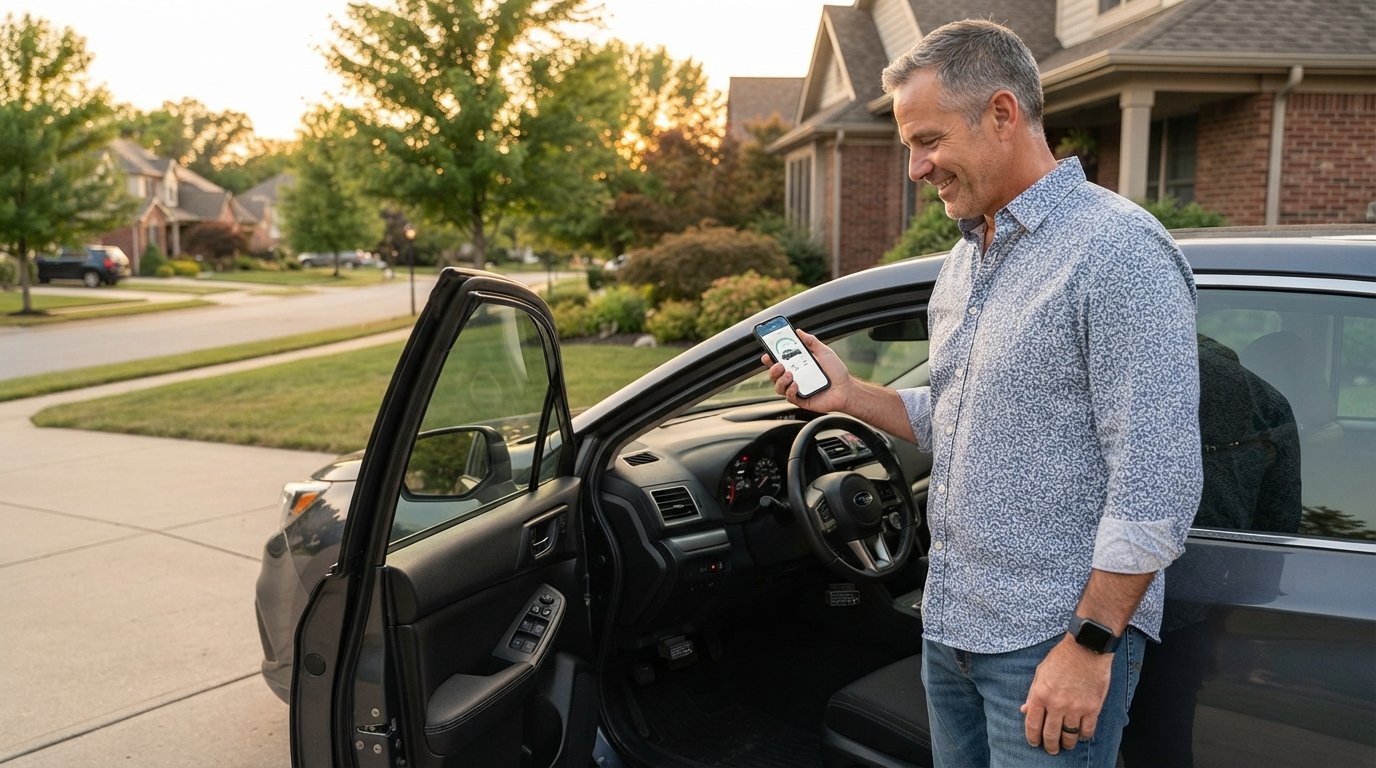
Tracking methods vary by carrier. Plug-in devices connect to your car's OBD-II port and transmit mileage and sometimes driving behavior (hard braking, acceleration, time of day) to the insurer. Mobile apps use your phone's GPS and sensors to detect trips. Odometer photo programs are the least invasive: you snap a picture at renewal and the insurer calculates the miles driven since your last photo. Each method has different privacy implications, which we will cover later.
How Per-Mile Rates Are Set: The Formula Behind Your Bill
Insurers do not just count miles; they price risk. Your per-mile rate is determined by a combination of factors that include your driving record, vehicle type, location, credit history (in most states), and the number of miles you drive. The mileage component usually works on a tiered scale: the first 5,000 miles might cost 5 cents per mile, the next 5,000 miles might cost 7 cents, and so on. Some programs offer a discount for signing up, then adjust your rate at renewal based on actual miles driven.
Here is a simplified example. Suppose a base rate of $30 per month and a per-mile rate of 4 cents. If you drive 500 miles in a month, your bill is $30 + (500 x $0.04) = $50. If you drive 1,500 miles, your bill is $30 + (1,500 x $0.04) = $90. Compare that to a traditional policy with a flat $120 monthly premium. At 500 miles, you save $70; at 1,500 miles, you save $30. The break-even point depends on your specific base rate and per-mile charge.
It is important to note that per-mile programs are not the same as pay-how-you-drive programs. The latter focus on driving behavior (braking, speed, time of day) rather than mileage. Some carriers combine both: you get a per-mile discount plus a safe-driving bonus. When you request quotes, ask the agent to clarify whether the program is mileage-based, behavior-based, or both.
Who Saves the Most with Pay Per Mile Car Insurance?
Pay per mile car insurance how it works and who saves is not a one-size-fits-all answer. The biggest winners are drivers who consistently log low annual mileage. According to federal highway data, the average U.S. driver travels about 13,500 miles per year. If you drive fewer than 10,000 miles, you are a strong candidate for savings. If you drive fewer than 7,500, the savings can be substantial.
Certain groups fit this profile naturally. Remote workers and telecommuters have eliminated the daily commute, often cutting annual mileage by 40 to 60 percent. Retirees who drive mainly for errands and appointments also benefit. Families with a second or third vehicle that is used only occasionally (a weekend truck, a teen's car during summer break) can park that vehicle on a per-mile policy and pay very little when it sits idle. Students who leave their car at home during the school year fall into the same category.
Here is a quick checklist to see if you are a likely saver:
- You drive fewer than 10,000 miles per year.
- You have a vehicle that is driven less than 5,000 miles per year (second car, classic car, recreational vehicle).
- You work from home or are retired.
- You live in a walkable or transit-rich area and use your car mainly for weekends.
- You are comfortable with telematics tracking or odometer reporting.
If you checked three or more boxes, a per-mile program is worth comparing. But do not assume it is automatically cheaper. High-mileage drivers, rideshare drivers, and those with long commutes will almost always pay more with per-mile pricing than with a traditional policy. The same goes for drivers with serious violations or accidents, because the base rate already reflects that risk.
Privacy and Data Considerations with Telematics Devices
Per-mile insurance requires data, and data raises privacy questions. Plug-in devices and mobile apps can collect not just mileage but also location, speed, acceleration, braking patterns, and time of day. Some insurers use this data only for billing; others use it to adjust risk scores or offer safe-driving discounts. Before you enroll, read the privacy policy and understand what data is collected, how long it is retained, and whether it is shared with third parties.
Odometer photo programs are the least invasive because they capture only a number, not a travel history. Mobile apps are convenient but may drain your phone battery and use location services continuously. Plug-in devices are the most data-rich, and some carriers require them for the first six months to establish a baseline. If you are uncomfortable with location tracking, ask if a photo-based option exists. Also check whether the insurer sells anonymized data to data brokers; many do, and you may be able to opt out.
Another consideration: telematics data can sometimes hurt you. If the device records frequent hard braking or late-night driving, the insurer may raise your rate even if your mileage is low. The program's terms should spell out exactly how data affects your premium. Look for a guaranteed discount or a cap on rate increases during the policy term.
Comparing Per-Mile Quotes Against Traditional Premiums
The only way to know if pay per mile car insurance saves you money is to compare quotes side by side. Start by estimating your annual mileage accurately. Check your odometer today and compare it to the reading from your last oil change or inspection. If you have a smartphone, your photos or calendar can help reconstruct your driving. Once you have a number, request quotes from at least three carriers: one traditional, one per-mile, and one pay-how-you-drive program. Use the same coverage limits and deductibles for an apples-to-apples comparison.
When you compare, look beyond the monthly premium. Ask about the base rate, the per-mile rate, any enrollment fees, and whether the rate can change mid-term. Some per-mile programs offer a discount for paying in full or for bundling with homeowners insurance. Others charge a fee if you exceed a certain mileage threshold. Calculate your estimated annual cost under each scenario: low mileage (5,000), average (10,000), and high (15,000). The break-even point will tell you which program is cheaper for your lifestyle.
For a broader look at how usage-based pricing fits into the market, our guide on car insurance for drivers who tow trailers or boats explains how specialty vehicles and occasional-use coverage can interact with mileage-based programs. The same principle applies: match the policy to the vehicle's actual use, not a generic annual estimate.
If you are also managing a car loan, keep in mind that refinancing your vehicle can free up cash that offsets insurance costs. Platforms like CarLoanRefinancing connect drivers with lenders to compare auto loan rates, which can lower your monthly payment and make room in your budget for better coverage.
Combining Per-Mile Programs with Other Discounts
Per-mile insurance does not have to be an either-or choice. Many carriers let you stack usage-based savings with traditional discounts. Common stackable discounts include multi-policy (bundling auto and home), multi-vehicle, safe driver, good student, anti-theft device, and paid-in-full discounts. Some per-mile programs also offer a sign-up bonus or a loyalty discount after the first year.
Here is how to maximize your savings:
- Ask the agent which discounts are compatible with the per-mile program. Some carriers exclude per-mile policies from certain discounts.
- Bundle your auto and home or renters insurance if the carrier allows it with usage-based pricing.
- Maintain a clean driving record; even per-mile programs check your motor vehicle report.
- Pay your premium in full if the carrier offers a discount, but confirm that the per-mile charge is still billed monthly or annually as agreed.
- Review your mileage every six months and adjust your estimated annual miles if your driving habits change.
One caution: do not chase a per-mile discount if it forces you to drop important coverage. Liability limits, uninsured motorist protection, and comprehensive coverage matter more than a few dollars of savings. A licensed agent can help you balance cost and protection.
State Rules and Availability
Pay per mile car insurance is not available in every state, and regulations vary. Some states require insurers to file telematics programs with the insurance department; others have restrictions on how driving data can be used. California, for example, has specific rules about usage-based insurance and privacy. Before you sign up, confirm that the carrier is licensed in your state and that the program complies with local laws. Your state insurance department website is a good place to check.
Availability also depends on the carrier. Major national insurers offer per-mile programs in most states, but smaller regional carriers may not. If you live in a rural area with limited options, you may need to compare traditional policies and ask about low-mileage discounts instead. Many insurers offer a low-mileage discount (often 5 to 15 percent) without requiring telematics, which can be a simpler alternative.
Steps to Get Started with Pay Per Mile Insurance
Ready to see if per-mile pricing works for you? Follow these steps:
- Estimate your annual mileage using your odometer and service records.
- Gather your current policy declarations page, including coverage limits and deductibles.
- Request quotes from at least three carriers, including one per-mile and one traditional.
- Ask each agent about data collection, rate stability, and discount stacking.
- Compare annual costs at 5,000, 10,000, and 15,000 miles.
- Choose the policy that fits your driving habits and privacy comfort level.
If you are unsure where to start, a comparison platform can streamline the process. Free Auto Insurance Quotes Online lets you request no-obligation quotes from multiple carriers and licensed agents in one place. You can compare per-mile and traditional options side by side, ask questions about telematics, and find out which discounts you qualify for. There is no cost to compare, and you are never obligated to buy.
Pay per mile car insurance is a smart fit for low-mileage drivers, but it is not a magic bullet. The key is to run the numbers for your specific situation, understand the privacy trade-offs, and stack discounts where possible. With a little homework, you can stop subsidizing high-mileage drivers and pay only for the miles you actually drive.