
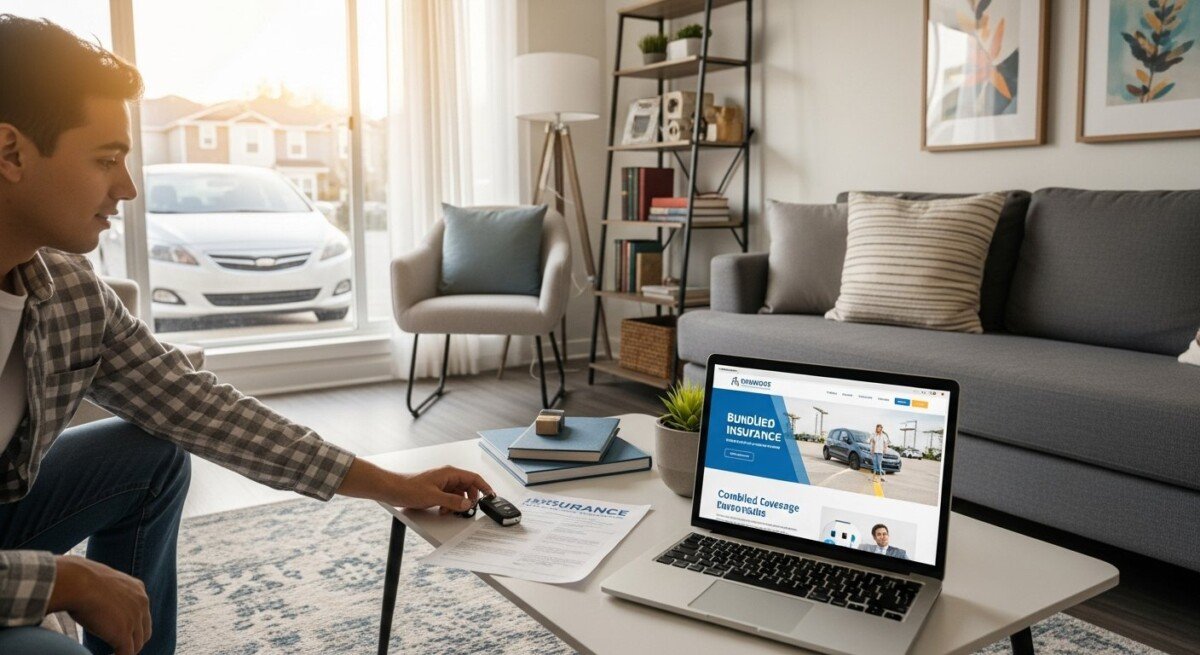
Renters Auto Insurance: A Smart Bundle for Apartment Dwellers
Bundle renters and auto insurance to close coverage gaps and save money. Call 833-275-7533 for a personalized quote.

By Marcus Bennett
You have an auto insurance policy for your car and a renters insurance policy for your apartment. On paper, they seem like separate worlds, one protecting your vehicle on the road and the other safeguarding your belongings at home. In reality, these two policies are powerful allies, and understanding their connection is key to building a comprehensive, cost-effective financial safety net. For renters who drive, the interplay between renters and auto insurance is not just a billing convenience, it is a strategic approach to risk management that can close coverage gaps, unlock significant discounts, and provide peace of mind that extends from your parking spot to your living room. Ignoring this relationship could leave you exposed to surprising liabilities and missed savings.
The Core Synergy: How Renters and Auto Insurance Work Together
At first glance, renters insurance and auto insurance cover distinct assets. Your auto policy is designed to address liabilities and damages arising from the operation of your vehicle, including collisions, injuries to others, and theft of the car itself. Renters insurance, conversely, protects your personal property inside your rented dwelling from perils like fire, theft, or vandalism, provides liability coverage if someone is injured in your home, and often includes additional living expenses if your rental becomes uninhabitable. The critical connection lies in the gaps each policy leaves behind, and how bundling them creates a seamless shield. For instance, while your auto policy covers items permanently installed in your car, like a stereo, it typically does not cover personal items you leave inside, such as a laptop, golf clubs, or a suitcase. Those items are the domain of your renters insurance policy, even when they are stolen from your vehicle. Conversely, if a delivery person slips on ice you tracked into your apartment building’s lobby, your auto policy is irrelevant, but your renters liability coverage may respond.
This synergy becomes most apparent when examining liability protection. Both policies include liability components, but they activate in different scenarios. Your auto liability insurance follows your car, covering bodily injury and property damage you cause while driving. Your renters liability insurance follows you as a person, covering non-auto-related incidents, such as your dog biting a neighbor or a visitor tripping in your apartment. Without renters insurance, you would be personally responsible for legal fees and settlement costs from such an event, potentially jeopardizing your savings and future earnings. A robust understanding of how these policies interact prevents dangerous assumptions about what is covered and where. For a deeper dive into the components that make up your car’s protection, our guide on what determines the average cost of auto insurance breaks down the factors insurers consider.
The Financial Advantage of Bundling Policies
One of the most compelling reasons to actively connect your renters and auto insurance is the potential for substantial cost savings. Insurers highly value customers who purchase multiple policies, known as bundling or a multi-policy discount. This practice reduces administrative costs for the company and increases customer retention, incentives they pass on to you in the form of lower premiums. It is not uncommon for insurers to offer a discount of 10% to 25% off the total cost when you bundle your auto and renters policies. This discount applies to both policies, making the combined package significantly cheaper than purchasing each policy from separate companies. Beyond the direct discount, bundling simplifies your financial life. You have a single point of contact for questions, one renewal date to remember, and one monthly or biannual payment to manage, reducing the chance of a missed payment and a lapse in crucial coverage.
To maximize this advantage, it is essential to shop for both policies together. When requesting a quote for auto insurance, explicitly ask for a bundled quote that includes renters insurance. Compare this bundled price from several insurers against both the bundled and separate policy prices from others. Do not assume your current auto insurer offers the best bundle, shop around. Remember, the goal is to find the optimal combination of comprehensive coverage and affordable price. The savings from bundling can often allow you to increase your coverage limits on one or both policies for the same price you were paying for separate, lesser policies. This strategic move enhances your protection without straining your budget. For strategies on evaluating insurers to find the best fit, consider how to use auto insurance reviews to find the best policy as a valuable resource.
Critical Coverage Gaps Every Renter Should Address
Operating with only an auto policy is a common but risky oversight for renters. It leaves massive exposure in two primary areas: personal property and personal liability. Imagine your apartment is burglarized, or a kitchen fire destroys your furniture, electronics, and clothing. Without renters insurance, you bear the full cost of replacing every single item. For most people, this would be a devastating financial blow. Your auto policy will not respond. Similarly, if you are found legally responsible for an injury to a guest or damage to the rental property itself (like a plumbing overflow that ruins the unit below), you are personally on the hook for medical bills, repairs, and legal defense, which can escalate into tens or even hundreds of thousands of dollars. Your auto liability only covers car-related incidents.
Here are three specific gaps that a renters policy fills for a driver:
- Personal Property in the Vehicle: As mentioned, items stolen from your car are covered under the personal property section of your renters policy, subject to its deductible and limits.
- Additional Living Expenses (ALE): If your rental is damaged by a covered peril and you cannot live there, your renters insurance ALE coverage pays for hotel stays, restaurant meals, and other extra costs. Your auto policy does not cover housing displacement.
- Worldwide Personal Liability: Renters liability coverage often extends beyond your home’s walls. If you accidentally cause injury to someone or damage their property anywhere in the world (and it is not car-related), this coverage can protect you. For example, if you accidentally break an expensive sculpture while visiting a friend’s home, your renters liability may cover the damage.
Understanding state-specific minimums and recommendations is also crucial, as requirements vary. For instance, drivers in states like Kentucky auto insurance guidelines or auto insurance in Massachusetts for drivers must meet certain mandates, but those only address the auto portion of your risk profile.
Steps to Optimize Your Combined Insurance Portfolio
Taking a proactive approach to your renters and auto insurance ensures you are neither overpaying nor underinsured. Begin with a thorough assessment of your needs. For renters insurance, create a detailed home inventory to accurately estimate the value of your personal property. This will inform whether you need actual cash value (which deducts depreciation) or more comprehensive replacement cost coverage. For auto insurance, evaluate your driving habits, the value of your vehicle, and your financial assets to determine appropriate liability limits, which should often be higher than state minimums. The next step is to contact at least three to five insurers for bundled quotes. Provide consistent information to each to ensure you are comparing equivalent coverage packages.
When reviewing quotes, scrutinize more than just the bottom-line premium. Key details to compare include:
- Deductible amounts for both comprehensive and collision (auto) and personal property (renters).
- Liability limit structures (e.g., 100/300/100 for auto, $300,000 for renters).
- Specific covered perils and, importantly, exclusions in each policy.
- Availability and cost of valuable endorsements, such as scheduled personal property riders for high-value items or increased coverage limits for specific categories like jewelry or electronics.
After selecting a provider, schedule an annual review of your policies. Life changes, such as moving to a new apartment, buying a new car, acquiring expensive electronics, or getting married, can all affect your ideal coverage levels. An annual check-in ensures your renters and auto insurance evolve with your life, maintaining optimal protection. This habit of regular review is a cornerstone of sound personal finance and risk management.
Frequently Asked Questions
Is renters insurance required if I have auto insurance?
No, renters insurance is not legally mandated like auto insurance, but it is critically important. Your auto policy only covers risks related to your vehicle. Your landlord’s insurance covers the building structure, not your belongings or your personal liability. Renters insurance fills this essential gap.
Will my auto insurance rates go up if I file a renters insurance claim?
Typically, no. Claims filed under your renters insurance policy are usually evaluated separately from your auto insurance claims history. However, insurers may review your overall claims history across all policies during renewal. A significant number of claims, regardless of type, could impact your risk profile.
Does bundling always save money?
While bundling almost always offers a discount, it is not a guarantee that Company A’s bundle is cheaper than buying auto from Company A and renters from Company B. You must shop and compare the total bundled cost from several carriers against the cost of separate policies from different carriers.
What if I don’t own a car but occasionally drive a rental or use a car-share service?
If you are a renter without a regular auto policy, you should still carry renters insurance for your belongings and liability. For rental cars, you may need to purchase the rental company’s insurance or rely on a credit card’s rental coverage. Non-owner auto insurance is also a specific product designed for frequent drivers who do not own a vehicle.
How much renters insurance liability coverage do I need?
A common recommendation is to carry liability limits equal to your net worth. Start with at least $100,000, but $300,000 to $500,000 is a more prudent range for many, as legal judgments can be high. The cost to increase this limit is often surprisingly low.
Mastering the relationship between your renters and auto insurance transforms them from disconnected expenses into a coordinated defense strategy. By bundling, you secure financial savings and administrative simplicity. More importantly, you construct a holistic safety net that protects your assets on the road and at home, addressing liabilities that could otherwise derail your financial future. The small investment in a renters policy complements your auto coverage, ensuring that whether a risk emerges from your driveway or your doorstep, you have a clear path to recovery and peace of mind.