
Understanding Auto Insurance Coverage Types and Key Details
Learn the essential types of auto insurance coverage and how to build a policy that protects your finances without overpaying. Make informed decisions about liability, collision, and comprehensive protections.

By Oliver Turner
Choosing the right auto insurance coverage is more than a legal checkbox, it’s the financial foundation for your life on the road. A standard policy is not a single product but a collection of different coverages, each designed to protect you from a specific type of risk. From the mandatory liability protection required by your state to the optional coverages that safeguard your own vehicle and finances, understanding what each part does is the first step to building a policy that truly fits your needs and budget. Without this knowledge, you risk being dangerously underinsured or overpaying for protections you do not need.
The Core Components of a Standard Auto Policy
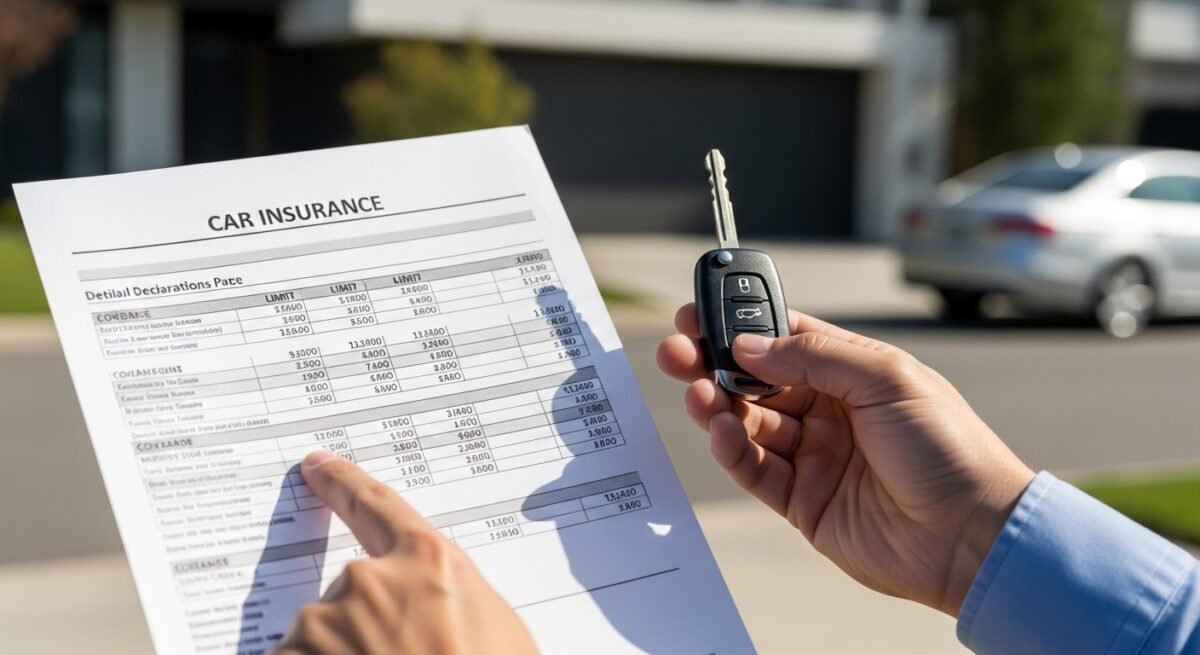
Every auto insurance policy is constructed from a set of standard coverage types. These are typically listed on your declarations page with specific dollar limits for each. The structure is often presented as a series of three numbers for liability coverage, such as 100/300/50, which represent the maximum amounts your insurer will pay for bodily injury per person, bodily injury per accident, and property damage per accident, respectively. Understanding these core components, and how they interact, is essential for making informed decisions about your protection levels.
Your policy’s declarations page acts as your custom blueprint, outlining exactly what is covered and for how much. It is crucial to review this document carefully and ask your agent to explain any terms or limits you do not fully understand. The cost of your premium is directly tied to the types and amounts of coverage you select, as well as personal risk factors like your driving history, vehicle type, and location. For a foundational look at how these elements come together under U.S. regulations, consider reviewing our resource on Understanding American Auto Insurance.
Breaking Down Liability Insurance
Liability insurance is the cornerstone of almost every state’s auto insurance requirements. It does not cover you or your vehicle, rather, it is designed to protect your assets if you are found legally responsible (liable) for causing injuries or damage to others in an accident. This coverage pays for the other party’s medical expenses, lost wages, pain and suffering, and vehicle repairs, up to the limits you selected. If the costs exceed your policy limits, you could be personally sued for the difference, making adequate limits critically important.
There are two main parts to liability coverage: bodily injury liability and property damage liability. Bodily injury liability covers injuries to people in other vehicles, pedestrians, or cyclists. Property damage liability covers damage you cause to someone else’s property, most commonly their car, but also things like fences, mailboxes, or buildings. Because court judgments for serious accidents can easily reach hundreds of thousands of dollars, experts often recommend carrying liability limits significantly higher than your state’s minimum requirements to protect your savings, home, and future income.
Protections for You and Your Vehicle
While liability covers others, a suite of other coverages exists to protect you, your passengers, and your own car. These are often optional but are highly valuable, especially if you have a newer vehicle or limited savings. The primary coverages in this category are collision, comprehensive, and medical payments or personal injury protection (PIP).
Collision coverage pays for damage to your own car resulting from a collision with another vehicle or object, like a tree or guardrail, regardless of who is at fault. Comprehensive coverage handles damage to your car from non-collision events. Common examples include theft, vandalism, fire, falling objects, or weather events like hail or flooding. Medical payments (MedPay) or personal injury protection (PIP) cover medical expenses for you and your passengers after an accident, regardless of fault. PIP, required in some “no-fault” states, is often broader and can also cover lost wages and essential services.
Selecting these coverages involves considering your vehicle’s value and your financial resilience. A common rule is to consider dropping collision and comprehensive if your car’s value is low and the premium and deductible costs approach the car’s worth. However, for a financed or leased vehicle, your lender will almost certainly require you to carry both. For more strategies on managing the cost of these protections, bundling home and auto insurance is one effective method many policyholders use.
Uninsured and Underinsured Motorist Coverage
Despite legal requirements, many drivers operate vehicles with no insurance or with state minimum limits that are insufficient to cover a serious crash. Uninsured motorist (UM) coverage protects you if you’re hit by a driver with no insurance. Underinsured motorist (UIM) coverage kicks in when the at-fault driver’s liability limits are too low to cover your medical bills and related costs. This vital coverage ensures that you and your passengers are not left with overwhelming expenses due to another driver’s irresponsibility. It is highly recommended and even required by law in many states.
Additional Endorsements and Specialty Coverages
Beyond the standard menu, insurers offer numerous endorsements (also known as riders) to fill specific gaps or enhance your policy. These add-ons provide tailored protection for modern needs and valuable assets. While they increase your premium, they can be cost-effective solutions for unique risks.
Common and valuable endorsements include rental car reimbursement, which pays for a temporary rental vehicle while your car is being repaired after a covered claim. Roadside assistance provides services like towing, tire changes, jump-starts, and lockout service. New car replacement coverage offers to replace a totaled new vehicle (often less than one or two years old) with a brand-new model of the same make and specifications, rather than paying its depreciated actual cash value. Gap insurance is crucial for leased or financed cars, as it covers the “gap” between what you owe on the loan and the car’s actual cash value if it is totaled.
How to Evaluate and Choose Your Coverage
Selecting the right auto insurance coverage is a personal decision that balances risk tolerance, financial situation, and legal requirements. A systematic approach can help you avoid common pitfalls. Start by honestly assessing your assets and risk exposure. What do you own that could be at risk in a lawsuit? How much could you afford to pay out-of-pocket for repairs or medical bills? Your answers will guide your decisions on liability limits and deductibles.
Next, get multiple quotes from different insurers. Prices can vary dramatically for the exact same coverage. When comparing quotes, ensure you are comparing identical coverage types, limits, and deductibles. Do not shop on price alone, consider the insurer’s reputation for customer service and claims handling. Finally, review your policy at least annually or whenever you experience a major life change, such as buying a home, getting married, or adding a teen driver. These events can significantly alter your insurance needs. To explore another avenue for potential savings and simplified management, the benefits of a home and auto insurance bundle are worth investigating during your annual review.
Frequently Asked Questions
What is the difference between comprehensive and collision coverage?
Collision coverage applies when your car hits or is hit by another vehicle or object. Comprehensive covers almost everything else that damages your car, including theft, vandalism, fire, animals, and weather-related damage like hail or flooding.
Should I carry only the state minimum liability limits?
State minimums are often very low (e.g., 25/50/25). In a serious accident, these limits could be exhausted quickly, leaving you personally liable for the remainder. It is generally advisable to purchase liability limits that at least match your net worth.
What does a deductible mean, and how does it work?
A deductible is the amount you agree to pay out-of-pocket toward a covered claim before your insurance pays. For example, with a $500 deductible on a $2,000 repair, you pay $500 and your insurer pays $1,500. Choosing a higher deductible lowers your premium but increases your upfront cost if you file a claim.
Does my auto insurance cover me if I drive for a ride-sharing service like Uber or Lyft?
Most personal auto policies explicitly exclude coverage when you are driving for a commercial purpose, including ride-sharing. During the period when the app is on and you are available for a ride, you likely need a special endorsement or a separate commercial policy. Both Uber and Lyft provide some insurance, but it has specific triggers and limits.
How can I lower my auto insurance premiums?
Strategies include shopping around, bundling policies, maintaining a clean driving record, opting for a higher deductible, asking about discounts (for good students, safe drivers, anti-theft devices, etc.), and driving a vehicle with a high safety rating. For a deeper dive into complex claims and policy disputes, you can find expert analysis at Read full article.
Ultimately, auto insurance coverage is a customizable safety net. Taking the time to understand its components empowers you to make choices that provide genuine security. A well-structured policy brings peace of mind, knowing you are prepared for the financial realities of the road without paying for unnecessary extras. Regular reviews and open communication with your insurance agent ensure your coverage evolves alongside your life, keeping you adequately protected through every mile.