
What Is Commercial Auto Insurance and Who Needs It
Commercial auto insurance protects businesses from financial ruin after vehicle accidents. This essential coverage is required for any vehicle used for work beyond simple commuting.

By Lucas Bennett
If you use a vehicle for business purposes, your personal auto insurance policy almost certainly leaves you exposed. A minor fender bender in a company car or a collision while delivering goods could lead to devastating financial losses, lawsuits, and policy cancellations if you’re relying on the wrong type of coverage. Commercial auto insurance is the specialized protection designed to bridge this critical gap, safeguarding businesses that rely on vehicles from the unique and heightened risks they face on the road. Understanding its nuances isn’t just about compliance, it’s a fundamental aspect of responsible business risk management.
The Defining Line: Personal vs. Commercial Auto Insurance
The core difference between personal and commercial auto insurance hinges on intent and use. Personal auto policies are designed for private, non-business activities: commuting to a fixed workplace, running errands, or family trips. The moment a vehicle is used to conduct business, transport goods for payment, or serve customers, it enters a realm of increased risk that standard policies are not priced or structured to cover. Insurance companies assess risk based on usage patterns. Commercial vehicles typically log more miles, operate in congested areas, are driven by multiple or possibly less-familiar employees, and may carry specialized equipment or cargo. This elevated risk profile necessitates a different insurance product.
A simple test is to examine the vehicle’s primary purpose. If the vehicle is titled in a business’s name, that’s a clear indicator. Other red flags for a personal insurer include using the vehicle to transport tools or materials (beyond nominal amounts), making deliveries, carrying paying passengers (like rideshare or delivery services), or towing for business purposes. Even a real estate agent driving clients to listings or a contractor traveling between job sites with a ladder in the truck bed can invalidate a personal policy if an accident occurs during business use. The consequences of being underinsured are severe, potentially leaving the business owner personally liable for massive property damage, bodily injury claims, and legal defense costs.
Who Absolutely Needs Commercial Vehicle Coverage
This coverage is not exclusively for large corporations with fleets of semitrucks. It serves a wide spectrum of businesses and professions. Any entity that uses vehicles as a tool for revenue generation or core operations should strongly consider a commercial policy.
Common examples of businesses that require commercial auto insurance include:
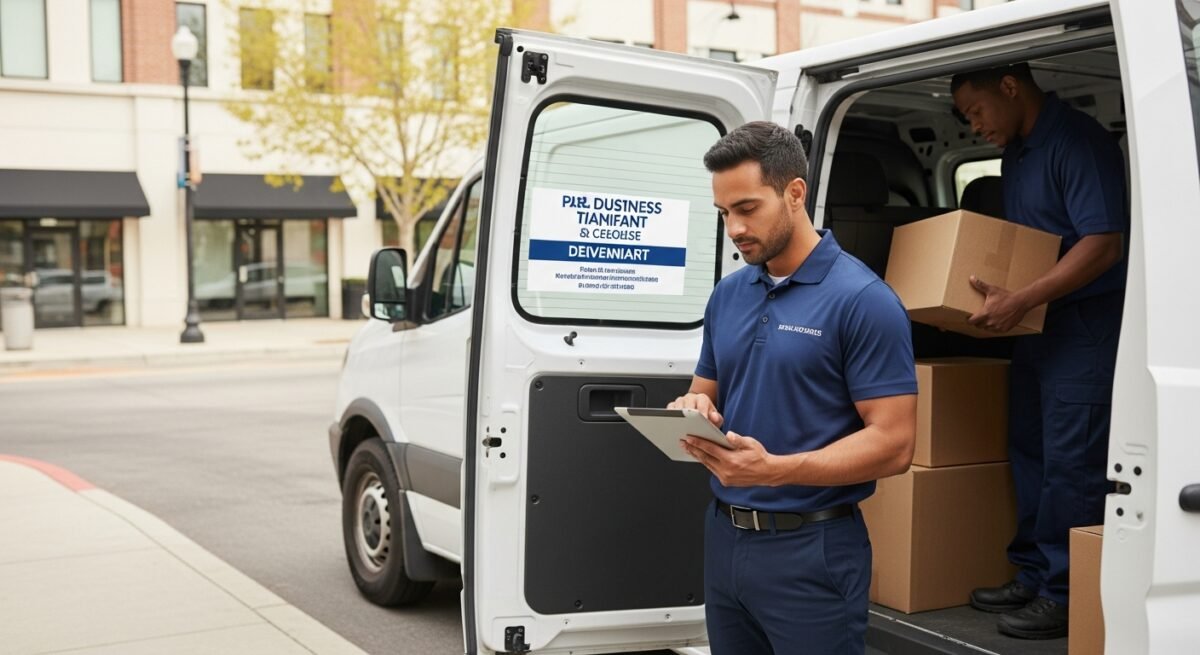
- Transportation and Delivery Services: This includes couriers, food delivery drivers, parcel delivery vans, and long-haul trucking companies. They face constant road exposure and cargo liability risks.
- Trades and Construction: Plumbers, electricians, landscapers, contractors, and roofers who carry tools, equipment, and materials to job sites. Their vehicles are often modified with racks, storage, or lift gates.
- Retail and Service Businesses: Companies that make service calls, such as appliance repair, HVAC technicians, or carpet cleaners, often use vehicles stocked with parts and equipment.
- Passenger Transport: Taxis, limousines, shuttle services, and non-emergency medical transport companies carry the significant liability of passenger safety.
- Retail and Sales Professionals: Sales representatives who travel territories or real estate agents who drive clients. While sometimes covered by a rider, a commercial policy is often safer.
- Business-Owned Vehicles: Any car, van, or truck owned by an LLC, corporation, or partnership, even if used for simple errands, should be covered commercially.
If you’re unsure about your need, the safest course is to speak directly with your insurance agent and describe your vehicle’s exact use. Misrepresentation can void a policy. For instance, specific state laws govern commercial vehicle registration and insurance requirements for vehicles over a certain weight, like those explored in our guide on auto insurance in Washington.
Key Coverages in a Commercial Auto Policy
A commercial auto insurance policy is built from a suite of coverages that can be tailored to a business’s specific needs. The foundational components mirror personal insurance but with higher limits and business-specific endorsements.
Liability Insurance: Your Financial Shield
This is the most critical component, often mandated by state law. It has two parts: Bodily Injury Liability and Property Damage Liability. If your business vehicle is at fault in an accident, this coverage pays for the medical expenses, lost wages, and pain and suffering of injured third parties, as well as repairs to their vehicle or other damaged property (like a fence or building). State minimum limits are typically far too low for commercial operations. A serious accident can easily result in claims exceeding $500,000. Businesses should purchase liability limits that reflect their total assets and potential risk exposure. A $1 million combined single limit is a common recommendation for small to mid-sized businesses.
Physical Damage Coverages: Protecting Your Assets
This refers to Collision and Comprehensive coverage for your business vehicles. Collision pays for damage to your vehicle from an impact with another object, regardless of fault. Comprehensive covers non-collision events: theft, vandalism, fire, hail, or hitting an animal. For businesses, this is a crucial way to protect capital investments. If a stolen work van would cripple your operations, this coverage is essential. Lenders also require it if the vehicle is financed.
Essential Add-Ons and Endorsements
Beyond the basics, several add-ons address specific commercial risks. Hired and Non-Owned Auto Liability (HNOA) is arguably the most important for many modern businesses. It covers liability when an employee uses their personal car for a business errand (non-owned) or when you rent a vehicle for business (hired). Given the rise of the gig economy and common practices like sending an employee to pick up supplies, this low-cost endorsement can prevent a catastrophic coverage gap. Medical Payments or Personal Injury Protection covers medical expenses for you and your passengers, regardless of fault. Uninsured/Underinsured Motorist Protection safeguards your business if you’re hit by a driver with little or no insurance. For trucks and delivery vehicles, Motor Truck Cargo insurance covers the loss or damage to the goods being transported, a vital protection for your clients’ property. For a deeper look at how state-specific laws and minimums work, including those for commercial vehicles, you can explore resources like the article on auto insurance in Virginia.
Factors That Determine Your Commercial Premium
Commercial auto insurance premiums are calculated using a complex matrix of risk factors. Insurers will scrutinize your business operations to price the policy accurately. Primary factors include the type of business and how vehicles are used (a florist delivery van is rated differently than a tow truck). The driving records of all employees who will operate the vehicles are heavily weighted, as is the business’s loss history. The number of vehicles, their make/model/year, and their primary garaging location (urban vs. rural) directly impact cost. Annual mileage per vehicle and the radius of operation (local vs. long-haul) are key metrics. Finally, the chosen coverage types, limits, and deductibles will define the final premium. Maintaining rigorous driver qualification standards, implementing a formal safety program, and bundling policies can lead to significant discounts.
The Process of Acquiring a Policy
Getting the right commercial auto insurance requires preparation. Start by gathering detailed information: business entity documents, driver’s license numbers and Motor Vehicle Reports (MVRs) for all potential drivers, vehicle identification numbers (VINs) for all company vehicles, and a clear description of each vehicle’s use (percentages for hauling, commuting, etc.). You’ll need to estimate annual mileage for each. It is highly advisable to work with an independent insurance agent or broker who specializes in commercial lines. They can access multiple insurance carriers, explain complex coverage options, and help you compare quotes not just on price, but on the breadth of coverage and the carrier’s reputation for claims service. Be transparent about all operations; withholding information to get a lower quote is a recipe for a denied claim.
Frequently Asked Questions
Can I just add a rider to my personal policy for business use? Some insurers offer a “business use” endorsement for very limited, low-risk activities (like a salesperson with no cargo). However, for any significant business use, transporting tools or goods, or using a vehicle specifically for business, a standalone commercial policy is necessary and safer.
What if my employees use their own cars for work? This is where Non-Owned Auto Liability (HNOA) becomes critical. Your business can be held liable for an accident an employee causes while on a work-related trip in their personal car. HNOA provides the primary liability coverage in this scenario, protecting your business assets.
Are there different policies for different vehicle types? Yes. A standard commercial auto policy (Business Auto Coverage Form) covers cars, vans, and light trucks. For heavier trucks, tractor-trailers, or buses, a Motor Carrier or Truckers policy is required, as it includes specific liabilities like cargo and higher liability limits mandated by federal and state regulations.
How much coverage is enough? While state minimums exist, they are inadequate for most businesses. A good rule is to carry liability limits at least equal to your business’s total net worth. Many small businesses start with a $1 million combined single limit. Consulting with an agent and a financial advisor is the best way to determine appropriate coverage levels for your specific risk. For more nuanced discussions on coverage adequacy and local regulatory landscapes, such as those in New York, the guide to auto insurance in New York offers valuable insights. For comprehensive analysis on matching coverage to business needs, Read full article for deeper dives into commercial policy structures.
Securing the right commercial auto insurance is a proactive step in fortifying your business’s foundation. It transforms a potential operational vulnerability into a managed risk, allowing you to focus on growth with the confidence that your vehicles, your employees, and your financial future are protected. By accurately assessing your needs, understanding the coverage landscape, and partnering with a knowledgeable professional, you can obtain a policy that provides robust protection without unnecessary expense, ensuring that a traffic incident doesn’t derail your business journey.