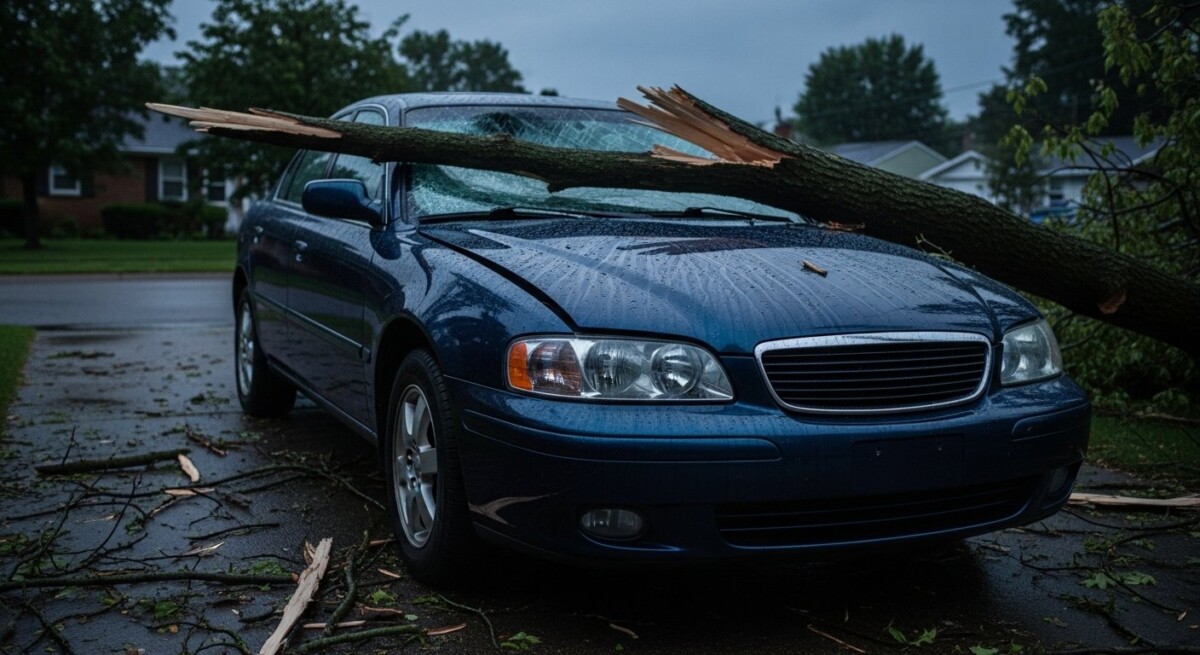
You have your auto insurance policy, and you know it covers collisions. But what about the tree branch that crashes onto your hood during a storm, or the deer that darts into the road, or the vandal who keys your car door? These common, costly events are not covered by your standard liability or collision insurance. They fall under the domain of comprehensive auto insurance, a crucial but often misunderstood component of full coverage. Understanding what comprehensive coverage protects, what it excludes, and how it works alongside your other coverages is essential for making informed decisions that safeguard your financial well-being against life’s unpredictable hazards.
Defining Comprehensive Auto Insurance Coverage
Comprehensive auto insurance, often called “other than collision” coverage, is a specific part of your auto insurance policy that pays for damage to your vehicle caused by events that are typically outside of your control and do not involve colliding with another vehicle or object. Think of it as protection against the acts of nature, animals, and people. While collision coverage handles the crash with another car or a telephone pole, comprehensive steps in for nearly everything else that can physically damage your car. It is a first-party coverage, meaning it pays for repairs to your own vehicle, minus your chosen deductible. This coverage is optional unless you are leasing or financing your vehicle, in which case the lender will almost certainly require it to protect their financial interest in the car. For owners of older vehicles with low market value, the cost of the coverage may eventually outweigh the potential benefit, a calculation we will explore later.
What Does Comprehensive Insurance Actually Cover?
The list of perils covered by a comprehensive auto insurance policy is broad, designed to address a wide array of unfortunate scenarios. While policy language can vary slightly by insurer and state, the core covered events are remarkably consistent. It is vital to review your specific policy declarations page for exact details, but you can generally expect comprehensive coverage to apply to the following situations.
- Theft: If your entire vehicle is stolen, comprehensive coverage will reimburse you for its actual cash value (ACV). It also typically covers theft of parts from your vehicle, such as a catalytic converter or custom wheels.
- Vandalism: Intentional damage to your car, including keying, slashed tires, broken windows, or graffiti, is covered under comprehensive insurance.
- Fire: Damage resulting from fire, whether from an engine electrical fault, a wildfire, or arson, is a covered comprehensive loss.
- Natural Disasters: This includes damage from events like hail, windstorms, hurricanes, tornadoes, floods, and earthquakes. A tree or large branch falling on your car is a classic comprehensive claim.
- Falling Objects: Beyond trees, this covers items like rocks tumbling from a cliff, debris flying off a truck, or even an object dropped from an overpass.
- Animal Collisions: Hitting an animal, most commonly a deer, is a comprehensive claim, not a collision claim. This is a critical distinction many drivers misunderstand.
- Glass Damage: Cracked or shattered windshields and windows are usually covered. Some insurers even offer separate glass coverage with a low or zero deductible.
It is worth noting that while comprehensive coverage is extensive, it is not a catch-all. It does not cover mechanical breakdowns, wear and tear, or damage from a lack of maintenance. It also does not cover personal items stolen from inside your car, those would typically fall under a homeowner’s or renter’s insurance policy. For a deeper look at how different coverages integrate, our Amica Auto Insurance review examines how a top-tier insurer structures its comprehensive and collision offerings.
Key Exclusions and Limitations to Understand
Knowing what comprehensive insurance does not cover is just as important as knowing what it does. A standard policy will explicitly exclude certain events. Personal belongings inside the car, as mentioned, are not covered. Damage from a collision with another vehicle or a stationary object like a guardrail or building is handled by your collision coverage, not comprehensive. Furthermore, if you use your vehicle for ridesharing services like Uber or Lyft during a period not covered by a specific endorsement, your comprehensive (and collision) coverage may be voided. Normal wear and tear, such as a worn-out transmission, rust, or fabric fading, are maintenance issues, not insurance claims. Intentional damage you cause to your own vehicle is considered fraud and is excluded. Finally, if your car is totaled in a covered event, the insurer will pay you the vehicle’s actual cash value (ACV) at the time of the loss, which is the market value minus depreciation, not the amount you paid for it or the amount you still owe on a loan. This potential gap between the ACV and your loan balance is why many buyers consider gap insurance.
Comprehensive vs. Collision: The Core Difference
For many drivers, the line between comprehensive and collision coverage is the most confusing aspect of auto insurance. The distinction, however, is straightforward and hinges on the cause of the damage. Collision coverage applies when your vehicle is in motion and hits, or is hit by, another vehicle or object. This includes accidents with other cars, hitting a pothole, rolling your vehicle, or crashing into a fence, tree, or building. The key element is an impact resulting from the vehicle’s movement. Comprehensive coverage, conversely, applies to damage from events where your car is typically stationary or where the damaging object is moving toward it. A deer running into the side of your car is comprehensive. You swerving and hitting the deer is collision. A hail storm dents your parked car: comprehensive. You lose control on icy hail and hit a mailbox: collision. Understanding this dichotomy helps you accurately report a claim and sets correct expectations for your deductible responsibility. For mature drivers evaluating their full coverage needs, our AARP Auto Insurance review details how these coverages are tailored for drivers over 50.
How Deductibles Work with Comprehensive Coverage
A deductible is the amount you agree to pay out-of-pocket toward a covered repair before your insurance company pays the remainder. Comprehensive coverage always carries a deductible, which you select when you purchase the policy. Common deductible amounts range from $100 to $1,000, with $500 being a frequent choice. The deductible applies per claim. For example, if a hailstorm causes $2,500 in damage to your car and you have a $500 comprehensive deductible, you would pay $500, and your insurer would pay $2,000. Choosing a higher deductible lowers your premium (the cost of the policy) because you are assuming more financial risk. Choosing a lower deductible raises your premium but reduces your out-of-pocket cost if you file a claim. The right choice depends on your financial situation and risk tolerance. If you have a $1,000 emergency fund, a $1,000 deductible might be a prudent way to save on premiums. However, if coming up with $500 would be difficult, a lower deductible may provide necessary peace of mind, albeit at a higher monthly cost.
When Is Comprehensive Coverage a Wise Investment?
Deciding whether to carry comprehensive auto insurance is a personal financial calculation. It is mandatory if you lease or finance your vehicle, as the lienholder requires it. For vehicle owners, the decision often comes down to the value of the car relative to the cost of the coverage. A common rule of thumb is to consider dropping comprehensive and collision coverage when the annual premium for both exceeds 10% of your car’s current market value. For instance, if your car is worth $4,000 and your combined comprehensive and collision premium is $600 per year, it may be time to reconsider. However, this is not a hard rule. You must also assess your personal risk tolerance and financial capacity. If you live in an area prone to hailstorms, wildfires, or high theft rates, the statistical likelihood of a claim is higher, making comprehensive coverage more valuable. If your car is parked on the street in an urban area versus in a locked garage in a rural area, your risk profile changes. It is a balance of probability, potential loss, and premium cost. For state-specific guidance, drivers can reference resources like our complete guide to auto insurance in Massachusetts, which contextualizes comprehensive coverage within local regulations and risks.
The Total Loss Scenario and Actual Cash Value
One of the most important functions of comprehensive coverage is handling a total loss. If your car is stolen and not recovered, or damaged so severely that repair costs exceed a certain percentage of its value (often 70-75%), the insurer will declare it a total loss. In this case, they will pay you the vehicle’s Actual Cash Value (ACV). ACV is not the replacement cost of a new car, nor is it the private party sale value. It is the car’s fair market value at the time of the loss, considering its age, mileage, condition, and options, often derived from third-party valuation tools. This payment, minus your deductible, is what you receive. If you owe money on a car loan that exceeds the ACV, you are responsible for that difference, known as being “upside-down.” This is why gap insurance is frequently recommended for new cars, as it covers that financial gap between the ACV and the loan balance.
Filing a Comprehensive Auto Insurance Claim
The process for filing a comprehensive claim is generally straightforward but requires prompt action and documentation. First, ensure everyone is safe and, if necessary, contact the police to file a report, which is crucial for incidents like theft, vandalism, or hit-and-run. Next, document the scene thoroughly. Take clear, wide-angle, and close-up photos of all damage from multiple angles. If an animal was involved, it may be helpful to photograph that as well, if safe to do so. Then, contact your insurance company or agent as soon as possible to initiate the claim. They will assign an adjuster who will review the damage, possibly obtain an estimate from a repair shop, and determine the covered amount based on your policy terms and deductible. For glass-only claims, many insurers have streamlined processes with direct repair shops where you pay only your glass deductible, if applicable. It is important to note that filing a comprehensive claim usually has a less severe impact on your future premiums than filing an at-fault collision claim, as these events are largely considered outside your control. However, a history of multiple claims of any type can still affect your rates.
Frequently Asked Questions
Is hitting an animal collision or comprehensive?
Hitting an animal, like a deer, dog, or raccoon, is almost always covered under comprehensive insurance, not collision. The logic is that the animal is considered a falling object or an act of nature.
Does comprehensive insurance cover a cracked windshield?
Yes, windshield repair or replacement is a standard part of comprehensive coverage. Many policies have a separate, lower glass deductible (like $100 or $0) specifically for windshield claims, so check your policy details.
Will my rates go up if I file a comprehensive claim?
While not as significant as an at-fault accident, filing a comprehensive claim can sometimes lead to a premium increase, depending on your insurer’s policies, your claim history, and the state’s regulations. It is not a guaranteed increase, but it is possible.
Do I need comprehensive insurance on an old car?
This is a cost-benefit analysis. If the annual premium plus your deductible approaches or exceeds the car’s value, it may not be financially prudent. For example, paying $400 per year plus a $500 deductible to insure a car worth $1,500 may not make sense.
Does comprehensive cover natural disasters like floods?
Yes, damage from floods, hurricanes, hail, and earthquakes is covered under comprehensive insurance. It is important to note that for floods, there is typically no waiting period like with federal flood insurance, making it vital for sudden events.
Choosing the right auto insurance coverage is a nuanced decision that evolves with your life and assets. Comprehensive auto insurance provides a critical safety net for a wide spectrum of unpredictable, non-collision events, from weather damage to theft. By understanding its scope, limitations, and financial mechanics, you can make a confident choice that aligns with your vehicle’s value, your geographic risks, and your personal financial strategy. Regularly reviewing your policy, especially when your vehicle depreciates or your life circumstances change, ensures your coverage remains both adequate and cost-effective. For a detailed analysis of how comprehensive coverage fits into broader insurance portfolios, our AARP comprehensive review for drivers over 50 offers additional insights tailored to a specific demographic.