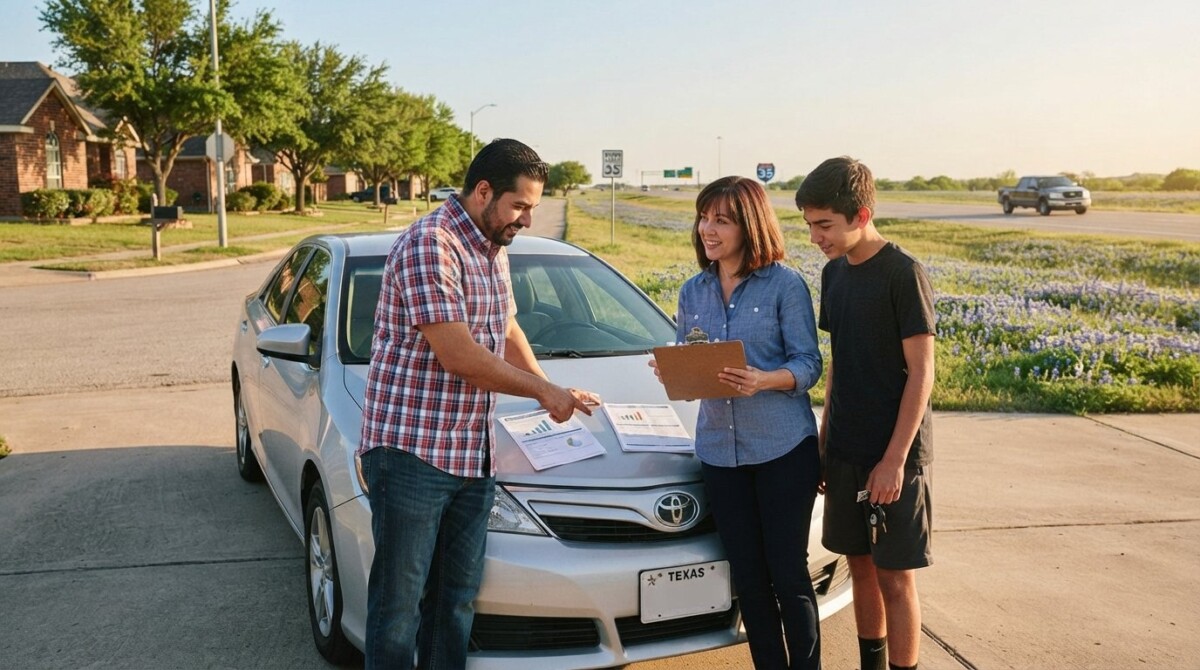
Driving in Texas comes with its own set of freedoms, wide-open highways, and unique challenges. But before you hit the road, you need to secure the right protection, and the process of finding it often feels overwhelming. With over 200 carriers licensed to sell auto insurance in the Lone Star State, the sheer number of options can paralyze even the most organized shopper. The good news is that obtaining auto insurance quotes Texas drivers rely on has never been easier or more efficient, provided you know what to look for and how to compare the numbers you receive.
Most people make the mistake of focusing solely on the monthly premium. While price is undeniably important, it is only one piece of a much larger puzzle. A cheap policy that leaves you underinsured after a serious accident can cost you thousands of dollars out of pocket. Conversely, an expensive policy with unnecessary coverage wastes your hard-earned money every single month. The goal is to find the sweet spot where cost, coverage, and customer service intersect, and that requires a strategic approach to gathering and comparing quotes.
Why Texas Auto Insurance Rates Vary So Much
If you have ever asked two neighbors with similar cars what they pay for insurance, you likely received wildly different answers. That is because insurers use a complex algorithm that weighs dozens of personal and geographic factors to determine your specific risk profile. Understanding these variables helps you see why your quotes look the way they do and gives you leverage to negotiate better rates.
One of the biggest drivers of cost in Texas is the state’s high rate of uninsured motorists. According to the Insurance Information Institute, roughly one in seven Texas drivers has no coverage at all. When you are hit by an uninsured driver, your own policy’s Uninsured Motorist (UM) coverage kicks in, and insurers factor this elevated risk into their pricing for everyone. Additionally, severe weather events like hailstorms and flooding in cities such as Houston and Dallas lead to frequent comprehensive claims, pushing rates higher in those metropolitan areas compared to rural regions.
Your personal profile matters just as much as your zip code. Insurers examine your credit score, driving record, age, marital status, and even your occupation. In Texas, they are legally allowed to use credit-based insurance scores, which means a good credit history can lower your premium significantly. A single speeding ticket can raise your rate by an average of 20% to 30%, while a DUI can cause your premium to double or triple. On the flip side, maintaining a clean record and good credit positions you for the most favorable quotes available.
Required Minimum Coverage in Texas
Before you start comparing rates, you need to understand what the law demands. Texas operates on a fault-based insurance system, meaning the at-fault driver’s insurance pays for the other party’s damages. The minimum liability limits required by state law are often referred to as 30/60/25. This translates to $30,000 for bodily injury per person, $60,000 for bodily injury per accident, and $25,000 for property damage per accident.
While these minimums are legal, they are frequently inadequate in real-world scenarios. A modern car can easily cost over $30,000 to replace, and a single hospital stay for a serious injury can exceed $60,000. If you cause an accident and the damages exceed your limits, you become personally responsible for the difference, and the other party can sue you for their medical bills and lost wages. Many financial advisors recommend carrying at least $100,000 in bodily injury coverage per person and $300,000 per accident to protect your assets.
Additionally, Texas law requires drivers to carry Personal Injury Protection (PIP), which pays for your own medical expenses regardless of who is at fault. This coverage is automatically included in every policy unless you reject it in writing. PIP is a valuable safety net, especially given the high rate of uninsured motorists on Texas roads.
How to Get Accurate Auto Insurance Quotes Texas Style
The quality of your comparison shopping depends entirely on the accuracy of the information you provide. If you give inconsistent details across different insurance companies, you will end up comparing apples to oranges, which defeats the entire purpose. To get reliable auto insurance quotes Texas carriers will honor, you need to gather specific details before you start.
Begin by collecting your driver’s license number, vehicle identification number (VIN), current odometer reading, and details about your annual mileage. You also need to know your current coverage limits and deductible amounts if you are switching carriers. Having this information ready allows you to complete applications quickly and ensures that every quote you receive is based on the same foundation.
Once you have your information ready, you have two primary paths to gather quotes. You can visit individual carrier websites and fill out forms one at a time, which takes hours and leaves you with a pile of confusing spreadsheets. Or, you can use a dedicated comparison platform that handles the legwork for you. Using a service like Free Auto Insurance Quotes Online streamlines the process by submitting your information to multiple carriers simultaneously, saving you time and reducing the risk of data entry errors.
When you receive your quotes, do not just look at the bottom line. Scrutinize the coverage details for each option:
- Liability limits: Confirm that the quote includes at least 100/300/100, not just the state minimums.
- Deductibles: Check whether the collision and comprehensive deductibles are $500, $1,000, or higher. A higher deductible lowers your premium but increases your out-of-pocket cost in a claim.
- Additional coverage: Look for rental reimbursement, roadside assistance, and gap insurance, as these add real value in specific situations.
- Discounts applied: Verify that all applicable discounts, such as multi-policy, safe driver, or anti-theft device discounts, are included in the quoted price.
After analyzing the details, you can confidently narrow your list to the two or three best options. This level of diligence ensures you are not paying for coverage you do not need while making sure you are not left exposed in a major accident.
The Role of Credit Scores and Discounts
Many drivers are surprised to learn how much their credit score influences their auto insurance rates. Insurers have found a statistical correlation between credit behavior and the likelihood of filing a claim. In Texas, this practice is regulated, but it is still widely used. If your credit score is less than stellar, you might see quotes that are 50% higher than those offered to drivers with excellent credit.
If you fall into this category, do not panic. You have options to improve your situation. Start by pulling your free credit report and disputing any errors you find. Paying down high credit card balances and making all payments on time for a few months can gradually improve your score. In the meantime, you can still find competitive rates by working with a broker or comparison platform that specializes in high-risk drivers.
Beyond credit, Texas offers a robust selection of discounts that can dramatically lower your premium. Most insurers offer a discount for bundling your auto and home insurance, typically saving you 10% to 15% on both policies. Defensive driving courses can knock another 5% to 10% off your premium, and the discount lasts for three years. If you drive less than 7,500 miles per year, look for a low-mileage discount. Students with good grades, military personnel, and members of certain professional organizations often qualify for additional savings that are not always advertised.
Comparing Full Coverage vs. Liability Only
One of the most common questions Texas drivers face is whether to carry full coverage or just liability insurance. The answer depends largely on the value of your vehicle and your financial situation. If your car is worth less than $3,000, paying for collision and comprehensive coverage may not make financial sense, since the premiums and deductible could exceed what the insurer would pay out in a total loss.
However, if you have a newer car or you are still paying off a loan, full coverage is essential. Your lender will require it, and it protects your investment. For a deeper dive into this decision, our detailed guide on full coverage auto insurance quotes explains how to evaluate the cost-benefit analysis for your specific vehicle. The key is to understand that full coverage includes collision (damage to your car from an accident) and comprehensive (damage from theft, weather, or animals) in addition to liability.
When you compare full coverage policies, pay close attention to the deductibles. Choosing a $1,000 deductible instead of a $500 deductible can lower your collision premium by up to 20%. If you have an emergency fund to cover that $1,000 in the event of a claim, the higher deductible is a smart way to save money every month without sacrificing protection. Remember, the purpose of insurance is to protect you from catastrophic financial loss, not to cover every minor scratch or ding.
How to Lower Your Premium Before You Buy
If your initial round of auto insurance quotes Texas carriers provide comes back higher than you expected, you do not have to accept those numbers as final. There are several proactive steps you can take to reduce your premium before you commit to a policy. These strategies are most effective when applied before you finalize your purchase.
First, consider raising your deductibles on both collision and comprehensive coverage. This is the fastest way to lower your premium, often by 10% to 30%. Second, ask about usage-based insurance programs. Many major carriers in Texas offer telematics programs that track your driving habits through a mobile app or a small device. If you are a safe driver who brakes gently and avoids hard acceleration, you can earn discounts of up to 30%.
Third, review your coverage limits to ensure you are not over-insured. If you have an older vehicle, dropping collision coverage entirely might be the right move. Fourth, check if you qualify for a professional or alumni group discount. Many insurers have partnerships with universities, professional associations, and employers that offer exclusive rates to members. Finally, if you have not had a ticket or accident in the last three to five years, ask for a accident-free or safe driver discount, as these are often applied automatically but occasionally require you to request them.
For a more comprehensive look at the comparison process, you can review our strategic guide on how to compare and save on Texas auto insurance. That resource provides a step-by-step checklist you can use during your next renewal period.
Common Mistakes to Avoid When Shopping
Even savvy shoppers make errors when navigating the insurance marketplace. One of the most common mistakes is allowing your coverage to lapse during the shopping process. A lapse in coverage, even for a single day, marks you as a high-risk driver and can result in significantly higher rates when you try to get a new policy. Always ensure your new policy starts on the same day your old one ends.
Another frequent error is failing to read the fine print regarding per-mile charges or telematics penalties. Some usage-based programs can raise your rate if you drive late at night or exceed a certain speed threshold. If you are not comfortable with this level of monitoring, stick with a traditional policy. Additionally, do not assume that the cheapest quote is the best. A bare-bones policy from a carrier with poor customer service reviews can leave you stranded after an accident. Check the Texas Department of Insurance complaint index to see how insurers rank in terms of customer satisfaction.
Finally, do not forget to update your policy when your life circumstances change. Getting married, moving to a safer neighborhood, or retiring can all lower your insurance costs. If you have recently experienced any of these changes, it pays to request an updated quote. The same applies if you have paid off your car loan, as you can then drop collision coverage if you choose. Our article on comparing Texas rates to maximize savings offers additional insights into timing your purchase for the best results.
Frequently Asked Questions
How often should I shop for auto insurance quotes in Texas?
Experts recommend shopping around at least once a year, preferably during your renewal period. Since rates fluctuate based on inflation, claim trends, and your personal profile, you might find a better deal from a different carrier even if you have been loyal to your current one for years. A quick annual check takes only 15 minutes and can save you hundreds of dollars.
Can I get auto insurance quotes in Texas without a Social Security number?
Yes, most insurers can provide a quote using your driver’s license number instead of your Social Security number. However, you will likely receive a higher quote because the insurer cannot check your credit-based insurance score. Providing your Social Security number allows the insurer to offer you the most accurate and often the lowest rate available.
What happens if I drive without insurance in Texas?
Driving without insurance in Texas is illegal and carries serious consequences. A first offense can result in fines up to $350, and subsequent offenses can lead to fines up to $1,000, vehicle impoundment, and license suspension. Additionally, you will have to pay a surcharge of $250 per year for three years to keep your license, on top of the reinstatement fees. It is simply not worth the financial risk.
Does my credit score affect my auto insurance quote in Texas?
Yes, Texas insurers are legally permitted to use your credit history to determine your insurance score. A poor credit score can raise your premium by 50% or more compared to a driver with excellent credit. However, you can ask your insurer to re-rate your policy after you have improved your credit, and you must be notified if your credit was used in the rating process.
Getting the right coverage at the right price is a process, but it does not have to be a painful one. The key is to approach it with accurate information and a clear understanding of your needs. Start by requesting personalized auto insurance quotes Texas drivers trust and compare them side by side. Take the time to review the coverage details, not just the price, and you will drive away with confidence knowing you are protected on every Texas highway.
Your next policy is just a few clicks away. Take control of your insurance costs today and secure the peace of mind that comes with knowing you are fully covered, no matter what the open road throws your way.