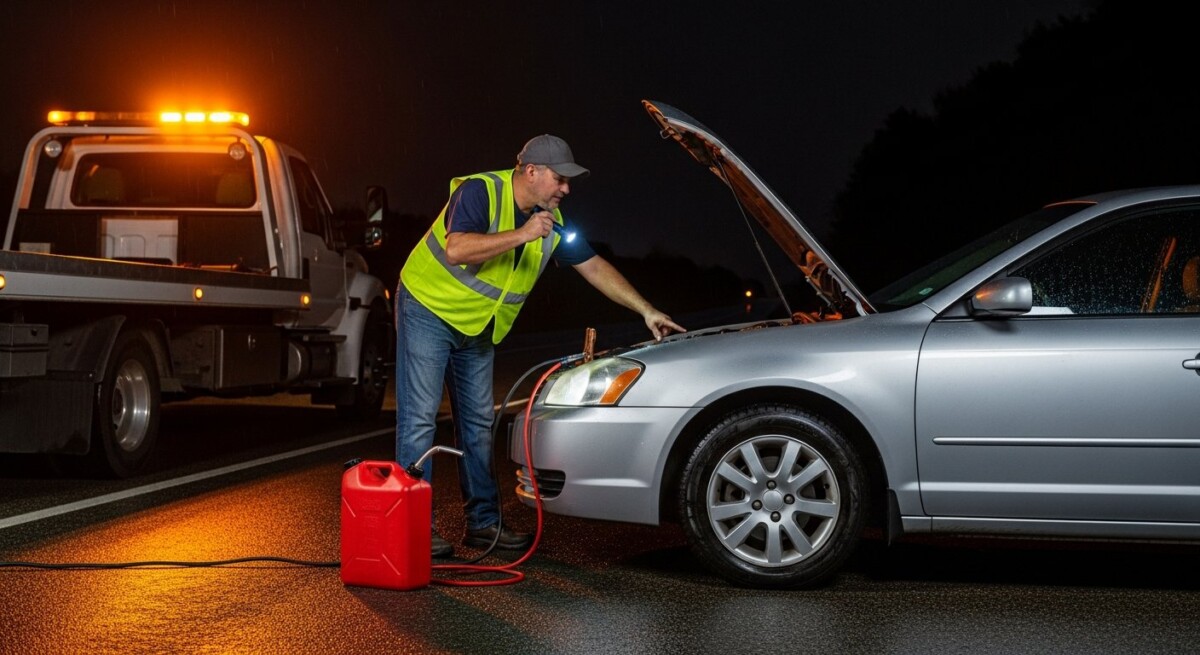
Imagine you are driving home late at night, and your engine starts sputtering. You pull over, pop the hood, and realize you have no idea what is wrong. You need a tow, a mechanic, or at least someone to bring you a gallon of gas. In that moment, the value of having roadside assistance attached to your auto insurance becomes crystal clear. Yet many drivers skip this add-on, assuming they will never need it or that it is too expensive. The reality is that adding roadside assistance to your policy can save you hundreds of dollars per incident and provide peace of mind that a standalone membership cannot always match.
What Is Auto Insurance With Roadside Assistance?
Auto insurance with roadside assistance is a coverage add-on or endorsement that provides help when your vehicle becomes disabled while on the road. Unlike a standard auto policy that covers damage from accidents, theft, or natural events, roadside assistance focuses on non-collision breakdowns and minor emergencies. Services typically include towing to a nearby repair shop, battery jump-starts, flat tire changes, lockout assistance, fuel delivery, and winching if you are stuck in a ditch or mud. Most insurers offer this as an optional feature for an extra premium, though some bundle it into comprehensive or premium packages.
The key difference between this and a separate roadside plan (like AAA) is convenience and cost structure. When you add roadside assistance to your auto insurance, you pay a small annual fee added to your premium, usually between $10 and $40 per year. In contrast, standalone memberships can cost $50 to $150 annually and require a separate membership card and billing cycle. More importantly, insurance-based roadside assistance often allows you to file a claim through your existing policy, which means you can manage everything through one app or phone call.
Why You Should Consider Adding Roadside Assistance to Your Policy
The primary reason to consider this add-on is financial protection against unexpected towing and service fees. A single tow can cost $100 to $300 depending on distance and time of day. Lockout services run $50 to $150. A flat tire change from a roadside service can be $40 to $80. If you experience just one of these events per year, the add-on pays for itself multiple times over. But there are deeper advantages that go beyond simple cost savings.
Convenience and Speed of Response
Insurance companies that offer roadside assistance typically contract with national networks of service providers. This means you have access to help almost anywhere in the country, often with a guaranteed response time. Most insurers have mobile apps that let you request assistance with GPS tracking, so you can see the tow truck approaching. This level of convenience is especially valuable for long-distance travelers, families with children, or anyone who drives in rural or unfamiliar areas.
No Surprise Bills at the Scene
One of the biggest frustrations with calling a random tow truck off the highway is the lack of price transparency. You may be quoted a fee over the phone, but upon arrival the driver might add surcharges for after-hours service, mileage, or equipment. With insurance-based roadside assistance, the cost is pre-negotiated. You pay nothing at the scene (or a minimal deductible), and the insurer handles the payment directly with the service provider. This eliminates the stress of haggling or worrying about hidden fees.
Coverage for Multiple Drivers and Vehicles
Most auto insurance policies cover the named insured and any listed drivers when they are operating the insured vehicle. This means that if your spouse or teenager is driving your car and breaks down, they can use the roadside assistance benefit. Some insurers even extend coverage to rental cars or vehicles you are driving temporarily. This is a significant advantage over a standalone plan that typically covers only the member, not the vehicle.
What Services Are Typically Included?
While coverage details vary by insurer, most roadside assistance add-ons include a standard set of services. Before you buy, it is essential to read the fine print so you know exactly what you are getting. Below is a list of common services you can expect from a typical auto insurance roadside assistance endorsement.
- Towing to the nearest qualified repair facility, usually up to a set mileage limit (e.g., 10 to 25 miles included, then a per-mile charge beyond that).
- Battery jump-starts if your battery is dead, with no charge for the boost itself.
- Flat tire change using your vehicle’s spare tire, or assistance if you do not have a spare.
- Lockout assistance if you lose or lock your keys inside the car, including locksmith services in some cases.
- Fuel delivery if you run out of gas, typically covering enough fuel to reach a station (often one to two gallons).
Some insurers also include additional perks such as winching and extraction (if your car is stuck off the road), trip interruption coverage (reimbursement for lodging or meals if a breakdown occurs far from home), and even concierge services for travel planning. However, these extras are less common and may require a higher-tier policy or an additional fee.
How Much Does It Cost?
The cost of adding roadside assistance to your auto insurance is surprisingly low. Most major insurers charge between $10 and $40 per year for a single vehicle. For example, State Farm and Allstate often list this add-on at around $20 to $30 annually. Progressive and Geico offer it for roughly $15 to $25 per year. Compare that to a standalone AAA Classic membership, which costs $55 to $65 per year, and you can see the savings potential. However, there is a catch: insurance-based roadside assistance may have lower coverage limits or higher deductibles per incident.
For instance, your policy might cover only up to $100 for a single tow or limit mileage to 15 miles per event. If your breakdown requires a longer tow, you could be responsible for the extra distance. Some insurers also cap the number of service calls per year, typically at three to five. Exceed that limit, and you may pay out of pocket or risk a rate increase. Standalone plans like AAA often offer higher mileage limits and unlimited calls, but they cost more upfront. The decision comes down to your driving habits and risk tolerance.
Does Using Roadside Assistance Raise Your Rates?
This is a critical question that many drivers overlook. Unlike a collision or comprehensive claim, a roadside assistance call is generally considered a service request, not a claim. Most insurers treat it as a policy feature and do not surcharge your premium for using it. However, there are exceptions. If you file multiple roadside assistance calls in a short period, your insurer may view you as a higher risk and adjust your rates accordingly. Additionally, some companies classify roadside assistance as a minor claim that appears on your loss history report, which could affect your eligibility for discounts.
To avoid surprises, ask your agent directly: is a roadside assistance call reported to the claims database? Does it count as a claim for rate increase purposes? The answer varies by carrier. For example, USAA and Geico typically do not raise rates for roadside calls, while some regional insurers may. If you are a frequent driver or have an older vehicle that may need multiple services, a standalone membership might be safer because it never impacts your insurance record.
Auto Insurance With Roadside Assistance vs. Standalone Membership
When evaluating your options, it helps to compare the two models side by side. In our guide on auto insurance with roadside assistance: is it worth it? we break down the cost-benefit analysis in detail. But here is a quick overview of the trade-offs.
Insurance-based roadside assistance is best for drivers who want low-cost, infrequent coverage and already have a good relationship with their insurer. It is ideal for commuters who drive short distances and rarely need help. Standalone memberships, on the other hand, are better for road trip enthusiasts, families with multiple vehicles, or those who drive older cars prone to breakdowns. They offer higher service limits, no claim concerns, and often include travel discounts and mapping services.
Another factor is portability. If you switch insurance companies, you lose the roadside benefit unless you add it to your new policy. Standalone memberships stay with you regardless of your insurer. If you value long-term consistency, a separate plan may be worth the extra cost.
How to Choose the Right Roadside Assistance Add-On
Selecting the right option requires evaluating your specific needs. Start by reviewing your current auto policy. Many insurers offer a basic roadside package by default, but you can often upgrade to a premium version with higher limits. Check the following details before deciding.
- Service call limits: How many calls are allowed per year? Is there a per-incident cap on towing distance or dollar amount?
- Coverage for other vehicles: Does the benefit extend to rental cars, borrowed vehicles, or when you are driving someone else’s car?
- Territory restrictions: Are you covered in all 50 states, Canada, or Mexico? Some policies exclude international travel.
- Response time guarantees: Does the insurer promise a specific arrival window, such as 30 or 60 minutes?
- Deductibles or copays: Is there a fee per service call, or is it fully covered at no cost?
If your insurer offers a robust roadside package with unlimited calls and generous mileage, it may be the better value. But if the limits are too restrictive, consider a standalone plan or a hybrid approach: keep the insurance add-on for basic coverage and supplement it with a low-cost membership like Good Sam or Better World Club for long trips.
Frequently Asked Questions
Can I add roadside assistance to my existing policy at any time?
Yes, you can usually add roadside assistance mid-policy. Contact your agent or log into your online account to make the change. The additional premium will be prorated for the remainder of your term.
Does roadside assistance cover motorcycles or RVs?
Some insurers offer separate roadside packages for motorcycles and RVs, but standard auto insurance roadside assistance typically covers only passenger cars, SUVs, and light trucks. Check your policy or ask your agent about specialty vehicle coverage.
Will my insurance company cancel my policy if I use roadside assistance too often?
It is unlikely but possible. If you abuse the service by calling for non-emergency issues or exceeding the annual call limit, the insurer may refuse future service or non-renew your policy. Use it responsibly and only for genuine emergencies.
Do I need roadside assistance if I already have a new car with warranty?
Many new cars come with roadside assistance from the manufacturer, but that coverage often expires after three to five years or a certain mileage. Once the factory coverage ends, adding it to your auto insurance is a cost-effective way to maintain protection.
Can I use roadside assistance for a vehicle that is not insured under my policy?
Generally no. The benefit applies to the insured vehicle listed on your policy. If you are driving a friend’s car and need a tow, your policy will not cover it unless the friend has roadside assistance on their own policy.
Making the Final Decision
Roadside assistance is one of those coverage options that feels optional until you actually need it. The small annual cost is a fraction of what you would pay for a single tow or lockout service. For most drivers, adding it to an existing auto insurance policy is the simplest and most affordable way to stay protected. However, if you drive long distances regularly, own multiple older vehicles, or want the highest service limits without worrying about insurance claims, a standalone membership may be a better fit.
Before you commit, compare quotes from multiple insurers to see how much the add-on costs with your specific policy. Use a free comparison tool to evaluate rates and coverage side by side. You may find that one company offers a more generous roadside package for only a few dollars more per year. Ultimately, the best choice is the one that aligns with your driving habits, budget, and tolerance for risk. For a deeper look at how this add-on compares to other options, read our article on auto insurance with roadside assistance: smart coverage and the related post about auto insurance with roadside assistance: smart coverage for additional insights. Also check out auto insurance with roadside assistance: a smart add-on to see how this feature integrates with comprehensive plans.
Take a few minutes today to review your auto policy and ask your agent about roadside assistance options. The peace of mind you gain is well worth the minimal investment, and you will thank yourself the next time you are stranded on the side of the road.