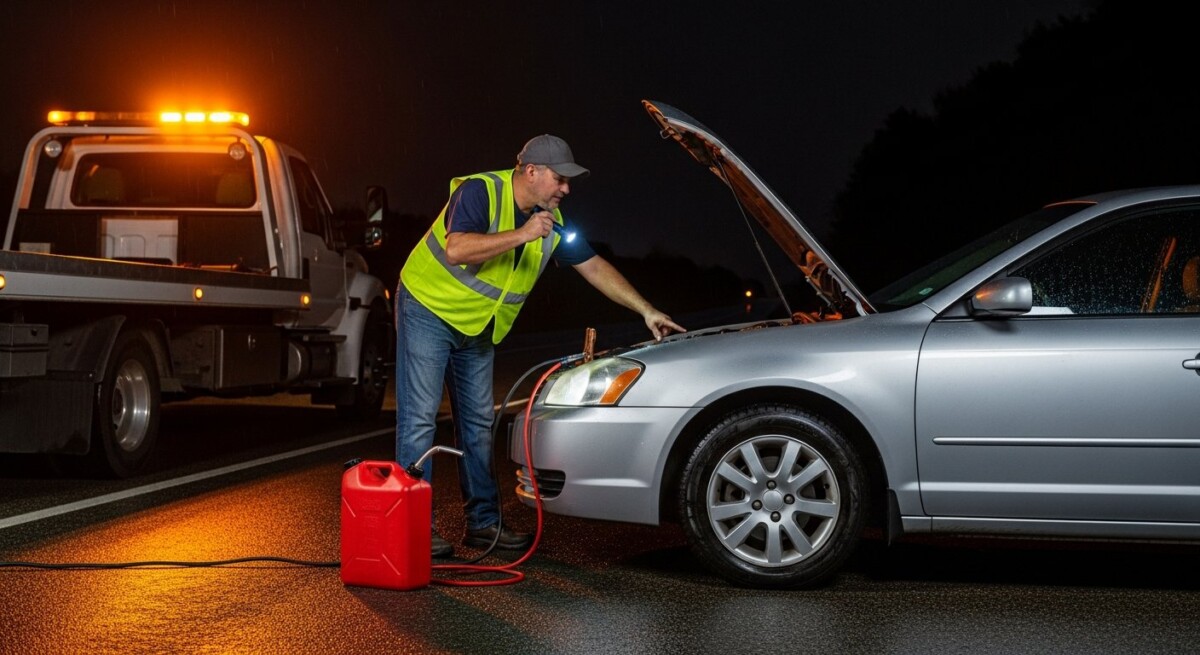
Imagine you are driving home late at night on a deserted highway. The engine suddenly sputters and dies. Your phone battery is at 15 percent. You have no idea who to call. This scenario plays out for millions of drivers every year. In that moment, having a policy that bundles auto insurance with roadside assistance can turn a stressful breakdown into a manageable inconvenience. Beyond the obvious peace of mind, this combination of coverages offers financial protection and convenience that standalone plans often cannot match. Understanding what this coverage includes, how it works, and whether it fits your budget is essential for every driver who wants to avoid surprise tow bills and long waits on the shoulder of the road.
Many drivers assume that roadside assistance is a separate product sold by motor clubs like AAA. While those services are still available, most major insurance carriers now offer roadside assistance as an add-on endorsement to a standard auto policy. This integration means you pay a small additional premium each month instead of a separate membership fee. The result is a streamlined experience where you can file a claim through your insurance app, get a tow truck dispatched, and have the cost covered under your policy. In this article, we will break down the key features, costs, limitations, and decision-making factors so you can determine if this add-on is right for you. For a deeper look at how this coverage compares to standalone plans, read our guide on auto insurance with roadside assistance: is it worth it?
What Does Auto Insurance With Roadside Assistance Cover?
Roadside assistance coverage varies by insurer, but most policies include a core set of services designed to get you back on the road quickly. The most common benefits are towing, flat tire changes, jump-starts, fuel delivery, lockout assistance, and winching or extrication. Each of these services has specific limits and conditions that you should understand before you need to use them.
Towing is typically the most used benefit. If your vehicle cannot be repaired on-site, the insurer will arrange for a tow to the nearest qualified repair facility. Most policies cap the towing distance at a certain number of miles, often between 10 and 20 miles per incident. If your breakdown occurs far from a mechanic, you may have to pay the difference out of pocket. Flat tire changes are usually limited to mounting your spare tire. If you do not have a spare or your vehicle uses run-flat tires, the service may default to towing instead. Jump-starts cover dead batteries from lights left on or extreme temperatures. Fuel delivery typically includes a gallon or two of gas, enough to get you to the nearest station. Lockout assistance covers situations where you have locked your keys inside the car, but you must prove ownership or provide identification. Winching is available if your vehicle is stuck in mud, snow, or a ditch, but only if the recovery is safe and accessible.
It is critical to note that roadside assistance is not a maintenance plan. It does not cover repairs, replacement parts, or diagnostics. It also excludes commercial vehicles, motorcycles in some states, and vehicles used for racing or off-roading. Always read the fine print of your policy to understand what is excluded. For a complete overview of how this coverage works within a broader policy, see our article on auto insurance with roadside assistance: smart coverage.
Cost Comparison: Add-On vs. Standalone Membership
One of the first questions drivers ask is whether it is cheaper to add roadside assistance to their auto insurance or to buy a separate membership from a motor club. The answer depends on your driving habits, the number of vehicles in your household, and the level of service you want. Generally, insurance add-ons cost between $3 and $15 per month per vehicle. That is $36 to $180 per year. Standalone memberships like AAA Classic cost around $60 to $120 per year for a single person, but they cover you as a person rather than a specific vehicle. This means if you are driving a friend’s car, you can still call for help. With an insurance add-on, coverage follows the vehicle, not the driver.
Here is a quick comparison of the two options:
- Insurance Add-On: Lower upfront cost, easy to bundle with your existing policy, coverage applies only to listed vehicles, and claims may affect your insurance rates.
- Standalone Membership: Higher annual fee but covers you as a driver in any car, no impact on insurance premiums, and often includes additional perks like travel discounts and trip planning.
- Pay-Per-Use Services: Apps like Urgently or Honk allow you to pay for a single tow without any membership. These are best for drivers who rarely break down but want a safety net.
If you have multiple vehicles in your household, an insurance add-on can be more affordable because you pay a small fee per car. However, if you frequently drive rental cars or borrow vehicles, a standalone membership gives you broader protection. Another important factor is how claims affect your insurance rates. Some insurers treat roadside assistance calls as comprehensive claims, which can lead to a premium increase at renewal. Others do not surcharge for these claims but may limit the number of calls per year. Be sure to ask your agent about this before adding the coverage.
When Does Roadside Assistance Make the Most Sense?
Roadside assistance is not a one-size-fits-all product. It provides the most value for drivers who fall into certain categories. Commuters who drive long distances daily are prime candidates. A breakdown on the way to work can cause lost wages, missed meetings, and expensive tow bills. Having coverage ensures you are back on the road with minimal disruption. Similarly, families with teenage drivers benefit greatly. New drivers are more likely to lock keys in the car, run out of gas, or get a flat tire. Adding roadside assistance to their policy gives parents peace of mind without requiring a separate membership for each child.
Drivers of older vehicles also find this coverage valuable. As cars age, the risk of mechanical failure increases. A 10-year-old sedan may need a tow more often than a new luxury SUV. For a few dollars a month, you can avoid the $150 to $250 cost of a single tow. On the other hand, if you drive a brand-new car with a comprehensive manufacturer warranty that includes roadside assistance, you may not need to duplicate coverage. Check your warranty booklet before purchasing an add-on. Finally, drivers who live in rural areas or regions with harsh winters should consider this coverage. Remote locations mean longer wait times for help and higher towing costs. Insurance-based roadside assistance can dispatch a provider faster than a general service because insurers have large networks of contracted towers.
How to Choose the Right Provider
Not all roadside assistance programs are created equal. When shopping for auto insurance with roadside assistance, you should evaluate several factors beyond the monthly premium. Response time is critical. Look for insurers that guarantee a maximum wait time, such as 60 minutes or less. Some companies use a network of local towers, while others rely on national dispatch centers. Local networks often provide faster service because the tower is already familiar with the area. Coverage limits also vary widely. Some policies cap towing at 10 miles, while others offer up to 25 miles per incident. If you frequently travel through rural areas, choose a plan with higher mileage limits.
Another factor is the number of service calls allowed per policy period. Most insurers allow three to five calls per year. If you exceed that limit, you will pay out of pocket for additional calls. Some insurers also have a waiting period before coverage begins, typically 24 to 48 hours after purchase. This prevents drivers from buying coverage immediately before a planned breakdown. Finally, consider the claims process. The best providers offer a mobile app or 24/7 hotline where you can request help with GPS tracking so the tower knows your exact location. For a detailed comparison of top providers, refer to our analysis of auto insurance with roadside assistance: a smart add-on.
Common Misconceptions About Roadside Assistance
Many drivers hold incorrect beliefs about how roadside assistance works. One common myth is that it covers all towing costs without any limits. In reality, most policies have a maximum payout per incident. If your tow costs more than the limit, you are responsible for the difference. Another misconception is that roadside assistance covers mechanical repairs performed on the side of the road. It does not. If a tow truck driver diagnoses a problem, they can only tow your vehicle to a shop. They cannot fix a broken alternator or replace a radiator hose on the shoulder.
Some drivers also believe that using roadside assistance will always raise their insurance rates. This is not universally true. Some insurers treat roadside assistance calls as non-chargeable events, similar to glass claims. Others count them as claims that can affect your premium. The only way to know is to read your policy documents or ask your agent directly. Finally, people often assume that roadside assistance is only for breakdowns. In fact, many policies cover lockouts, flat tires, and empty gas tanks. These everyday hassles are the most common reasons people use the service, not major mechanical failures.
Frequently Asked Questions
Does auto insurance with roadside assistance cover rental cars?
No. Coverage typically applies only to the vehicles listed on your policy. If you rent a car, you should purchase the rental company’s roadside assistance or rely on a standalone membership that covers you as a driver.
Can I use roadside assistance if I am not the policyholder?
Most insurers allow any licensed driver who is listed on the policy to request service. Some also cover the policyholder’s spouse or family members even if they are not listed. Check your policy for specific rules.
How many times can I use roadside assistance per year?
Most policies allow three to five service calls per year. Some insurers offer unlimited calls for an additional premium. Using the service too frequently may lead to non-renewal of the coverage.
Will my insurance premium increase after using roadside assistance?
This depends on the insurer. Some companies do not surcharge for roadside assistance claims. Others treat them like any other claim and may raise your rates at renewal. Ask your agent before adding the coverage.
Is roadside assistance worth it for new cars?
New cars often come with complimentary roadside assistance from the manufacturer for the first few years. You can skip the add-on during that period. Once the warranty expires, adding coverage to your insurance is a cost-effective alternative.
Making the Final Decision
Choosing whether to add roadside assistance to your auto insurance policy comes down to your risk tolerance, budget, and driving environment. For most drivers, the small monthly cost provides significant peace of mind and eliminates the hassle of finding a tow truck in an emergency. The integration with your existing insurance means you have one point of contact and one bill, simplifying the process. However, if you rarely drive, have a new car with warranty coverage, or prefer the flexibility of a standalone membership that covers you in any vehicle, the add-on may not be necessary.
Before making a decision, compare quotes from multiple insurers to see how much the add-on costs with each carrier. Some companies offer roadside assistance as part of a larger package, such as accident forgiveness or rental reimbursement. Bundling these coverages can save you money overall. For a comprehensive look at how this coverage fits into a complete policy, explore our resource on auto insurance with roadside assistance: smart coverage. Remember, the goal is to protect yourself from unexpected expenses and downtime. With the right coverage in place, a breakdown becomes a minor inconvenience rather than a financial setback. Take the time to review your options, ask your agent the right questions, and choose the plan that best matches your needs.